


Talk to an Expert
Talk to an Expert ✆ +91 945 945 6700
Trusted by 10,000+ Businesses

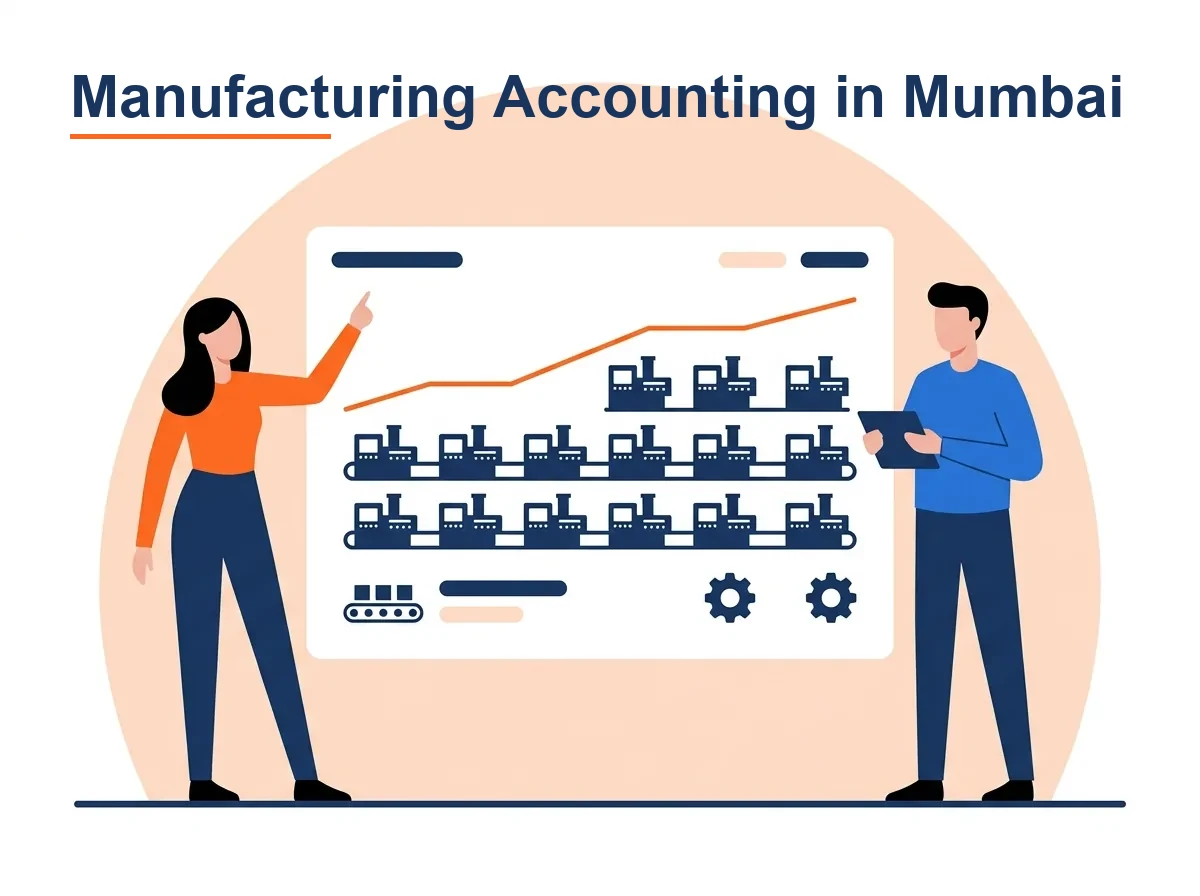
Manufacturing Sector Accounting in Mumbai

Reviewed by CA and CS Team, Patron Accounting LLP ICAI and ICSI Registered| 15+ Years Experience| Last Updated: 23 June 2026 Verify Credentials →

Process and batch costing built for Mumbai chemical, pharma, and textile-processing plants, with AS 2 inventory valuation, RCM on Bhiwandi freight, and multi-location GSTIN consolidation across the MMR belt.

Documents: GSTIN per plant, PAN, Bill of Materials, stock and production registers, fixed-asset register, PTRC/PTEC

Fees: Starting from INR 3,499/mo (Exl GST and Govt. Charges)

Eligibility: Chemical, pharma, textile-processing, packaging, and engineering units across the MMR belt

Coverage: Bhiwandi, Dombivli, Ambernath, Tarapur, Andheri, MIDC Marol, and Taloja

10,000+ Businesses Served | 4.9 Google Rating | 15+ Years Experience

15+ YearsIndustry Experience
CA and CSCertified Experts
4.9
Based on 500+ reviews

Get Free Consultation

Talk to a CA/CS expert today

🇮🇳 +91

Our team will get back to you shortly. No spam.

10,000+Businesses ServedPlants, SMEs, and process units across India.
50,000+Cost Sheets BuiltBOM, WIP, and process cost runs handled accurately.
4.9★Client RatingTrusted by manufacturers, plant owners, and finance heads.
ISO CertifiedProfessional standards and documented processes.
SSL SecureYour financial and production data is fully protected.

Manufacturing Sector Accounting in Mumbai - Overview

📌 TL;DR - Manufacturing Accounting in Mumbai at a Glance

Manufacturing accounting in Mumbai is built around process and batch costing for chemical, pharma, and textile-processing plants, AS 2 valuation of bulk inventory and work-in-progress, GST Reverse Charge on Bhiwandi freight and security, ITC-04 job-work returns, and plant-wise profit and loss consolidated across multiple MMR GSTINs. Fees start from INR 3,499/mo. Serving Tarapur, Ambernath, Dombivli, Andheri, MIDC Marol, and Taloja.

Quick ReferenceDetails for Mumbai Manufacturers
Governing LawAS 2 (ICAI); CGST Act 2017 (Sec 9(3)/9(4) RCM, Sec 68 and Rule 138 e-Way Bill, ITC-04); Companies Act 2013 Sec 128 and Schedule II
Applicable ToChemical, pharma, textile-processing, packaging, and engineering units across the MMR belt
Starting PriceStarting from INR 3,499/mo (Exl GST and Govt. Charges)
Costing MethodProcess costing for continuous and batch output; each process stage treated as a cost centre
Inventory BasisAS 2 - lower of cost or net realisable value at normal capacity
e-Way Bill ThresholdConsignment value above INR 50,000; inter-state job-work movement regardless of value
Local AuthorityRoC Mumbai (MCA); Maharashtra GST; Marine Lines Patron office

Mumbai and the wider MMR run on process manufacturing. A chemical or bulk-drug plant in Tarapur, Ambernath, or Dombivli converts raw material continuously through reaction, distillation, and packaging stages where each stage carries its own cost. A textile-processing house in Bhiwandi dyes and finishes fabric in batches before goods move to warehousing. Accounting for these units is fundamentally different from a discrete auto job shop - the substance is process costing, AS 2 inventory, and freight-driven RCM, not piece-by-piece job tickets. Learn more about our national Manufacturing Sector Accounting service.

Patron Accounting's Mumbai CA team sets up per-process cost sheets, values bulk inventory and work-in-progress under AS 2, tracks Reverse Charge on goods transport and security from Bhiwandi logistics, and consolidates plant-wise profit and loss across each MMR GSTIN. For ongoing monthly compliance, see our Accounting Services. This page is reviewed quarterly for accuracy.

What Is Manufacturing Sector Accounting?

Manufacturing sector accounting is the discipline of recording, costing, and reporting the conversion of raw material into finished goods, so a plant knows the true cost of each batch, the value of its inventory, and the profit of each product line.

For a chemical or pharma unit in Tarapur or Ambernath, this means process costing - treating each stage as a cost centre, absorbing material, labour, and overhead, and accounting for normal and abnormal process loss before valuing the bulk drug or chemical produced. For a textile-processing house in Bhiwandi, it means batch costing across dyeing and finishing, then aligning stock with warehousing-linked dispatch.

The work pairs costing with statutory compliance: AS 2 inventory valuation, GST Reverse Charge on freight, ITC-04 job-work reporting, and Schedule II depreciation. For software-level support, see Tally Accounting in Mumbai and Zoho Books Accounting in Mumbai.

Key Terms for Manufacturing Accounting in Mumbai:

Process Costing: Costing where each process stage is a cost centre and cost is spread across continuous or batch output, used by chemical and pharma plants.

Bill of Materials (BOM): The structured list of inputs and quantities needed to produce one unit, the backbone of every cost sheet.

Work-in-Progress (WIP): Partly finished output valued at material plus the share of labour and overhead absorbed up to the period close.

AS 2 Valuation: Inventory carried at the lower of cost or net realisable value, with overhead absorbed at normal capacity and borrowing cost excluded.

Reverse Charge (RCM): GST paid in cash by the recipient on notified supplies such as transport, then claimed back as input tax credit.

Process Costed, Inventory AS 2 Valued
Mumbai Manufacturing BOM | WIP | Process Cost

Who Needs Manufacturing Accounting in Mumbai?

Any MMR unit that converts raw material into finished goods and must value inventory, cost its output, and stay GST and Companies Act compliant needs structured manufacturing accounting.

  • Chemical and Bulk-Drug Plants (Tarapur/Ambernath) - Continuous and batch processes needing per-stage process costing and AS 2 valuation of reactive raw material and WIP.
  • Pharma and Formulation Units (Dombivli/Taloja) - Batch costing per product, expiry-aware stock valuation, and strict ITC and RCM tracking.
  • Textile-Processing Houses (Bhiwandi) - Dyeing and finishing batches plus warehousing-linked dispatch and freight RCM on inbound and outbound transport.
  • Packaging and Printing Units (Andheri/MIDC Marol) - Job-work flows requiring ITC-04 filing and BOM-based costing of cartons, labels, and laminates.
  • Light Engineering and Assembly (MIDC Marol/Taloja) - Components costed against BOM, with e-Way Bills on inter-unit movement across the MMR belt.
  • Multi-Plant Groups Across MMR - Several GSTINs needing consolidated plant-wise and product-wise profit and loss in one reporting view.

Our Manufacturing Accounting Services in Mumbai

ServiceWhat We Do
Cost Sheets and BOM CostingBuild product cost sheets from the Bill of Materials, absorbing direct material, direct labour, and manufacturing overhead for each process stage.
Process and Batch CostingSet up each process as a cost centre, account for normal and abnormal loss, and value transfers between stages for chemical, pharma, and textile units.
Inventory and WIP Valuation (AS 2)Value raw material, work-in-progress, and finished goods at the lower of cost or net realisable value at normal capacity each period.
GST, RCM, e-Way Bill and ITC-04File GSTR-1 and GSTR-3B, handle Reverse Charge on freight and security, generate e-Way Bills, and submit job-work returns in FORM GST ITC-04.
Plant-Wise and Product-Wise P&LConsolidate multiple MMR GSTINs into plant-wise and product-wise profit and loss so margins are visible by line and location.
Fixed Assets, Depreciation and ExciseMaintain the fixed-asset register, apply Schedule II useful-life and Income Tax WDV depreciation, and reconcile or close legacy excise records.

Need ongoing returns alongside costing? See GST Return Filing and Income Tax Return Filing across India.

Our Process

How Manufacturing Accounting Works in Mumbai: 6-Step Process

A CA-supervised costing and compliance methodology for MMR process plants, from BOM mapping to plant-wise sign-off.

Step 1

Plant Review and BOM Mapping

Patron's CA reviews each MMR plant, its GSTINs, process stages, and the Bill of Materials for every product. For Tarapur and Ambernath chemical units we map reaction and packaging stages as cost centres before any posting begins.

BOM MappedStages Defined
Mapped01
Step 2

Cost Centre and Software Setup

We configure each process stage as a cost centre in Tally, Zoho Books, or SAP Business One, align the chart of accounts, and set opening inventory and asset balances. Multi-plant GSTINs are structured for consolidated MMR reporting from the start.

Cost CentresChart Aligned
Set Up02
Step 3

Production Entry and Process Costing

Material issues, production output, and stage transfers are posted in date order. Process loss is accounted for, overhead is absorbed at normal capacity, and each batch from a Bhiwandi dyeing run or a Dombivli formulation line is costed against its cost sheet.

Output PostedBatches Costed
InputsOutput
Costed03
Step 4

Inventory Valuation and GST Reconciliation

Raw material, WIP, and finished goods are valued under AS 2. Purchases are matched to GSTR-2B, Reverse Charge on freight and security is computed and reported in GSTR-3B Table 3.1(d) and Table 4, and e-Way Bills are reconciled against dispatches.

AS 2 ValuedRCM Tracked
Reconciled04
Step 5

Job-Work Returns and Depreciation

Goods sent to and received from job workers are tracked and filed in FORM GST ITC-04, half-yearly or quarterly by turnover. Depreciation is run under Schedule II useful-life and the Income Tax block-of-assets WDV method, and any legacy excise position is reconciled.

ITC-04 FiledDepreciation Run
Filed05
Step 6

Plant-Wise P&L and CA Sign-Off

All MMR GSTINs are consolidated into plant-wise and product-wise profit and loss, the trial balance is verified, and a CA signs off the period. You receive audit-ready books with a short summary of margins by line and any items needing your confirmation.

P&L ConsolidatedAudit-Ready
SIGNED OFF
Handed Over06

Documents Required for Manufacturing Accounting in Mumbai

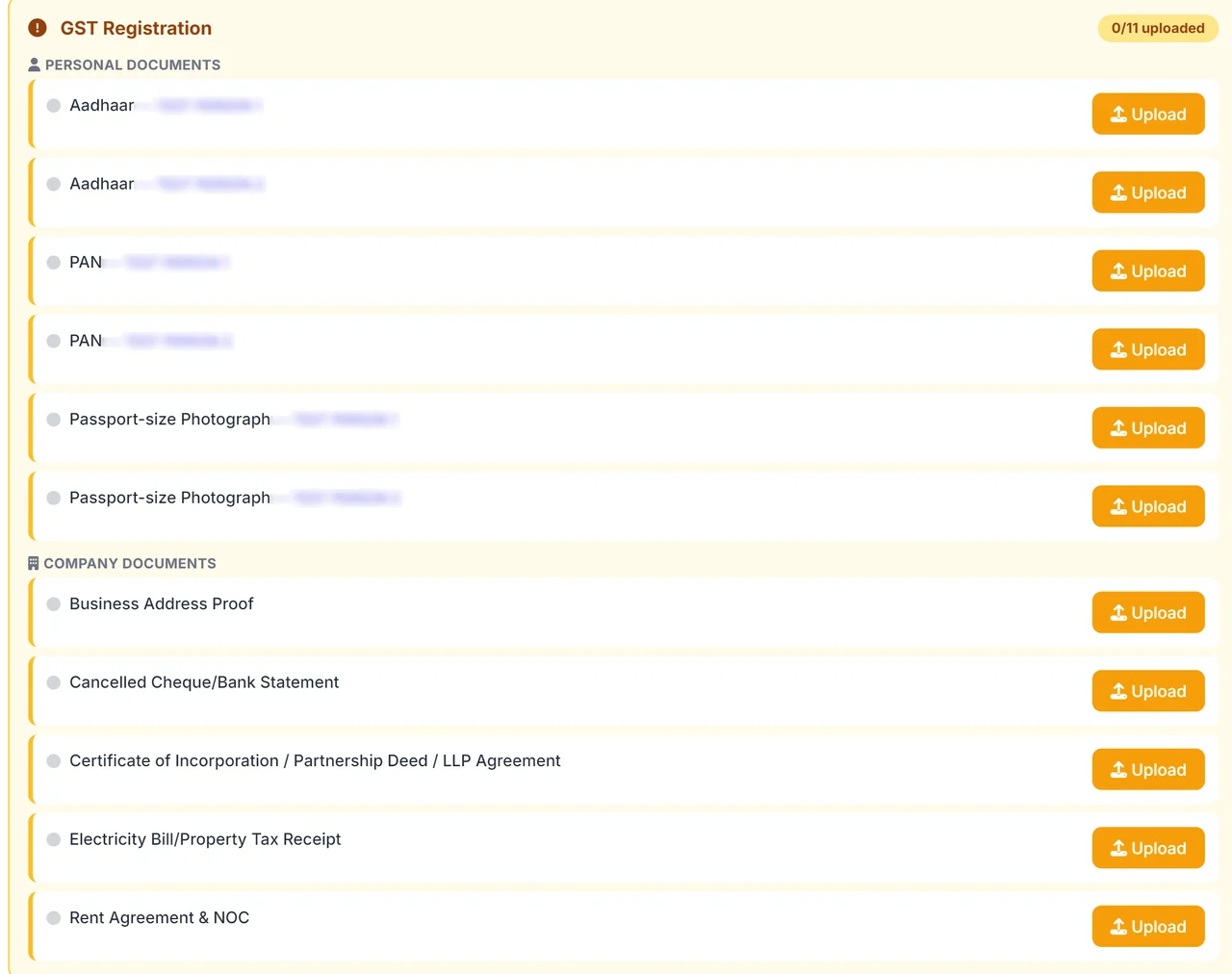
  • GSTIN for Each MMR Plant - Every registration across Tarapur, Bhiwandi, Andheri, and other sites
  • PAN of the Business Entity
  • Bill of Materials (BOM) - Input list and quantities for each product
  • Stock and Production Registers - Material issues, output, and process-loss records
  • Sales and Purchase Invoices - Including e-invoices, freight and RCM bills, and credit/debit notes
  • Bank and Credit Card Statements - For every account in the period
  • Fixed-Asset Register - Plant and machinery details for Schedule II and WDV depreciation
  • Job-Work Challans - For goods sent to and received from job workers for ITC-04
  • Payroll and PTRC/PTEC Details - Maharashtra Professional Tax registration and salary records
  • Legacy Excise Records - For reconciliation or closure, where applicable

All fees and charges listed are indicative only and do not constitute a binding offer. Final amounts may vary depending on the volume of work and the complexity involved.

Common Manufacturing Challenges and How Patron Solves Them

ChallengePatron's Solution
Process loss distorting batch cost in chemical and pharma unitsSeparate normal from abnormal loss per stage so only normal loss loads onto good output, keeping batch and bulk-drug cost accurate.
RCM on Bhiwandi freight and security missed or wrongly claimedPay RCM in cash via challan first, then claim ITC, and report it correctly in GSTR-3B Table 3.1(d) and Table 4 each month.
Inventory carried at cost above net realisable valueApply AS 2 at every close, writing down slow-moving or expiry-bound pharma and chemical stock to net realisable value.
Job-work movement untracked across MMR sitesMaintain the challan trail, generate e-Way Bills for inter-state moves regardless of value, and file ITC-04 on schedule.

Manufacturing Accounting Fees in Mumbai

Fee ComponentAmount
Patron Accounting Professional FeesStarting from INR 3,499/mo (Exl GST and Govt. Charges)
Process and Batch Costing SetupQuoted by number of process stages, products, and plants
ITC-04 Job-Work Return FilingHalf-yearly up to INR 5 crore turnover; quarterly above (frequency per CGST rules)
GST RCM and e-Way Bill ComplianceStatutory tax paid in cash via challan; cannot be set off against ITC before payment (govt charge)
Accounting Software SubscriptionCharged separately by Tally, Zoho, SAP, or the chosen provider

All fees and charges listed are indicative only and do not constitute a binding offer. Final amounts may vary depending on the number of plants, GSTINs, and the complexity of process costing involved. Government GST, RCM, and e-Way Bill charges are statutory and payable as prescribed.

Get a fixed-scope manufacturing accounting quote for your Mumbai plant

Share your process, plants, and GSTINs and we respond within 2 hours.

Call +91 945 945 6700

How Long Manufacturing Accounting Setup Takes in Mumbai

ScopeTypical Turnaround
Single-plant, single-product setup3 to 7 working days for cost sheet and cost-centre configuration
Single plant, multiple products1 to 2 weeks including BOM mapping and AS 2 inventory setup
Multi-process chemical or pharma unit2 to 4 weeks for full process costing and RCM setup
Multi-plant MMR group with consolidation4 to 8 weeks across Tarapur, Bhiwandi, and Taloja GSTINs

Turnaround depends on how quickly the BOM, registers, and GSTIN data are shared. Single-product packaging units in Andheri are fastest; multi-process chemical groups with consolidation take longest.

Why Choose Patron for Manufacturing Accounting in Mumbai

Process Costing Expertise

We build per-stage process and batch cost sheets for chemical, pharma, and textile units, accounting for normal loss and overhead at normal capacity, not generic single-rate costing.

AS 2 Inventory Discipline

Bulk raw material, WIP, and finished goods are valued at the lower of cost or net realisable value, with slow-moving and expiry-bound stock written down correctly each close.

RCM and Job-Work Mastery

Reverse Charge on Bhiwandi freight and security is paid and claimed correctly, e-Way Bills are reconciled, and ITC-04 job-work returns are filed on the right cycle.

Multi-GSTIN Consolidation

Several MMR plants are consolidated into one plant-wise and product-wise profit and loss view, so margins are clear across Tarapur, Bhiwandi, and Taloja.

Local MMR Knowledge

Familiar with RoC Mumbai timelines, Maharashtra GST practice, and the chemical, pharma, and textile belts of Tarapur, Ambernath, Dombivli, and Bhiwandi.

Software Agnostic Setup

Costing and reporting configured directly inside Tally, Zoho Books, SAP Business One, or QuickBooks, whichever your Mumbai plant already runs.

In-House Bookkeeping vs Patron Manufacturing Accounting

FactorPatron ProfessionalIn-House DIY
Process and batch costingPer-stage cost centres with loss accountingSingle blended rate; batch cost unknown
Inventory valuationAS 2 at normal capacity, verifiedOften at purchase cost; NRV ignored
RCM and ITC-04 handlingPaid, claimed, and filed on scheduleFrequently missed; ITC and credit lost
Multi-GSTIN P&LConsolidated plant and product viewSiloed per plant; no group margin view
Audit and CA sign-offSchedules and sign-off includedExtra cleanup billed at audit time

For audit-linked needs, see Tax Audit in Mumbai and our national Statutory Audit service.

Why do Mumbai chemical and pharma plants need process costing instead of job costing?

Chemical and pharma units in Tarapur, Ambernath, and Dombivli produce continuous or batch output where each process stage is a cost centre. Process costing spreads material, labour, and overhead across output and normal losses, unlike job costing used by discrete auto shops. Patron sets up per-process cost sheets so each batch and bulk drug run is valued correctly.

How is manufacturing inventory valued under AS 2 for MMR units?

Under AS 2 issued by ICAI, inventory is valued at the lower of cost or net realisable value. Cost equals direct materials plus direct labour plus a share of manufacturing overhead absorbed at normal capacity, and borrowing cost is excluded. For Mumbai chemical and textile-processing plants, Patron values bulk raw material, WIP, and finished goods on this basis at each period close.

How much does manufacturing accounting cost in Mumbai?

Patron Accounting charges Starting from INR 3,499/mo (Exl GST and Govt. Charges). The final fee depends on the number of plants, GSTINs, transaction volume, and whether process or batch costing and ITC-04 job-work reporting are required. A Bhiwandi warehousing-linked unit or a Tarapur multi-plant group receives a fixed-scope quote before work begins.

When does Reverse Charge Mechanism apply to Mumbai manufacturers?

RCM under Section 9(3) and 9(4) of the CGST Act 2017 applies to notified supplies such as goods transport agency freight and security services, both common for Bhiwandi logistics-linked plants. The tax is paid in cash via challan first, then claimed as input tax credit, and reported in GSTR-3B Table 3.1(d) and Table 4. Patron tracks and reconciles every RCM entry.

What is FORM GST ITC-04 and how often must Mumbai units file it?

ITC-04 reports goods sent to and received from a job worker. Units with annual turnover up to INR 5 crore file half-yearly, while those above file quarterly. For Andheri and MIDC Marol engineering and packaging firms that outsource processing, Patron maintains the challan trail and files ITC-04 so input tax credit on job-work movement is preserved.

When is an e-Way Bill mandatory for goods movement in and around Mumbai?

Under Section 68 and Rule 138 of the CGST Act 2017, an e-Way Bill is required when consignment value exceeds INR 50,000. For inter-state job-work movement it is needed regardless of value. Patron generates and reconciles e-Way Bills for stock transfers between Taloja, Bhiwandi, and customer sites across the MMR belt.

Which documents do you need to start manufacturing accounting in Mumbai?

You provide GSTIN for each MMR plant, PAN, bank statements, purchase and sales invoices, the Bill of Materials, stock and production registers, payroll and PTRC or PTEC details, the fixed-asset register, and any legacy excise records. Patron uses these to build cost sheets, value inventory under AS 2, and prepare plant-wise profit and loss.

Do you handle manufacturing books in Tally, SAP B1, and Zoho Books?

Yes. Patron works directly inside Tally, Zoho Books, SAP Business One, or QuickBooks, whichever your Mumbai plant runs. We map the Bill of Materials, configure process and batch cost centres, post WIP and overhead entries, and reconcile the closing trial balance so multi-location GSTIN reporting stays consistent across MMR.

Quick Answers

Process costing or job costing? For Mumbai chemical, pharma, and textile-processing plants the answer is process costing, since output is continuous or batch and each stage is a cost centre.

How is bulk inventory valued? Under AS 2, at the lower of cost or net realisable value, with overhead at normal capacity and borrowing cost excluded.

Who pays GST on Bhiwandi freight? The manufacturer, under Reverse Charge - paid in cash via challan, then claimed as ITC in GSTR-3B Table 3.1(d) and Table 4.

What do I get each period? Per-stage cost sheets, AS 2-valued inventory, filed RCM and ITC-04, and consolidated plant-wise and product-wise profit and loss.

Cost Your Mumbai Plant Accurately

In process manufacturing, margins are won or lost in the cost sheet. Whether you run a chemical or bulk-drug plant in Tarapur, a pharma line in Dombivli or Taloja, a textile-processing house in Bhiwandi, or a packaging unit in Andheri, Patron Accounting's CA-supervised team sets up process costing, values inventory under AS 2, manages RCM and ITC-04, and consolidates plant-wise profit and loss from INR 3,499/mo.

Explore the national Manufacturing Sector Accounting page, then continue with Accounting Services for ongoing monthly support. Patron Accounting LLP serves 10,000+ businesses with a 4.9 Google rating.

Book a Free Consultation - No Obligation.

Content Created: 23 June 2026 | Last Updated: 23 June 2026 | Next Review: 23 September 2026

Reviewed by CA and CS Team, Patron Accounting LLP. Review Triggers: changes to AS 2, GST RCM or ITC-04 rules, Schedule II depreciation, or Patron Accounting fees.