


Talk to an Expert
Talk to an Expert ✆ +91 945 945 6700
Trusted by 10,000+ Businesses

Catch-Up Bookkeeping Services for Backlogged Books

Reviewed by CA and CS Team, Patron Accounting LLP ICAI & ICSI Registered| 15+ Years Experience| Last Updated: July 2026 Verify Credentials →

Each year closed separately: Every year in the backlog gets its own reconciled trial balance, with each closing balance carried into the next year's opening.

Filed returns reconciled to books: Where the rebuilt books disagree with a return you filed, we write the difference down. You then decide: amend, disclose or explain.

Estimates you can point to: Where no document survives, the estimate sits in a named account with its basis written down and management's representation behind it.

Sub-ledgers rebuilt from source: We split borrowings into principal and interest and recompute depreciation from the asset records. Payroll is agreed to your PF and ESI filings.

15+ YearsIndustry Experience
CA & CSCertified Experts
4.9
Based on real Google reviews

Get Free Consultation

Talk to a CA/CS expert today

🇮🇳 +91

Our team will get back to you shortly. No spam.

Real Stories from Real People

Verified Google reviews from founders and businesses Patron works with across India.

Join 3,000+ Founders and Businesses on Patron

Rated 4.9 on Google - trusted for startup accounting since 2019.

Talk to an Expert
10,000+Businesses ServedGST compliance and litigation support across India.
15+Years ExperienceDeep expertise in IP registration, GST & business compliance.
50,000+Documents FiledReturns, appeals, and filings handled accurately.
4.9★Client RatingTrusted by entrepreneurs, startups, and growing businesses.
ISO CertifiedProfessional standards and documented processes.
SSL SecureYour financial and business data is fully protected.

What Catch-Up Bookkeeping Covers — Scope, Deliverables and Who It Suits

📌 TL;DR - Backlog Bookkeeping Catch Up Services at a Glance

Catch up bookkeeping services clear months of backlog without disturbing your current-year books. Patron rebuilds the ledger from bank statements and invoices, then regularises late returns with Section 50 interest at 18% a year computed correctly rather than guessed. Each adjustment is supported by source records. A reconciled trial balance and a documented prior-period trail come back with it. Ideal where filings have slipped or a departmental notice has landed.

Books left unwritten stop being a bookkeeping problem fairly quickly. They turn into a notice, a blocked credit and a director who cannot answer a straight question from a banker. The catch-up bookkeeping work runs backwards from the last reconciled bank balance, rebuilding period by period so that each closed year stands on its own before the next one is opened, along the lines described in this backlog clean-up explainer.

Workload turns on how far back the open months run, the transaction count sitting inside them, and whether bank statements and purchase invoices survive in a usable form. Backlog accounting services also include regularising the late returns that are lodged through the GST filing portal. Representing you in an assessment or an appeal is a distinct piece of work.

What Is Catch-Up Bookkeeping?

When a company's records stall months behind, it cannot file, satisfy a lender or trust a single figure it holds. Catch up bookkeeping services are the engagement that closes that gap and brings overdue books back up to date. That is the whole of what they are responsible for: closing the gap between the last period properly written and today. A company whose ledgers stopped months ago cannot file, cannot answer a banker, and cannot trust any figure it holds.

Accounts are rebuilt backwards from the last reconciled bank balance, period by period, so each older year is closed and standing on its own before the next is opened. Every rebuilt entry is tied to a source record, and the late returns that piled up are regularised as the books are restored. Catch up bookkeeping services hand back a reconciled trial balance and a documented trail of the prior-period corrections made. Backlog accounting services of this kind stop at the clean-up: representing you in an assessment or appeal is a distinct piece of work.

Key Terms for Backlog Bookkeeping Catch Up:

What Is Catch-Up Bookkeeping. When a company's records stall months behind, it cannot file, satisfy a lender or trust

Who Needs Catch-Up Bookkeeping in India?

Catch-up bookkeeping services suit any business whose ledger has fallen months or years behind live operations. The trigger is rarely the same twice, but the organisations below all share books that stopped being written at some point.

  • Companies that received a departmental notice and cannot answer it from current records.
  • Firms whose accountant resigned mid-year and left the logins and half-posted books behind.
  • Founders who meant to reconcile the statements each week and never did.
  • Businesses facing a lender or investor who wants figures the books cannot yet produce.
  • Startups approaching due diligence with several closed years still unreconciled.
  • Traders and service firms whose GST and TDS returns were filed but never tied to books.
  • Businesses carrying prior-period errors that each closed year must absorb before the next opens.
  • Owners rebuilding from bank statements after the source ledger was lost or corrupted.

Our Catch-Up Bookkeeping Services

ServiceWhat We Do
Backlog gap assessmentWe scope how far your books have fallen behind, list the missing months, and set a clean cut-off date to work from One-time (setup)
Backlog transaction postingOur catch up bookkeeping services post every historical sale, purchase, receipt and payment into the ledgers so each old period is complete One-time (setup)
Bank and ledger reconciliationWe reconcile every bank, card and control account across the backlog period, following our approach to clean up backlog accounting safely One-time (setup)
Prior-period adjustmentsWe record correcting entries for earlier years, keeping each adjustment separate so filed returns stay fixed and your restated numbers remain traceable On event / as needed
Clean trial balanceYou receive a reconciled trial balance for each year that ties back to source records and is ready for audit or filing One-time (setup)
Remediation handover listWe hand over a documented list of open items, assumptions and estimates behind the catch up accounting, so you can answer lender questions One-time (setup)
Our Process

How Catch-Up Bookkeeping Works — Our Process

How Patron delivers backlog bookkeeping catch up, step by step from onboarding to a clean monthly close.

Step 1

Fix the starting point

We take the last finalised or audited balance sheet as the opening position and reconstruct forward from there. Where no such statement exists, opening balances are built and then labelled as reconstructed, so it is always clear which figures are proven and which are derived.

Illustration for Fix the starting point: We take the last finalised or audited balance sheet as the opening position and
Step 2

Treat filed returns as fixed

GST returns, income tax returns, TDS returns and Form 26AS were already filed and cannot be quietly contradicted. Books are rebuilt to agree with them. Each difference is listed for a decision, whether to amend, disclose, or accept and explain, rather than adjusted away to make the books tidy.

Illustration for Treat filed returns as fixed: GST returns, income tax returns, TDS returns and Form 26AS were already filed
Step 3

Rebuild from the bank up

Bank, overdraft and card statements usually survive when vouchers do not, so every line is posted first and documents attached afterwards. Whatever remains unmatched becomes the document-chase list, and the length of that list tells us honestly how complete the reconstruction can be.

Illustration for Rebuild from the bank up: Bank, overdraft and card statements usually survive when vouchers do not, so
Step 4

Reconstruct the sub-ledgers

Borrowings are rebuilt from sanction letters and amortisation schedules so principal and interest split correctly in each year. Fixed assets are rebuilt from purchase and disposal records with depreciation recomputed year by year, and payroll from the PF and ESI filings and challans.

Illustration for Reconstruct the sub-ledgers: Borrowings are rebuilt from sanction letters and amortisation schedules so
Step 5

Handle gaps in the open

Where no document survives, we do not create one. The amount is estimated on a basis that is written down, posted to a clearly named account, and supported by a written representation from management. Anyone reviewing the books later can then see exactly what was assumed and why.

Illustration for Handle gaps in the open: Where no document survives, we do not create one. The amount is estimated on a
Step 6

Close each year in sequence

Years are closed one at a time and rolled forward, with each closing balance agreed to the following year's opening. Annual reconciliations, GST against books and TDS against Form 26AS, are run per financial year rather than across the whole backlog in one pass.

Illustration for Close each year in sequence: Years are closed one at a time and rolled forward, with each closing balance
Step 7

Hand over with a remediation list

You receive a reconciled trial balance for every year, the schedule of differences against what was filed, and a list of returns that may need revision or amendment. That last list is often the real output: catching up the books almost always uncovers compliance still to be fixed.

Illustration for Hand over with a remediation list: You receive a reconciled trial balance for every year, the schedule of

Documents Required for Catch-Up Bookkeeping

For a period already filed, the returns you submitted become the fixed points that the rebuilt books have to agree with.

  • Every GST return filed during the period: GSTR-1, GSTR-3B, GSTR-2B and any GSTR-9/9C
  • Income tax returns filed, tax audit reports in Form 3CA/3CB-3CD, and the computation of income for each year
  • TDS returns, challans and Form 26AS / AIS for each year in the backlog
  • Payroll registers with PF and ESI ECR filings and challans for the period
  • Loan sanction letters and amortisation schedules for every borrowing taken during the period
  • Fixed asset purchase invoices and disposal records for the period
  • Bank statements for every account covering the entire backlog period
  • Credit card, overdraft and loan statements for the backlog period
  • The last set of finalised or audited financial statements with schedules and notes
Client Portal

How You Work With Patron

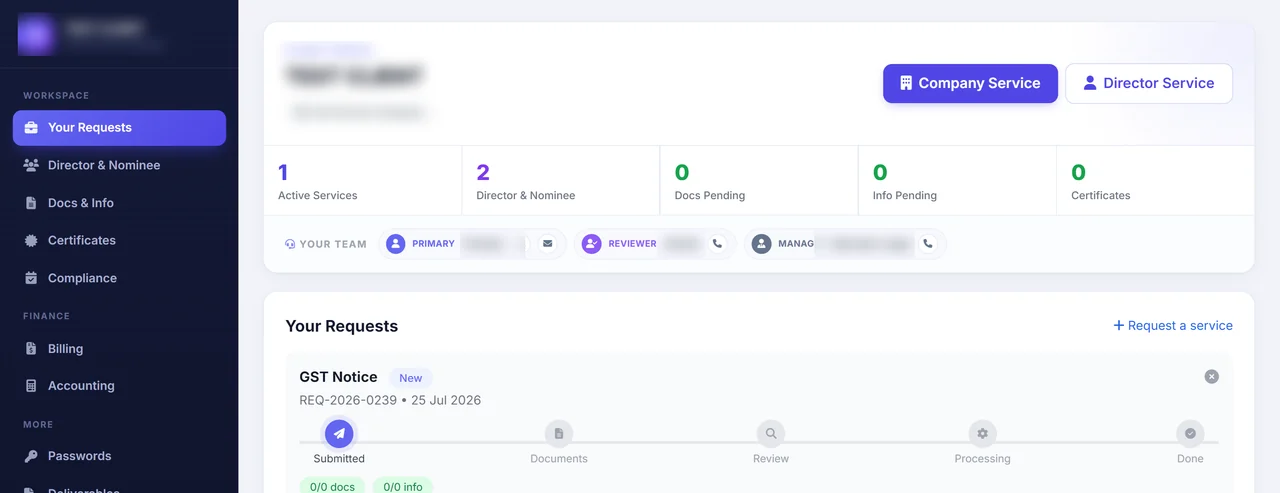
Everything happens in one secure login. You can see your active services, the Patron team on your account, and anything still pending. Once you raise a request, it moves through the same clear steps every time, so you always know exactly where your work stands.

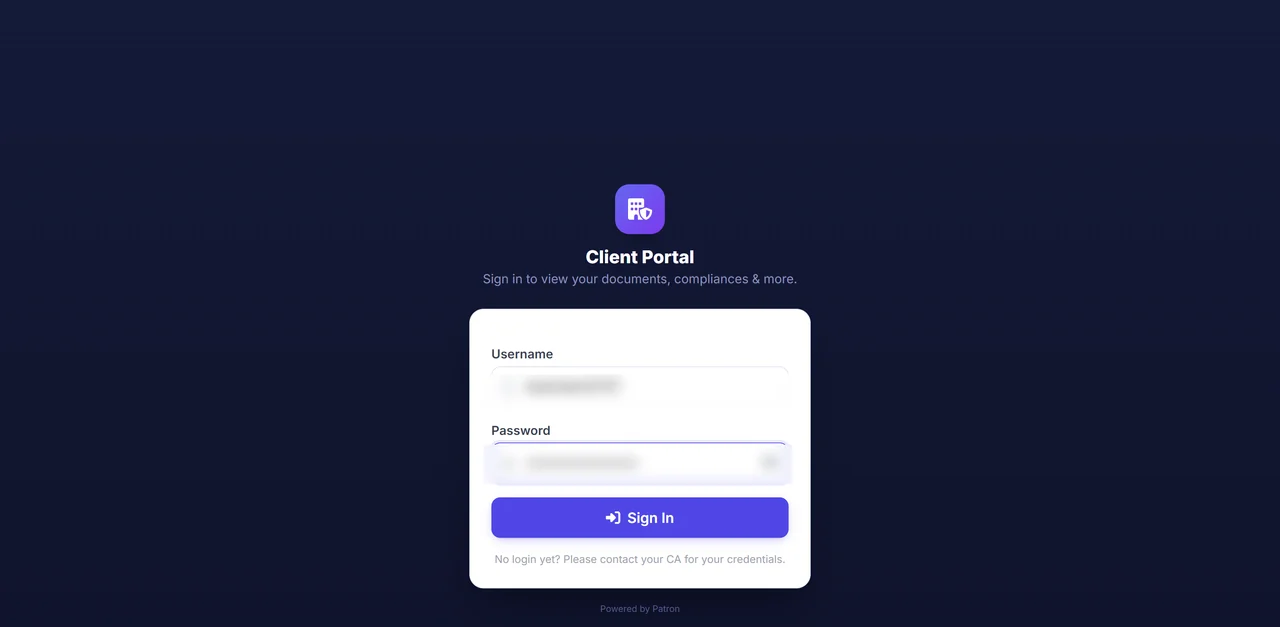
Secure client portal login screen
1

Sign in securely

Your books, documents and requests all sit behind one private, password protected login. The team handling your account is shown on screen, so nothing sensitive ever needs to travel over email or WhatsApp.

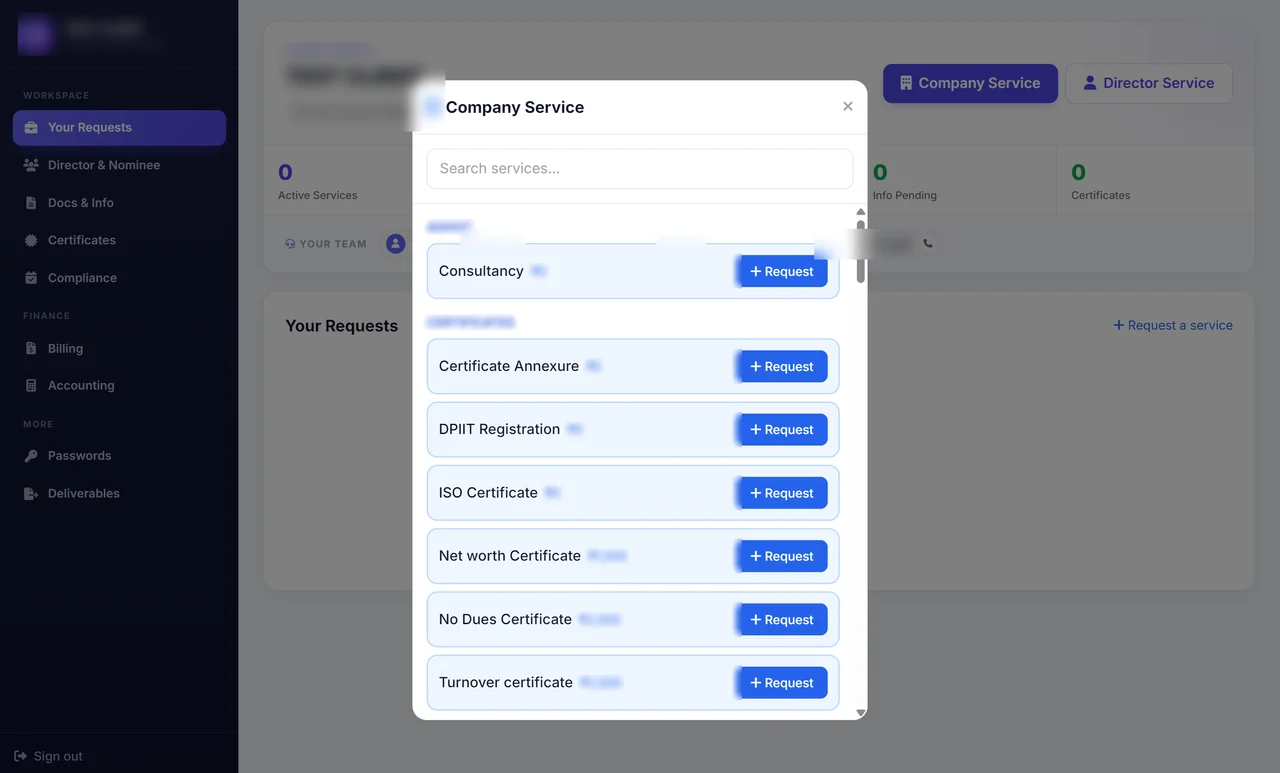
Service catalogue inside the client portal
2

Raise your request

Choose the service you need from the menu inside the portal, where the price is shown before you go ahead. Your request is logged the moment you send it, with no phone calls or reminder emails to wait on.

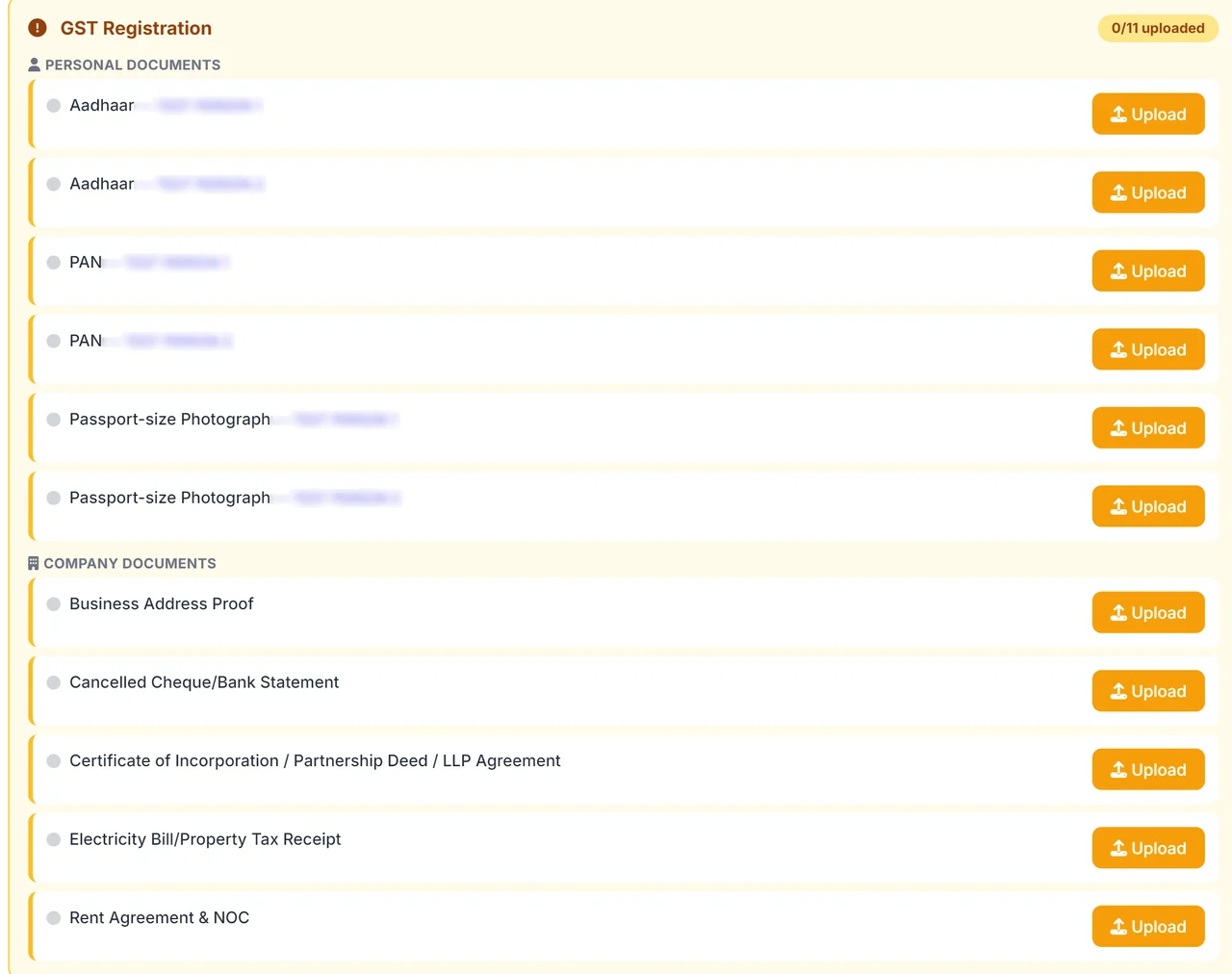
GST registration document checklist in the client portal, with an upload button beside each item
3

Share what the service asks for

For every service, the portal lists the exact documents it needs, each with its own upload button. The example shown here is the GST registration checklist. When a service needs nothing from you, it simply asks for nothing.

Live request tracker inside the client portal
4

We review, prepare and file

Once your documents are in, your team checks them, prepares the work and files it for you. A live tracker shows each stage as it happens, from review to processing to done, so you never have to ask where things stand.

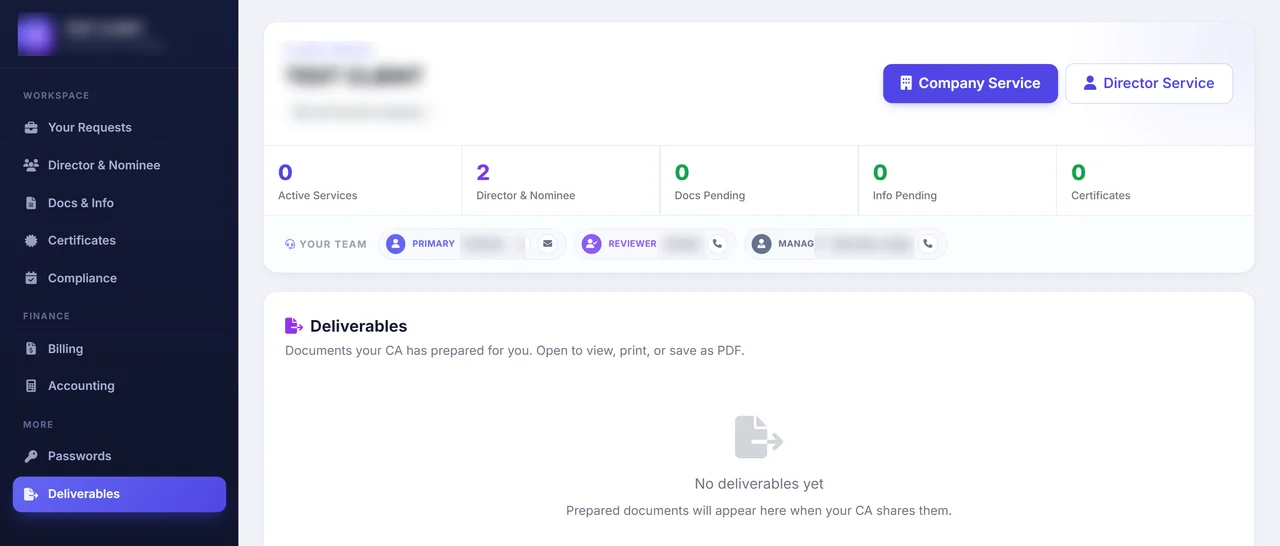
Deliverables area of the client portal
5

Collect your finished work

Every completed return, computation and certificate is placed in your Deliverables area. You can open, print or download any of them as a PDF whenever you need a copy.

Common Catch-Up Bookkeeping Challenges and How We Solve Them

ChallengeImpactHow Patron Accounting Solves It
Prior-period purchase and expense invoices missing entirelyInput credit and expense deductions are lost, and the reconstructed period cannot be supported at assessment.Reconstruct vendor-wise from statements and portals, retrieve bills, and flag genuinely unsupported entries.
Opening balances from the last return do not match realityEvery later period inherits the error, so the close never balances.Fix the opening trial balance against the last audited figures before posting any backlog; see clean up years of backlog.
Cash-in-hand ledger runs negative across the backlog gapBooks look facially wrong, inviting scrutiny and penalty on the reconstructed period.Rebuild the cash book date-wise and reconcile timing so the balance never turns negative.
GST and TDS returns filed on estimates, not booksTurnover per returns diverges from the ledger, triggering mismatch notices later.Rebuild the registers, reconcile filed returns to the books, and quantify short or excess for correction.
Depreciation, closing stock and provisions skipped in unwritten yearsProfit and tax for each year misstated, and the prior-period error compounds forward.Recompute depreciation block-wise, value each year's closing stock, and book provisions to the right period.

Catch-Up Bookkeeping Fees

Fee ComponentAmount
Per month of backlog — one month of backlog at routine transaction volumeINR 9,999 per month of backlog
Excl. GST & Government Charges
Larger or complex backlog — heavier monthly volume or several months cleared togetherOn quote

Catch-up bookkeeping is billed at INR 9,999 per month of backlog, so the total depends on how many months you are behind and the transaction volume in each. Complex or high-volume periods are quoted after we scope the records. Request a customised estimate on +91 94594 56700.

Fees exclude GST and government charges. Final quote confirmed after a scoping review.

All fees and charges listed are indicative only and do not constitute a binding offer. Final amounts may vary depending on the volume of work and the complexity involved.

Professional accounting and compliance charges are scoped to your number of entities, funding stage and monthly transaction volume, and are separate from statutory and government charges. Contact us for a detailed, fixed quote.

Get a free Backlog Bookkeeping Catch Up consultation - Call +91 945 945 6700 or WhatsApp us. No-obligation assessment.

Catch-Up Bookkeeping Compliance Calendar 2026

ComplianceDue DateApplies To
TDS / TCS deposit (Challan ITNS-281)7th of every month (30 April for March)Every business that deducts tax at source on salaries, rent, contractor or professional fees
GSTR-1 (outward supplies)11th of every month for monthly filersGST-registered businesses filing monthly returns
GSTR-3B (summary return and tax payment)20th of every month for monthly filersGST-registered businesses filing monthly; QRMP filers pay via PMT-06
TDS return for Jan-Mar quarter (Form 24Q / 26Q)31 May 2026Deductors filing quarterly TDS statements
Income-tax return, non-audit cases31 July 2026Proprietors, firms and individuals not liable to tax audit
Tax audit report (Form 3CA/3CB-3CD)30 September 2026Businesses crossing the Section 44AB turnover threshold
Annual GST return GSTR-9 and reconciliation GSTR-9C31 December 2026GST-registered businesses above the annual-return and audit thresholds

When books are behind, the immediate dates are the pending TDS return on 31 May and the non-audit ITR on 31 July, then the tax audit on 30 September. Patron's catch-up bookkeeping team rebuilds prior periods and lines each overdue filing up against the next live deadline so you close the gap in order. Request a consultation on +91 94594 56700 to set filing reminders.

Key Benefits

Why Professional Catch-Up Bookkeeping Matters

Each year closed separately

Every year in the backlog gets its own reconciled trial balance, with each closing balance carried into the next year's opening.

  • Each year closed with its own reconciled trial balance
  • Closing balance carried into the next year's opening
  • Without it, one early error compounds through every later year

Filed returns reconciled to books

Where the rebuilt books disagree with a return you filed, we write the difference down. You then decide: amend, disclose or explain.

  • Rebuilt books reconciled to GST, income tax and TDS returns
  • Differences checked against Form 26AS / AIS
  • Without it, the same gap resurfaces when filings are compared with accounts

Estimates you can point to

Where no document survives, the estimate sits in a named account with its basis written down and management's representation behind it.

  • Estimate held in a named account, basis recorded
  • Backed by management's written representation
  • Without it, an unexplainable figure sits in the ledger when the invoice is asked for

Sub-ledgers rebuilt from source

We split borrowings into principal and interest and recompute depreciation from the asset records. Payroll is agreed to your PF and ESI filings.

  • Borrowings split into principal and interest, depreciation recomputed
  • Payroll agreed to PF and ESI filings
  • Without it, a loan balance never agrees with the lender's own record

A remediation list to work from

Alongside the rebuilt books you get a schedule of which returns still need revising or amending, usually the part with money attached.

  • Schedule of returns still needing revision or amendment
  • Flags the items with money attached
  • Without it, tidy accounts sit on compliance nobody has checked

Lender questions you can answer

A banker asking for two years of figures gets them from a file, each balance supported by the record it came from.

  • Two years of figures supported by source records
  • Built on the last finalised or audited financial statements
  • Without it, funding conversations stall at the request for accounts

Why Businesses Choose Patron Accounting for Backlog Bookkeeping / Catch-Up

Five things a founder can check before handing over the books. Each is a claim with the proof behind it.

Backlog cleared without disturbing your current-year books

We clear years of backlog while your current-year books carry on untouched, each period closed on its own. That reconstruction skill comes from 15+ years of experience.

Late GST and TDS returns regularised, interest computed correctly

We regularise late GST and TDS returns and compute the interest and late fee correctly, so filings tie to the rebuilt books. This is part of 25,000+ filings completed.

Rebuilt in your existing software, no migration needed

We rebuild inside the software you already run, whether Tally Prime, Zoho Books, Xero or Odoo, with no migration and no re-keying. We work across Zoho Books and Xero.

First reconciled trial balance soon after handover

Your first deliverable is a reconciled trial balance you can trust, followed by a period-by-period reconstruction from bank statements. Delivery this dependable earns our 4.9 star Google rating.

Catch-up engagements for businesses years behind

Backlog and catch-up clients sit among the 3,000+ businesses served since 2019, some years behind when they reach us. Our in-house team of CAs and CS, 15+ years of experience, rebuilds them.

Figures reflect Patron Accounting LLP engagements since 2019. Scope and turnaround are confirmed in your engagement letter.

Catch-Up Now vs Carry the Backlog

CriterionCatch-Up NowCarry the Backlog
Compliance riskReturns get reconciled to books before notices arriveEvery open period raises the chance of a missed filing
Cost over timeOne remediation effort now, priced against a known scopeRecords decay and reconstruction gets dearer the longer it waits
Penalty exposureErrors corrected before they attract late fees or interestLate filings and interest keep accruing while books stay behind
Financing readinessClean statements ready when a lender or investor asksLoan and due-diligence requests stall without current accounts
Data accuracySource documents are still available to rebuild ledgers correctlyBank statements and bills go missing, forcing estimates later
Effort to fixScope is contained while the gap is measured in monthsYears of backlog take far longer to reconstruct accurately
VerdictCarrying a backlog only raises cost, penalties and risk as records fade. For almost every business, catch up bookkeeping services now are the sound choice, as cleaning up backlog accounting makes clear.

Legal and Regulatory Framework for Catch-Up Bookkeeping

Section 44AA of the Income-tax Act turns bookkeeping from a convenience into a legal duty: once the limits are crossed, records must exist for the year, and a business that has fallen behind is out of compliance until they do. The wider framework then decides how far back the reconstruction has to reach.

Rebuilding those months is governed work, not free-hand data entry. Prior periods are corrected without disturbing what a past return already reported, which is why Prior-Period Adjustments follow a defined treatment and why a Historical Data Cut-off Date fixes where the clean-up starts. Catch up bookkeeping services bring overdue records back to a filed-ready state against the provisions below.

  • Section 44AA, Income-tax Act 1961 (with Rule 6F)Books must be maintained once income or turnover crosses the prescribed limits, so an arrears period is a live compliance gap until it is closed - the definition of Catch-Up Bookkeeping.
  • Section 44AB, Income-tax Act 1961Where the turnover thresholds are met the restored accounts must be complete enough to support a tax audit report in Form 3CA/3CB with 3CD.
  • Companies (Accounting Standards) Rules 2021The reconstructed numbers are measured under the same accounting standards as current books, so a catch-up year is comparable with the ones around it.
  • Section 128 and Section 44AA, Income-tax Act 1961The double-entry obligation behind the arrears applies whichever entity holds the books, so nothing can simply be summarised.
  • Rule 3(1), Companies (Accounts) Rules 2014The audit trail stays enabled as historical entries are posted, so a reconstructed period is transparent rather than opaque. Ongoing bill processing continues under accounts payable outsourcing.

Official sources: Ministry of Corporate Affairs · Income Tax Department · GST Portal · Startup India (DPIIT)

How many years of pending books can you catch up?

We routinely rebuild eight financial years of books, because Section 128(5) of the Companies Act requires books of account to be preserved for eight financial years. Income tax reassessment now reaches three years and three months from the end of the assessment year, or five years and three months where escaped income is Rs 50 lakh or more. Older periods are reconstructed from bank statements and filed returns.

How long does a catch-up bookkeeping project take?

A single year of backlog with under 1,000 transactions is normally completed in 2 to 3 weeks, two to three years takes 4 to 8 weeks, and multi entity or multi state cases run longer. The timeline depends on how quickly bank statements, purchase invoices and GST return data reach us, so a complete document handover on day one shortens it considerably.

What does it cost to clear two years of pending books?

Two years of catch-up bookkeeping generally costs Rs 25,000 to Rs 90,000 in total, quoted per financial year after a free review of your bank statements and transaction count. Volume, the number of bank accounts, the number of GSTINs, payroll headcount and whether stock records must be rebuilt drive the figure. The quote is fixed before work starts, never billed hourly.

What documents are needed when the records are incomplete?

We can start with bank statements alone. Statements for every account, the GST returns already filed, TDS returns, previous year financials and loan or credit card statements are enough to rebuild a usable ledger. Missing purchase invoices are then chased vendor by vendor, and anything still unsupported is parked in a suspense account and listed for your decision.

Can old returns still be filed once the books are brought up to date?

In most cases yes. Pending GST returns can still be filed with late fee and interest, and income tax returns can be filed as belated or updated returns within the window allowed by the Income Tax Act. Because that window varies with how old the year is, we confirm exactly what remains open before quoting any of the filing work.

What is bookkeeping catch-up?

Bookkeeping catch-up is the work of recording months or years of unposted transactions so the ledgers, bank balances and the GST and TDS returns already filed finally agree. It begins with bank statements, purchase and sales invoices and portal data, rebuilds the ledger period by period in Tally or Zoho Books, and ends with a closing trial balance you can file and be audited from.

What is a catch-up in accounting?

A catch-up in accounting is a one time project that brings overdue books up to the current date, usually covering one to three financial years of missed entries. It differs from monthly bookkeeping because the work runs backwards through periods for which returns may already be filed, so every rebuilt ledger has to agree with those filed GST and income tax figures.

Can input tax credit missed in earlier GST returns still be claimed?

Input tax credit for an earlier financial year can only be claimed inside the statutory time limit set in the GST law, which closes a fixed period after that financial year ends, so credit older than the window is permanently lost. We identify still claimable credit first and prioritise those periods, then quantify the lapsed amount so you can see the real cost of delay.

Once the backlog is cleared, do you take over monthly bookkeeping?

Most clients move to a monthly retainer once the backlog is cleared, priced from about Rs 8,000 a month, because the same team already knows the ledger. Handover is optional. If you prefer to keep bookkeeping in house, we deliver the cleaned Tally or Zoho Books file, a documented chart of accounts and a signed off closing trial balance to continue from.

What should a bookkeeper charge per hour?

Hourly bookkeeping rates in India commonly run Rs 300 to Rs 1,200 an hour, depending on whether a junior accountant or a qualified CA does the work. For a backlog, a fixed fee per financial year is the safer buy. Hourly billing on old books rewards slow work and gives you no ceiling, so we quote a fixed price after counting your transactions.

Quick Answers

Books left unwritten stop being a bookkeeping problem fairly quickly. They turn into a notice, a blocked credit and a director who cannot answer a straight question from a banker. The catch-up bookkeeping work runs backwards from the last reconciled bank balance, rebuilding period by period so that each closed year.

Backlog Bookkeeping Catch Up Deadlines You Cannot Afford to Miss

TDS / TCS deposit (Challan ITNS-281) is due 7th of every month (30 April for March). GSTR-1 (outward supplies) is due 11th of every month for monthly filers. GSTR-3B (summary return and tax payment) is due 20th of every month for monthly filers. Patron tracks each against your books so nothing is reconstructed after the fact. Call +91 94594 56700 to set up a filing-reminder schedule.

Start Your Catch-Up Bookkeeping with Patron Accounting

Nobody does it, which is how the backlog got there. The founder means to sit with the statements every Sunday and never does. An accountant who left halfway through took the logins with him, and the pile grows quietly until something outside forces the issue. Catch up bookkeeping services exist for that pile.

The end point of backlog accounting services is a closing balance you can build on. One figure for each completed year, signed off and not open to argument, with the entries behind it traceable to a statement or an invoice. Next year then starts from a number instead of a guess.

The last date your books were genuinely correct is question one, followed by what survives from the months after it: bank statements, purchase bills, whatever the old accountant left. That inventory decides how much can be rebuilt rather than reconstructed. Handing over supplier bill processing comes later.

Book a Free Consultation - No Obligation.

Explore Our Accounting Services

Related services our CA-led team delivers for businesses across India.

Reviewed by the CA & CS Team, Patron Accounting LLP
ICAI & ICSI registered  ·  15+ years in Indian accounting & compliance  ·  Last reviewed 23 July 2026  ·  Next review 23 October 2026