


Talk to an Expert
Talk to an Expert ✆ +91 945 945 6700
Trusted by 10,000+ Businesses

Accounts Receivable Outsourcing Services

Reviewed by CA and CS Team, Patron Accounting LLP ICAI & ICSI Registered| 15+ Years Experience| Last Updated: July 2026 Verify Credentials →

Invoices that close at zero: Your customer account closes at nil, because we book any gap between the bill and what a platform paid.

A disputed and undisputed split: You get a debtor list split into what is genuinely disputed and what is simply unpaid, from balance confirmations.

Exposure controlled at order stage: We check new orders against the customer's credit limit and overdue balance before they are accepted, so a slow payer stops accumulating.

Every invoice backed by proof: Each invoice travels with the purchase order, delivery challan or completion certificate behind it, and a valid IRN where e-invoicing applies.

15+ YearsIndustry Experience
CA & CSCertified Experts
4.9
Based on real Google reviews

Get Free Consultation

Talk to a CA/CS expert today

🇮🇳 +91

Our team will get back to you shortly. No spam.

Real Stories from Real People

Verified Google reviews from founders and businesses Patron works with across India.

Join 3,000+ Founders and Businesses on Patron

Rated 4.9 on Google - trusted for startup accounting since 2019.

Talk to an Expert
10,000+Businesses ServedGST compliance and litigation support across India.
15+Years ExperienceDeep expertise in IP registration, GST & business compliance.
50,000+Documents FiledReturns, appeals, and filings handled accurately.
4.9★Client RatingTrusted by entrepreneurs, startups, and growing businesses.
ISO CertifiedProfessional standards and documented processes.
SSL SecureYour financial and business data is fully protected.

What Accounts Receivable Outsourcing Covers — Scope, Deliverables and Who It Suits

📌 TL;DR - Accounts Receivable Outsourcing Services at a Glance

Accounts receivable outsourcing chases collections by ageing bucket with a named owner on every account. TDS credits are reconciled to Form 26AS, so customers cannot short-pay against tax they never deposited. Patron reports debtor ageing and days sales outstanding on a fixed cycle, with dunning following a written escalation ladder. Common among businesses carrying long, disputed or concentrated receivables.

The collection ledger sets the rhythm for the week straight after month end. Invoices raised during the period are frozen, receipts are allocated against them, and the receivable cycle only restarts once every customer account opens the following month on a balance that both sides accept. Reminders then go out on set days, disputes are logged with a reason and a raiser attached, and the collection position is reported in the manner explained in this order-to-cash explainer.

Allocation of receipts, ageing analysis, reminder runs and the matching of deducted tax against the statement available on the income tax e-filing site all sit inside the monthly retainer. Legal recovery, credit insurance and the commercial decision to write a balance off stay with you. Accounts receivable services scale with the customer count, the dispute volume and the currencies you invoice in.

What Are Accounts Receivable Outsourcing Services?

Every invoice is tracked, under the order-to-cash discipline, through defined ageing buckets until the cash arrives, each account carrying a named owner. Accounts receivable outsourcing is the outsourced function that runs that discipline for you, so no overdue balance goes unwatched.

Receipts are allocated against the right invoices, the debtor ledger is aged, and reminders go out on a set schedule that escalates in fixed steps rather than at random. It reconciles tax that customers have deducted against the statement the revenue records show, so a short payment cannot hide behind tax the customer never deposited. The aim is a shorter gap between raising an invoice and seeing the cash. This engagement reports the debtor position and the days-sales-outstanding figure to a set reporting rhythm. What these accounts receivable services do not touch is the commercial call. Legal recovery, credit insurance and whether to write off a balance remain with you.

Key Terms for Accounts Receivable Outsourcing:

What Are Accounts Receivable Outsourcing Services. Every invoice is tracked, under the order-to-cash discipline,

Who Needs Accounts Receivable Outsourcing Services in India?

Accounts receivable outsourcing suits businesses where cash is earned but not collected. Sales look strong on paper, yet the debtor ledger keeps growing and nobody is fully accountable for turning invoices into money in the bank.

  • B2B suppliers with a few large customers who need tighter credit and receivables management on every account.
  • Companies whose oldest invoices keep rolling forward because no one is tasked with chasing them down.
  • Firms whose customers short-pay by deducting tax at source, leaving credits to match against Form 26AS.
  • Exporters invoicing across several currencies, where receipt allocation and ageing have quietly become unmanageable.
  • Healthcare providers and diagnostic centres waiting on third-party administrator reimbursements that settle slowly and in parts.
  • Businesses billing on milestones or retainers, where disputes freeze invoices until someone logs and splits them.
  • Firms with no written escalation ladder, so their days sales outstanding keeps climbing unchecked.

Our Accounts Receivable Outsourcing Services

ServiceWhat We Do
Credit control setupWe set credit limits and terms per customer, so exposure is controlled at the order stage before any invoice is raised One-time (setup)
Invoicing against proofWe raise sales invoices only against delivery proof, applying e-invoicing with IRN and QR code where it is required for your turnover Weekly
Receivables ageing reportsOur receivables management services age the ledger by true due date, giving you a clear view of what is current and overdue Monthly
Structured collections and dunningWe run a scheduled reminder ladder, logging every follow-up per account, following methods in this days sales outstanding guide to cut delays Weekly
Receipt applicationWe apply customer receipts to the correct open invoices so accounts close at zero and unapplied credits do not pile up Weekly
Dispute and doubtful reportingOur accounts receivable outsourcing team splits disputed from undisputed balances, confirms accounts periodically, and flags doubtful debts for your provisioning decisions Monthly
Our Process

How Accounts Receivable Outsourcing Services Work — Our Process

How Patron delivers accounts receivable outsourcing, step by step from onboarding to a clean monthly close.

Step 1

Set up credit control

Each customer is set up with PAN, GSTIN, billing and shipping states, agreed credit period and credit limit. New orders are then checked against that limit and against overdue balances before acceptance, so exposure is controlled at the order stage instead of argued about at collection.

Illustration for Set up credit control: Each customer is set up with PAN, GSTIN, billing and shipping states, agreed credit
Step 2

Invoice against proof of supply

Invoices are raised only against a purchase order, contract or completed milestone, supported by the delivery challan, e-way bill or completion certificate. Where e-invoicing applies, the IRN and QR code are generated and validated first: an invoice without a valid IRN is not a valid tax invoice.

Illustration for Invoice against proof of supply: Invoices are raised only against a purchase order, contract or completed
Step 3

Age the ledger properly

The opening open-invoice listing is taken over and re-aged from due date, not invoice date. Buckets then drive effort rather than decorate a report: recent balances get a reminder, older ones get a call, and the oldest are separated out for a commercial decision by you.

Illustration for Age the ledger properly: The opening open-invoice listing is taken over and re-aged from due date, not
Step 4

Run a structured dunning ladder

Follow-up runs on a fixed sequence: statement, reminder, telephone call, then escalation to your commercial owner, with every contact logged against the invoice. Disputes raised during follow-up are recorded as disputes and routed for resolution, not chased again as though the customer were merely slow.

Illustration for Run a structured dunning ladder: Follow-up runs on a fixed sequence: statement, reminder, telephone call,
Step 5

Apply receipts to invoices

Receipts are applied invoice by invoice from remittance advices. Gateway, UPI and marketplace settlements are broken from gross to net, so commission, charges and tax deducted at source are booked properly instead of appearing as short recovery. Advances are tracked against future billing.

Illustration for Apply receipts to invoices: Receipts are applied invoice by invoice from remittance advices. Gateway, UPI
Step 6

Confirm balances and split disputes

Balance confirmations are circulated periodically and every difference returned is reconciled. The confirmed position also produces an honest undisputed-versus-disputed split. That is the classification the receivables ageing schedule in the financial statements requires, and one that cannot credibly be constructed at year-end.

Illustration for Confirm balances and split disputes: Balance confirmations are circulated periodically and every difference
Step 7

Report and flag doubtful balances

Each period we hand back the ageing, days sales outstanding, collections against target, the dispute log and a view on balances that look credit-impaired. The decision to provide or write off stays with management; our job is to make the evidence behind that decision visible.

Illustration for Report and flag doubtful balances: Each period we hand back the ageing, days sales outstanding, collections

Documents Required for Accounts Receivable Outsourcing Services

Collecting money starts with proving it is owed, so the contract, the delivery evidence and the invoice need to travel together.

  • Customer purchase orders, signed contracts, statements of work and rate cards
  • Delivery challans, e-way bills and proof of delivery or service completion certificates
  • Credit notes issued, sales returns and approved discount or rebate schemes
  • Advance receipts and receipt vouchers issued against them
  • Customer remittance advices and payment intimations
  • Existing accounts receivable ageing and open invoice listing as at the takeover date
  • Customer master with PAN, GSTIN, billing and shipping address, credit period and credit limit
  • Sales invoices and tax invoices raised, with IRN and QR code where e-invoicing applies
  • Bank statements plus payment gateway, UPI and marketplace settlement reports for collections
Client Portal

How You Work With Patron

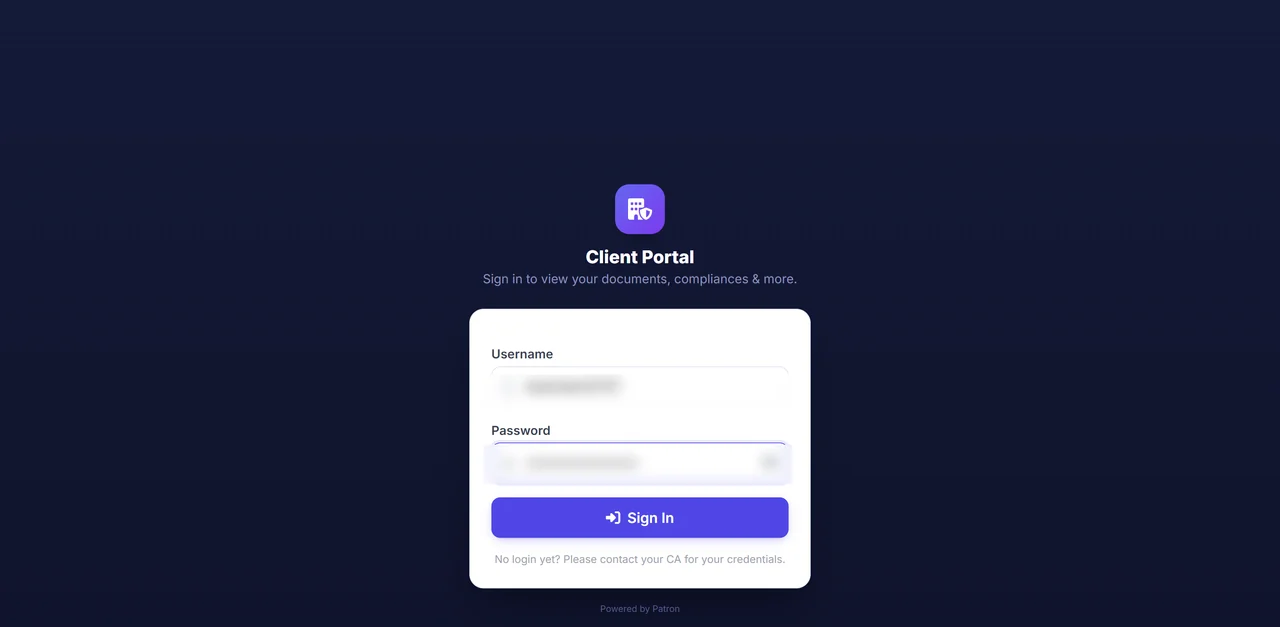
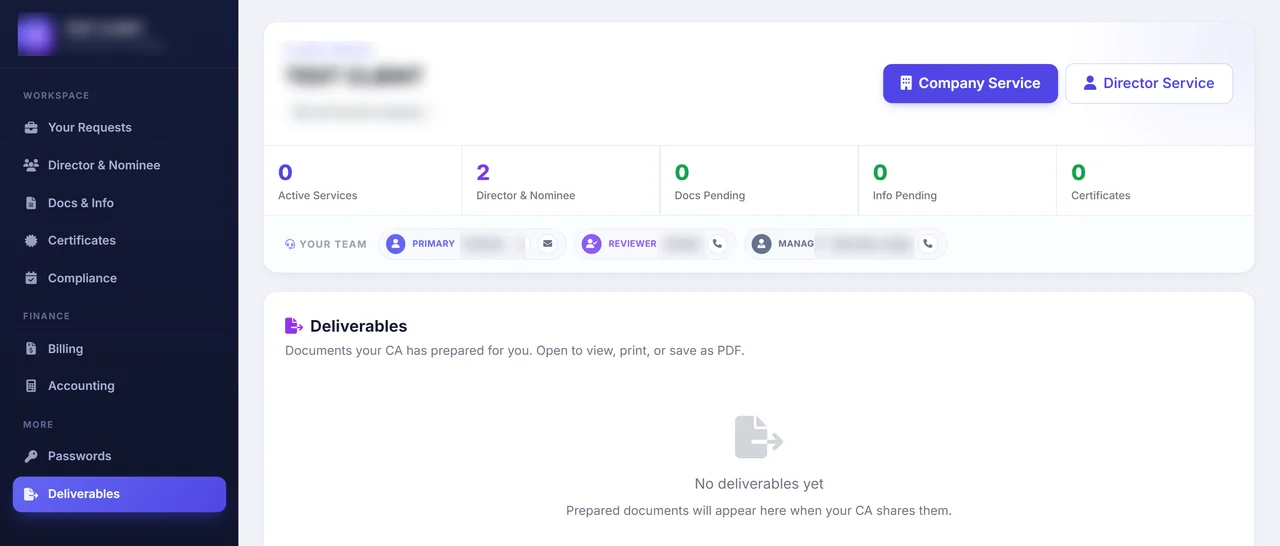
Everything happens in one secure login. You can see your active services, the Patron team on your account, and anything still pending. Once you raise a request, it moves through the same clear steps every time, so you always know exactly where your work stands.

Secure client portal login screen
1

Sign in securely

Your books, documents and requests all sit behind one private, password protected login. The team handling your account is shown on screen, so nothing sensitive ever needs to travel over email or WhatsApp.

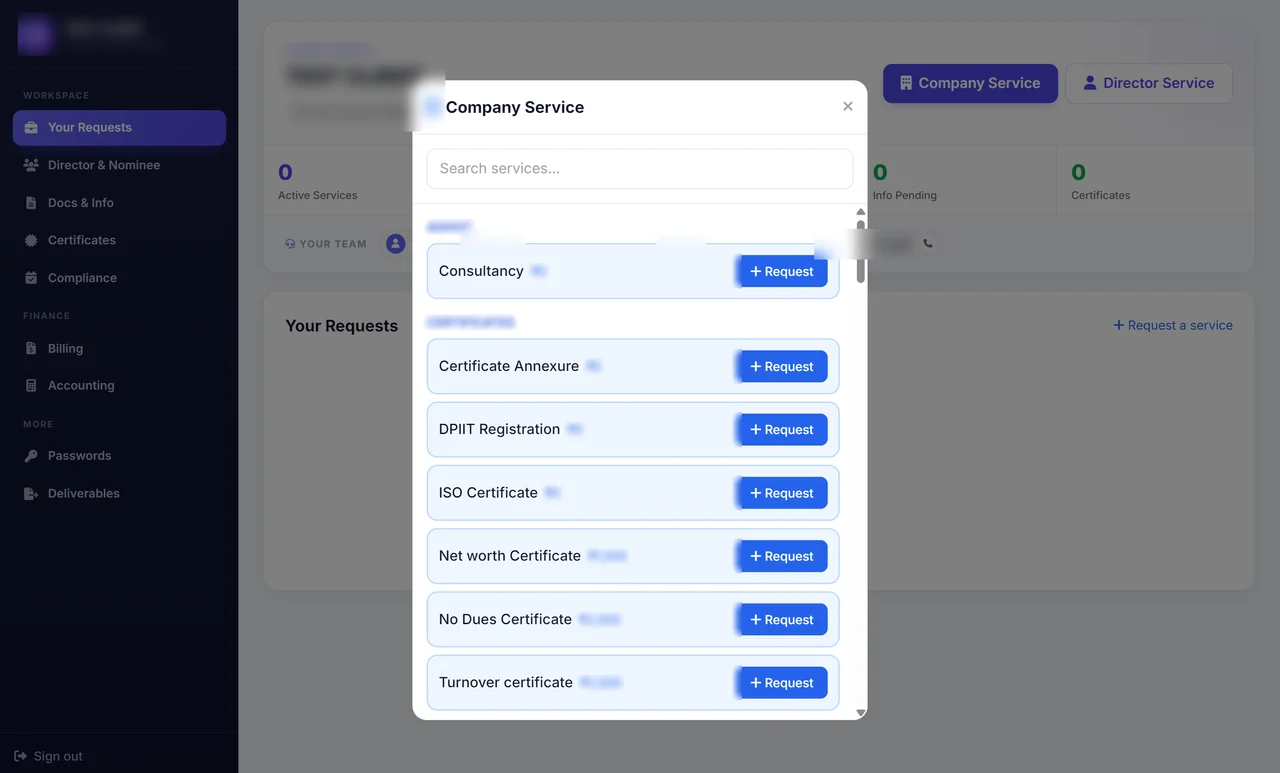
Service catalogue inside the client portal
2

Raise your request

Choose the service you need from the menu inside the portal, where the price is shown before you go ahead. Your request is logged the moment you send it, with no phone calls or reminder emails to wait on.

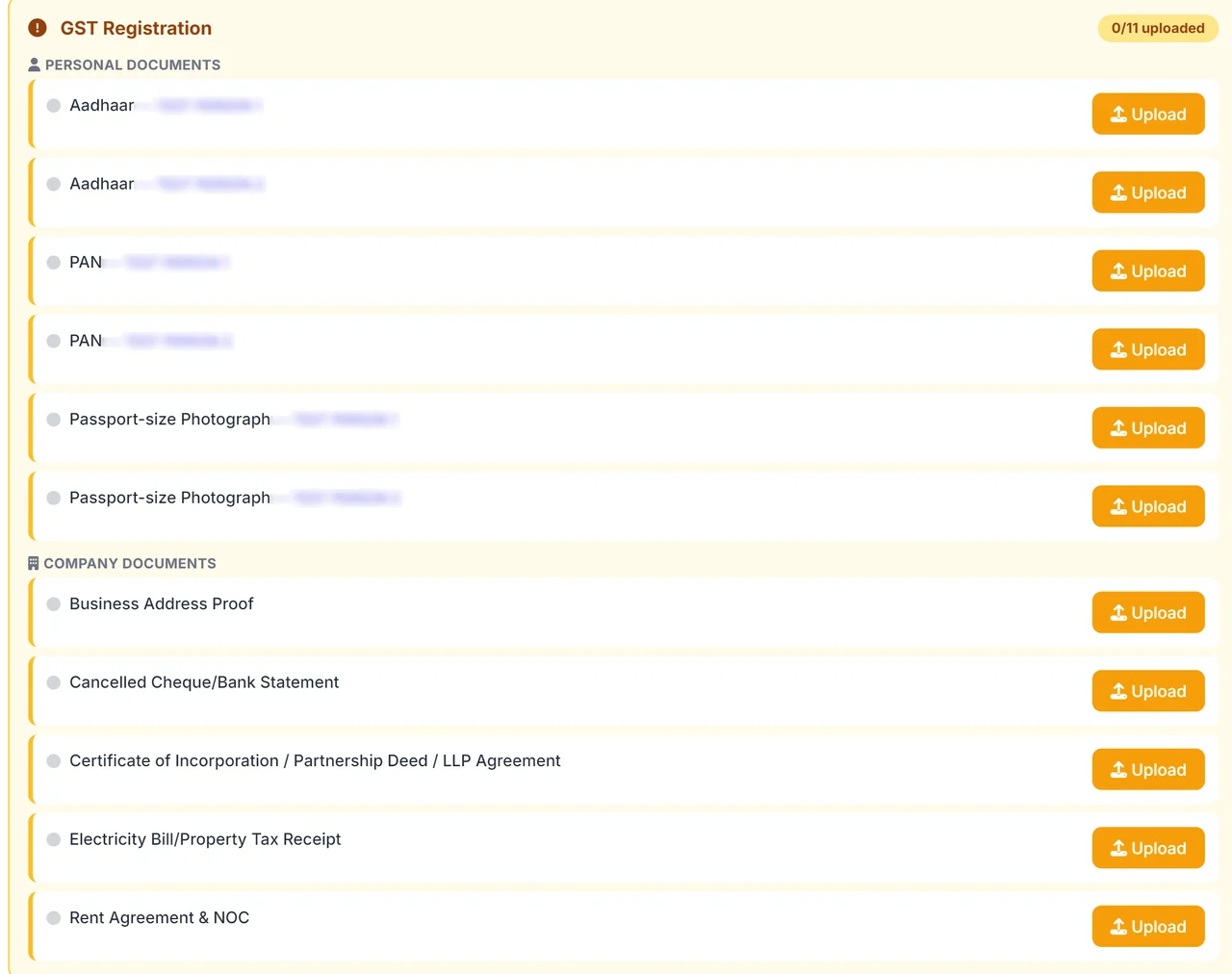
GST registration document checklist in the client portal, with an upload button beside each item
3

Share what the service asks for

For every service, the portal lists the exact documents it needs, each with its own upload button. The example shown here is the GST registration checklist. When a service needs nothing from you, it simply asks for nothing.

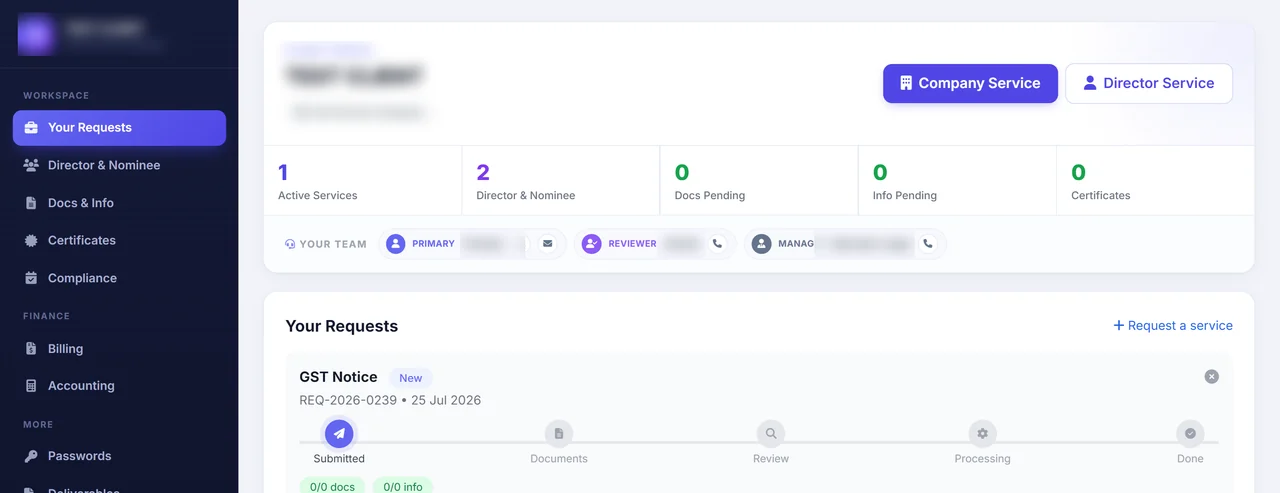
Live request tracker inside the client portal
4

We review, prepare and file

Once your documents are in, your team checks them, prepares the work and files it for you. A live tracker shows each stage as it happens, from review to processing to done, so you never have to ask where things stand.

Deliverables area of the client portal
5

Collect your finished work

Every completed return, computation and certificate is placed in your Deliverables area. You can open, print or download any of them as a PDF whenever you need a copy.

Common Accounts Receivable Outsourcing Challenges and How We Solve Them

ChallengeImpactHow Patron Accounting Solves It
Receipts land in the bank without invoice allocationCash sits on-account, ageing looks worse than it is and collectors chase invoices already paid.Patron allocates every receipt against its invoice within the settlement cycle, clearing on-account balances.
Credit notes and disputes left unlogged against open invoicesThe debtor ledger overstates receivables, so provisioning and cash forecasts both run on wrong figures.We log each dispute and credit note against the invoice, keeping the receivable balance clean.
No ageing discipline, so overdue accounts slip past 90 daysOlder debt turns doubtful, forcing bad-debt provisions that hit the profit and loss.We report ageing by bucket and act early using the AR ageing report.
Receivables concentrated in a few large customersOne delayed payer starves working capital and stalls the firm's own supplier payments.Our team flags concentration, sets a credit limit per account and reports exposure every week.
Invoices raised before delivery obligations are metReceivables recorded for work not yet earned distort days sales outstanding and reported profit.We tie invoicing to fulfilment evidence so each receivable reflects genuinely earned revenue.

Accounts Receivable Outsourcing Fees

Fee ComponentAmount
Starter — routine monthly invoicing and follow-ups for one entityINR 7,499 per month
Excl. GST & Government Charges
Growth — higher invoice counts, more debtors or added collection cyclesOn quote
Managed — multi-entity receivables with custom ageing and reporting cadenceOn quote

Our entry receivables plan covers one entity with routine monthly invoicing and follow-ups. What lifts the fee is the count of invoices raised each month and the depth of collection chases, and our guide to reducing days sales outstanding shows why. Accounts receivable outsourcing is scoped to your volumes, so ask for a quote. Book a scope call on +91 94594 56700.

Fees exclude GST and government charges. Final quote confirmed after a scoping review.

All fees and charges listed are indicative only and do not constitute a binding offer. Final amounts may vary depending on the volume of work and the complexity involved.

Professional accounting and compliance charges are scoped to your number of entities, funding stage and monthly transaction volume, and are separate from statutory and government charges. Contact us for a detailed, fixed quote.

Get a free Accounts Receivable Outsourcing consultation - Call +91 945 945 6700 or WhatsApp us. No-obligation assessment.

Accounts Receivable Outsourcing Compliance Calendar 2026

ComplianceDue DateApplies To
TDS / TCS deposit (Challan ITNS-281)7th of every month (30 April for March)Every business that deducts tax at source on salaries, rent, contractor or professional fees
GSTR-1 (outward supplies)11th of every month for monthly filersGST-registered businesses filing monthly returns
GSTR-3B (summary return and tax payment)20th of every month for monthly filersGST-registered businesses filing monthly; QRMP filers pay via PMT-06
Advance tax first instalment (15%)15 June 2026Companies, firms and individuals with a tax liability of Rs 10,000 or more
Tax audit report (Form 3CA/3CB-3CD)30 September 2026Businesses crossing the Section 44AB turnover threshold
Annual GST return GSTR-9 and reconciliation GSTR-9C31 December 2026GST-registered businesses above the annual-return and audit thresholds

In receivables the dates that bite are the 11th GSTR-1, which fixes your customers' input credit, and the 20th GSTR-3B. Advance tax on collections follows on 15 June. Patron runs accounts receivable so invoices, credit notes and GST output reconcile before each filing. Talk to a Patron CA on +91 94594 56700 about your due dates.

Key Benefits

Why Professional Accounts Receivable Outsourcing Matters

Invoices that close at zero

Your customer account closes at nil, because we book any gap between the bill and what a platform paid.

  • gateway, UPI and marketplace settlements broken from gross to net
  • difference booked as commission, charge or tax withheld
  • Otherwise collectors chase stub balances on customers who have paid

A disputed and undisputed split

You get a debtor list split into what is genuinely disputed and what is simply unpaid, from balance confirmations.

  • balance confirmations produce the undisputed versus disputed classification
  • receivables ageing schedule built on that split, not memory
  • Without it, ageing schedule reconstructed from memory at year end

Exposure controlled at order stage

We check new orders against the customer's credit limit and overdue balance before they are accepted, so a slow payer stops accumulating.

  • orders checked against credit limit and overdue balance before acceptance
  • a slow payer stops accumulating exposure
  • Without it, exposure argued after delivery instead of before

Every invoice backed by proof

Each invoice travels with the purchase order, delivery challan or completion certificate behind it, and a valid IRN where e-invoicing applies.

  • invoices raised only against PO, contract or milestone with delivery evidence
  • a validated IRN attached where e-invoicing applies
  • Without it, a documentation hunt gives the customer a reason to delay

Ageing that reflects due dates

Your ledger is aged from due date rather than invoice date. A bucket then shows which accounts are late under their own terms.

  • open invoice listing re-aged from due date, not invoice date
  • late accounts identified under their own credit terms
  • Without it, real defaulters hidden among customers on long terms

A logged history per account

We record every statement, reminder, call and escalation against the invoice it relates to, with disputes tagged as disputes.

  • fixed dunning sequence, every contact logged against the invoice
  • disputes recorded as disputes on the account
  • Without it, escalation with no evidence of prior follow-up

Why Businesses Choose Patron Accounting for Accounts Receivable Outsourcing

Five things a founder can check before handing over the books. Each is a claim with the proof behind it.

Collections chased by ageing bucket with named owners

Across 15+ years and 3,000+ businesses, we work each debtor by ageing bucket with a named owner per account, so the oldest invoices are chased instead of rolling forward.

TDS credits reconciled to Form 26AS

We reconcile the TDS your customers deduct against Form 26AS as a matter of routine, part of the 25,000+ filings completed, so short-paid invoices are matched and recovered.

Invoicing and dunning automated inside your ledger

We build inside the platform already running your books, whether Zoho Books, Xero, Tally Prime or Odoo, setting invoicing and dunning reminders to run inside the ledger you already use.

Debtor ageing and DSO reported every month

Every month you receive a debtor ageing report and a DSO read you can act on, delivered on the cadence behind our 4.9 star Google rating.

AR engagements among 3,000+ businesses served

These receivables engagements sit among the 3,000+ businesses served since 2019 across our accounting and bookkeeping services. Our in-house team of CAs and CS brings 15+ years of experience.

Figures reflect Patron Accounting LLP engagements since 2019. Scope and turnaround are confirmed in your engagement letter.

Internal Collections vs Managed AR

CriterionInternal CollectionsManaged AR
Monthly costStaff salaries whether or not receivables need active chasingA fee that tracks ledger size, no idle capacity
Cash flow impactFollow-up often lapses when staff juggle other duties, lifting DSOStructured dunning shortens days sales outstanding and frees working capital
Follow-up disciplineReminders depend on one person remembering to send themA logged reminder cycle runs on every open invoice
ScalabilityMore customers mean more chasing than a small team can coverCapacity grows with the debtor book without new hires
ContinuityCollections stall when the person handling them is awayChasing continues through leave and staff changes
Dispute handlingDisputes sit unlogged until someone follows upDisputed and undisputed balances are split and tracked to closure
VerdictA business with a small, loyal customer base can collect in-house. Where late payment strains cash, accounts receivable outsourcing tightens follow-up and lowers DSO, as reducing days sales outstanding shows.

Legal and Regulatory Framework for Accounts Receivable Outsourcing

Receivables are kept to a plain standard - a sale is recognised when the invoice that evidences it is validly raised - and that standard is made binding through the CGST Act's invoicing rules and the Companies Act's books. Get the invoice right and the debtor, the revenue and the output tax all agree; get it wrong and all three drift.

That is why the invoice, not the collection call, is the compliance event. A tax invoice has to issue on time and in the prescribed form, and above the turnover limit it must carry an IRN before it is valid. The Accounts Receivable Aging Schedule then reads off that clean ledger, and Days Sales Outstanding (DSO) measures it. Accounts receivable outsourcing keeps the debtors ledger against the provisions below.

  • Section 31, CGST Act 2017 with Rule 46 and 48A tax invoice must issue within the prescribed time and, above Rs 5 crore turnover, carry an IRN generated through the e-invoice portal.
  • Section 35(1), CGST Act 2017Accounts of outward supplies and output tax are kept at the principal place of business and reconciled to the debtors ledger.
  • Section 128, Companies Act 2013 and Section 44AA, Income-tax Act 1961The double-entry obligation behind every receivable applies whether the entity is a company or a non-corporate business - beginning with Accounts Receivable.
  • Section 44AA, Income-tax Act 1961Books are maintained once receipts cross the prescribed limits, so recognised income can be substantiated against what was invoiced.
  • Rule 3(1), Companies (Accounts) Rules 2014The audit trail stays enabled, so a credit note or a written-off balance is always logged. A months-behind ledger is first restored through catch-up bookkeeping.

Official sources: Ministry of Corporate Affairs · Income Tax Department · GST Portal · Startup India (DPIIT)

Free tool: ECL Estimator (Ind AS 109)

Estimate expected-credit-loss provisioning on your trade receivables.

Compute Expected Credit Loss

Pick your approach — General for loans and debt instruments, or Simplified for trade receivables. The calculator applies the Ind AS 109 methodology and generates a journal entry plus disclosure narrative.

Asset Classification
Stage Classification
Stage 1: No SICR — recognise 12-month ECL. Interest on gross carrying amount.
ECL Components (PD × LGD × EAD)
Outstanding gross exposure including accrued interest.
12-month PD for Stage 1 (typical 0.5-3% for investment-grade).
Expected loss as % of EAD after collateral recoveries (typical 30-60% unsecured).
Time-value discount factor as % of nominal (e.g. 95 for 5% discount). Blank = none.
Provision Matrix — Trade Receivables Aging

Enter outstanding receivable amounts in each aging bucket. Default rates are illustrative — derive from your historical credit loss experience adjusted for forward-looking information per Ind AS 109 Para 5.5.15.

Current (Not Due)
1–30 days past due
31–60 days past due
61–90 days past due
91–180 days past due
181–365 days past due
> 365 days past due
Left: bucket name. Centre: outstanding ₹. Right: default rate %.
Expected Credit Loss
Calculation Basis
Journal Entry — Year-End

Open the full calculator ↗

What are accounts receivable management services?

Accounts receivable management services cover invoicing, credit checks, customer ledger maintenance, payment follow up, dispute resolution and ageing reporting, handled by an external team on your behalf. The scope usually starts at invoice creation and ends at cash application in the books, with escalation of overdue accounts run to a written policy agreed with you before the engagement begins.

How long does handing over a debtor ledger take?

A standard handover takes 10 to 15 working days from data access to the first collection call. Week one is spent validating the ageing report, customer master, credit terms and open disputes, and week two on agreeing the follow up calendar and escalation matrix. Ledgers with unreconciled part payments can add another week to the cut over.

Will your team contact customers directly for payment?

Yes, follow up is done in your company's name from a dedicated email ID and phone line that you control, using a script and escalation ladder approved by you. Reminders begin before the due date rather than after it, and any dispute, discount request or commercial concession is routed back to your sales team instead of being settled by us.

How do you deal with invoices more than 180 days overdue?

Invoices past 180 days move to a separate recovery track with a documented reminder trail, a signed reconciliation statement sent to the customer and a written demand before any legal step is considered. We also flag them for provisioning so the balance sheet shows realistic receivables, and we build the evidence file you need if the amount is later written off.

What does accounts receivable outsourcing cost in India?

Managed receivables typically cost Rs 15,000 to Rs 40,000 a month for a ledger of up to 200 active customers, with larger books priced on invoice volume and number of collection touchpoints. Pricing is a fixed monthly retainer and not a share of collections, so there is no incentive to push your customers into terms your sales team never agreed.

Do you reconcile customer receipts against GST invoices and TDS deducted by clients?

Yes, every receipt is matched to the invoice and any short payment is identified as TDS, bank charges or a commercial deduction, with TDS claims verified against Form 26AS each quarter. Customer wise reconciliation statements are shared monthly, so unexplained short receipts do not sit in the ledger until the year end audit finds them.

Can a deduction be claimed for invoices that are never recovered?

A bad debt is allowed as a deduction under the Income Tax Act once the amount is actually written off in your books and was earlier offered as income. The GST already paid on that invoice cannot be recovered, because the law does not permit a credit note purely on the ground that a customer has failed to pay.

What receivables reports are provided each month?

You get an ageing analysis by bucket, days sales outstanding, collection efficiency against target, a customer wise dispute log and a rolling 13 week cash inflow forecast, delivered within 5 working days of month end. Written commentary explaining which accounts moved and why is included, so the numbers can go straight into your management reporting pack.

What is the AR process in an MNC?

In an MNC, accounts receivable runs as a defined order to cash cycle: customer master and credit limit setup, invoicing, cash application against open items, dunning reminders at fixed intervals, dispute and deduction management, and monthly ageing with days sales outstanding reported to the controller. Every step has a named owner and a service level, and overdue accounts escalate on a documented ladder instead of ad hoc calls.

Can you raise e-invoices and e-way bills as part of the receivables process?

Yes, e-invoice generation with an IRN and QR code plus e-way bill creation are included where your turnover crosses the e-invoicing threshold notified under GST. The document is raised from your own accounting software, the IRN is stored against the sales entry, and the invoice register is reconciled with the portal every month so nothing is missed.

Quick Answers

The collection ledger sets the rhythm for the week straight after month end. Invoices raised during the period are frozen, receipts are allocated against them, and the receivable cycle only restarts once every customer account opens the following month on a balance that both sides accept. Reminders then go out on set.

Accounts Receivable Outsourcing Deadlines You Cannot Afford to Miss

TDS / TCS deposit (Challan ITNS-281) is due 7th of every month (30 April for March). GSTR-1 (outward supplies) is due 11th of every month for monthly filers. GSTR-3B (summary return and tax payment) is due 20th of every month for monthly filers. Patron tracks each against your books so nothing is reconstructed after the fact. Call +91 94594 56700 to set up a filing-reminder schedule.

Start Your Accounts Receivable Outsourcing Services with Patron Accounting

Collections work gets mistaken for recovery work. A recovery agent arrives after the relationship has broken. This sits before that, inside the ordinary rhythm of invoicing and reminders, where a balance is still a conversation between two finance teams rather than a dispute anyone has escalated. Your customer stays a customer throughout.

Accounts receivable services turn next month's expected cash into a figure you can plan against, not a hope. Each account carries a promised date, a reason where there is a delay, and a documented next action, so the forecast you give your board is built from commitments rather than averages.

Whoever holds your debtor ledger walks us through it as it stands. We work out how much is genuinely collectable, and which balances are disputed rather than simply old. We also settle what your team may promise, and whether getting older periods closed off is needed too.

Book a Free Consultation - No Obligation.

Explore Our Accounting Services

Related services our CA-led team delivers for businesses across India.

Reviewed by the CA & CS Team, Patron Accounting LLP
ICAI & ICSI registered  ·  15+ years in Indian accounting & compliance  ·  Last reviewed 23 July 2026  ·  Next review 23 October 2026