


Talk to an Expert
Talk to an Expert ✆ +91 945 945 6700
500+ stock audits completed

Stock Audit/Inventory Audit in Mumbai: Services, Scope and Fees

Reviewed by CA and CS Team, Patron Accounting LLP ICAI & ICSI Registered| 15+ Years Experience| Last Updated: 20 August 2026 Verify Credentials →

Ownership Split Settled Across Shared Godowns: An inventory audit in Mumbai establishes which zones are yours before anything is added up, so the figure reaching a lender is your position and nobody else's.

Corridor Transit Confirmed Against Gate Records: Consignments moving through the port corridor assigned on evidence, so material in a freight station is claimed by exactly one side.

A Single Consolidated Position for Mumbai and Thane: Sites across the belt counted to one cut-off and reported together, rather than as separate statements taken on different days.

Stock audits across Mumbai and the estates around it.

15+ YearsIndustry Experience
CA & CSCertified Experts
4.9
Based on 500+ reviews

Get Free Consultation

Talk to a CA/CS expert today

🇮🇳 +91

Our team will get back to you shortly. No spam.

What Clients Say

Hear how teams across industries use Patron to save time, cut costs, & stay in control.

Fetching latest Google reviews…
Sunny Ashpal
Sunny Ashpal
Director - Demandify Media

I've had an outstanding experience working with Patron Accounting. Their professionalism, attention to detail, and timely communication made the entire process smooth and stress-free. Highly recommended for anyone seeking reliable and knowledgeable financial guidance!

Anjanay Srivastava
Anjanay Srivastava
Founder - Hunarsource Consulting

I'm glad that I was able to connect with Patron. They took the minimum time to do the calculations based on the details provided by me and were really impressed by their acumen. And it's not expensive at all. Good guidance while filling was given as well.

From the very beginning, their approach has been highly professional, prompt, and solution-oriented. Every interaction reflected their deep knowledge, attention to detail, and a genuine willingness to help. It gave me immense confidence and peace of mind.

Patron Accounting gives the best service related to all account handling of our firm. I am blessed and extremely happy that Patron Accounting assigned Anu to take care of our company's needs. She files all returns timely and is most kind and respectful towards us.

I got financial services from them for my private limited company. They are having good and qualified staff to provide services in a professional manner which is beneficial for me.

I have been taking services of Patron Accounting from 5 years and found them highly professional and the best people for all taxation related work be it individual or company services. Highly recommended.

500+ stock audits completed

Rated 4.9 on Google across 13 reviews.

Talk to an Expert
500+Stock Audits CompletedCounts run across borrower sites and cities.
15+Years ExperienceICAI and ICSI registered, in Indian accounting and certification.
CA-SignedAudit ReportsSigned by a Chartered Accountant in practice, not a checker.
4.9★Google RatingAcross 13 verified Google reviews.
UDIN on Every ReportVerifiable against the ICAI record before a lender relies on it.
SSL SecureYour financial and business data is fully protected.

Counting Stock Across Mumbai

📌 TL;DR - Stock Audit in Mumbai Services at a Glance

A stock audit in Mumbai is usually performed outside the city, at Bhiwandi sheds, Taloja chemical stores or yards facing Nhava Sheva. Zone ownership in shared warehousing is established first, then licensed chemical stock and bonded lots are counted on their own terms. Movement within Maharashtra carries an e-way bill only above 1 lakh rupees, which shapes the documentation available to examine. Suited to borrowers whose registered office holds no stock.

A stock audit in Mumbai usually happens somewhere other than Mumbai. The registered office is in the city, and the stock is in Bhiwandi, at Taloja, or in a yard facing the port. Island-city premises hold samples and paperwork; the funded inventory sits in the warehousing belts outside, which is where the count has to go and where the day is planned around access rather than around volume.

Bhiwandi Godowns Where Most of the Stock Sits

Bhiwandi is the warehousing floor for the whole Mumbai market, and a single shed there commonly holds stock belonging to several companies at once. The first task is not counting but partition: establishing which racks belong to the borrower, which belong to other principals, and which are held on the operator's own account. Stock audit services in Mumbai that skip this step produce a total nobody can reconcile to a balance sheet.

Chemical Stock Held Under Licence at Taloja

The Taloja MIDC belt holds solvents, intermediates and packaged chemicals under storage licences that govern quantity, segregation and access. Counting there means working inside those conditions: drums verified by identity and weight rather than opened, tank contents taken from dip and density records, and hazardous zones entered only under the site's own permit system. The licence itself is evidence, because it caps what may lawfully be held.

Goods Facing the JNPT Corridor

Stock moving to and from Jawaharlal Nehru Port at Nhava Sheva spends part of its life in transit, in a container freight station, or under customs bond. A stock auditor in Mumbai has to fix ownership and cut-off across that corridor: goods cleared but not received, goods received but not yet entered, and bonded material that is physically present while duty remains unpaid. Each is treated differently in a stock audit, and confusing them is the usual source of a variance that is not a variance.


What a Stock Audit Involves

An inventory audit in Mumbai is scoped by how it usually defined by warehousing rather than by manufacturing, and the first question is always ownership rather than quantity. An engagement covers the zones inside a shared facility that belong to the borrower, plus any licensed or bonded material held separately. The boundary is title and presence. The condition of the building, its licences and its operator are not being audited here.

01

A Count Inside a Bhiwandi Third Party Warehouse

In a Bhiwandi shed the coverage is defined by zone allocation before anything is counted, because one building routinely holds stock for several principals. In scope are the racks, floor stacks and staging areas allocated to the borrower under the storage agreement. Out of scope is everything allocated to other principals and the operator's own trading stock, which is identified and left alone. A total taken across the whole shed would reconcile to nobody's balance sheet.

02

How Port-Facing Stock Is Treated at the Count

Material moving through the Nhava Sheva corridor is separated by customs status before quantity is recorded. Bonded lots with duty unpaid are reported apart from free stock, because they carry an obligation as well as a value. Goods in a container freight station awaiting clearance are treated as in transit and assigned by the terms of sale. Consignments cleared but not yet received are documented rather than assumed onto either side.

03

How Principal-Owned Stock Is Reported Separately

Where the borrower is itself holding goods for others, that material is counted, identified and reported as a separate line outside the borrower's own position. The same applies in reverse to borrower stock sitting at a third party. The purpose is that the lender reads one figure representing what the borrower actually owns, with everything else visible but excluded, rather than a single warehouse total that mixes several parties together.

Key terms on this page:

  • Third-party held stockGoods stored at an operator's facility while owned by the principal.
  • Bonded stockImported material under customs control with duty unpaid.
  • Zone allocationThe agreed areas of a shared shed assigned to one principal.
Stock Audit in Mumbai
Counting stock at a Bhiwandi distribution godown between inbound containers and outbound loads

Who We Count For in Mumbai

A stock auditor in Mumbai meets three kinds of borrower here. They are separated by where they store rather than by what they sell. Registered addresses sit inside the city while the goods sit well beyond it, and that split decides what each reader needs.

Distributors Storing at Bhiwandi and Vasai

Distributors holding space in a shared shed carry the ownership problem before the counting one. This reader needs its own allocation established against the storage agreement and everything else excluded, because a lender reading a whole-building total would be reading several companies' stock at once.

Chemical and Process Units at Taloja

Units holding solvents, intermediates and packaged chemicals operate under storage licences that govern access and quantity. The reader is accustomed to working inside a permit system and expects the count to do the same. Material segregated pending clearance is the population this group most needs reported separately.

Importers Holding Stock Along the JNPT Corridor

Importers carry stock at several customs statuses at once: bonded, cleared, and in transit between the two. This reader's exposure is that duty-unpaid material looks like free stock on a shelf. Businesses running the same pattern at another port often commission the same work in Kolkata.

Industrial Areas We Cover Around Mumbai

AreaWhat We Cover There
Bhiwandi and Vasai Warehouse CoverageA stock auditor in Mumbai covers these estates on one engagement. Shared warehousing where the first task is establishing which zones are yours under the storage agreement before a single carton is counted.
Taloja and Turbhe Industrial CoverageLicensed chemical and process sites, worked inside the permit system, with material held pending clearance recorded apart from saleable stock.
Port-Facing and Bonded Locations Around JNPTYards and container freight stations where customs status is settled before quantity, since duty-unpaid lots carry a liability alongside whatever they are worth.
Our Process

How the Count Runs

Each phase is fixed before the next begins, so a difference found on site can be traced back to the point it arose.

Step 1

Counting Between Bhiwandi Dispatch Cycles

Work is timed between outbound loading cycles, since a shared shed will not stop despatching for a single principal. Movements that cannot be paused are documented at the point they happen, signed by the operator, and reconciled against the count afterwards.

Counting Between Bhiwandi Dispatch Cycles
Step 2

Access Timing Around Thane Belt Traffic

Arrival is planned around congestion on the approach roads, because a team reaching a shed at midday has already lost the working window. Multi-site engagements sequence the furthest location first for exactly the same reason.

Access Timing Around Thane Belt Traffic
Step 3

Import Stock Held Under Bond Counted Separately

An inventory audit in Mumbai counts bonded material against the bond register in its own pass, apart from free stock. Customs status is established before quantity, since duty-unpaid goods are physically present and not freely available.

Import Stock Held Under Bond Counted Separately

Stoklenz Crews in Mumbai

Play the interactive demoWalk a count through Stoklenz, scan by scan

Run your next count on Stoklenz

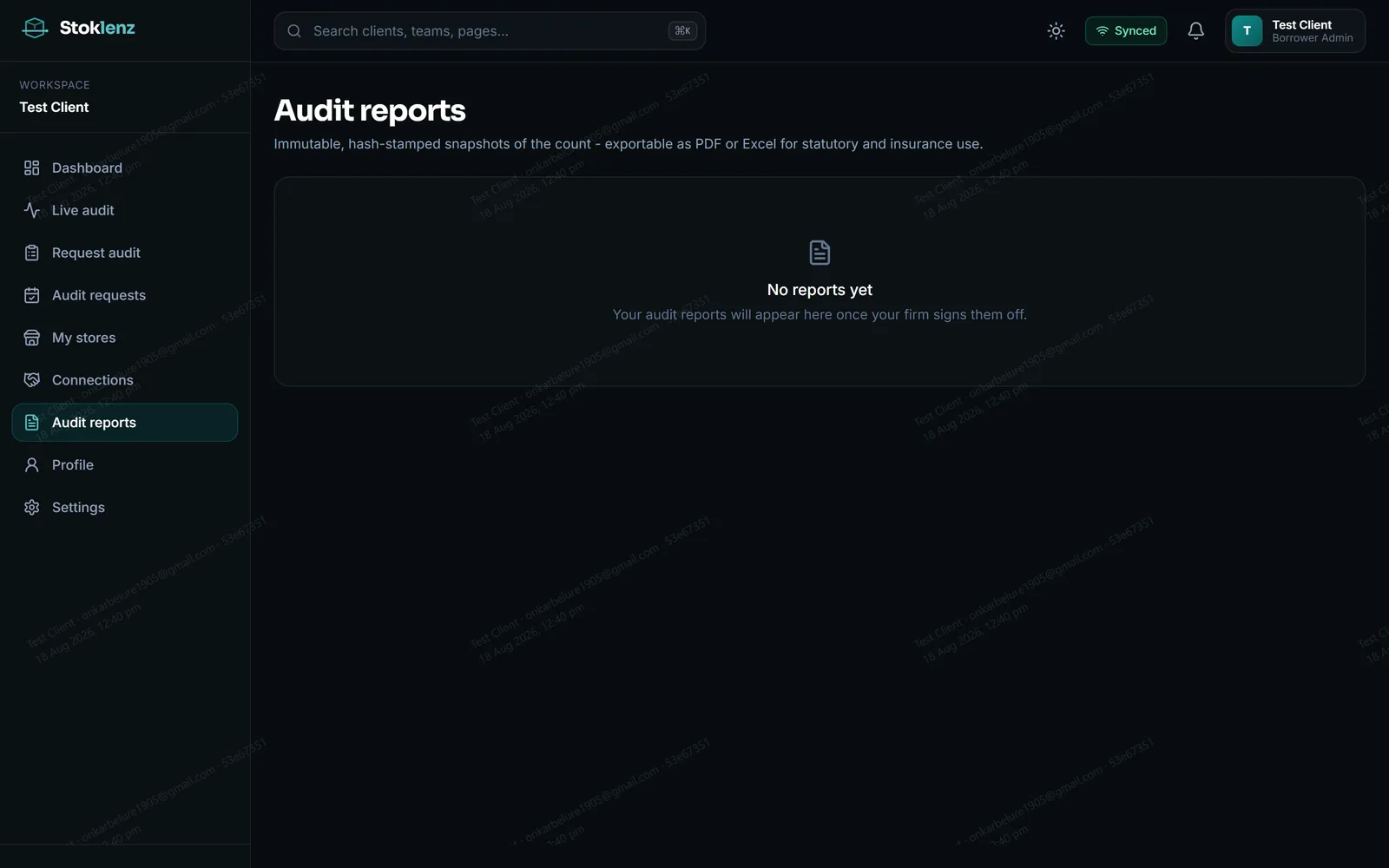
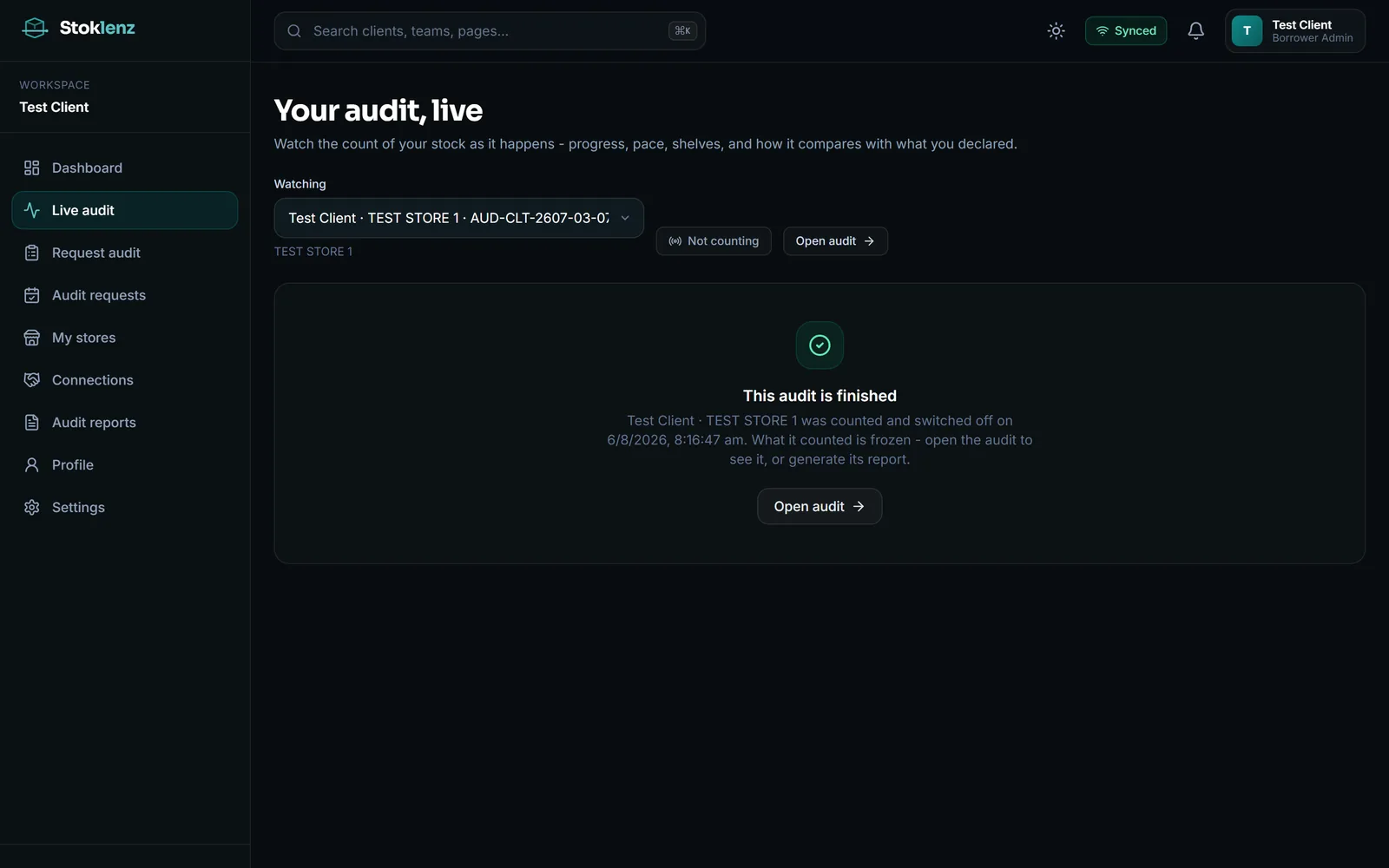
Barcode counting against live book stock, geo-fenced attendance and a variance schedule that comes out of the captured data. Send your site list and the scope comes back against it.

Explore Stoklenz →
Stoklenz ground force: crew attendance captured against the site coordinates at sign-in, not written on a sheet afterwards01

Attendance Pinned to Each Bhiwandi Bay

An inventory audit in Mumbai records sign-in against the specific bay rather than the building, which matters where one shed holds several principals.

Audit reports: working papers and variance schedules produced from the captured count, not re-keyed from it02

Every Bhiwandi Bay Consolidated for Head Office

Bay-level results roll into a single position as each closes, so a distributor with space across several sheds reads one figure.

Live audit: the count as it happens on the floor, rather than a status typed up afterwards03

Ownership Tags Recorded Across Third Party Storage

Each zone is captured against its owner at the point of count, which is what keeps another principal's pallets out of the reported position.

Bhiwandi Godowns, 3PL Stock and JNPT Goods in Transit

IssueWhat It Does to the Count
Stock Held for Principals Across Bhiwandi GodownsAn inventory audit in Mumbai that counts a whole shed produces the sum of several principals' goods, which reconciles to nobody's balance sheet.
Goods in Transit on the JNPT CorridorConsignments sitting in a container freight station at the cut-off, claimed by neither the importer's records nor the supplier's, and evidenced by neither.
Rack Access Inside Shared WarehousingUpper racking that can only be reached with the operator's equipment and operator's time, which the count has to be scheduled around rather than assume.

What Drives the Fee in Mumbai

What Moves the FeeWhy
Number of Bhiwandi Bays in ScopeAn inventory audit in Mumbai prices on bays rather than buildings, since each allocated zone carries its own boundary to agree and its own records to reconcile.
Travel Between Taloja, Turbhe and VasaiSites spread across the belt are hours apart in working-day traffic, and the schedule has to absorb that before any counting begins.
Dispatch Windows That Force Night CountingShared warehousing that will not pause outbound loading pushes work into night hours, which changes both the schedule and the crew arrangement.

All fees and charges listed are indicative only and do not constitute a binding offer. Final amounts may vary depending on the volume of work and the complexity involved.

Get a free Stock Audit in Mumbai consultation - Call +91 945 945 6700 or WhatsApp us. No-obligation assessment.

Key Benefits

What the Count Gives You

Ownership Split Settled Across Shared Godowns

An inventory audit in Mumbai establishes which zones are yours before anything is added up, so the figure reaching a lender is your position and nobody else's.

Corridor Transit Confirmed Against Gate Records

Consignments moving through the port corridor assigned on evidence, so material in a freight station is claimed by exactly one side.

A Single Consolidated Position for Mumbai and Thane

Sites across the belt counted to one cut-off and reported together, rather than as separate statements taken on different days.

Counts Run in Mumbai

500+ stock audits completed.

  • Counts Completed Across Mumbai and Thane
  • Bhiwandi and Taloja Sites Reached
  • Turnaround Across Bhiwandi Bays

Across engagements run by the Patron team. The figure is counted from completed engagements only, and it is restated when it changes rather than rounded up and left. Scope for any one count is still agreed against your own site list.

Why Businesses Choose Patron Accounting

Crews Who Work Around Bhiwandi Dispatch Hours

An inventory audit in Mumbai is fitted between outbound loading cycles, since a shared shed will not pause despatch for one principal's count.

Principal Stock Split Out Before the Report Goes Out

Zone allocations are agreed from the storage agreement first, so the position reaching a lender is the borrower's own and not the building's total.

Godown Access Arranged Before the Crew Arrives

Entry, rack access and operator equipment are arranged in advance, because a team standing at a gate waiting for permission has lost the working window.

A Count We Have Run in Mumbai

Principal Stock Separated Across Two Bhiwandi Bays

2 bays · multiple principals · reported per principal

A third-party logistics operator at Bhiwandi

  1. 01The challenge

    The facility held for several principals across two bays. Each principal's lender needed a certified position for that principal alone, and the WMS reported the facility as a whole.

  2. 02What we did

    Stock was verified and reported per principal rather than as a facility total, with mixed locations resolved pallet by pallet on the floor.

  3. 03What the count found

    Stock belonging to two principals had been stored in shared locations without physical segregation. Neither position could have been certified from the system alone - only physical verification could separate them.

  4. 04What changed

    Each principal received a certified figure its own lender could work from, and the operator introduced principal-level location discipline in both bays.

Import Stock Counted Before a Duty Assessment

counted ahead of assessment · reconciled to bills of entry

An importer holding stock near JNPT

  1. 01The challenge

    An assessment was due and turned on what was physically held. The ledger position had never been reconciled to the customs record consignment by consignment.

  2. 02What we did

    Stock was counted ahead of the assessment date and reconciled to the bills of entry behind each consignment rather than to the ledger in total.

  3. 03What the count found

    Quantities agreed to the customs record at consignment level. Where the ledger differed, the difference was in internal transfers between the bonded and duty-paid holdings rather than in the imported quantity itself.

  4. 04What changed

    The company went into the assessment with a reconciliation tied to the bills of entry, which is the record the assessment actually tests.

How quickly can a stock audit start in Mumbai?

For a single site in Mumbai a count can usually be scheduled within a few working days of the scope being agreed. Multi-site engagements take longer to plan because sites are visited in sequence. Bhiwandi warehousing and JNPT-linked bonded stock are usually the two scopes that matter.

What does a Mumbai stock audit cost?

Mumbai cost is driven by the number of godown units and by traffic, not by floor area. Bhiwandi is around 40 km from the southern business district and the journey is unpredictable, so an early cut-off and a realistic travel allowance matter more than the size of any single shed.

Which industrial areas around Mumbai do you cover?

Coverage across Mumbai includes Bhiwandi, Taloja, Turbhe, Vasai and the JNPT-facing warehousing corridor. Scope is agreed against your actual site list rather than a city boundary, because most borrowers hold stock at more than one location and the outlying estates take longer to reach than a central address suggests.

Which sectors do you audit most often in Mumbai?

Mumbai work is dominated by distribution, pharma and imported goods. Very little of it is manufacturing. The count is therefore about godown control, batch and expiry on the pharma side, and establishing what is genuinely yours among stock held by agents and freight operators.

Can you count stock at several Mumbai locations on the same date?

Yes, and in Bhiwandi it is usually essential. A single borrower often holds stock across several godown units in the same compound, registered under different names. Counting them on one date and one cut-off is the only way to stop stock being presented twice across adjacent sheds.

Do you audit stock held at third-party warehouses in Mumbai?

In Mumbai this is the main scope rather than an add-on. Most Bhiwandi and Vasai stock sits with a 3PL or C&F agent rather than on your own premises, so the count runs at the provider site and is reconciled to both the provider record and your books.

Do you provide reports acceptable to banks operating in Mumbai?

Mumbai is where most large corporate and credit hub branches sit, so the report frequently goes to a lender relationship team rather than a local branch. It is prepared on that bank format, signed by a partner and carrying a UDIN.

Can counts in Mumbai be done outside working hours?

Yes. Bhiwandi runs around the clock, so the practical question is which dispatch wave to count between rather than whether the site is open. Counts are commonly scheduled overnight or across a Sunday when inward and outward movement is at its lightest.

How is stock in transit between Mumbai sites handled?

Mumbai adds a category most cities do not have: import consignments moving from JNPT that are yours on paper but not yet at the godown. Goods in transit and bonded stock are listed separately against the bill of entry and delivery order rather than counted on the floor.

Do you handle year-end counts for Mumbai businesses?

Yes. March dominates, but Mumbai carries a large population of importers and MNC subsidiaries on a December year-end, which spreads demand across two peaks. Booking against whichever window applies to your parent is the constraint, not counting capacity.

March and September Book Out Early

MAR

March Year End Across Bhiwandi and Taloja

An inventory audit in Mumbai competes for March dates with every other borrower storing in the same sheds, and shared warehousing cannot host several counts at once.

SEP

September Reviews Ahead of the Festive Dispatch Rush

September counts have to finish before festive dispatch volumes climb, since a shed loading at full rate offers no window at all.

Booking a Count in Mumbai

Godown Addresses and Principal Details

An inventory audit in Mumbai needs each bay address, the storage agreement and the principal whose stock sits in it, because ownership is settled before counting.

Booking a Bhiwandi or Taloja Count

Dates are agreed against the shed's loading cycle, and licensed chemical premises need entry arrangements confirmed before the crew travels.

Book a Free Consultation - No Obligation.

Reviewed by the CA & CS Team, Patron Accounting LLP
ICAI & ICSI registered  ·  15+ years in Indian accounting & certification  ·  Last reviewed 20 August 2026  ·  Next review 20 November 2026
Official sources: ICAIICAI UDIN PortalMCARBI