


Talk to an Expert
Talk to an Expert ✆ +91 945 945 6700
Trusted by 10,000+ Businesses

Accounting Services for Schools and Colleges

Reviewed by CA and CS Team, Patron Accounting LLP ICAI & ICSI Registered| 15+ Years Experience| Last Updated: July 2026 Verify Credentials →

Fee position by term: You get an outstanding fee figure agreed student by student, with money collected for a later term held back from income.

Exemption status that holds: You know each month how much income has been applied to your objects and how much sits set apart in permitted modes.

Donation records donors accept: Your donation register issues the annual statement and donor certificates straight from it. Corpus gifts stay recorded apart from general donations.

Grant money proved used: Each restricted grant carries its own ledger and closing balance. You can answer a funder's question about what its money paid for.

15+ YearsIndustry Experience
CA & CSCertified Experts
4.9
Based on real Google reviews

Get Free Consultation

Talk to a CA/CS expert today

🇮🇳 +91

Our team will get back to you shortly. No spam.

Real Stories from Real People

Verified Google reviews from founders and businesses Patron works with across India.

Join 3,000+ Founders and Businesses on Patron

Rated 4.9 on Google - trusted for startup accounting since 2019.

Talk to an Expert
10,000+Businesses ServedGST compliance and litigation support across India.
15+Years ExperienceDeep expertise in IP registration, GST & business compliance.
50,000+Documents FiledReturns, appeals, and filings handled accurately.
4.9★Client RatingTrusted by entrepreneurs, startups, and growing businesses.
ISO CertifiedProfessional standards and documented processes.
SSL SecureYour financial and business data is fully protected.

What Education Sector Accounting Covers — Scope, Deliverables and Who It Suits

📌 TL;DR - Education Accounting Services at a Glance

Accounting services for schools keep fees, grants and corpus in separate funds rather than one pot. Section 12A and 80G status stays protected, and the audit goes in on Form 10B or 10BB as your income threshold decides. Patron maintains term-wise fee deferral, grant utilisation statements and a fund-based ledger a trustee board can actually read. Designed for schools, colleges and the trusts and societies that run them.

When fee receipts, grant money and corpus donations all run through one bank narration, trustees cannot show which money funded which purpose, and a grant giver asking for utilisation proof gets nothing usable. Patron avoids that by tagging each receipt to its fund at the point of entry, reconciling term by term, and issuing statements the board reviews well before the year closes. See how the audit file is built.

Miss the audit window and the exemption itself is questioned, with earlier years reopened and donations reassessed. Accounting for educational institutions is therefore scoped around the filings carrying that exposure: fund ledgers, utilisation statements and audit workings. Hostel and mess positions, registration renewals and representation are handled apart. Periodic returns are lodged at the GST portal.

What Is Education Sector Accounting?

Unlike ordinary business bookkeeping, which tracks profit for owners, accounting services for schools track how money given for a stated purpose was actually spent. The service exists because an institution holds fees, grants and donations that cannot be pooled into one figure.

Accounting services for schools keep each of those inflows in its own fund, so a term fee, a government grant and a corpus gift never blur together in the ledger. The books show, at any point, what each fund received and what it has applied. Each fund carries its own opening balance, receipts and application through the year. Accounting for educational institutions is built around the reliefs that ride on this discipline: charitable registration and the income-application position, which stay protected only while the fund records support them. Preparing the figures a trustee board reviews is the core deliverable. The tax exemption claim itself, its assessment and any representation before the department belong to separate specialists, not to this bookkeeping engagement.

Key Terms for Education Accounting:

What Is Education Sector Accounting. Unlike ordinary business bookkeeping, which tracks profit for owners, accounting

Who Needs Education Sector Accounting in India?

Accounting services for schools fit education bodies whose income arrives with strings attached, from fee heads to grants to donations. The organisations below each carry a specific reason their books cannot run as an ordinary company ledger would.

  • Schools billing tuition, transport, hostel and exam fees that each need tracking term by term.
  • Colleges funded by grants where the giver later demands a utilisation statement.
  • Trusts and societies holding 12AB registration that must meet the 85% income application rule every year.
  • Institutions receiving corpus donations that have to stay ring-fenced from general funds.
  • Bodies running FCRA accounts where foreign contributions need books kept wholly separate.
  • Trusts transacting with specified persons under Section 13(3), where each dealing must be tested.
  • Colleges and schools awarding concessions and scholarships that need posting against each student.
  • Newer institutions still setting up fund-based accounting before their first exemption audit.

Our Education Sector Accounting Services

ServiceWhat We Do
Fee collection reconciliationFee demand reconciled to collections by student, term and head, with tuition, transport and hostel receipts posted to the right funds Monthly
Concession and scholarship postingApproved concessions, scholarships and waivers recorded so the true cost of fee support is visible, a routine part of accounting for educational institutions Monthly
Corpus and donation classificationDonations split between corpus and general with donor PAN captured, using fund-based accounting for schools so restricted money stays segregated On event / as needed
Income application and accumulation trackingApplication of income and any amounts accumulated tracked against the 85% rule, with Section 11(5) investments recorded as applicable Quarterly
Specified person transaction testingDealings with specified persons under Section 13(3) tested and documented, so exemption is not put at risk by related-party transactions Quarterly
Audit pack and school MISYear-end schedules assembled for the auditor and monthly accounting services for schools delivered, with payroll for teaching and non-teaching staff booked Monthly, audit annually
Our Process

How Education Sector Accounting Works — Our Process

How Patron delivers education accounting, step by step from onboarding to a clean monthly close.

Step 1

Fee demand to collection reconciliation

The fee software export is reconciled per student and per head: tuition, admission, transport, hostel and examination. That is agreed to what actually reached the bank, leaving a defensible outstanding fee figure. Fee collected for a later academic term is carried forward rather than taken to income.

Illustration for Fee demand to collection reconciliation: The fee software export is reconciled per student and per head:
Step 2

Concession and scholarship posting

Approved waivers, concessions and scholarships are posted against the fee demand rather than quietly netted out of collections. Gross fee income and the cost of concessions then both appear, which is what the governing body and the auditor need to see.

Illustration for Concession and scholarship posting: Approved waivers, concessions and scholarships are posted against the
Step 3

Corpus and donation classification

Donations are split into corpus and general on the strength of the donor's written direction, not on how they were spent. Donor name, address and PAN are captured at receipt so the annual donation statement and donor certificates can be issued without chasing.

Illustration for Corpus and donation classification: Donations are split into corpus and general on the strength of the
Step 4

Application and accumulation tracking

Spending is classified through the year as revenue or capital application towards the objects. The balance is tracked as accumulated or set apart, with the corresponding funds held in the permitted investment modes. This is monitored monthly, not discovered at year end.

Illustration for Application and accumulation tracking: Spending is classified through the year as revenue or capital
Step 5

Specified person transaction testing

A standing list of specified persons is maintained from the trust deed and governing body records. Salary, rent, interest and purchases involving them are tested for reasonableness, with the comparable kept on file alongside the approval.

Illustration for Specified person transaction testing: A standing list of specified persons is maintained from the trust
Step 6

Restricted fund segregation

Fee collection, general and any foreign contribution accounts are kept strictly apart in the ledger as well as at the bank, with no transfers that mix them. Foreign contribution is received and utilised only through the designated account.

Illustration for Restricted fund segregation: Fee collection, general and any foreign contribution accounts are kept
Step 7

Year end audit pack assembly

Receipts and payments, income and expenditure and the balance sheet are prepared in the format the trust audit report expects. The application, accumulation and specified-person schedules are attached, so the auditor certifies from a complete file.

Illustration for Year end audit pack assembly: Receipts and payments, income and expenditure and the balance sheet are

Documents Required for Education Sector Accounting

Revenue in an institution is billed by term and by student rather than by invoice, so the fee software export does more work here than any sales register.

  • Fee collection register / fee software export by student, term and fee head (tuition, admission, transport, hostel, exam)
  • Fee concession, scholarship and waiver approvals
  • Trust deed or society memorandum and rules, with the current 12AB registration order and 80G approval order
  • Donation register with donor name, address and PAN, separating corpus from general donations
  • Record of application of income, amounts accumulated or set apart, and investments held in Section 11(5) modes
  • Register of loans and borrowings, and of specified persons under Section 13(3), with related-party transaction details
  • Bank statements for every account, including separate fee-collection and FCRA accounts if held
  • Payroll records for teaching and non-teaching staff, with PF and ESI challans
  • Purchase and expense bills: books, uniforms, lab consumables, repairs, utilities, affiliation and exam fees
Client Portal

How You Work With Patron

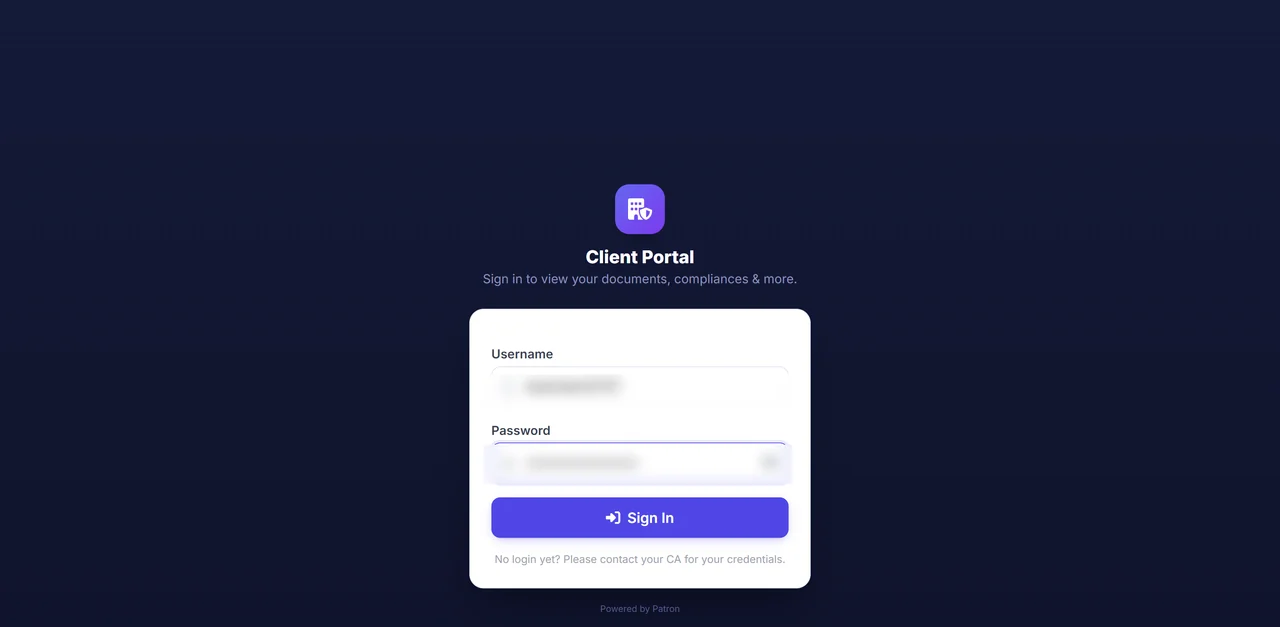
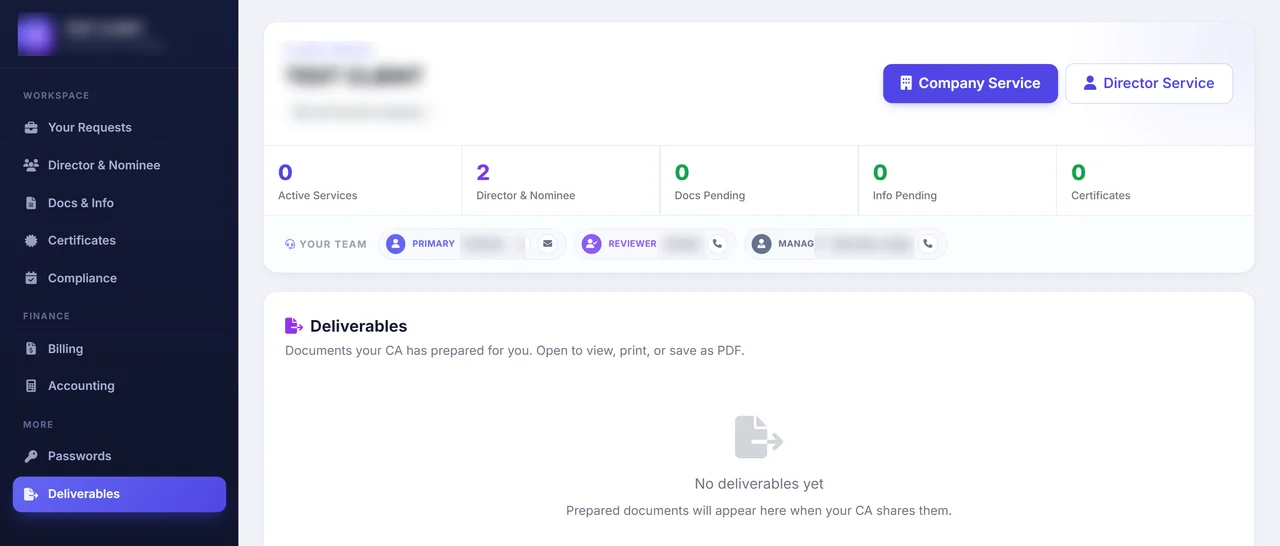
Everything happens in one secure login. You can see your active services, the Patron team on your account, and anything still pending. Once you raise a request, it moves through the same clear steps every time, so you always know exactly where your work stands.

Secure client portal login screen
1

Sign in securely

Your books, documents and requests all sit behind one private, password protected login. The team handling your account is shown on screen, so nothing sensitive ever needs to travel over email or WhatsApp.

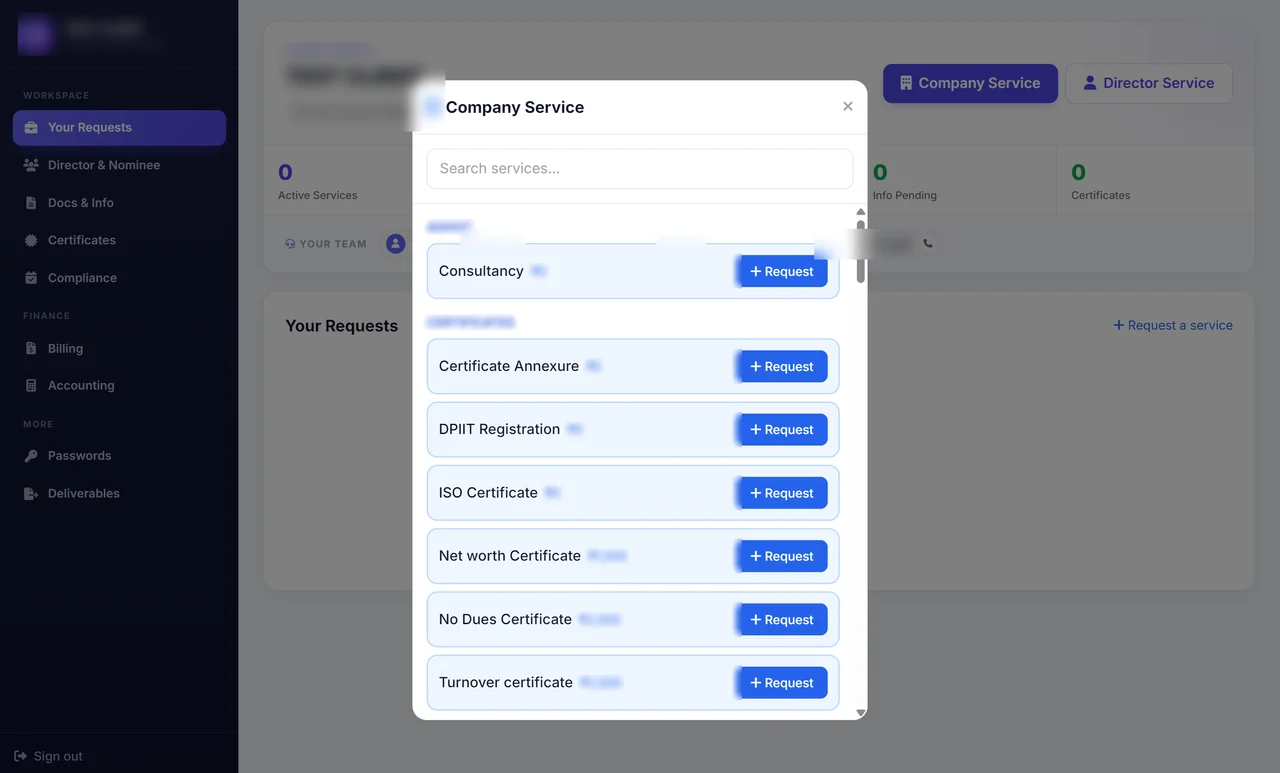
Service catalogue inside the client portal
2

Raise your request

Choose the service you need from the menu inside the portal, where the price is shown before you go ahead. Your request is logged the moment you send it, with no phone calls or reminder emails to wait on.

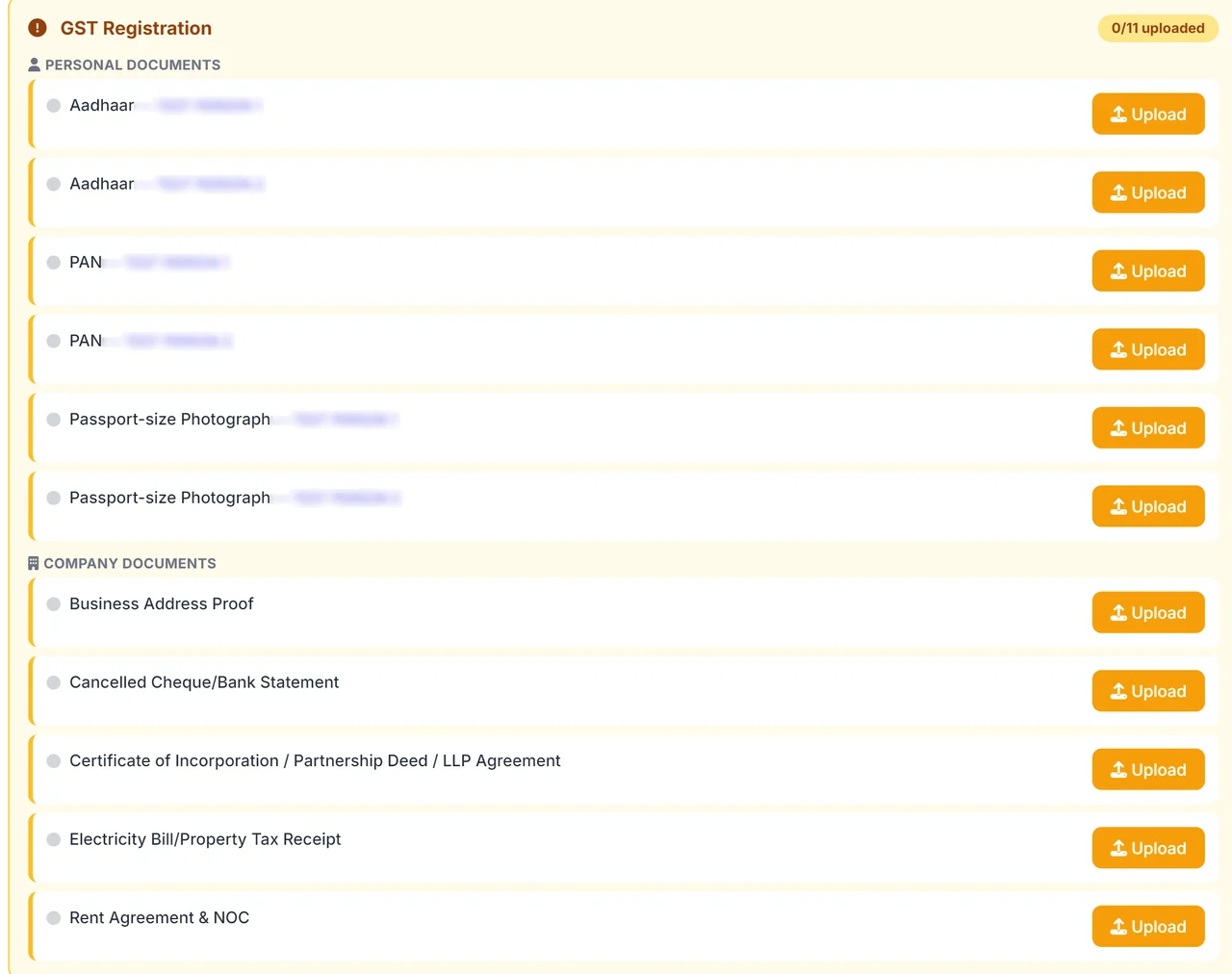
GST registration document checklist in the client portal, with an upload button beside each item
3

Share what the service asks for

For every service, the portal lists the exact documents it needs, each with its own upload button. The example shown here is the GST registration checklist. When a service needs nothing from you, it simply asks for nothing.

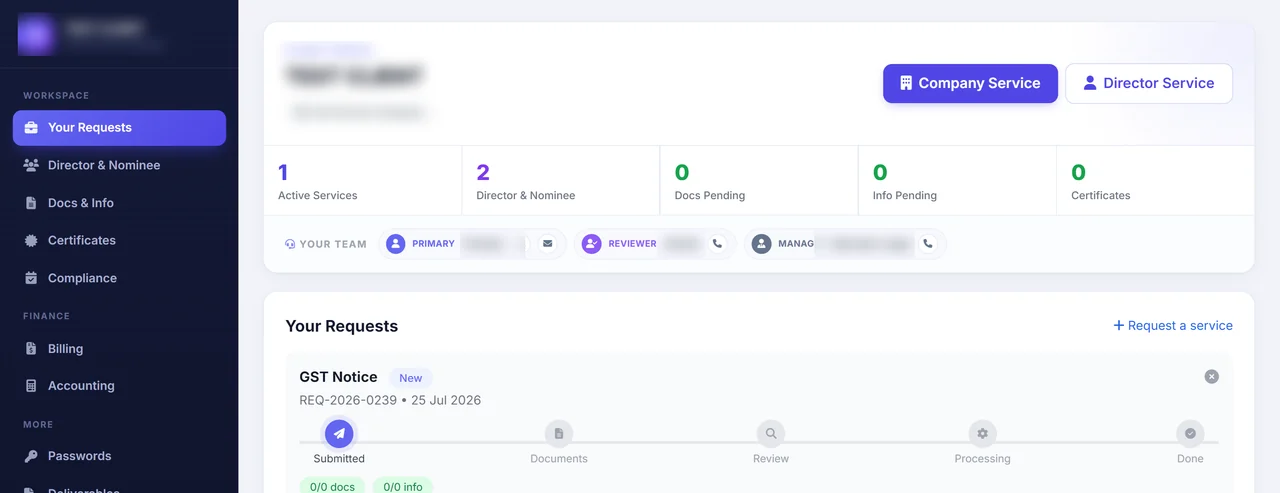
Live request tracker inside the client portal
4

We review, prepare and file

Once your documents are in, your team checks them, prepares the work and files it for you. A live tracker shows each stage as it happens, from review to processing to done, so you never have to ask where things stand.

Deliverables area of the client portal
5

Collect your finished work

Every completed return, computation and certificate is placed in your Deliverables area. You can open, print or download any of them as a PDF whenever you need a copy.

Common Education Sector Accounting Challenges and How We Solve Them

ChallengeImpactHow Patron Accounting Solves It
Scholarship and fee-concession waivers netted straight against tuition receiptsFee income and student receivables both understated; the board reads a wrong collection rate and provisioning.Post waivers to a separate concession account, student-wise, so gross fee and net fee both reconcile.
Capitation, development and admission fees all booked to one tuition headTaxable and corpus receipts blur, leaving 12A exemption exposed at assessment and the surplus misstated.Split each fee head in the chart of accounts; isolate corpus receipts, and weigh the Section 10(23C) versus 12A routes.
Hostel, mess and transport run without activity-wise costingLoss-making auxiliary activities stay hidden inside the overall surplus, so fee revisions are mispriced.Open a cost centre per activity; track bus depreciation and mess consumables against their own income.
Capital assets funded by grant depreciated against general fundsFund balances misstated and restricted corpus quietly eroded, which a grant giver's audit will flag.Link the asset register to its funding source; charge depreciation to the correct fund each year.
Staff salary advances, PF and TDS not reconciled to payrollReconciling items pile up and Section 43B dues get disallowed for late deposit.Run a monthly payroll control account tied to bank and challans, clearing advances against salary.

Education Sector Accounting Fees

Fee ComponentAmount
Starter — one institution with standard fee and grant headsINR 4,499
Excl. GST & Government Charges
Growth — more fee heads, added campus or deeper fund accountingOn quote
Managed — multi-campus trust books with custom board reportingOn quote

Our accounting services for schools begin at INR 4,499 for one institution with standard fee and grant heads, billed monthly. What moves the price is the number of fee heads, fund-accounting depth and campus count. For school fee accounting scoped to your trust, request a quote on the figures below. Schedule a pricing consultation on +91 94594 56700.

Fees exclude GST and government charges. Final quote confirmed after a scoping review.

All fees and charges listed are indicative only and do not constitute a binding offer. Final amounts may vary depending on the volume of work and the complexity involved.

Professional accounting and compliance charges are scoped to your number of entities, funding stage and monthly transaction volume, and are separate from statutory and government charges. Contact us for a detailed, fixed quote.

Get a free Education Accounting consultation - Call +91 945 945 6700 or WhatsApp us. No-obligation assessment.

Education Sector Accounting Compliance Calendar 2026

ComplianceDue DateApplies To
TDS / TCS deposit (Challan ITNS-281)7th of every month (30 April for March)Every business that deducts tax at source on salaries, rent, contractor or professional fees
Provident Fund (ECR) and ESI contribution15th of every monthEmployers registered under EPF and ESI
GSTR-3B (summary return and tax payment)20th of every month for monthly filersGST-registered businesses filing monthly; QRMP filers pay via PMT-06
80G / 12A renewal and Form 10BD statement of donations31 May 2026Trusts issuing 80G receipts to donors
Advance tax second instalment (45% cumulative)15 September 2026Companies, firms and individuals liable to advance tax
Trust audit report (Form 10B / 10BB)30 September 2026Charitable trusts and institutions registered under 12A/12AB
Trust income-tax return (ITR-7)31 October 2026Registered trusts, societies and Section 8 companies
Annual GST return GSTR-9 and reconciliation GSTR-9C31 December 2026GST-registered businesses above the annual-return and audit thresholds

A trust-run school lives by 30 September, when the Form 10B audit report is due, and 31 October for the ITR-7. The 80G renewal and Form 10BD donation statement fall on 31 May. Patron aligns these with your fee-cycle accounting so exemption status stays intact. Talk to a Patron CA on +91 94594 56700 about your due dates.

Key Benefits

Why Professional Education Sector Accounting Matters

Fee position by term

You get an outstanding fee figure agreed student by student, with money collected for a later term held back from income.

  • Outstanding fee agreed student by student and fee head
  • Advance for a later term held out of current income
  • Without the split, next term's cash flatters the term and arrears chasing stalls

Exemption status that holds

You know each month how much income has been applied to your objects and how much sits set apart in permitted modes.

  • Income applied to objects tracked month by month
  • Accumulation held in Section 11(5) permitted modes
  • Without it, a shortfall surfaces after year-end with no room to correct

Donation records donors accept

Your donation register issues the annual statement and donor certificates straight from it. Corpus gifts stay recorded apart from general donations.

  • Register carries donor name, address and PAN
  • Corpus gifts classified apart from general donations
  • Without PAN or written direction, donors chased months later

Grant money proved used

Each restricted grant carries its own ledger and closing balance. You can answer a funder's question about what its money paid for.

  • Each restricted grant on its own ledger and balance
  • Separate fee-collection and FCRA bank accounts supporting it
  • Without separation, purpose reconstructed from bank narrations

Specified person dealings tested

We test salary, rent, interest and purchases involving trustees and their relatives against a comparable, and keep the approval alongside.

  • Trustee dealings tested against a comparable, approval kept
  • Register of specified persons under Section 13(3)
  • Without the file, a routine trustee payment can be disputed as a benefit

True cost of concessions

You see waivers and scholarships as a cost in their own right, not as lower collections. Your governing body reads gross fee income separately.

  • Concessions, scholarships and waivers posted as a cost
  • Fee income shown gross, not netted off
  • Without it, rising concessions read as a fee shortfall

Why Businesses Choose Patron Accounting for Accounting Services for Schools & Colleges

Five things a founder can check before handing over the books. Each is a claim with the proof behind it.

Fund-based books keep fees, grants and corpus apart

We run fund-based accounting so tuition fees, government grants and corpus donations sit in separate funds, never pooled. That discipline comes from 15+ years handling institutional books.

12A/80G status protected and Form 10B filed on time

Whether an institution runs on 10(23C) or 12A, we protect the exemption and file Form 10B by the due date, part of 25,000+ filings completed.

Fee-management software reconciled to the ledger, term by term

We work in whichever of Zoho Books, Xero, Tally Prime or Odoo you run, reconciling your fee-management software to the ledger each term.

Term-wise fee deferral and utilisation statements each term

Each term you receive a fee-deferral schedule and a grant utilisation statement, drawn straight from the ledger. That repeatable delivery is one reason for our 4.9 star Google rating.

Schools, colleges, coaching institutes, trusts and societies alike

Schools, colleges and coaching institutes sit among the 3,000+ businesses we have served since 2019. Our in-house team of CAs and CS, ISO Certified and MCA Registered, keeps their books.

Figures reflect Patron Accounting LLP engagements since 2019. Scope and turnaround are confirmed in your engagement letter.

Trust Accounting vs Company Accounting for Institutions

CriterionTrust AccountingCompany Accounting for Institutions
Legal formTrust: charitable trust or society run under a trust deed.Company: Section 8 company registered under the Companies Act.
Governing frameworkTrust: fund-based accounting under the trust deed and Income-tax rules.Company: Schedule III format under the Companies Act and standards.
Revenue recognitionTrust: fees and grants tracked as restricted or unrestricted funds.Company: fees recognised as income on accrual under standards.
Tax exemption routeTrust: 12A, 80G and Section 10(23C), 85% application rule.Company: Section 8 can hold 12A, but filing is heavier.
Compliance loadTrust: Form 10B audit, simpler filings, registrar of societies.Company: MCA annual filings, board governance, statutory audit added.
MIS clarityTrust: fund-wise view of surplus, weaker on cost centres.Company: departmental P&L and ratios clearer for larger institutions.
VerdictChoose trust accounting when your exemption rests on 12A and the 85% application rule; a Section 8 company suits large multi-campus institutions needing corporate MIS. Sound accounting services for schools follow fund-based accounting for schools.

Legal and Regulatory Framework for Education Sector Accounting

The same rupee of school fee is treated two ways: for accounting it is income measured and disclosed like any other, but for tax it can be exempt surplus rather than taxable profit. Reconciling that split is the heart of the legal framework here, and it turns on whether the institution holds a live registration under the Income-tax Act.

So the books have to be built to prove application of income, not just to report it. Grants, fees and donations are held against the purpose they were given for, which is why Fund-Based Accounting is the method rather than ordinary profit tracking, and why the 85% Income Application Rule governs how much of the year's receipts must actually be spent. The provisions below are what a compliant set of accounting services for schools is kept against.

  • Sections 12A/12AB, Income-tax Act 1961A school or trust registered under 12AB has its surplus exempt so long as income is applied to its objects, with the registration renewed periodically.
  • Section 12A(1)(b) with Form 10B/10BBAbove the income threshold the institution files an audit report in Form 10B or 10BB along with its return.
  • Notification 12/2017-Central Tax (Rate), entry 66Core education services up to higher secondary are exempt from GST, while ancillary supplies such as transport or hostel catering may still be taxable.
  • Section 80G, Income-tax Act 196180G approval lets donors claim a deduction, and the institution reports each gift in the Form 10BD donation statement - relevant to Restricted Corpus Donations.
  • Section 44AA, Income-tax Act 1961Books are maintained once income or receipts cross the prescribed limits, so the exempt surplus can be computed and defended.
  • Rule 3(1), Companies (Accounts) Rules 2014Where the institution runs on accounting software the audit trail stays enabled, keeping every fee reversal or grant reallocation on record. Registration itself is handled on the hub page.

Official sources: Ministry of Corporate Affairs · Income Tax Department · GST Portal · Startup India (DPIIT)

What is bookkeeping in school?

Bookkeeping in a school is the day to day recording of fee collections, staff salaries, vendor bills, transport and hostel receipts and bank transactions into a ledger that supports the trust or society annual accounts. Entries are kept fee head wise and fund wise so tuition, transport, hostel and examination receipts stay separate, and the fee software collection report is reconciled to the books every month.

What is the 85% rule for a trust?

The 85 percent rule requires a trust registered under Section 12A to apply at least 85 percent of its income towards its charitable or educational objects during the year, with up to 15 percent allowed to be accumulated without any condition. Accumulating more than that needs Form 10 to be filed and the money to be held in the investment modes permitted under Section 11(5).

When does an educational trust have to file Form 10B?

Form 10B has to be filed one month before the due date for furnishing the trust's income tax return, which in practice means 30 September for most institutions. Filing late, or filing the wrong form between 10B and 10BB, can cost the institution its exemption for that year, so the audit needs to be closed by early September.

How is student fee income recorded in a school's books?

Fee income is recorded student wise on an accrual basis for the term it relates to, with fees collected in advance for the next academic year carried as a liability rather than income. Separate heads are kept for tuition, admission, transport, hostel and examination fees so exempt and taxable receipts stay identifiable and reconcile with the fee software collection report.

Is GST applicable on school fees, transport and canteen charges?

Tuition and related services supplied by a school to its own students are exempt from GST, and transport, catering and housekeeping supplied to an institution up to higher secondary level are also exempt under the education notification. Coaching centres, commercial training and services supplied to outsiders are taxable, so a mixed institution has to keep exempt and taxable turnover separate.

Does a school have to deduct TDS on salaries and vendor payments?

Yes, a school deducts TDS on staff salaries under Section 192, on visiting faculty and professional payments under Section 194J, and on contractor payments such as transport and housekeeping under Section 194C. Quarterly returns in Form 24Q and Form 26Q are due after each quarter and late filing carries a daily fee, so deductions are checked before every payment cycle.

How much do accounting services for schools and colleges cost?

Monthly accounting for a single school with up to 800 students usually runs from Rs 12,000 to Rs 25,000 a month, and multi branch institutions or degree colleges typically fall between Rs 30,000 and Rs 60,000. Fees depend on transaction volume, payroll headcount, number of fee heads and whether audit support and the Form 10B working are included.

Can books be taken over mid-year when the institution's accountant has left?

Yes, we take over mid year and usually get the books current within 15 to 30 working days depending on the backlog. The first step is a trial balance review, fee collection reconciliation and TDS challan verification for the months already gone, followed by a list of missing vouchers your office needs to trace before the audit starts.

Which software is best for school accounting?

Tally or Zoho Books with branch wise and fund wise cost centres suits most Indian schools, with the fee management software kept separate and posted into the books through a monthly summary journal. Cost centre discipline from day one is what makes branch level income and expenditure, fund wise reporting and consolidated trust accounts possible. Configuration is completed during onboarding, usually inside the first two weeks.

What is the method of accounting for a trust?

An educational trust keeps its books on the accrual basis using fund accounting, so corpus, earmarked grants and general funds sit in separate ledger heads and, wherever possible, separate bank accounts. The annual accounts are presented as a balance sheet with an income and expenditure account rather than a profit and loss. Corpus donations received with a specific written direction are shown as a fund, not as income.

Quick Answers

When fee receipts, grant money and corpus donations all run through one bank narration, trustees cannot show which money funded which purpose, and a grant giver asking for utilisation proof gets nothing usable. Patron avoids that by tagging each receipt to its fund at the point of entry, reconciling term by term, and.

Education Accounting Deadlines You Cannot Afford to Miss

TDS / TCS deposit (Challan ITNS-281) is due 7th of every month (30 April for March). Provident Fund (ECR) and ESI contribution is due 15th of every month. GSTR-3B (summary return and tax payment) is due 20th of every month for monthly filers. Patron tracks each against your books so nothing is reconstructed after the fact. Call +91 94594 56700 to set up a filing-reminder schedule.

Start Your Education Sector Accounting with Patron Accounting

Accounting services for schools get confused with ordinary company bookkeeping carrying a different name on the ledger. The two answer to different readers. A company reports to shareholders on profit. An institution answers to people who gave money for a stated purpose, and that purpose must stay visible in the ledger rather than be reconstructed later.

Term boundaries stop being crunch points once bookkeeping for schools runs continuously. Receipts posted through the term leave the closing position already built when the term ends. A utilisation query is answered from what exists rather than from a hurried reconstruction. Working papers accumulate as the year runs, not after it.

Whoever holds the fund structure should be in the room from the start. How many restricted grants you run, and what your fee software can export, come early. Then whether last year's audit raised anything on classification, as we also ask clients in the software sector.

Book a Free Consultation - No Obligation.

Education Accounting Near You

Local teams for education accounting in these cities.

Reviewed by the CA & CS Team, Patron Accounting LLP
ICAI & ICSI registered  ·  15+ years in Indian accounting & compliance  ·  Last reviewed 23 July 2026  ·  Next review 23 October 2026