


Talk to an Expert
Talk to an Expert ✆ +91 945 945 6700
Trusted by 10,000+ Businesses

Startup Accounting Services in India

Reviewed by CA and CS Team, Patron Accounting LLP ICAI & ICSI Registered| 15+ Years Experience| Last Updated: July 2026 Verify Credentials →

Cap table the register supports: Your working cap table, the statutory register of members and the share capital in the books all carry the same holdings.

Option grants that stand up: Your option grants, vesting, exercises and lapses sit in the Form SH-6 register, with board and shareholder approvals behind them.

Investor metrics traceable to ledger: Your burn, runway and revenue metrics are rebuilt from the trial balance on your own definitions. Any gap against the deck is explained.

Convertible instruments in the right place: We classify compulsorily convertible preference shares or debentures from the actual instrument terms, and treat round costs on a stated basis.

15+ YearsIndustry Experience
CA & CSCertified Experts
4.9
Based on real Google reviews

Get Free Consultation

Talk to a CA/CS expert today

🇮🇳 +91

Our team will get back to you shortly. No spam.

Real Stories from Real People

Verified Google reviews from founders and businesses Patron works with across India.

Join 3,000+ Founders and Businesses on Patron

Rated 4.9 on Google - trusted for startup accounting since 2019.

Talk to an Expert
10,000+Businesses ServedGST compliance and litigation support across India.
15+Years ExperienceDeep expertise in IP registration, GST & business compliance.
50,000+Documents FiledReturns, appeals, and filings handled accurately.
4.9★Client RatingTrusted by entrepreneurs, startups, and growing businesses.
ISO CertifiedProfessional standards and documented processes.
SSL SecureYour financial and business data is fully protected.

What Startup Accounting Covers — Scope, Deliverables and Who It Suits

📌 TL;DR - Startup Accounting Services at a Glance

Startup accounting services keep the cap table and the books agreeing before a diligence discovers they do not. Patron maintains investor MIS on burn, runway and cohort performance, and handles DPIIT recognition, Section 80-IAC claims and ESOP perquisite timing. Statutory filings run alongside founder reporting instead of trailing behind it. Common among funded and bootstrapped Indian startups heading towards a priced round.

The founder keeps the decisions and the bank logins; the startup accounting work Patron runs covers the ledger, the payroll run and the compliance calendar. In practice that means your operations team raises invoices in the billing tool and stops there, while classification, accruals and the period close happen behind it. The board pack and the statutory filings are drawn from one set of books, not two. How Mumbai fintech founders split it follows the same pattern.

An ESOP perquisite deducted in the wrong month becomes an employee's tax notice and the company's default at once. A recognition claim filed after the window closes cannot be reopened. That exposure, more than transaction count, is what sets effort in accounting for startups. Eligibility is checked against the Startup India portal criteria. Valuation reports and diligence responses are separate engagements.

What Are Startup Accounting Services?

A funded company's ledger has to agree, at all times, with its cap table and its investor commitments. Startup accounting services are the function that keeps those two records in step and the books ready for diligence.

In practice, it runs the general ledger, the payroll and the monthly close. On top of that sits the reporting a funded business is judged by: burn, runway and cohort performance in a format investors recognise. It handles the recognition timing on employee share awards, where a charge booked in the wrong month creates a problem for both company and employee. For subscription businesses, it also spreads deferred revenue across the term it belongs to. This function also tracks the conditions attached to recognised-startup benefits, so a claim is not lost to a missed window. Accounting for startups, then, is ordinary bookkeeping carried out to a standard a priced round will test. Preparing valuation reports or fielding diligence responses falls outside this engagement.

Key Terms for Startup Accounting:

What Are Startup Accounting Services. A funded company's ledger has to agree, at all times, with its cap table and

Who Needs Startup Accounting Services in India?

Startup accounting services fit companies where the share register and investor promises drive the books as much as trade does. Most are DPIIT-recognised and funded ventures heading towards a priced round, where founders answer to their investors as closely as to the tax department.

  • DPIIT-recognised startups planning to claim the Section 80-IAC tax holiday, who must keep every eligibility condition met.
  • Ventures that have just closed a round on convertible notes or CCPS and must book the instrument correctly.
  • Founders who granted stock options on a handshake and now need a proper option register behind them.
  • Companies whose funds ask for monthly numbers on burn and runway drawn straight from the ledger.
  • Bootstrapped startups nearing their first funding diligence, who need books an investor will not pick apart.
  • Early companies carrying foreign investor accounts and founder loans that belong on the related-party record.
  • Startups where the founder still holds every bank login while nobody closes the month behind them.

Our Startup Accounting Services

ServiceWhat We Do
Cap table and share register upkeepShare allotments posted and the cap table reconciled to the statutory register of members, so ownership and dilution always agree On event / as needed
Funding round instrument accountingCCPS, CCD and convertible notes recorded in the right class, with share premium papered so each round sits correctly in the books On event / as needed
Investor MIS, burn and runwayBurn, runway and MRR reported to your investors and tied back to the ledger. See burn rate and runway explained Monthly
ESOP charge and option registerOption grants captured in the register and the share-based payment charge amortised across the vesting period, with startup bookkeeping kept audit-ready Monthly
DPIIT and 80-IAC condition trackingEligibility conditions for DPIIT recognition and any Section 80-IAC claim tracked, with supporting schedules maintained through the year as applicable Annually
Monthly bookkeeping and founder MISDay-to-day bookkeeping, bank reconciliation and statutory workings delivered as monthly startup accounting services, giving founders one clean set of numbers Monthly
Our Process

How Startup Accounting Services Work — Our Process

How Patron delivers startup accounting, step by step from onboarding to a clean monthly close.

Step 1

Cap table to register tie-out

The working cap table is agreed to the statutory register of members and to every allotment record, then to share capital and securities premium in the books. Where the three disagree, the statutory register governs and the cap table is corrected.

Illustration for Cap table to register tie-out: The working cap table is agreed to the statutory register of members and to
Step 2

Funding round instrument accounting

Term sheet, SHA or SSA and the instrument terms are read to decide how compulsorily convertible preference shares or debentures sit in the balance sheet, and how round costs are treated. The valuation relied on at each round is filed with the working.

Illustration for Funding round instrument accounting: Term sheet, SHA or SSA and the instrument terms are read to decide how
Step 3

Share premium position papering

For rounds closed before 1 April 2025 the valuation basis and investor detail are preserved, because the premium provision applied to those years and assessments remain open. Rounds from that date onward are documented as outside it.

Illustration for Share premium position papering: For rounds closed before 1 April 2025 the valuation basis and investor
Step 4

ESOP charge and option register

Grant letters, the scheme document and the board and shareholder approvals give the vesting schedule, from which the share-based payment charge is spread. Grants, vesting, exercises and lapses are entered in the Register of Employee Stock Options in Form SH-6.

Illustration for ESOP charge and option register: Grant letters, the scheme document and the board and shareholder approvals
Step 5

Investor MIS tie-back

Burn, runway and the revenue metrics already reported to investors are rebuilt from the ledger using the definitions the company itself uses. Where the deck and the trial balance disagree, the difference is reconciled rather than restated.

Illustration for Investor MIS tie-back: Burn, runway and the revenue metrics already reported to investors are rebuilt from
Step 6

Founder and related party review

Founder agreements, director current accounts and any loan to or from a director are examined against the restrictions on loans to directors and on related-party transactions. The approvals actually obtained are matched to the entries in the books.

Illustration for Founder and related party review: Founder agreements, director current accounts and any loan to or from a
Step 7

DPIIT and deduction condition tracking

DPIIT recognition and, where obtained, the Section 80-IAC approval are checked each year against the conditions attached to them, including turnover and incorporation-date limits. The year in which the deduction is claimed is then a decision on record.

Illustration for DPIIT and deduction condition tracking: DPIIT recognition and, where obtained, the Section 80-IAC approval

Documents Required for Startup Accounting Services

A funded company carries two extra sets of paperwork, the cap table and the investor agreements, and both change how ordinary transactions are recorded.

  • Cap table with the share register (Section 88 register of members) and all share allotment records
  • Investment documents: term sheet, SHA/SSA, CCPS or CCD terms, and the valuation used at each round
  • ESOP scheme document, board and shareholder approvals, grant letters, and the Register of Employee Stock Options in Form SH-6
  • Investor reporting pack and MIS definitions: the burn, runway, MRR and cohort metrics already reported to investors
  • DPIIT recognition certificate and, if claimed, the Section 80-IAC approval
  • Founder and related-party agreements, and any director loan or current-account records
  • Bank statements for all accounts, including foreign currency and any overseas subsidiary account
  • Sales invoices and customer contracts
  • Purchase and expense bills, including cloud, SaaS subscriptions and marketing spend, with corporate card statements
Client Portal

How You Work With Patron

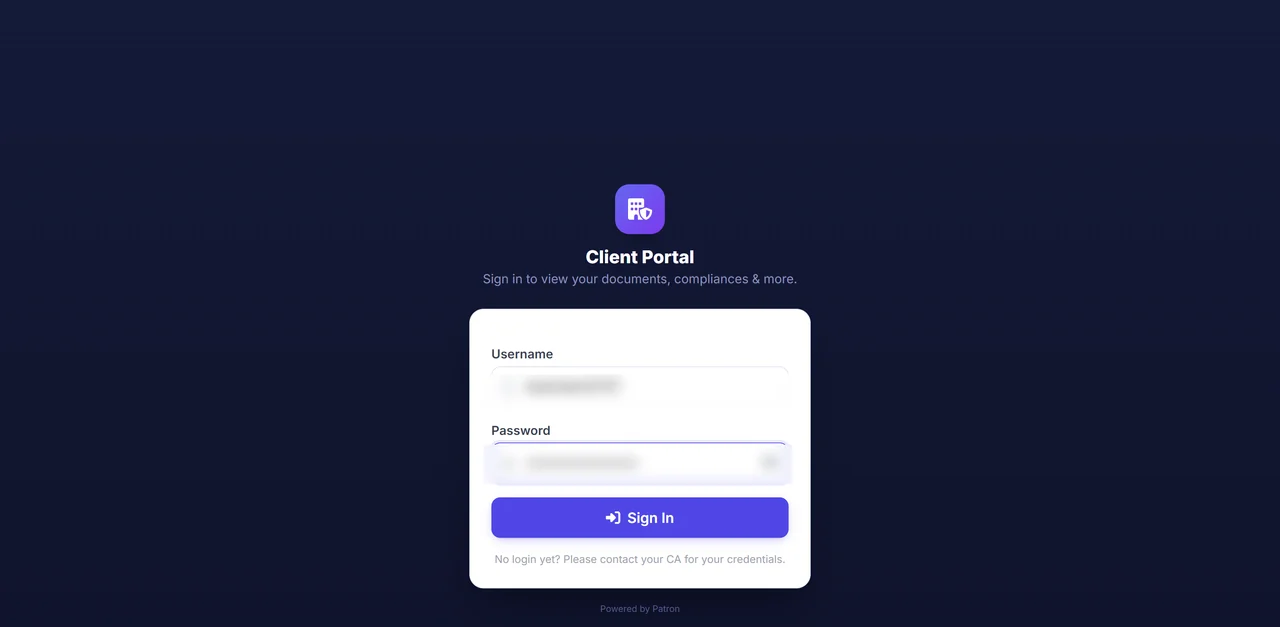
Everything happens in one secure login. You can see your active services, the Patron team on your account, and anything still pending. Once you raise a request, it moves through the same clear steps every time, so you always know exactly where your work stands.

Secure client portal login screen
1

Sign in securely

Your books, documents and requests all sit behind one private, password protected login. The team handling your account is shown on screen, so nothing sensitive ever needs to travel over email or WhatsApp.

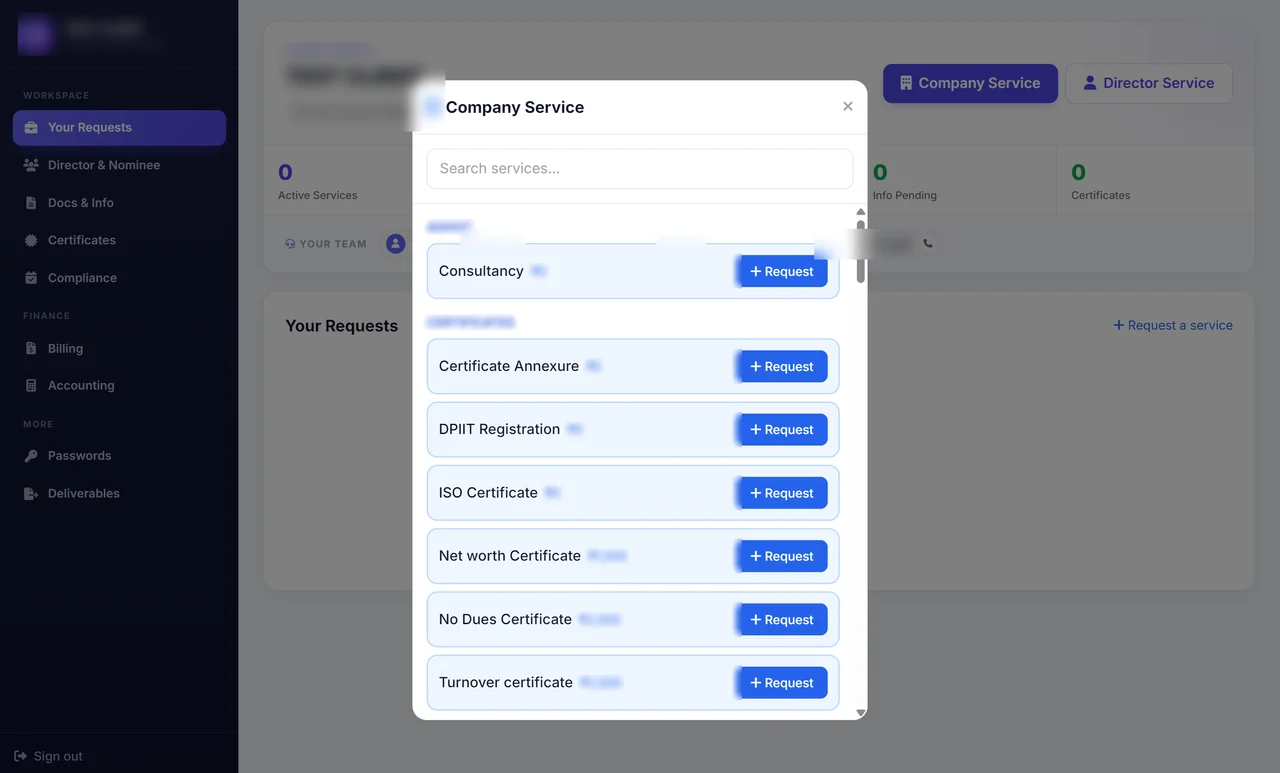
Service catalogue inside the client portal
2

Raise your request

Choose the service you need from the menu inside the portal, where the price is shown before you go ahead. Your request is logged the moment you send it, with no phone calls or reminder emails to wait on.

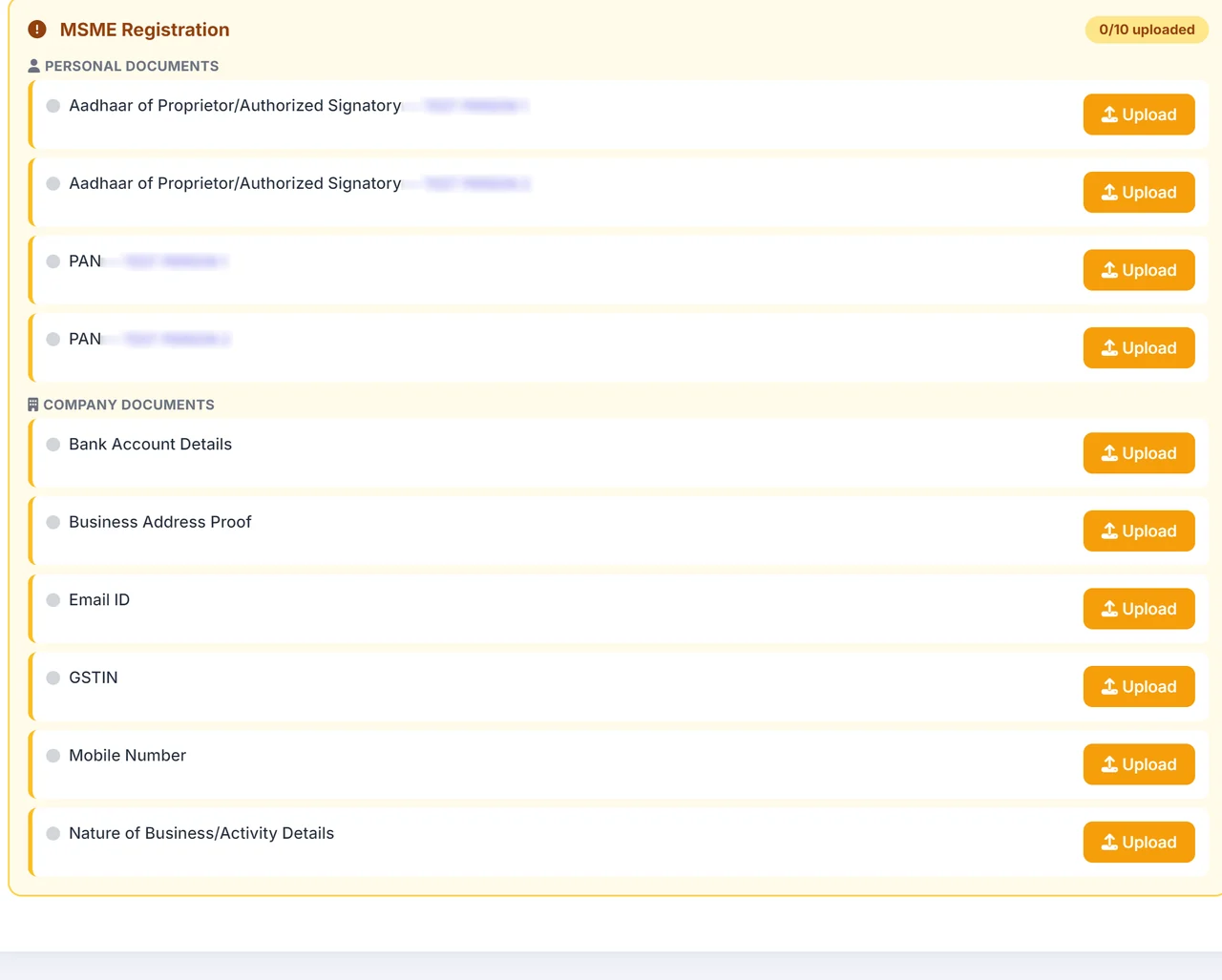
MSME and Udyam registration document checklist in the client portal, with an upload button beside each item
3

Share what the service asks for

For every service, the portal shows the exact documents it needs, each with its own upload button. The list shown here is the MSME (Udyam) registration checklist. When a service needs nothing from you, it simply asks for nothing.

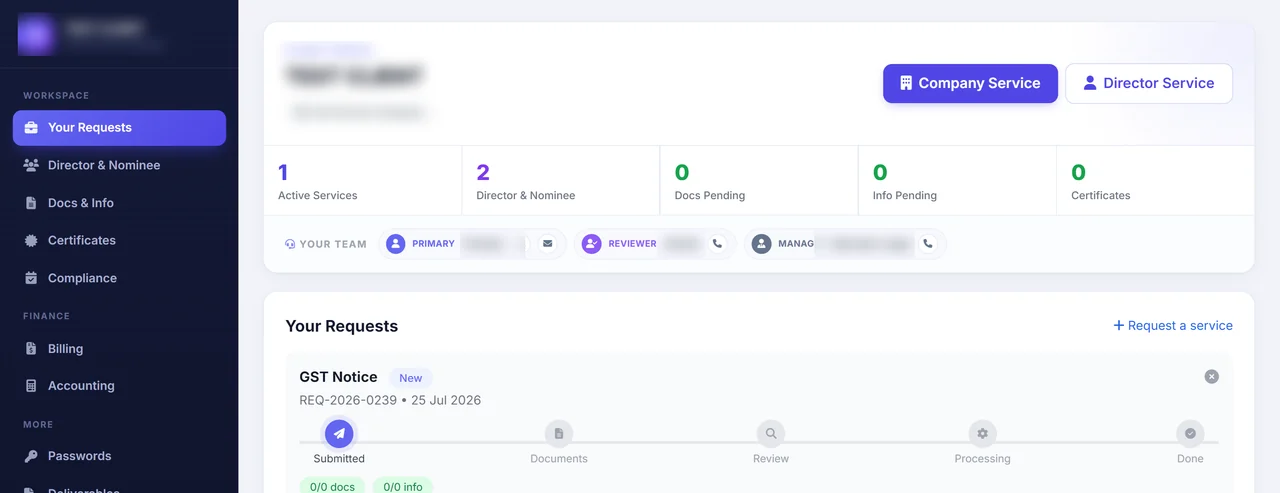
Live request tracker inside the client portal
4

We review, prepare and file

Once your documents are in, your team checks them, prepares the work and files it for you. A live tracker shows each stage as it happens, from review to processing to done, so you never have to ask where things stand.

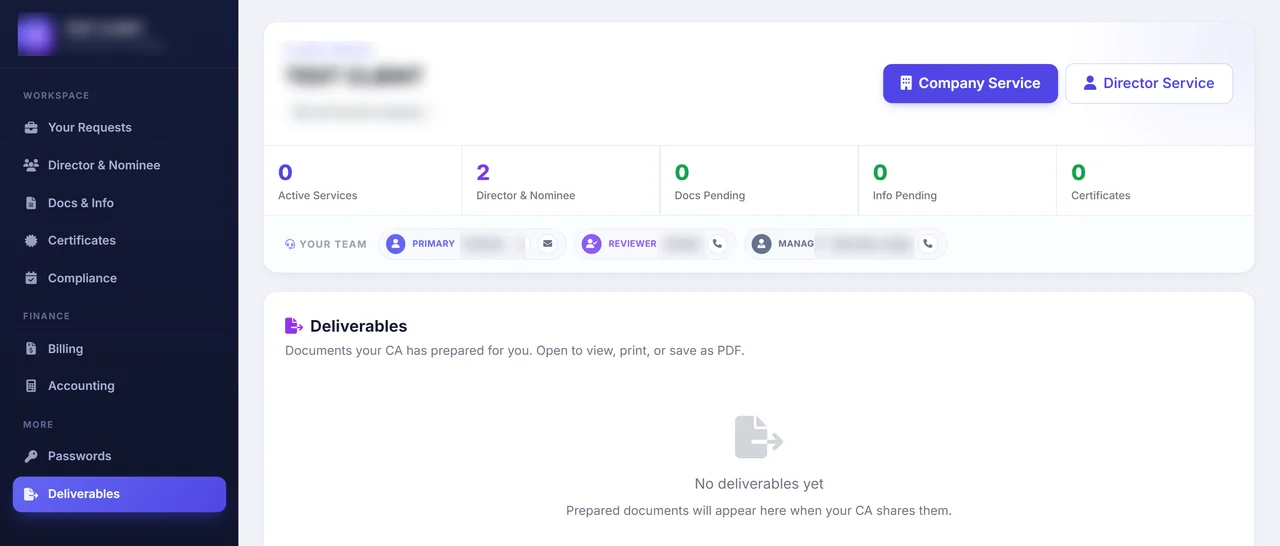
Deliverables area of the client portal
5

Collect your finished work

Every completed return, computation and certificate is placed in your Deliverables area. You can open, print or download any of them as a PDF whenever you need a copy.

Common Startup Accounting Challenges and How We Solve Them

ChallengeImpactHow Patron Accounting Solves It
Founder spends and company costs share personal cardsBooks overstate profit and diligence flags related-party leakage, denting the valuation before a priced round.Our team separates founder drawings into a director's current account and codes reimbursements against an approved policy.
Annual prepaid deals booked as revenue upfrontReported revenue inflates, then reverses, spooking investors halfway through diligence and distorting MRR.We build a deferred revenue schedule that recognises each subscription month by month.
ESOP charge not accrued as options vestThe share-based cost is understated, overstating profit and distorting the company's tax deduction at exercise.Patron runs an Ind AS 102 charge schedule so the expense accrues evenly across the vesting period.
Convertible notes and SAFEs left unclassified on the balance sheetAuditors requalify them as liabilities, restating equity right before the raise closes.We classify each instrument correctly and reconcile it to the cap table at every close.
Burn and runway reported off a stale ledgerThe board sees a stale runway figure and misjudges the timing of the next raise.Our team closes monthly to a fixed date and reports burn from reconciled numbers; see the year-one startup accounting needs.

Startup Accounting Fees

Fee ComponentAmount
Starter — one early-stage entity with steady monthly burn linesINR 2,499 per month
Excl. GST & Government Charges
Growth — later funding stage, cap-table events or an added group entityOn quote
Managed — multiple entities with investor-ready monthly MIS and custom reportingOn quote

Early founders begin at INR 2,499 per month for one entity with steady monthly books and a clean ledger. The price rises with entity stage, cap-table events and growing burn lines as the work broadens. Ask for a fixed quote on +91 94594 56700.

Fees exclude GST and government charges. Final quote confirmed after a scoping review.

All fees and charges listed are indicative only and do not constitute a binding offer. Final amounts may vary depending on the volume of work and the complexity involved.

Professional accounting and compliance charges are scoped to your number of entities, funding stage and monthly transaction volume, and are separate from statutory and government charges. Contact us for a detailed, fixed quote.

Get a free Startup Accounting consultation - Call +91 945 945 6700 or WhatsApp us. No-obligation assessment.

Startup Accounting Compliance Calendar 2026

ComplianceDue DateApplies To
TDS / TCS deposit (Challan ITNS-281)7th of every month (30 April for March)Every business that deducts tax at source on salaries, rent, contractor or professional fees
Provident Fund (ECR) and ESI contribution15th of every monthEmployers registered under EPF and ESI
GSTR-3B (summary return and tax payment)20th of every month for monthly filersGST-registered businesses filing monthly; QRMP filers pay via PMT-06
ESOP perquisite TDS deposit on allotment7th of the month after allotmentEmployers allotting shares under an approved ESOP
Advance tax first instalment (15%)15 June 2026Companies, firms and individuals with a tax liability of Rs 10,000 or more
Director KYC (DIR-3 KYC)30 September 2026Every director holding a DIN as on 31 March
Income-tax return, audit cases31 October 2026Companies and audit-liable firms
Financial statements filing (Form AOC-4)Within 30 days of the AGM (by 29 October 2026 for a 30 September AGM)Companies filing audited financials with the ROC
Annual return (Form MGT-7 / MGT-7A)Within 60 days of the AGM (by 28 November 2026 for a 30 September AGM)Companies filing the annual return with the ROC

For a funded startup the sharpest dates are the ESOP perquisite TDS on the 7th after allotment and the ROC filings, AOC-4 by 29 October and MGT-7 by 28 November. Director KYC is due 30 September. Patron's startup accounting team runs board and tax dates on one calendar so nothing slips before a diligence. Request a consultation on +91 94594 56700 to set filing reminders.

Key Benefits

Why Professional Startup Accounting Matters

Cap table the register supports

Your working cap table, the statutory register of members and the share capital in the books all carry the same holdings.

  • working cap table tied to the Section 88 register of members
  • share capital and securities premium in the books agree
  • Without it, allotments retraced under an investor's counsel in diligence

Option grants that stand up

Your option grants, vesting, exercises and lapses sit in the Form SH-6 register, with board and shareholder approvals behind them.

  • grants, vesting, exercises and lapses in the Form SH-6 register
  • share-based payment charge spread over the vesting schedule
  • Without it, informal email grants leave options the company cannot evidence

Investor metrics traceable to ledger

Your burn, runway and revenue metrics are rebuilt from the trial balance on your own definitions. Any gap against the deck is explained.

  • burn, runway and revenue rebuilt from the trial balance
  • your own definitions used, gap against the deck explained
  • Without it, a fund's analyst arrives at a different figure

Convertible instruments in the right place

We classify compulsorily convertible preference shares or debentures from the actual instrument terms, and treat round costs on a stated basis.

  • CCPS and CCD terms read to decide balance sheet treatment
  • round costs treated on a stated basis
  • Without it, equity misread by a lender or later investor

Related party dealings on record

You know which founder dealings the company actually approved. We match director accounts, founder agreements and director loans to the approvals obtained.

  • director current accounts, founder agreements and director loans matched to approvals
  • loans to directors tested against approvals obtained
  • Without it, an unapproved entry left standing for auditors and reviewers

A deduction claim you can support

You claim the Section 80-IAC deduction in a year on record, because we test DPIIT recognition and its conditions each year.

  • DPIIT recognition and 80-IAC conditions tested each year
  • turnover and incorporation-date limits checked before the claim
  • Without it, a claim made in a year the company no longer qualifies

Why Businesses Choose Patron Accounting for Startup Accounting Services India

Five things a founder can check before handing over the books. Each is a claim with the proof behind it.

Cap table and books that agree before diligence

With 15+ years across 3,000+ businesses, we keep your equity register and ledger tied together, so convertible notes, CCPS and option grants reconcile long before an investor's diligence opens them.

DPIIT recognition, Section 80-IAC and ESOP timing

DPIIT recognition, the Section 80-IAC tax holiday and ESOP perquisite timing are routine filings for us, part of the 25,000+ filings completed, kept correct so an eligibility condition never slips.

Zoho Books or Xero set up to scale

We work across Zoho Books and Xero, and we set the chart of accounts, classes and reporting to hold from seed through a priced round without a rebuild.

Investor MIS on burn, runway and cohort

Every month your investors get an MIS on burn rate and runway drawn straight from the ledger, the monthly cadence behind our 4.9 star Google rating.

Funded startups among 3,000+ businesses served

Funded startups sit among the 3,000+ businesses we have served since 2019. Our in-house team of CAs and CS, with 15+ years of experience, backs them, reflected in our 4.9 star Google rating.

Figures reflect Patron Accounting LLP engagements since 2019. Scope and turnaround are confirmed in your engagement letter.

Founder-Led Books vs Outsourced Startup Accounting

CriterionFounder-Led BooksOutsourced Startup Accounting
Monthly costNo fee, but founder hours move away from product and fundraisingA monthly engagement fee buys a finance function without a full salary
Compliance riskMissed returns and messy ledgers are common when founders self-recordDeadline tracking and review cut the risk of late or wrong filings
Investor readinessCap table and metrics often lack a clean ledger trailBooks map to a supportable cap table and investor metrics
ScalabilityWorks at seed stage, strains once transactions and headcount riseCapacity grows with the company through each funding round
Founder timeConsumes evenings and weekends better spent on growthFrees the founder to focus on customers and runway
Software and controlsUsually a spreadsheet with no segregation of dutiesCloud accounting with approval controls built in from the start
VerdictFounder-led books suit the earliest pre-revenue weeks. Once you raise or bill customers, outsourced startup accounting services protect your runway and cap table, as when a startup should hire sets out.

Legal and Regulatory Framework for Startup Accounting

Incorporating as a private limited company is what pulls a startup into the fullest version of the framework: Section 128 books, Schedule III statements and a live audit trail apply from day one, well before there is revenue to report. On top of that sits a set of reliefs that only a recognised startup can claim, which is where the specialised work begins.

Those reliefs turn on records kept prospectively, not reconstructed later. A Cap Table Dilution history, the grant terms behind each ESOP and the Monthly Burn Rate that lenders and boards read all have to be evidenced as they happen. Startup accounting services keep the statutory books and this second layer in step, against the provisions below.

  • DPIIT recognition under the Startup India notificationA DPIIT-recognised startup unlocks the tax and compliance reliefs that follow, and the recognition is the reference point every later claim is checked against. Eligibility runs off the DPIIT Startup India notification and CBDT's recognition-linked exemption notifications.
  • Section 80-IAC, Income-tax Act 1961An eligible DPIIT startup can claim a 100% deduction of profits for three consecutive years out of its first ten.
  • Section 17(2)(vi) with Section 192, Income-tax Act 1961An ESOP is a perquisite taxed on exercise, and an eligible startup may defer the TDS under Section 191(2)/192(1C) to ease the employee's cash flow.
  • Section 56(2)(viib), Income-tax Act 1961The angel-tax charge on share premium above fair value no longer applies from AY 2025-26, though the valuation records behind earlier rounds are still worth keeping.
  • Section 128, Companies Act 2013Books stay on accrual and double entry at the registered office from incorporation and are retained for eight years.
  • Rule 3(1), Companies (Accounts) Rules 2014The audit trail is enabled from the first entry, so a diligence team can rely on the edit history. Incorporation itself is handled on the hub page.

Practical note: During due diligence, the two things most often flagged are a cap table that does not tie back to the books and ESOP grants recorded without board approval or a fair-value working.

Official sources: Ministry of Corporate Affairs · Income Tax Department · GST Portal · Startup India (DPIIT)

Free tool: Burn-Rate & Cash-Runway Calculator

Estimate your monthly burn and how many months of runway you have left, instantly.

Calculate Your Burn Rate & Runway

Amounts entered in
Money in the bank right now.
All cash going out per month (salaries, rent, software, marketing).
Cash income per month. Enter 0 if pre-revenue.
Optional. Compounds monthly to project breakeven.
Gross Burn / Month
Net Burn / Month
Cash Runway
Health Assessment

Open the full calculator ↗

What should you look for in a startup tax accountant?

Look for a firm that files your GST and TDS returns and also handles founder-level items such as ESOP perquisite tax, share allotment reporting and investor diligence packs. Ask how many funded startups they keep books for, which software they work in, and who signs off. Cheap data entry with no tax review surfaces as a diligence problem later.

What should an AI startup look for in an accountant?

An AI startup needs an accountant who can treat GPU and cloud spend correctly, decide what is expensed against what is capitalised as an intangible, and handle withholding under Section 195 on payments to foreign compute and model providers. Add transfer pricing if any group entity sits offshore. Few generic bookkeeping firms cover all three together.

Does a startup need an accountant?

Yes, a private limited startup needs an accountant from incorporation, because TDS returns, annual ROC filings and the income tax return all begin whether or not there is revenue, and GST returns start the month you register. Spreadsheets survive the first few months, but investor diligence, ESOP accounting and reconciled statutory dues need a qualified reviewer. Most founders switch to a firm at the first institutional round.

What monthly reports do the board and investors receive?

You get a monthly pack by the 15th of the following month covering profit and loss, balance sheet, cash flow, burn rate, runway in months and a statutory dues status. Investor-specific views such as departmental spend or unit economics are added where the term sheet requires them. The same pack feeds quarterly board reporting without rework.

How do you handle ESOP accounting and the tax when employees exercise?

ESOP cost is charged to the profit and loss over the vesting period using a valuation, and on exercise the difference between fair market value and exercise price is a perquisite on which the company deducts TDS from salary. Eligible recognised startups can defer that deduction. We also maintain the grant register and the perquisite disclosure.

What is startup accounting?

Startup accounting is bookkeeping and reporting built around burn, runway and investor requirements rather than statutory filing alone. It covers monthly books in Zoho Books or Tally, GST and TDS returns, payroll, the ESOP grant register, cap table support, a monthly MIS showing burn and runway, and a standing diligence folder of signed financials, reconciliations and board minutes so a term sheet never triggers a three week scramble.

What does startup accounting cost in the first year?

Early-stage startups usually pay Rs 8,000 to Rs 15,000 a month for bookkeeping, GST and TDS returns and a monthly MIS, with annual ROC filings and the income tax return quoted on top. Funded companies running payroll, multiple GST registrations and investor reporting move to Rs 25,000 upward. We quote after seeing one month of volume.

What extra compliance does DPIIT startup recognition create?

Recognition brings annual reporting on the Startup India portal and access to the Section 80-IAC tax holiday, which needs separate approval from the inter-ministerial board and is never automatic. Ordinary Companies Act, GST and TDS compliance continues unchanged alongside it. We track which exemptions you have actually been granted rather than assuming recognition covers everything.

How quickly can a startup's books be taken over from a previous accountant?

Handover normally completes in 10 to 15 working days from receipt of the trial balance, ledgers, bank statements and software credentials. We reconcile opening balances before posting anything new and list every difference we find in writing. Where the earlier accountant has gone quiet, the ledgers are reconstructed from banking records and the returns already on the GST portal.

What happens if a startup has missed ROC and TDS filings?

Missed filings are cleared in order of penalty exposure, because ROC forms carry an additional fee that keeps accruing daily while TDS defaults attract interest plus a late filing fee. We first list every open default from the MCA and TRACES portals, then file oldest first. Directors are told the total cost before work starts.

Quick Answers

The founder keeps the decisions and the bank logins; the startup accounting work Patron runs covers the ledger, the payroll run and the compliance calendar. In practice that means your operations team raises invoices in the billing tool and stops there, while classification, accruals and the period close happen behind.

Startup Accounting Deadlines You Cannot Afford to Miss

TDS / TCS deposit (Challan ITNS-281) is due 7th of every month (30 April for March). Provident Fund (ECR) and ESI contribution is due 15th of every month. GSTR-3B (summary return and tax payment) is due 20th of every month for monthly filers. Patron tracks each against your books so nothing is reconstructed after the fact. Call +91 94594 56700 to set up a filing-reminder schedule.

Start Your Startup Accounting Services with Patron Accounting

Nobody decides to take their books seriously on a quiet Tuesday. It happens when a term sheet is close, because diligence runs on the investor's calendar rather than on yours. The ledger you present is then the one you already kept, not one assembled afterwards in a hurry, and that difference shows immediately.

Investor updates stop being a fortnight of work once accounting for startups runs continuously. Every number a fund queries traces to a schedule that already exists, closed and dated, so a follow-up email causes a lookup rather than a rebuild. Founder time goes back to the business it was raised for.

The cap table is where we start: what was issued, on what terms, and whether the register in your books reflects it. Option grants made informally come next, along with any recognition claim you intend to make, as they do for companies billing on subscription.

Book a Free Consultation - No Obligation.

Startup Accounting Near You

Local teams for startup accounting in these cities.

Reviewed by the CA & CS Team, Patron Accounting LLP
ICAI & ICSI registered  ·  15+ years in Indian accounting & compliance  ·  Last reviewed 23 July 2026  ·  Next review 23 October 2026