


Talk to an Expert
Talk to an Expert ✆ +91 945 945 6700
Trusted by 10,000+ Businesses

Accounts Payable Outsourcing Services

Reviewed by CA and CS Team, Patron Accounting LLP ICAI & ICSI Registered| 15+ Years Experience| Last Updated: July 2026 Verify Credentials →

Payment only against proof: We pay no bill until the purchase order and the goods receipt agree with it on quantity, rate and tax.

MSME dues visible before payment: We flag every micro and small vendor from their Udyam declaration and list those dues separately in the payment run.

Credit confirmed ahead of payment: We claim credit only on invoices your supplier has reported in GSTR-2B, parking and chasing anything missing before you pay.

Reasons behind every held invoice: You get an ageing and a hold report each period, saying why any particular bill has not been paid.

15+ YearsIndustry Experience
CA & CSCertified Experts
4.9
Based on real Google reviews

Get Free Consultation

Talk to a CA/CS expert today

🇮🇳 +91

Our team will get back to you shortly. No spam.

Real Stories from Real People

Verified Google reviews from founders and businesses Patron works with across India.

Join 3,000+ Founders and Businesses on Patron

Rated 4.9 on Google - trusted for startup accounting since 2019.

Talk to an Expert
10,000+Businesses ServedGST compliance and litigation support across India.
15+Years ExperienceDeep expertise in IP registration, GST & business compliance.
50,000+Documents FiledReturns, appeals, and filings handled accurately.
4.9★Client RatingTrusted by entrepreneurs, startups, and growing businesses.
ISO CertifiedProfessional standards and documented processes.
SSL SecureYour financial and business data is fully protected.

What Accounts Payable Outsourcing Covers — Scope, Deliverables and Who It Suits

📌 TL;DR - Accounts Payable Outsourcing Services at a Glance

Accounts payable outsourcing puts a three-way match on every invoice, checking purchase order, goods receipt and bill before any payment leaves. Section 43B(h) dues to MSME vendors are tracked against the 45-day limit so the deduction is not lost. Patron runs vendor ageing, payment cycles and TDS deduction on a fixed weekly rhythm. Built for businesses processing high invoice volumes.

Money leaves on a schedule here rather than on request. Bills arrive by email or through a vendor portal, are coded to the right cost centre and the right approver, and then sit in a payment run that is released on the same day each week under maker and checker control. Anything that fails validation is held back, queried with the vendor and reported as blocked, a route mapped out in this walk through the purchase-to-pay cycle.

Complexity depends on invoice count, how long the vendor list runs, the entities and states you pay from, and whether approvals run through a proper system or over scattered email threads. Accounts payable services cover the coding, the matching, payment preparation and deduction of tax, with challans lodged on the Income Tax e-filing portal. Vendor negotiation and treasury calls remain entirely yours to make.

What Are Accounts Payable Outsourcing Services?

When a payables cycle ends, the books have to show exactly what the business owes, to whom, and by when, with every bill already checked. Accounts payable outsourcing is the arrangement that produces that position by running the whole payment function outside your team.

Supplier bills come in and are matched, each against its purchase order and goods receipt, before anything is paid. Each bill is posted to its cost centre, and payments released on a fixed cycle under maker and checker control. It tracks what is owed to small suppliers against the statutory payment window, so the related deduction is not forfeited. This function keeps vendor balances agreed and the ageing current, with tax deducted at the point of booking. These accounts payable services stop at preparation: the decision to pay, to negotiate or to hold a vendor stays with you, and challan filing runs on the tax portal.

Key Terms for Accounts Payable Outsourcing:

What Are Accounts Payable Outsourcing Services. When a payables cycle ends, the books have to show exactly what the

Who Needs Accounts Payable Outsourcing Services in India?

This suits any business where bills arrive faster than one person can code, match and pay them. Once vendors run into the hundreds, or approvals scatter across email and several entities, accounts payable outsourcing puts one controlled payment run in place of the scramble.

  • Manufacturers and traders booking hundreds of vendor bills a month that outrun one accounts person.
  • Companies paying vendors across several GSTINs and states, each entity with its own approval chain.
  • Businesses buying from MSME-registered suppliers who must track dues to protect the deduction.
  • Firms losing input credit because bills get paid before GSTR-2B is even checked.
  • Groups where invoices approve over email and nobody can state the payables balance on demand.
  • Fast-growing companies whose vendor master is thick with duplicates and stale bank details.
  • Contractors and project firms matching every bill to its purchase order and goods receipt before release.
  • Shared-service teams handling invoice processing at a volume a small in-house desk cannot staff.

Our Accounts Payable Outsourcing Services

ServiceWhat We Do
Vendor master clean-upWe standardise your vendor master with PAN, GSTIN, bank details, payment terms and the correct TDS section for each supplier One-time (setup)
Invoice capture and processingOur invoice processing services digitise every vendor bill, code it to the right ledger and cost centre, and queue it for approval Weekly
Three-way invoice matchingWe match each invoice to its purchase order and goods receipt note, holding any bill that fails until the difference is resolved Weekly
GST and TDS checksWe match purchases to GSTR-2B before release, decide withholding at booking, and flag MSME dues so payments respect the statutory clock Monthly
Payment run preparationOur accounts payable outsourcing team builds a scheduled payment proposal by due date, ready for your authorised signatories to review and release Weekly
Vendor statement reconciliationWe reconcile supplier statements to your ledger, agree balances in writing, and clear old items, a discipline shared with backlog bookkeeping clean-up work Monthly
Our Process

How Accounts Payable Outsourcing Services Work — Our Process

How Patron delivers accounts payable outsourcing, step by step from onboarding to a clean monthly close.

Step 1

Clean the vendor master

We rebuild the vendor master so each vendor carries PAN, GSTIN, bank details, agreed payment terms and the TDS section that applies. Udyam declarations are collected and every vendor is flagged micro, small or other, because that flag later drives both the payment window and disclosure.

Illustration for Clean the vendor master: We rebuild the vendor master so each vendor carries PAN, GSTIN, bank details,
Step 2

Three-way match every invoice

Each invoice is matched to its purchase order and to the goods receipt note or service acceptance before it is booked. Quantity, rate and tax are compared line by line; mismatches are held rather than posted, and short supply or rate differences go back as a debit note.

Illustration for Three-way match every invoice: Each invoice is matched to its purchase order and to the goods receipt note
Step 3

Decide withholding at booking

Withholding is determined when the invoice is booked, not when it is paid, because tax is deductible at credit or payment, whichever comes first. The GST position is settled in the same entry: creditable, blocked, or payable by the recipient under reverse charge.

Illustration for Decide withholding at booking: Withholding is determined when the invoice is booked, not when it is paid,
Step 4

Match to GSTR-2B before payment

Before an invoice is released for payment we reconcile the purchase register to GSTR-2B for that tax period. Credit is taken only where the supplier has actually reported the invoice; anything missing is parked, the vendor is chased, and the payment decision is revisited.

Illustration for Match to GSTR-2B before payment: Before an invoice is released for payment we reconcile the purchase
Step 5

Build the payment proposal

The payment run is built from ageing and agreed terms, with micro and small vendors listed separately. Paying them beyond the period allowed under the MSMED Act does not only strain the relationship; it pushes the income-tax deduction into the year the money actually moves.

Illustration for Build the payment proposal: The payment run is built from ageing and agreed terms, with micro and small
Step 6

Reconcile with each vendor

Vendor statements are reconciled to our ledger each cycle, with advances adjusted, debit and credit notes matched, and goods received but not invoiced accrued. Disagreements are settled with the vendor in writing rather than left sitting in the books as an unexplained balance.

Illustration for Reconcile with each vendor: Vendor statements are reconciled to our ledger each cycle, with advances
Step 7

Close and report payables

Each period closes with a payables ageing, a hold report explaining why particular invoices remain unpaid, the dues position for micro and small enterprises, and the goods-received-not-invoiced accrual. That pack is what your finance team and your auditor will ask for first.

Illustration for Close and report payables: Each period closes with a payables ageing, a hold report explaining why

Documents Required for Accounts Payable Outsourcing Services

Nothing can be matched or paid until the vendor master is clean, which is why the first items here establish who your vendors actually are.

  • Purchase orders and goods receipt notes / service acceptance confirmations
  • Vendor contracts, rate cards and annual maintenance agreements
  • GSTR-2B for each tax period
  • Vendor MSME/Udyam registration declarations showing micro or small classification
  • Purchase returns, debit notes raised on vendors and vendor credit notes received
  • Advance payment vouchers and the vendor advance ledger
  • Vendor master file with PAN, GSTIN, bank details, payment terms and TDS section applicable
  • Vendor tax invoices and bills of supply for the period
  • Bank statements and NEFT/RTGS/UPI payment confirmations or bank payment advices
Client Portal

How You Work With Patron

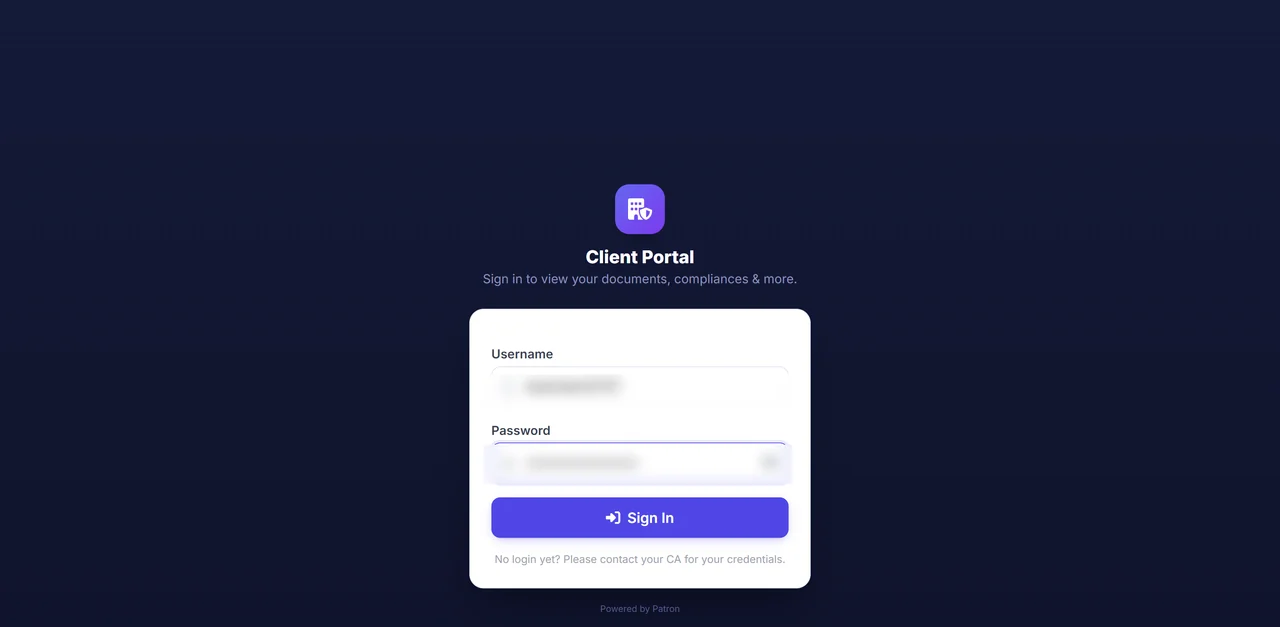
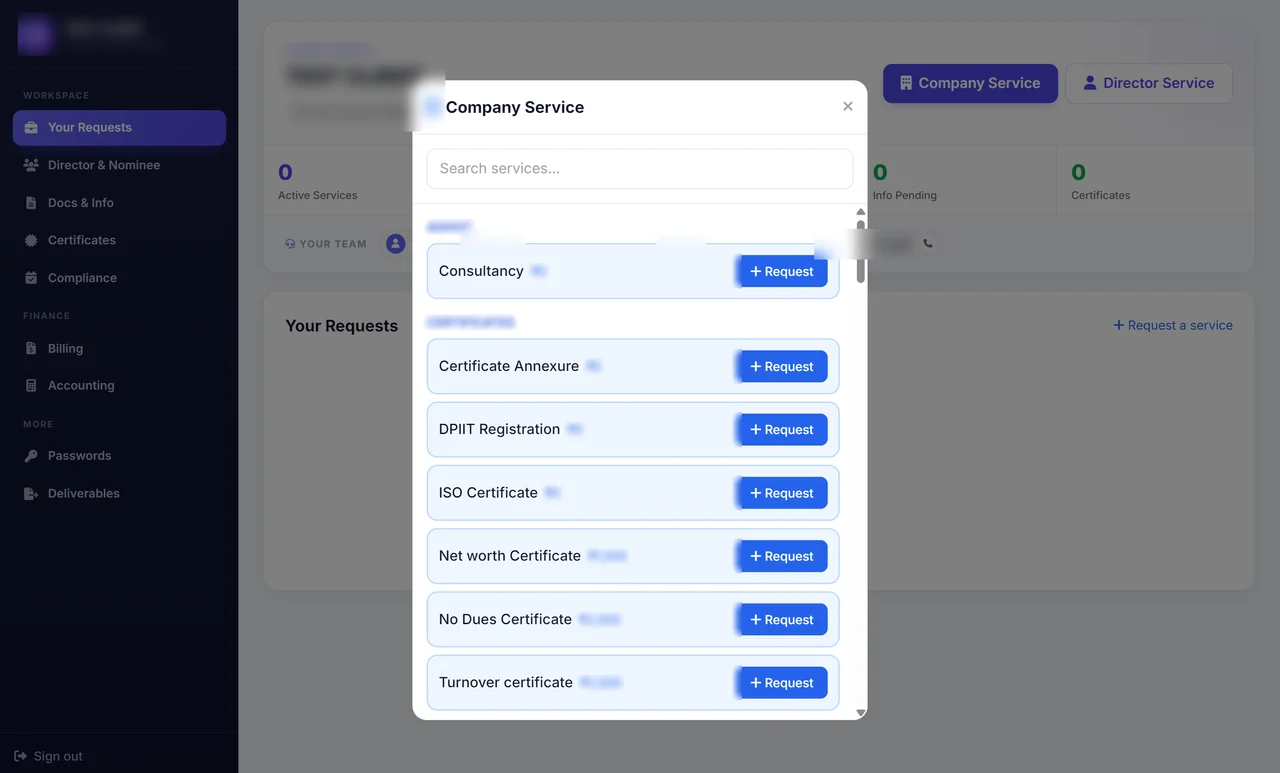
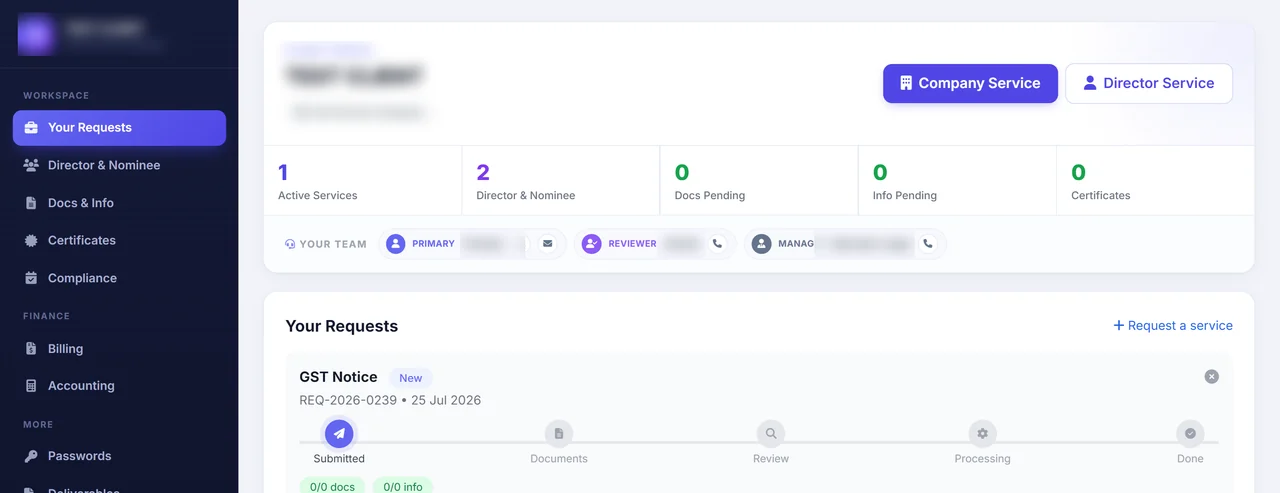
Everything happens in one secure login. You can see your active services, the Patron team on your account, and anything still pending. Once you raise a request, it moves through the same clear steps every time, so you always know exactly where your work stands.

Secure client portal login screen
1

Sign in securely

Your books, documents and requests all sit behind one private, password protected login. The team handling your account is shown on screen, so nothing sensitive ever needs to travel over email or WhatsApp.

Service catalogue inside the client portal
2

Raise your request

Choose the service you need from the menu inside the portal, where the price is shown before you go ahead. Your request is logged the moment you send it, with no phone calls or reminder emails to wait on.

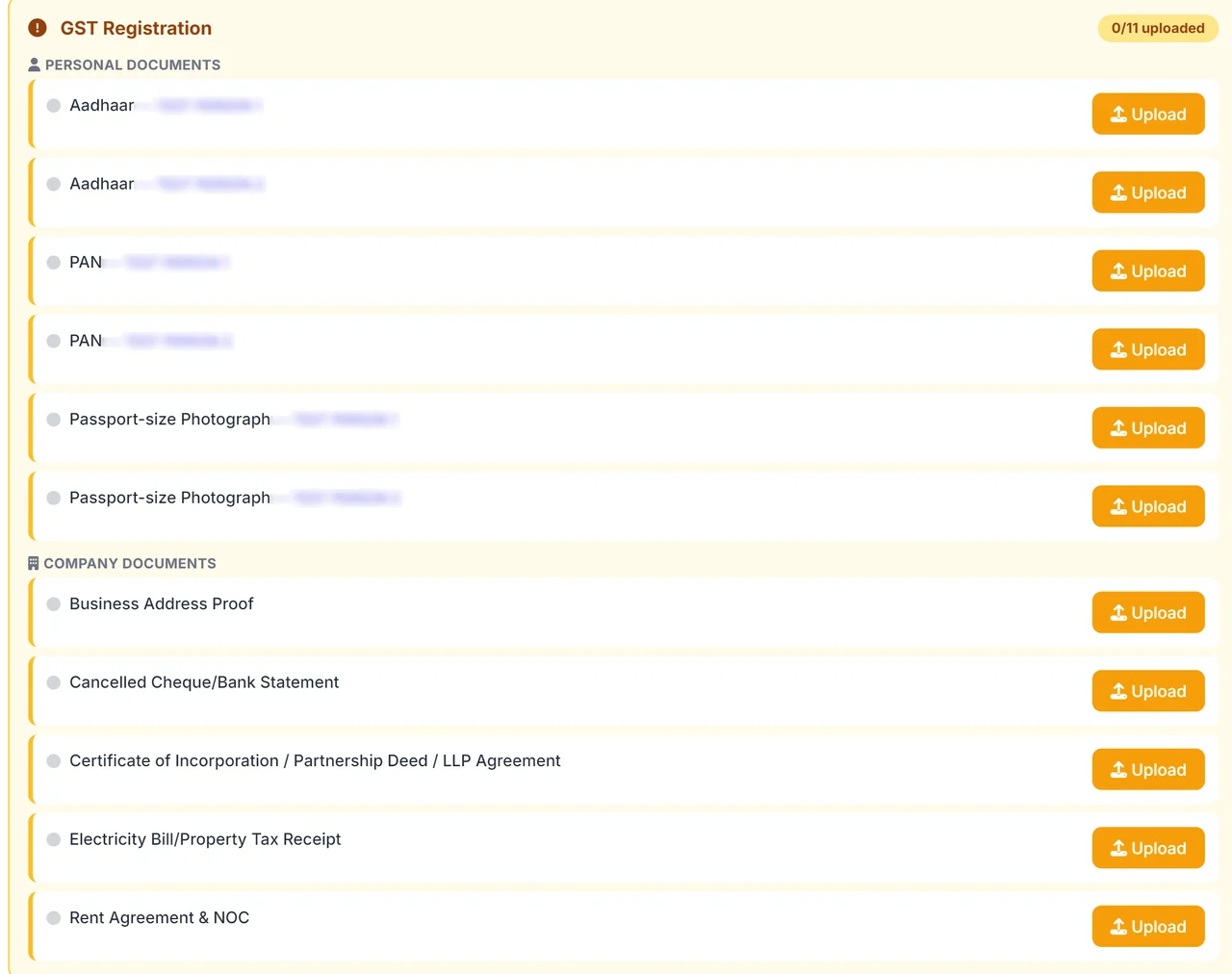
GST registration document checklist in the client portal, with an upload button beside each item
3

Share what the service asks for

For every service, the portal lists the exact documents it needs, each with its own upload button. The example shown here is the GST registration checklist. When a service needs nothing from you, it simply asks for nothing.

Live request tracker inside the client portal
4

We review, prepare and file

Once your documents are in, your team checks them, prepares the work and files it for you. A live tracker shows each stage as it happens, from review to processing to done, so you never have to ask where things stand.

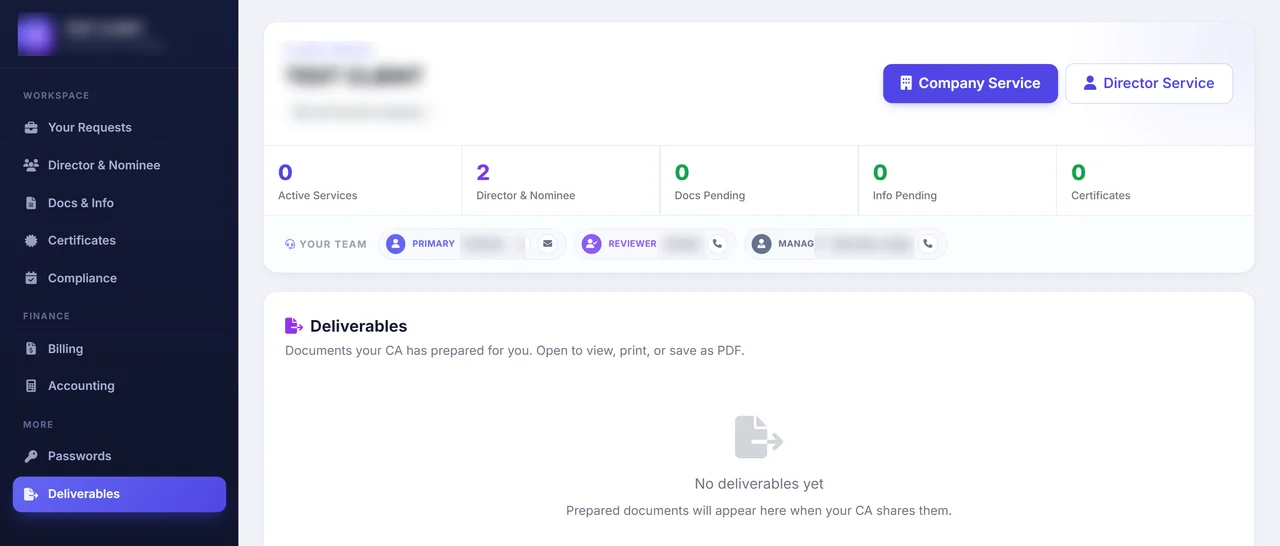
Deliverables area of the client portal
5

Collect your finished work

Every completed return, computation and certificate is placed in your Deliverables area. You can open, print or download any of them as a PDF whenever you need a copy.

Common Accounts Payable Outsourcing Challenges and How We Solve Them

ChallengeImpactHow Patron Accounting Solves It
Duplicate invoices slip through when vendors resend by emailThe same bill is paid twice, cash lost and recovery from the vendor slowWe screen vendor, invoice number and amount for duplicates before the purchase to pay payment run releases funds
Vendor advances and debit notes left unadjusted against billsPayables overstated, and the vendor ledger never agrees with the supplier statement at closeReconcile advances, TDS and debit notes to the vendor statement monthly, so open items reflect real dues
ITC claimed on invoices missing from GSTR-2BInput credit reversed with interest, and the cost lands back in expenseMatch every purchase to GSTR-2B and park unmatched invoices until the vendor uploads, protecting the credit
TDS deducted under the wrong section or rateShort deduction triggers Section 40(a)(ia) disallowance and interest on the shortfallMap each vendor to the correct 194 section at onboarding, so deduction is right at invoice booking
Goods received but not invoiced by period closeExpenses and payables understated, so margin is overstated for the monthRaise a GRN-based accrual for un-invoiced receipts, so the close reflects the true liability

Accounts Payable Outsourcing Fees

Fee ComponentAmount
Starter — routine monthly bill volume for one entity with simple approvalsINR 7,499 per month
Excl. GST & Government Charges
Growth — higher vendor bill volume with multi-step approval routingOn quote
Managed — multi-entity payables with custom controls and monthly reportingOn quote

Your accounts payable outsourcing starts at INR 7,499 per month for routine bill volume in one entity with simple approvals. What moves the price up is the number of monthly vendor bills processed and how many approval steps your routing needs. Get a scope-based quotation on +91 94594 56700.

Fees exclude GST and government charges. Final quote confirmed after a scoping review.

All fees and charges listed are indicative only and do not constitute a binding offer. Final amounts may vary depending on the volume of work and the complexity involved.

Professional accounting and compliance charges are scoped to your number of entities, funding stage and monthly transaction volume, and are separate from statutory and government charges. Contact us for a detailed, fixed quote.

Get a free Accounts Payable Outsourcing consultation - Call +91 945 945 6700 or WhatsApp us. No-obligation assessment.

Accounts Payable Outsourcing Compliance Calendar 2026

ComplianceDue DateApplies To
TDS / TCS deposit (Challan ITNS-281)7th of every month (30 April for March)Every business that deducts tax at source on salaries, rent, contractor or professional fees
GSTR-3B (summary return and tax payment)20th of every month for monthly filersGST-registered businesses filing monthly; QRMP filers pay via PMT-06
Form 15CA / 15CB on foreign remittancesBefore each outward foreign remittanceBusinesses remitting payments to non-residents
MSME-1 half-yearly return on dues to micro and small suppliers30 April 2026 and 31 October 2026Companies with payments to MSME vendors outstanding beyond 45 days
TDS return for Jan-Mar quarter (Form 24Q / 26Q)31 May 2026Deductors filing quarterly TDS statements
TDS return for Apr-Jun quarter (Form 24Q / 26Q)31 July 2026Deductors filing quarterly TDS statements
TDS return for Jul-Sep quarter (Form 24Q / 26Q)31 October 2026Deductors filing quarterly TDS statements

In accounts payable the calendar is TDS-led: deposit by the 7th, then the quarterly TDS returns on 31 May, 31 July and 31 October. MSME-1 reports dues held beyond 45 days. Patron runs accounts payable so vendor TDS and 15CA workings clear before each date. Get a filing-reminder schedule set up; call +91 94594 56700.

Key Benefits

Why Professional Accounts Payable Outsourcing Matters

Payment only against proof

We pay no bill until the purchase order and the goods receipt agree with it on quantity, rate and tax.

  • Three-way match across invoice, purchase order and goods receipt note
  • Short supply goes back as a debit note
  • Without the gate, you pay for goods that never arrived

MSME dues visible before payment

We flag every micro and small vendor from their Udyam declaration and list those dues separately in the payment run.

  • Section 43B(h) allows the deduction only in the year of payment
  • Micro and small flags read from Udyam declarations
  • Without tracking, the deduction is pushed into a later year

Credit confirmed ahead of payment

We claim credit only on invoices your supplier has reported in GSTR-2B, parking and chasing anything missing before you pay.

  • Each invoice matched to GSTR-2B for the tax period
  • Missing invoices parked and chased before money moves
  • Without it, you pay the vendor and reverse the credit later

Reasons behind every held invoice

You get an ageing and a hold report each period, saying why any particular bill has not been paid.

  • Holds tagged as failed match, missing declaration or vendor query
  • The hold report sits in the period-end pack
  • Without it, the vendor call escalates to the owner

Vendor balances agreed in writing

We reconcile vendor statements to your ledger each cycle, adjusting advances and accruing goods received but not yet invoiced.

  • Advances and debit and credit notes settled on paper
  • Vendor advance ledger reconciled while both sides hold the paperwork
  • Without it, unexplained old balances get raised at audit

Withholding fixed at booking

We decide tax deduction when the invoice is booked, not when it is paid, using the section stored against the vendor.

  • TDS section held on the vendor master drives the deduction
  • Deduction fixed at booking, not at payment
  • Without it, the deduction is reported in the wrong period

Why Businesses Choose Patron Accounting for Accounts Payable Outsourcing

Five things a founder can check before handing over the books. Each is a claim with the proof behind it.

Three-way match on every invoice before payment

We match purchase order, goods receipt note and vendor bill before any payment leaves, so nothing is paid on trust. This three-way matching rigour comes from 15+ years of experience.

Section 43B(h) MSME 45-day payment tracking built into the run

Section 43B(h) means dues to MSME suppliers must clear within the statutory window or the deduction is lost. We flag each one inside the payment run, part of 25,000+ filings completed.

Approval workflow inside your ERP, audit trail per approver

You keep the ledger you already run, Zoho Books, Xero, Tally Prime or Odoo. Approvals sit inside the tool you run, so every held or released bill carries a named approver trail.

Payment run and vendor ageing, fixed weekly cycle

Each week we complete the payment run and circulate a vendor ageing statement reconciled to supplier statements, so balances stay current. This accuracy feeds the 25,000+ filings we have completed.

AP engagements among 3,000+ businesses served

Accounts payable runs are among the 3,000+ businesses we have served since 2019. Our in-house team of CAs and CS handles them, with 15+ years of experience and a 4.9 star Google rating.

Figures reflect Patron Accounting LLP engagements since 2019. Scope and turnaround are confirmed in your engagement letter.

In-House AP Team vs Outsourced AP

CriterionIn-House AP TeamOutsourced AP
Monthly costSalaries for a full AP desk, a high fixed monthly costA managed fee that flexes with invoice volume, no idle staff
Compliance riskMSME payment deadlines under 43B(h) can slip without a tracked calendarMSME dues and withholding are flagged before payment as standard
Invoice controlsThree-way matching depends on how the team is trained and staffedPurchase order, goods receipt and invoice matched on every bill
ScalabilityA volume spike means overtime or a rushed extra hireCapacity absorbs seasonal peaks without recruitment lag
ContinuityLeave or exit delays vendor payments until cover is arrangedA team keeps payments running through absence and turnover
Segregation of dutiesSmall teams often let one person book and release paymentRecording, approval and payment stay in separate hands
VerdictA large firm with steady, high invoice volume can justify an in-house desk. For most SMEs, accounts payable outsourcing gives tighter control at lower fixed cost, supported by disciplined three-way matching.

Legal and Regulatory Framework for Accounts Payable Outsourcing

Every bill a payables function books is also a tax event: deduct the right TDS and the expense stands, miss it and Section 40(a)(ia) disallows part of it. Behind that sits Section 128 of the Companies Act, which demands a complete, dated creditors ledger in the first place.

That double check is where the compliance lives. So Three-Way Matching against the purchase order and the goods received note is a compliance control as much as a payment one, and the Section 43B(h) MSME Clock decides when a small supplier's bill must be paid for the deduction to hold. Accounts payable outsourcing runs that ledger against the provisions below.

  • Chapter XVII-B, Income-tax Act 1961Tax is deducted at source on covered payments and deposited by the 7th of the next month; non-deduction disallows 30% of the expense under Section 40(a)(ia).
  • Section 31, CGST Act 2017 with Rule 46 and 48The vendor tax invoice must carry the prescribed fields, and above Rs 5 crore turnover an IRN before input tax credit can be claimed on it.
  • Section 128, Companies Act 2013 and Section 44AA, Income-tax Act 1961The underlying obligation to keep a complete double-entry creditors ledger sits behind every payables task, whichever entity holds the books.
  • Section 44AA, Income-tax Act 1961A non-corporate business maintains its books once income or turnover crosses the prescribed limits, so the expenses claimed can be substantiated - starting with Accounts Payable.
  • Rule 3(1), Companies (Accounts) Rules 2014The audit trail stays enabled while bills are posted or corrected, so a back-dated invoice cannot pass unrecorded. A large arrears backlog is handled by catch-up bookkeeping.

Official sources: Ministry of Corporate Affairs · Income Tax Department · GST Portal · Startup India (DPIIT)

How do you evaluate an accounts payable outsourcing provider?

Judge a provider on four things: invoice turnaround time, three-way match accuracy, whether GST input credit matching is included, and how vendor queries get escalated. Ask for a sample month of exception reports rather than a brochure. A provider who cannot tell you their error rate per thousand invoices is simply not measuring it.

What is AP outsourcing?

Accounts payable outsourcing is handing the invoice to payment cycle to an external team that receives vendor bills, checks them against the purchase order and goods receipt note, codes them to the correct ledger, matches input credit against GSTR-2B, applies TDS and prepares the payment file for your approval. Expenditure approval and the bank release stay with you. Pricing is per invoice or a fixed monthly retainer.

How is GST input credit on vendor bills protected from being lost?

Every purchase invoice is matched against GSTR-2B before payment is released, so bills a vendor has not uploaded are held back and chased instead of paid. Unmatched credits go to you weekly with vendor names and amounts. This single control often recovers more than the cost of the service within the first two quarters.

Do you handle TDS deduction on vendor payments as part of the process?

Yes. Each invoice is coded to the correct TDS section at entry, deduction is applied before payment, and the monthly challan is prepared for your approval and deposit. Quarterly statements and Form 16A issue are included where you want the full cycle. Vendor PAN and lower deduction certificates are validated at onboarding, not at return time.

Do you get access to the client bank account or release payments?

No. We prepare the payment file and the approval note, and your authorised signatory releases funds from your own banking portal. Maker and checker stay inside your company, which preserves the segregation of duties auditors expect to see. Where you want us in the maker role, we take initiate rights only, never final authorisation.

How much does it cost to outsource accounts payable?

Accounts payable outsourcing in India generally costs Rs 25 to Rs 60 per invoice, or a fixed monthly retainer where volume is stable, with the rate driven by invoice complexity and whether GST and TDS matching sit inside the scope. A business processing 2,000 invoices a month usually spends less than one in house payables executive costs. Setup and system integration are billed once.

How do you stop duplicate and fraudulent invoices getting paid?

Duplicate checks run on vendor GSTIN, invoice number, date and amount at the point of entry, and any match is quarantined for review before it reaches a payment run. New vendor bank details are confirmed by call-back to a number already on record, never from the invoice itself. Stopped amounts are reported to you monthly.

How long does accounts payable onboarding take and what is required from the client?

Onboarding runs 3 to 4 weeks. Week one covers your vendor master, approval matrix, payment terms and chart of accounts. Week two we run in parallel with your existing team on live invoices. From week three we take over, working to a documented process note signed off by your finance head before cutover.

Do you work inside an existing ERP or your own system?

We work inside your system, whether that is Tally, Zoho Books, SAP, Oracle or Microsoft Dynamics, using restricted user roles your IT team creates. Nothing is copied into a parallel ledger. Where you have no ERP at all, we implement Zoho Books and run payables from there with your approval workflow built into it.

Can you outsource accounts payable?

Yes, and most of the cycle can be outsourced, including invoice receipt, three way matching, coding, exception handling, vendor query response, TDS deduction, ageing reports and preparation of the payment file. What should stay inside your company is approval of the expenditure and the final release of funds from your own bank portal, so the maker and checker split auditors expect is not broken.

Quick Answers

Money leaves on a schedule here rather than on request. Bills arrive by email or through a vendor portal, are coded to the right cost centre and the right approver, and then sit in a payment run that is released on the same day each week under maker and checker control. Anything that fails validation is held back,.

Accounts Payable Outsourcing Deadlines You Cannot Afford to Miss

TDS / TCS deposit (Challan ITNS-281) is due 7th of every month (30 April for March). GSTR-3B (summary return and tax payment) is due 20th of every month for monthly filers. Form 15CA / 15CB on foreign remittances is due Before each outward foreign remittance. Patron tracks each against your books so nothing is reconstructed after the fact. Call +91 94594 56700 to set up a filing-reminder schedule.

Start Your Accounts Payable Outsourcing Services with Patron Accounting

Typing invoices in is not what you are choosing between. It is whether you genuinely want to know your payables position on any given day without asking three people, and whether approvals should live in a system that remembers who gave them. Everything else about the payables function follows from that answer.

With accounts payable services running, your payables balance becomes a number you can plan cash against. What is due, what is approved and what is deliberately parked all sit in one view. A decision to release or defer is made against the record rather than the loudest reminder in your inbox.

Approval authority is agreed before anything is processed: who signs off what amount, which costs need a second pair of eyes, and how bills reach you now. Your vendor master gets looked at in the same conversation, alongside bringing old ledgers up to date.

Book a Free Consultation - No Obligation.

Explore Our Accounting Services

Related services our CA-led team delivers for businesses across India.

Reviewed by the CA & CS Team, Patron Accounting LLP
ICAI & ICSI registered  ·  15+ years in Indian accounting & compliance  ·  Last reviewed 23 July 2026  ·  Next review 23 October 2026