


Talk to an Expert
Talk to an Expert ✆ +91 945 945 6700
Trusted by 10,000+ Businesses

Bank Reconciliation Services for Indian Businesses

Reviewed by CA and CS Team, Patron Accounting LLP ICAI & ICSI Registered| 15+ Years Experience| Last Updated: July 2026 Verify Credentials →

Stale cheques taken off the books: We track every cheque you issue against what the bank has cleared. Cheques that go stale are reversed, not carried into another year.

Proof that no month is missing: We chain each statement's opening balance to the previous closing, across every current, overdraft, deposit and card account. You then know no month.

Bank-only entries brought on book: We post charges, overdraft interest, forex fees, gateway commission and deposit interest each to its own head. Each carries the right tax treatment.

Card spend traced to bills: Every itemised card transaction ties back to a bill or expense claim, and we separate personal spending for recovery.

15+ YearsIndustry Experience
CA & CSCertified Experts
4.9
Based on real Google reviews

Get Free Consultation

Talk to a CA/CS expert today

🇮🇳 +91

Our team will get back to you shortly. No spam.

Real Stories from Real People

Verified Google reviews from founders and businesses Patron works with across India.

Join 3,000+ Founders and Businesses on Patron

Rated 4.9 on Google - trusted for startup accounting since 2019.

Talk to an Expert
10,000+Businesses ServedGST compliance and litigation support across India.
15+Years ExperienceDeep expertise in IP registration, GST & business compliance.
50,000+Documents FiledReturns, appeals, and filings handled accurately.
4.9★Client RatingTrusted by entrepreneurs, startups, and growing businesses.
ISO CertifiedProfessional standards and documented processes.
SSL SecureYour financial and business data is fully protected.

What Bank Reconciliation Covers — Scope, Deliverables and Who It Suits

📌 TL;DR - Bank Credit Card Reconciliation Services at a Glance

Bank reconciliation services match every line, leaving no suspense account carrying last year's differences. Current accounts, credit cards, payment gateways and wallets are reconciled by Patron, with unmatched items listed against a named owner. Foreign remittances are tied to their FIRC and restated under AS 11, so exchange differences hit the right period. Appropriate for businesses running several bank and card accounts.

Between the bank statements, the card and gateway settlement files and your own ledger, nothing arrives in the same order or the same format. Patron collects them as each month runs rather than waiting for the year end, matches line against line, chases breaks while the paperwork is still findable, and closes each period with a schedule of cleared items, open items and write-off decisions awaiting your call. A plain guide to matching entries covers the underlying routine.

Scope covers the account set you nominate at the start. Credit card reconciliation services sit inside that count, and each further account, currency or gateway adds another matching pass. Effort moves with statement volume, the age of the backlog and whether prior-year differences are still open. Filings on the official GST portal draw on these figures but are quoted separately.

What Is Bank Reconciliation?

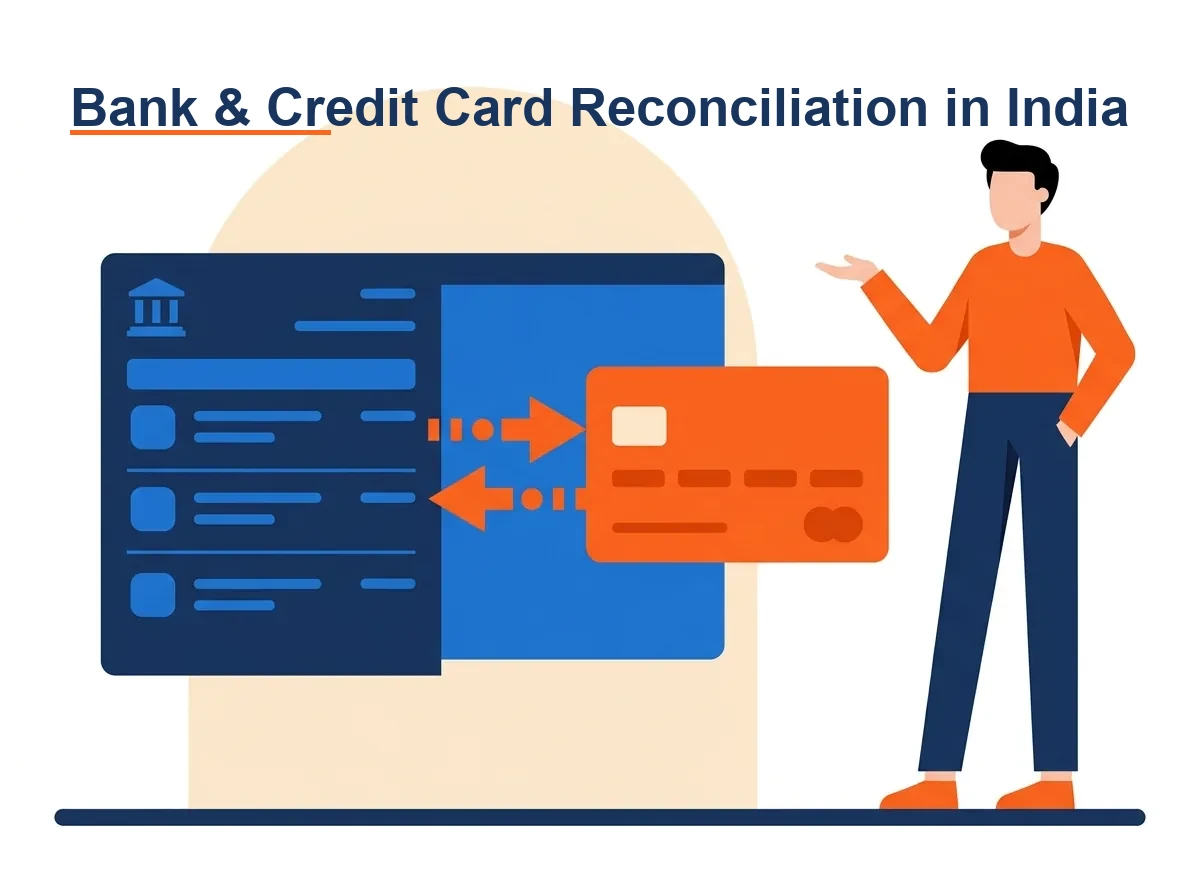
A single account is the unit of work here, a current account, a company card or a payment gateway, matched statement line against ledger line until the two agree. Bank reconciliation services are the outsourced function that performs that match across every account you nominate, leaving nothing parked in a suspense head.

Each statement and settlement file is collected as the month runs, and every line is matched to your books. The period closes with a listing of what has cleared, what remains open and any write-off decisions awaiting your call. Foreign currency receipts are tied to their inward remittance certificate and restated so exchange differences fall in the correct period. Bank reconciliation services extend to company cards, wallets and gateways, where credit card reconciliation services substantiate each spend against a real receipt. The figures feed statutory filings on the official portal, but that filing is quoted and handled separately from this engagement.

Key Terms for Bank Credit Card Reconciliation:

What Is Bank Reconciliation. A single account is the unit of work here, a current account, a company card or a

Who Needs Bank Reconciliation in India?

Bank reconciliation services matter most where money moves through more places than one ledger easily tracks. Several current accounts, a few cards, a gateway or two, and the statements stop agreeing on their own. These businesses need each line matched before a balance can be trusted.

  • Companies holding current accounts across several banks, where no two statements arrive alike.
  • Businesses with heavy corporate card spend, needing credit card reconciliation that traces each swipe to a bill.
  • Firms taking gateway and wallet payments, whose payouts land net of fees and refunds.
  • Companies carrying an unmatched backlog, where a suspense balance has survived several closings.
  • Exporters holding foreign currency accounts, where each remittance must tie to its advice.
  • Businesses on cash credit or overdraft, needing bank charges and interest booked correctly.
  • Retail counters settling daily through UPI and POS, where volume buries the odd missing payout.
  • Owners heading into audit, needing a closing bank position provable line by line.

Our Bank Reconciliation Services

ServiceWhat We Do
Bank feed set-upWe connect automated bank feeds for every account and carry forward the last reconciliation so your opening position is agreed from day one One-time (setup)
Statement completeness checkOur bank reconciliation services prove every statement is complete, confirming no month or account is missing across the full period under review Monthly
Line-by-line matchingWe match every bank line to the books, clearing stale and unpresented cheques, following practices in this bank reconciliation statement guide closely Monthly
Booking bank-only entriesWe bring bank charges, interest, and foreign exchange advices on to the books, so entries the bank knows are captured in your ledgers Monthly
Credit card reconciliationOur credit card reconciliation services trace every card transaction back to its supporting bill and read payment gateway payouts from gross to net Monthly
Exception and closing reportWe clear the suspense account, give every break a named owner, and prove a clean closing balance you can rely on each month Monthly
Our Process

How Bank Reconciliation Works — Our Process

How Patron delivers bank credit card reconciliation, step by step from onboarding to a clean monthly close.

Step 1

Carry forward the last reconciliation

We start from the prior period's closing reconciliation statement and prove out every item on it: each cheque issued but not presented, each deposit not yet credited. Items that still have not cleared are investigated, and cheques that have gone stale are reversed rather than carried forward again.

Illustration for Carry forward the last reconciliation: We start from the prior period's closing reconciliation statement
Step 2

Prove the statements are complete

Statements are collected for every current, overdraft, cash credit, fixed deposit and card account, in Excel or CSV as well as PDF. Completeness is proved by chaining each statement's opening balance to the previous closing balance, so a missing month cannot quietly slip through.

Illustration for Prove the statements are complete: Statements are collected for every current, overdraft, cash credit,
Step 3

Match bank lines to books

Matching runs first on amount, date and reference, then by hand for the awkward cases. Those include one NEFT settling several invoices, part payments, contra transfers between your own accounts, and cheques presented for an amount different from the one written in the books.

Illustration for Match bank lines to books: Matching runs first on amount, date and reference, then by hand for the awkward
Step 4

Book what only the bank knows

A large part of any reconciliation is entries the business never recorded: bank charges, interest debited on the overdraft, foreign exchange charges, gateway commission, and fixed deposit interest with the tax deducted on it. Each is posted to the correct expense head with its tax treatment.

Illustration for Book what only the bank knows: A large part of any reconciliation is entries the business never recorded:
Step 5

Substantiate card spending

Every itemised card transaction is traced to a bill or an expense claim. Personal spend is identified for recovery. Input tax credit is claimed only where the invoice is in the company's name and appears in GSTR-2B, because a credit card statement is not itself a tax invoice.

Illustration for Substantiate card spending: Every itemised card transaction is traced to a bill or an expense claim.
Step 6

Prove a clean closing position

A reconciliation is finished only when the gap between bank and book balance consists entirely of dated timing items, each expected to clear on an identified date. Nothing is routed to suspense or squared off with a rounding entry, and anything still unexplained is reported as unexplained.

Illustration for Prove a clean closing position: A reconciliation is finished only when the gap between bank and book

Documents Required for Bank Reconciliation

Work forward from the last statement that was agreed, then account for everything since: cheques, transfers, charges and the items that never cleared.

  • The prior period's closing bank reconciliation statement
  • Cheque book counterfoils and a list of cheques issued but not yet presented
  • Payment gateway, wallet and marketplace settlement reports with the gross-to-net breakup
  • Bank charge, interest, and foreign exchange advices and debit notes
  • Overdraft, cash credit and term loan account statements with sanction terms and drawing power
  • Fixed deposit advices and bank interest certificates
  • Bank statements for every account for the full period, in PDF and Excel or CSV
  • A complete list of bank accounts with account number, IFSC, branch, currency and account type
  • Credit card statements for every corporate and business card, with itemised transactions
Client Portal

How You Work With Patron

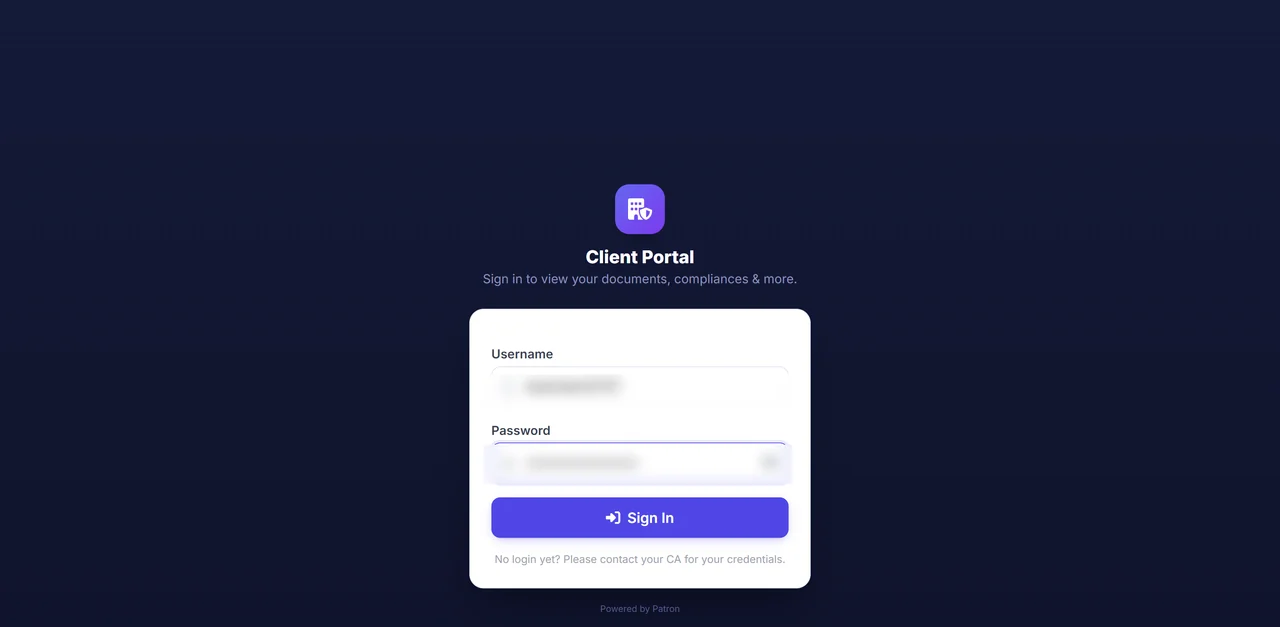
Everything happens in one secure login. You can see your active services, the Patron team on your account, and anything still pending. Once you raise a request, it moves through the same clear steps every time, so you always know exactly where your work stands.

Secure client portal login screen
1

Sign in securely

Your books, documents and requests all sit behind one private, password protected login. The team handling your account is shown on screen, so nothing sensitive ever needs to travel over email or WhatsApp.

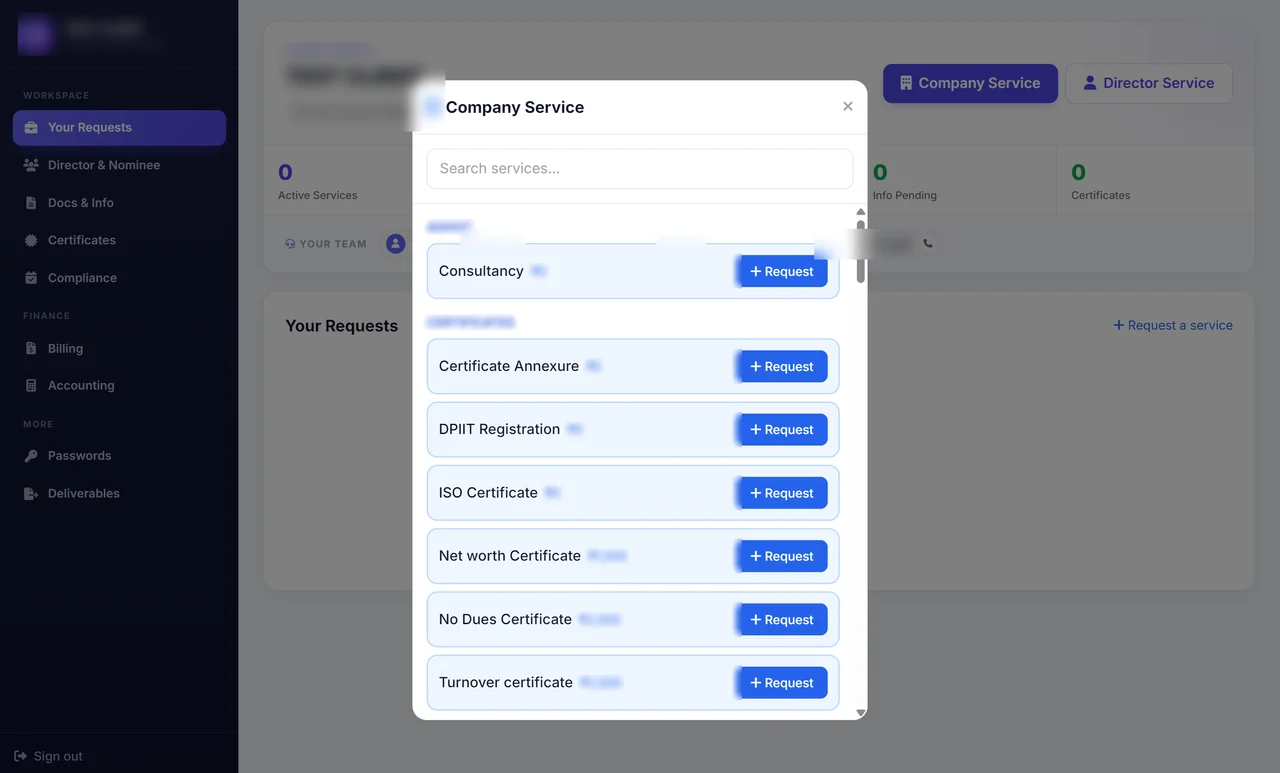
Service catalogue inside the client portal
2

Raise your request

Choose the service you need from the menu inside the portal, where the price is shown before you go ahead. Your request is logged the moment you send it, with no phone calls or reminder emails to wait on.

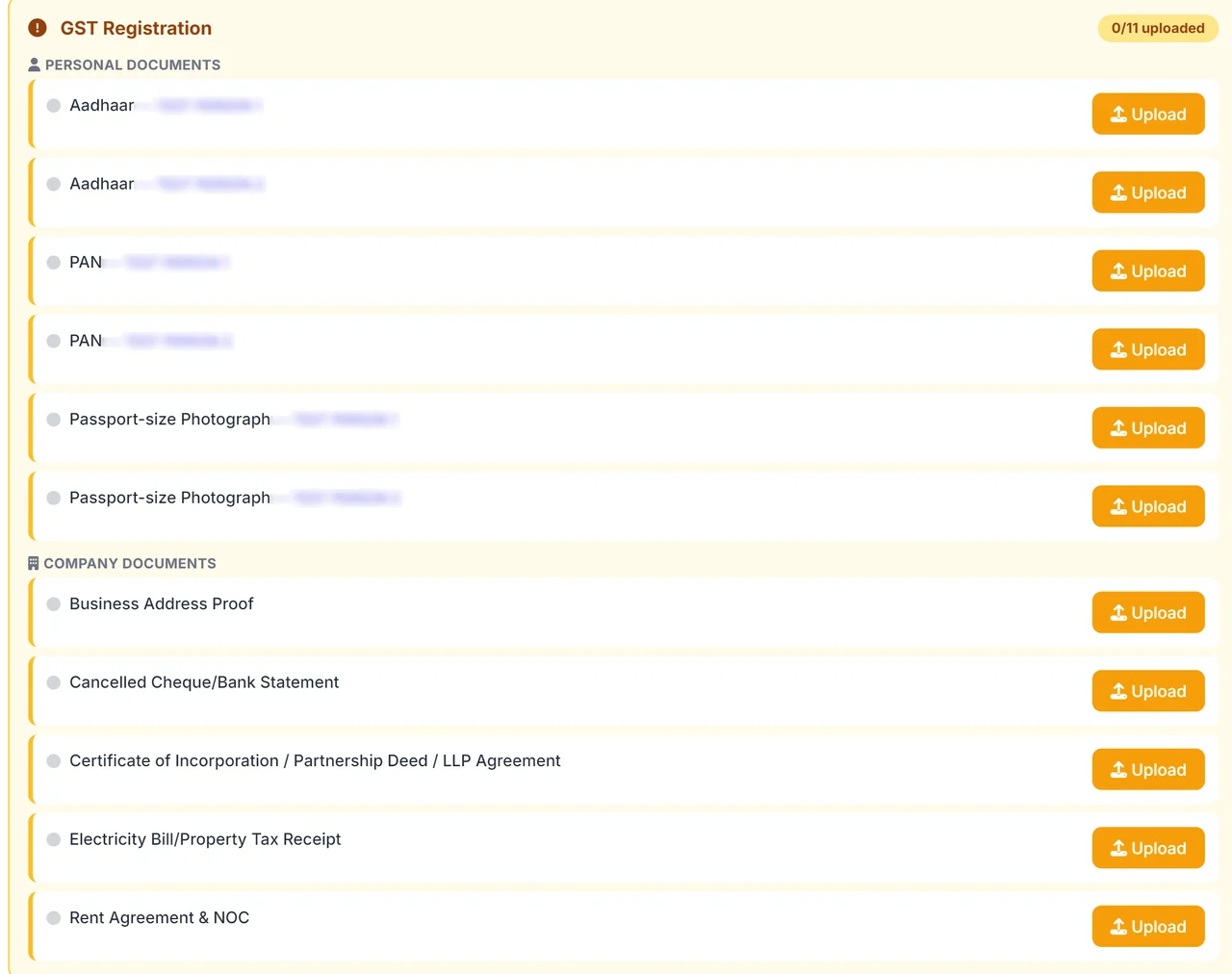
GST registration document checklist in the client portal, with an upload button beside each item
3

Share what the service asks for

For every service, the portal lists the exact documents it needs, each with its own upload button. The example shown here is the GST registration checklist. When a service needs nothing from you, it simply asks for nothing.

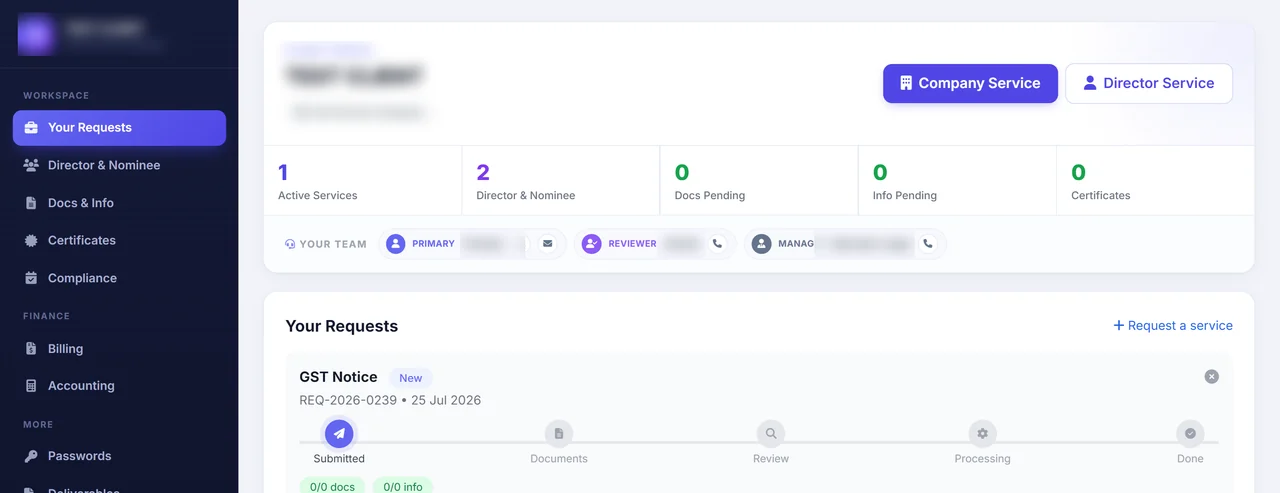
Live request tracker inside the client portal
4

We review, prepare and file

Once your documents are in, your team checks them, prepares the work and files it for you. A live tracker shows each stage as it happens, from review to processing to done, so you never have to ask where things stand.

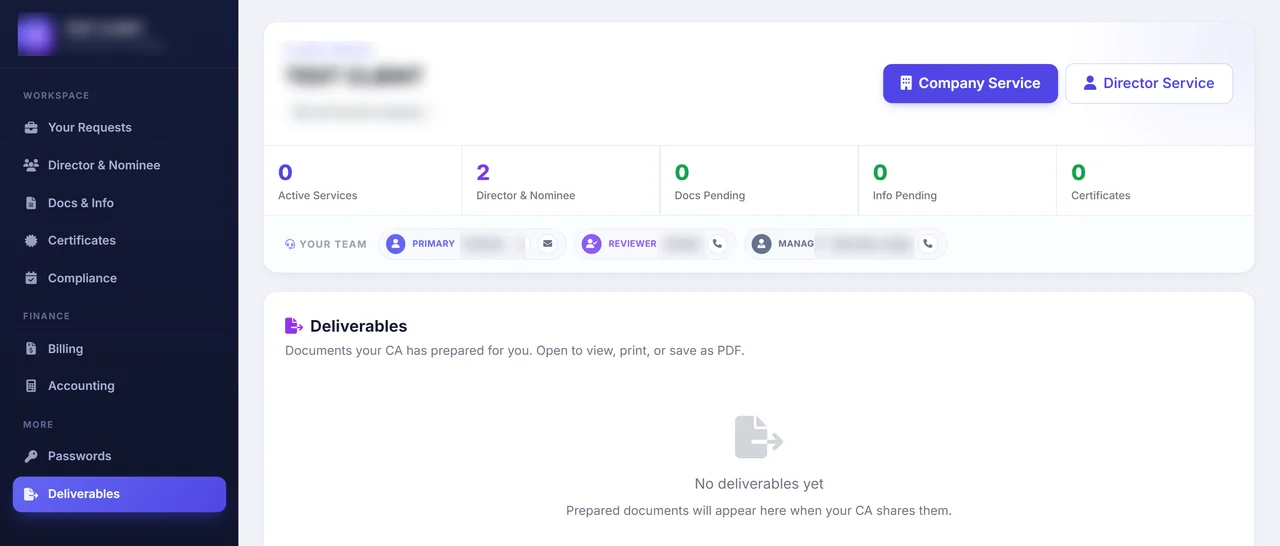
Deliverables area of the client portal
5

Collect your finished work

Every completed return, computation and certificate is placed in your Deliverables area. You can open, print or download any of them as a PDF whenever you need a copy.

Common Bank Reconciliation Challenges and How We Solve Them

ChallengeImpactHow Patron Accounting Solves It
Cheques issued but not yet presented left unexplained in the balanceBook and bank balances never agree, and stale cheques sit uncleared for monthsWe list outstanding and stale cheques by date, clearing or reversing those beyond their validity at each close.
Bank charges, interest and auto-debits only spotted at year-endExpenses land in the wrong month and the cash position is overstated all yearCharges, standing instructions and interest booked from each statement, following how to prepare a BRS, so ledger cash stays live.
Duplicate vendor payments slip through when transaction volume is highCash walks out twice and recovery depends on a supplier's goodwill months laterPatron flags duplicate amount, date and payee combinations during reconciliation, raising recovery entries before the payment ages.
Personal and business spends mixed on the same company cardExpenses overstate, input credit is claimed on ineligible items, and directors' drawings blurOur team codes card lines against receipts, posting personal spend to director loan rather than leaving it in expenses.
Gateway settlements land days after the sale is recordedSales and receipts sit in different periods, leaving a receivable no one is chasingPatron matches each settlement batch to its order date, tracking the in-transit receivable until the money clears.

Bank Reconciliation Fees

Fee ComponentAmount
Starter — a few bank and card accounts reconciled each monthINR 2,499 per month
Excl. GST & Government Charges
Growth — more accounts and higher statement line volume monthlyOn quote
Managed — multi-entity reconciliations with custom controls and monthly reportingOn quote

Reconciling a handful of bank and card accounts each month sits in the entry tier, matching statements to your ledger and flagging gaps. What raises the fee is simply more accounts and heavier line volume. Speak with an accounting specialist on +91 94594 56700.

Fees exclude GST and government charges. Final quote confirmed after a scoping review.

All fees and charges listed are indicative only and do not constitute a binding offer. Final amounts may vary depending on the volume of work and the complexity involved.

Professional accounting and compliance charges are scoped to your number of entities, funding stage and monthly transaction volume, and are separate from statutory and government charges. Contact us for a detailed, fixed quote.

Get a free Bank Credit Card Reconciliation consultation - Call +91 945 945 6700 or WhatsApp us. No-obligation assessment.

Bank Reconciliation Compliance Calendar 2026

ComplianceDue DateApplies To
TDS / TCS deposit (Challan ITNS-281)7th of every month (30 April for March)Every business that deducts tax at source on salaries, rent, contractor or professional fees
GSTR-1 (outward supplies)11th of every month for monthly filersGST-registered businesses filing monthly returns
Provident Fund (ECR) and ESI contribution15th of every monthEmployers registered under EPF and ESI
GSTR-3B (summary return and tax payment)20th of every month for monthly filersGST-registered businesses filing monthly; QRMP filers pay via PMT-06
Tax audit report (Form 3CA/3CB-3CD)30 September 2026Businesses crossing the Section 44AB turnover threshold
Annual GST return GSTR-9 and reconciliation GSTR-9C31 December 2026GST-registered businesses above the annual-return and audit thresholds

Clean reconciliation is what makes every later date safe: the 20th GSTR-3B and the 30 September tax audit both rely on a bank and card tie-out first. Patron runs bank reconciliation weekly so no unmatched entry surfaces at a filing or audit. Call +91 94594 56700 for a 2026 calendar mapped to your books.

Key Benefits

Why Professional Bank Reconciliation Matters

Stale cheques taken off the books

We track every cheque you issue against what the bank has cleared. Cheques that go stale are reversed, not carried into another year.

  • Tracked against cheque counterfoils and the issued not presented list
  • Stale, unpresented cheques reversed before year end
  • Without it cash is understated and a paid supplier still chases you

Proof that no month is missing

We chain each statement's opening balance to the previous closing, across every current, overdraft, deposit and card account. You then know no month is missing.

  • Opening balance chained to prior closing for every account
  • Covers current, overdraft, deposit and card statements for the full period
  • Without it a missing month leaves every reported figure short

Bank-only entries brought on book

We post charges, overdraft interest, forex fees, gateway commission and deposit interest each to its own head. Each carries the right tax treatment.

  • Sourced from bank charge, forex and FD interest certificates
  • Tax deducted on deposit interest traced and claimed
  • Without it they land as one year end lump and credit goes unclaimed

Card spend traced to bills

Every itemised card transaction ties back to a bill or expense claim, and we separate personal spending for recovery.

  • Matched to credit card statements with itemised transactions
  • Input credit taken only where the invoice appears in GSTR-2B in your name
  • Without it credit is reversed and personal spend never recovered

Every break with a named owner

We list every unmatched item against the person accountable for closing it, not in a schedule that rolls forward.

  • Each unmatched item assigned to a named owner to close
  • Not left to age in a rolling schedule
  • Without it breaks age past the point of recovery

Gateway payouts read gross to net

We break wallet, gateway and marketplace settlements from gross collection through commission and deductions. Each is then agreed to the credit in your account.

  • Worked from gateway, wallet and marketplace settlement reports
  • Gross to net breakup agreed to each account credit
  • Without it sales understate collections and fee leakage stays invisible

Why Businesses Choose Patron Accounting for Bank & Credit Card Reconciliation

Five things a founder can check before handing over the books. Each is a claim with the proof behind it.

Every line matched, nothing parked in suspense

We match every line so no suspense account carries last year's differences into this one. Across 3,000+ businesses and 15+ years, clearing breaks to nil is standard work for us.

Foreign remittances tied to FIRC, forex gains booked

We tie each foreign remittance to its FIRC and book the forex gain or loss at the right rate. This reconciliation discipline underpins the 25,000+ filings we have completed.

Bank feeds and card statements pulled automatically

In Zoho Books, or your Tally Prime or Odoo, we pull bank feeds and card statements automatically where supported rather than keying them in. We work across Zoho Books and Xero.

All accounts reconciled monthly, unmatched items owned

Every month all bank and card accounts are reconciled, with each unmatched item assigned to someone to chase. The monthly rhythm shows in our 4.9 star Google rating.

Reconciliation work across the 3,000+ businesses we serve

Reconciliation runs through many of the 3,000+ businesses we have served since 2019, across current, corporate card and gateway accounts. Our in-house team of CAs and CS brings 15+ years of experience.

Figures reflect Patron Accounting LLP engagements since 2019. Scope and turnaround are confirmed in your engagement letter.

Manual Reconciliation vs Automated Bank Feeds

CriterionManual ReconciliationAutomated Bank Feeds
Speed and frequencyStatements downloaded and matched by hand, usually monthly at bestTransactions flow in daily, so breaks surface early
Error rateTyping and matching by hand invites missed or duplicated entriesRule-based matching cuts keying errors on routine transactions
Cost and effortLow tool cost but heavy staff time each periodA feed subscription trades staff hours for software cost
ScalabilityHigh volume and many accounts quickly overwhelm manual matchingMultiple and multi-currency accounts handled without proportional effort
Audit trailWorking papers depend on how carefully staff file themEach match is logged, leaving a clear trail per break
Setup dependencyWorks with any bank straight away, no integration neededNeeds a supported bank feed and initial rule setup
VerdictLow-volume accounts can still be reconciled manually. For most businesses, automated feeds make bank reconciliation services faster and more accurate, though manual review still resolves the exceptions, as common reconciliation errors show.

Legal and Regulatory Framework for Bank Reconciliation

What bank reconciliation protects is the most basic claim any set of books makes - that the cash it reports actually exists - and Section 128's true-and-fair requirement rests on it. A lender reading the balance sheet, or an auditor testing it, starts at the bank line, so a ledger that disagrees with the statement fails at the first check.

The framework treats the reconciliation as the bridge between an external record and the books. Every statement line is matched to a ledger entry, and the gaps have names: uncleared payments, gateway lags, card settlements in transit. That is why the Bank Clearing Account exists to hold timing differences and why Outstanding Checks / Timing Differences are tracked rather than written off. Bank reconciliation services keep the cash position honest against the provisions below.

  • Section 128, Companies Act 2013The books are kept true and fair, and the reported bank balance must agree with the statement it claims to reflect - the basis of Bank Reconciliation.
  • Section 128 and Section 44AA, Income-tax Act 1961The double-entry obligation applies to every entity, so the cash and card ledgers of companies and non-corporates alike are reconciled the same way.
  • Section 44AA, Income-tax Act 1961A non-corporate business maintains books once the limits are crossed, and an accurate bank position is the foundation of those books.
  • Section 44AB, Income-tax Act 1961Where a tax audit applies, unreconciled bank differences are exactly what the auditor is required to probe, so they are cleared first.
  • Rule 3(1), Companies (Accounts) Rules 2014The audit trail stays enabled, so a reclassified receipt or a corrected charge is logged. A long-neglected account is first rebuilt through catch-up bookkeeping.

Practical note: an unreconciled bank line is the first item an auditor pulls, and stale balances sitting in a clearing account are the usual sign a close was rushed.

Official sources: Ministry of Corporate Affairs · Income Tax Department · GST Portal · Startup India (DPIIT)

In preparation of BRS, which entries are passed?

A bank reconciliation statement itself passes no entries. Adjusting entries go into the books only for items the bank has recorded and you have not, such as bank charges, interest credited, direct customer deposits, standing instructions and dishonoured cheques. Timing differences like cheques issued but not yet presented appear in the statement and clear on their own.

What is the BRS prepared for?

A bank reconciliation statement is prepared to explain the difference between the bank balance shown in your books and the balance on the bank statement at a given date. It separates timing differences, such as cheques issued but not yet presented, from entries you have never recorded, such as bank charges and interest, and it gives the auditor evidence that the cash balance is real.

What does corporate credit card reconciliation involve?

Card reconciliation matches each statement line to an expense claim, a supporting bill and the correct GST treatment, then to the settlement debited from your bank. Personal spends and missing bills are listed cardholder by cardholder every month. Input tax credit is claimed only where the vendor invoice carries your GSTIN, not from the card slip.

How many months of unreconciled statements can you clean up?

We routinely clear backlogs of 24 to 36 months, working oldest month first so opening balances are right before the current year is touched. A scoping review over 3 to 5 working days tells you how many entries are unmatched and what a fixed-fee clean-up will cost. Missing statements are collected directly from the bank.

What are the 7 steps to bank reconciliation?

Bank reconciliation runs in seven steps: obtain the statement for the period, tick off matched receipts, tick off matched payments, list cheques issued but not presented, list deposits in transit, post bank charges, interest and auto debits into the books, then agree the adjusted book balance to the statement. Whatever stays unmatched is investigated and cleared before the month is closed.

What does outsourced bank reconciliation cost?

Reconciliation alone is generally Rs 3,000 to Rs 10,000 a month for up to five accounts at normal transaction volume, and is quoted per account beyond that. Backlog clean-up is priced separately as a one-time job after scoping. Businesses already taking monthly bookkeeping from us get reconciliation bundled in rather than billed on top.

Is access to net banking login credentials required?

No. We work from statements in PDF, Excel or MT940 format that you or your bank sends, or from a view-only user ID the bank can create. Full net banking credentials are never requested. Every file is stored in an access-controlled folder, and access is withdrawn on the day an engagement ends.

What is the software for credit card reconciliation?

Corporate credit card reconciliation in India is normally handled in Zoho Books, Zoho Expense, Tally Prime or Xero. Zoho Books treats the card as a separate liability account and imports the statement, so each spend is matched to a vendor bill carrying your GSTIN and the monthly settlement debit clears against it. QuickBooks is not an option, since it withdrew from India in 2023.

Does reconciliation help after a GST or income tax notice?

Yes. Notices comparing bank credits against declared turnover are answered with a reconciled cash book showing which receipts are sales and which are loans, transfers, refunds or capital introduced. We prepare that statement with supporting entries mapped to every bank line. Unreconciled accounts are the main reason these notices escalate into demands.

How do you reconcile payment gateway and UPI collections?

Gateway settlements from Razorpay, PayU, PhonePe and similar providers are matched at transaction level, with gateway commission, GST charged on that commission and refunds posted separately instead of booking only the net credit. Chargebacks and failed transactions are tracked until resolved. Daily UPI collections are grouped to the settlement batch that actually reached your account.

Quick Answers

Between the bank statements, the card and gateway settlement files and your own ledger, nothing arrives in the same order or the same format. Patron collects them as each month runs rather than waiting for the year end, matches line against line, chases breaks while the paperwork is still findable, and closes each.

Bank Credit Card Reconciliation Deadlines You Cannot Afford to Miss

TDS / TCS deposit (Challan ITNS-281) is due 7th of every month (30 April for March). GSTR-1 (outward supplies) is due 11th of every month for monthly filers. Provident Fund (ECR) and ESI contribution is due 15th of every month. Patron tracks each against your books so nothing is reconstructed after the fact. Call +91 94594 56700 to set up a filing-reminder schedule.

Start Your Bank Reconciliation with Patron Accounting

Balances that tie prove less than they seem. Two errors of the same size cancel each other out, a personal spend sits inside a legitimate total, and the closing figure agrees while the detail underneath it does not. Bank reconciliation services test the detail, not the total. That is the answer the page has been circling.

Regular BRS preparation means your cash position stops needing a caveat. The balance you quote in a meeting is the balance you could defend line by line. Cheques not yet presented are listed rather than assumed, and card spend carries a cost head instead of sitting in a lump.

The account list is drawn up first: every account, card, wallet and gateway that touches your money, including ones nobody thinks of as accounts. Then how far back the unmatched items go, and whether anyone has tried clearing them. Some reach into years that were never closed.

Book a Free Consultation - No Obligation.

Explore Our Accounting Services

Related services our CA-led team delivers for businesses across India.

Reviewed by the CA & CS Team, Patron Accounting LLP
ICAI & ICSI registered  ·  15+ years in Indian accounting & compliance  ·  Last reviewed 23 July 2026  ·  Next review 23 October 2026