


Talk to an Expert
Talk to an Expert ✆ +91 945 945 6700
Trusted by 10,000+ Businesses

Finalisation of Accounts and Year-End Closing

Reviewed by CA and CS Team, Patron Accounting LLP ICAI & ICSI Registered| 15+ Years Experience| Last Updated: July 2026 Verify Credentials →

Profit that stays in its year: Sales and purchases land in the year they belong to, so the result you report is the one that year produced.

Accruals traceable to their workings: Every accrued liability in the accounts traces back to the working that produced it, so the profit holds under questioning.

Registers matching what exists: What the books say you own matches what is actually on the floor and in the yard, every difference cleared.

Deferred tax that ties back: The gap between what the accounts charge and what the return claims is a figure you can explain, with workings behind.

15+ YearsIndustry Experience
CA & CSCertified Experts
4.9
Based on real Google reviews

Get Free Consultation

Talk to a CA/CS expert today

🇮🇳 +91

Our team will get back to you shortly. No spam.

Real Stories from Real People

Verified Google reviews from founders and businesses Patron works with across India.

Join 3,000+ Founders and Businesses on Patron

Rated 4.9 on Google - trusted for startup accounting since 2019.

Talk to an Expert
10,000+Businesses ServedGST compliance and litigation support across India.
15+Years ExperienceDeep expertise in IP registration, GST & business compliance.
50,000+Documents FiledReturns, appeals, and filings handled accurately.
4.9★Client RatingTrusted by entrepreneurs, startups, and growing businesses.
ISO CertifiedProfessional standards and documented processes.
SSL SecureYour financial and business data is fully protected.

What Year-End Closing and Finalisation Covers — Scope, Deliverables and Who It Suits

📌 TL;DR - Year End Closing Finalisation Services at a Glance

Finalisation of accounts is the year-end close that holds: schedules, confirmations and reconciliations gathered into one audit-ready file. Patron finalises under Schedule III, running the Section 44AB tax audit alongside it to clear prior-period items before an auditor raises them. Balance confirmations are chased ahead of the close, not during it. Ideal where 31 March is close and the schedules are not ready.

After the trial balance is frozen and before audit fieldwork begins, a single bound file reaches your desk: signed statements, the supporting schedule behind every balance, ledger scrutiny notes and the fixed asset and depreciation workings that sit behind them. Questions during fieldwork are then answered from papers already on record rather than reconstructed under pressure. A step-by-step account of the close sets out the sequence Patron works through with you each year.

Once net worth reaches Rs 250 crore, an unlisted company reports under Ind AS and the schedules behind the close change with it. Inside scope sit ledger scrutiny, provisioning, related-party schedules and balance sheet finalisation to Schedule III, tested against the ICAI Accounting Standards. Rewriting an incomplete year of books, group consolidation and transfer pricing documentation are each handled under a separate assignment.

What Is Year-End Closing and Finalisation?

A financial year is the unit this work is built around: twelve months of entries that must be brought to a single, defensible set of statements before the books can close. Finalisation of accounts is the exercise of taking a year's ledger from its rough closing position to statements that withstand scrutiny, every balance carrying a schedule that explains it.

It is the bridge between routine bookkeeping and the signed financials. Balances are examined rather than accepted, sub-ledgers are agreed to the general ledger, and adjustments for accruals, prepayments and depreciation are brought in so each figure sits in the right period. Balance sheet finalisation is the visible output, though the working papers beneath it carry the weight. A ledger that merely balances is not the same as one that is right, and this is where the two are made to meet. Done properly, finalisation of accounts settles the differences a year accumulates instead of rolling them into the next year's opening balances.

Key Terms for Year End Closing Finalisation:

  • Closing Journal EntriesFinal entries that transfer income and expense balances to close the accounting year.
  • Accrued LiabilitiesExpenses incurred but not yet billed, recognised so the period carries its costs.
  • Prepaid Expense AmortizationSpreading a payment made in advance across the periods that actually benefit from it.
  • Accrual AccountingRecording income and costs when earned or incurred, not when cash moves.
  • DepreciationCharging the cost of an asset across the years it is used.
  • Trial BalanceA list of every ledger balance, proving debits equal credits before finalising.
  • Journal EntryA dated record posting equal debits and credits to named ledger accounts.
  • Prior-Period AdjustmentsCorrections to earlier years' figures, made in the current accounts with disclosure.
What Is Year-End Closing and Finalisation. A financial year is the unit this work is built around: twelve months of

Who Needs Year-End Closing and Finalisation in India?

Finalisation of accounts is for businesses where 31 March is close and the schedules behind the close are not ready. When the trial balance freezes but nothing yet supports it, the organisations below need an audit-ready file built.

  • Companies nearing the 31 March year-end with a frozen trial balance but no schedules behind it.
  • Businesses facing statutory audit whose books must be closed to Schedule III before an auditor arrives.
  • Unlisted companies crossing Rs 250 crore net worth, now reporting under Ind AS.
  • Firms under a Section 44AB tax audit needing depreciation worked under both Schedule II and the tax blocks.
  • Businesses with GSTR-9 and 9C workings to close for the full financial year.
  • Companies chasing debtor and creditor confirmations still not in at the year-end.
  • Firms with prior-period items to isolate before the books are locked.
  • Businesses whose dividend, a partner's exit or a bank renewal rests on statements nobody hedges.

Our Year-End Closing and Finalisation Services

ServiceWhat We Do
Sub-ledger closeWe close receivables, payables, fixed assets and inventory sub-ledgers first, so control accounts agree before the finalisation of accounts begins Annually
Cut-off and provisionsWe test revenue and expense cut-off both ways and book provisions, accruals and prepayments, so profit stays inside the year it belongs to Annually
Physical verification agreementWe agree inventory counts and fixed asset verification records to the books, so your registers match what actually exists at year-end Annually
Annual reconciliationsWe close the year's GST and TDS reconciliations, agreeing GSTR workings and Form 26AS to the books, following this year-end closing checklist approach Annually
Depreciation and deferred taxWe run two depreciation workings, one under Schedule II and one on the income-tax blocks, so deferred tax ties back cleanly Annually
Balance sheet finalisationWe keep prior-period items separate, then lock the ledgers, completing balance sheet finalisation as part of our year end accounting services Annually
Our Process

How Year-End Closing and Finalisation Works — Our Process

How Patron delivers year end closing finalisation, step by step from onboarding to a clean monthly close.

Step 1

Close the sub-ledgers first

Sales, purchase, payroll, fixed asset and inventory sub-ledgers are closed and agreed to their control accounts before anything else happens. Once agreed, the period is restricted so a late entry cannot silently change a figure that has already been reviewed and signed off.

Illustration for Close the sub-ledgers first: Sales, purchase, payroll, fixed asset and inventory sub-ledgers are closed and
Step 2

Test the cut-off both ways

We work the last and first document numbers on either side of the year-end, covering despatches, goods receipts, invoices and e-way bills. That catches goods received but not invoiced, and invoices raised for goods not yet despatched. Cut-off errors move profit between two years.

Illustration for Test the cut-off both ways: We work the last and first document numbers on either side of the year-end,
Step 3

Provisions, accruals and prepayments

The expense schedule is reviewed line by line: audit fee, bonus, leave and gratuity, utilities billed after the year-end, interest accrued but not due, and prepaid amounts to be carried forward. Each provision is supported by a computation rather than a round figure.

Illustration for Provisions, accruals and prepayments: The expense schedule is reviewed line by line: audit fee, bonus,
Step 4

Agree physical verification to books

Inventory count sheets and the fixed asset verification report are reconciled to the book records. Shortages are written off with a reason recorded, excesses are brought in, and assets that no longer physically exist are removed from the register instead of being depreciated indefinitely.

Illustration for Agree physical verification to books: Inventory count sheets and the fixed asset verification report are
Step 5

Run the annual reconciliations

GSTR-2B is reconciled to the electronic credit ledger and to the purchase register for the whole year, and the GSTR-9 and 9C working is built. Tax deducted at source is agreed to Form 26AS, the filed returns and the default report from TRACES.

Illustration for Run the annual reconciliations: GSTR-2B is reconciled to the electronic credit ledger and to the purchase
Step 6

Two depreciation workings, not one

Depreciation is computed on the fixed asset register using Schedule II useful lives for the accounts, and separately on the income-tax block of assets for the return. The difference between the two carries straight into the deferred tax working and must be documented.

Illustration for Two depreciation workings, not one: Depreciation is computed on the fixed asset register using Schedule II
Step 7

Prior-period items, then lock

Amounts that belong to earlier years are identified and presented as prior-period items rather than absorbed into this year's expenses. Once management has reviewed the closing pack, the year is locked and the supporting file is handed to your auditor.

Illustration for Prior-period items, then lock: Amounts that belong to earlier years are identified and presented as

Documents Required for Year-End Closing and Finalisation

Closing a year is largely a matter of proving balances existed on one date, so count sheets and confirmations dated 31 March do the heavy lifting.

  • Closing stock statement with the valuation working
  • Physical verification reports: inventory count sheets and fixed asset verification records
  • Debtor and creditor balance confirmations as at the year-end
  • Schedule of prepaid expenses, accrued expenses, provisions and outstanding liabilities
  • Depreciation working under Schedule II and, separately, under the Income-tax block of assets
  • GSTR-9 / 9C workings and the GSTR-2B versus electronic credit ledger reconciliation for the year
  • TDS reconciliation with Form 26AS, the filed TDS returns and the default/demand report from TRACES
  • Final trial balance and full general ledger dump for the financial year
  • Bank statements to 31 March and year-end bank balance confirmation certificates
Client Portal

How You Work With Patron

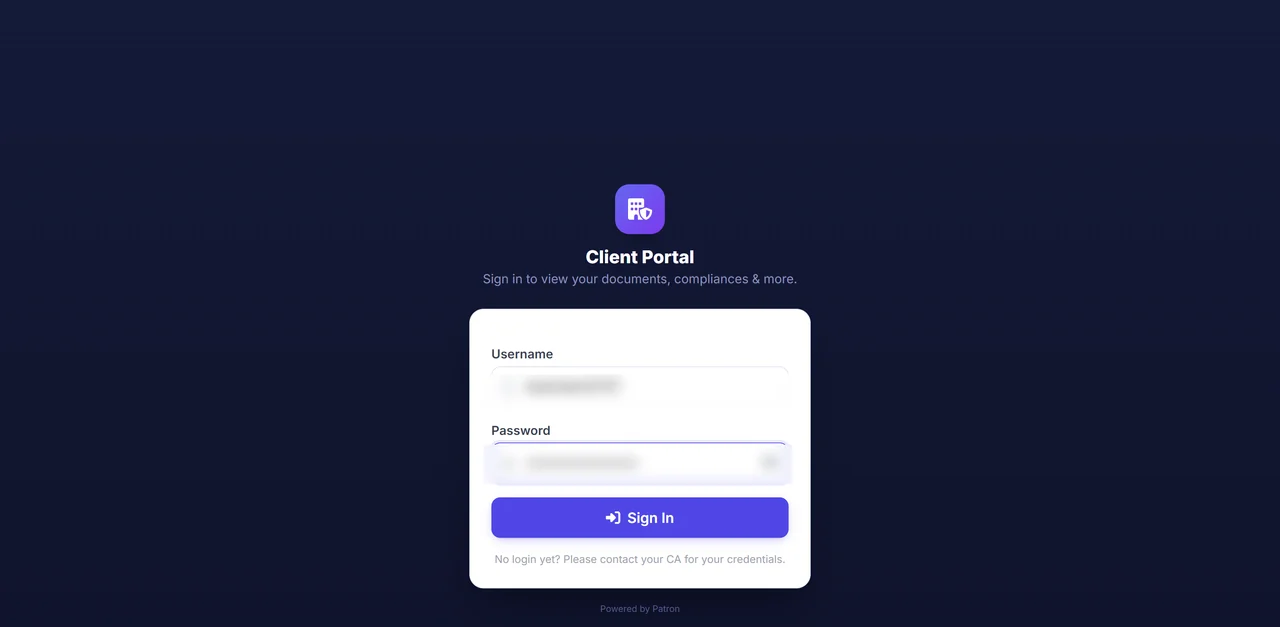
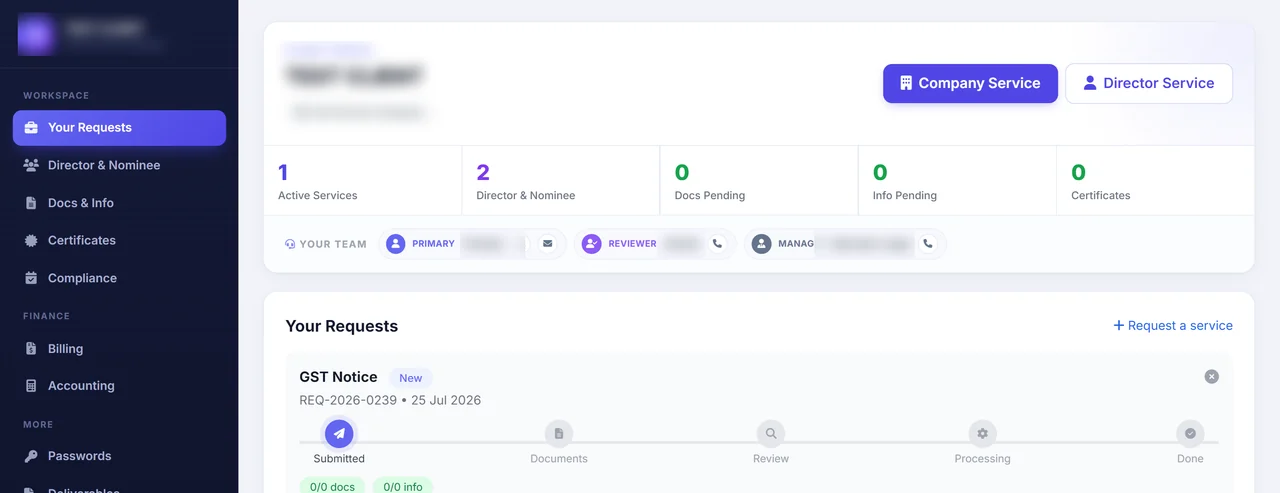
Everything happens in one secure login. You can see your active services, the Patron team on your account, and anything still pending. Once you raise a request, it moves through the same clear steps every time, so you always know exactly where your work stands.

Secure client portal login screen
1

Sign in securely

Your books, documents and requests all sit behind one private, password protected login. The team handling your account is shown on screen, so nothing sensitive ever needs to travel over email or WhatsApp.

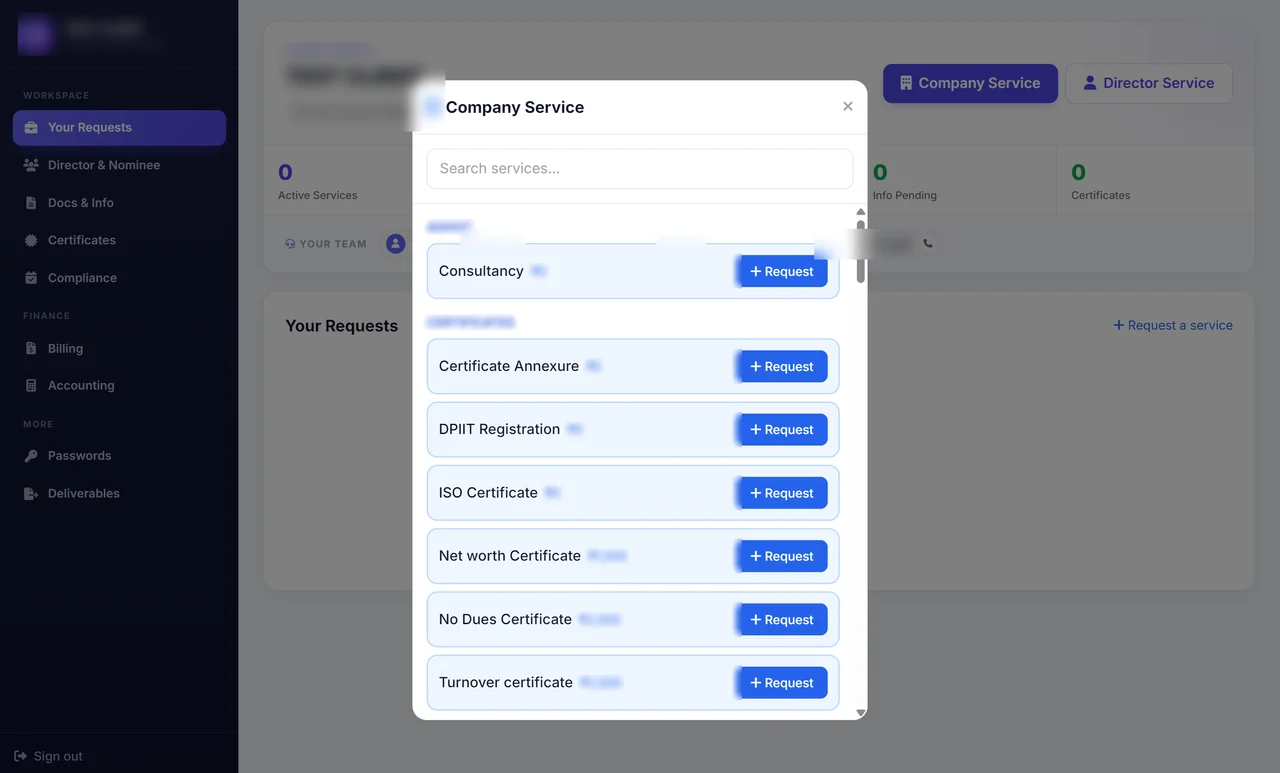
Service catalogue inside the client portal
2

Raise your request

Choose the service you need from the menu inside the portal, where the price is shown before you go ahead. Your request is logged the moment you send it, with no phone calls or reminder emails to wait on.

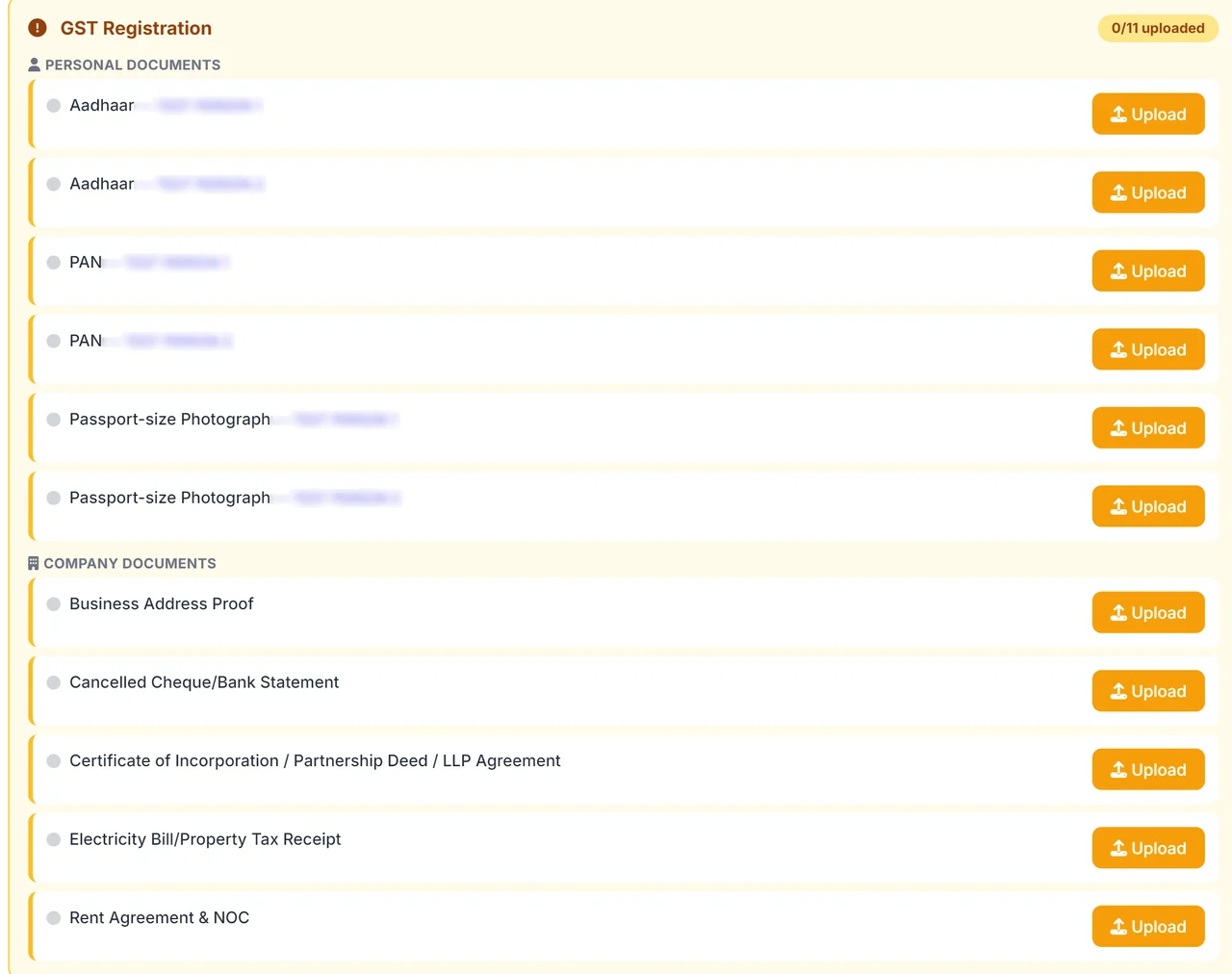
GST registration document checklist in the client portal, with an upload button beside each item
3

Share what the service asks for

For every service, the portal lists the exact documents it needs, each with its own upload button. The example shown here is the GST registration checklist. When a service needs nothing from you, it simply asks for nothing.

Live request tracker inside the client portal
4

We review, prepare and file

Once your documents are in, your team checks them, prepares the work and files it for you. A live tracker shows each stage as it happens, from review to processing to done, so you never have to ask where things stand.

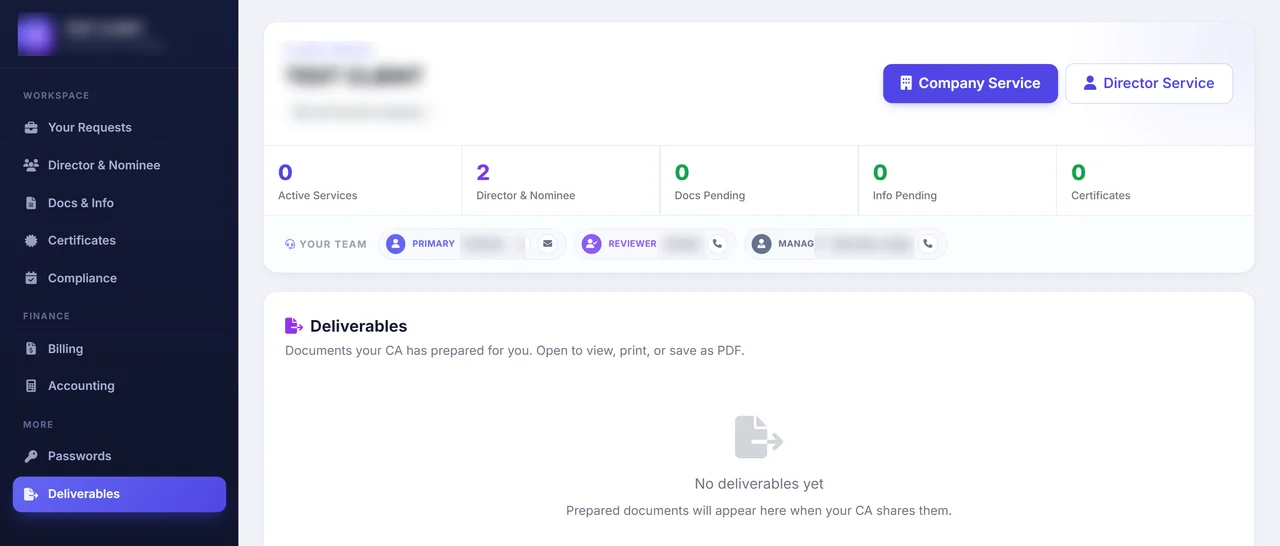
Deliverables area of the client portal
5

Collect your finished work

Every completed return, computation and certificate is placed in your Deliverables area. You can open, print or download any of them as a PDF whenever you need a copy.

Common Year-End Closing and Finalisation Challenges and How We Solve Them

ChallengeImpactHow Patron Accounting Solves It
Expenses incurred before year-end booked after the cut-offCosts land in the wrong year, overstating profit and the tax paid on it.Our team runs a cut-off accrual review, provisioning unbilled expenses; see year-end closing checklist.
Companies Act and income-tax depreciation kept on one basisA single depreciation figure serves neither law, so both the accounts and the tax computation are wrong.Patron maintains dual depreciation, Schedule II useful lives for books and block rates for tax, reconciled.
Closing stock carried at cost, ignoring net realisable valueSlow-moving and obsolete inventory stays overvalued, overstating both current assets and profit.We test closing stock at lower of cost and net realisable value, provisioning obsolescence.
Deferred tax on timing differences left uncomputed at closeDeferred tax assets and liabilities are missing, so the tax charge and net worth mislead.Patron prepares the deferred tax working from timing differences, posting the asset or liability before sign-off.
Related-party transactions not gathered for disclosureAS 18 disclosures are assembled under audit pressure, risking omissions and a qualified report.Our team compiles a related-party schedule through the year, mapping each transaction to its counterparty and terms.

Year-End Closing and Finalisation Fees

Fee ComponentAmount
Standard close — one non-audit entity finalising a single financial yearINR 14,999 per year
Excl. GST & Government Charges
Audit-applicable close — audit-applicable entity, higher turnover or a group finalisationOn quote

Finalisation of accounts for a non-audit entity starts at INR 14,999 per year: adjusting entries posted, schedules built and the balance sheet closed. Entity type, turnover and whether audit applies move the fee upward. Speak with an accounting specialist on +91 94594 56700.

Fees exclude GST and government charges. Final quote confirmed after a scoping review.

All fees and charges listed are indicative only and do not constitute a binding offer. Final amounts may vary depending on the volume of work and the complexity involved.

Professional accounting and compliance charges are scoped to your number of entities, funding stage and monthly transaction volume, and are separate from statutory and government charges. Contact us for a detailed, fixed quote.

Get a free Year End Closing Finalisation consultation - Call +91 945 945 6700 or WhatsApp us. No-obligation assessment.

Year-End Closing and Finalisation Compliance Calendar 2026

ComplianceDue DateApplies To
Advance tax final instalment (100%)15 March 2026Companies, firms and individuals liable to advance tax
Return of deposits (Form DPT-3)30 June 2026Companies reporting loans and deposits outstanding as on 31 March
Tax audit report (Form 3CA/3CB-3CD)30 September 2026Businesses crossing the Section 44AB turnover threshold
Director KYC (DIR-3 KYC)30 September 2026Every director holding a DIN as on 31 March
Income-tax return, audit cases31 October 2026Companies and audit-liable firms
Financial statements filing (Form AOC-4)Within 30 days of the AGM (by 29 October 2026 for a 30 September AGM)Companies filing audited financials with the ROC
Annual return (Form MGT-7 / MGT-7A)Within 60 days of the AGM (by 28 November 2026 for a 30 September AGM)Companies filing the annual return with the ROC
Annual GST return GSTR-9 and reconciliation GSTR-9C31 December 2026GST-registered businesses above the annual-return and audit thresholds

Year-end runs to a fixed chain: the final advance tax on 15 March, the tax audit by 30 September, the audit-case ITR on 31 October and AOC-4 by 29 October. Patron's finalisation team sequences the close so each date is met from a locked trial balance. Request a consultation on +91 94594 56700 to set filing reminders.

Key Benefits

Why Professional Year-End Closing and Finalisation Matters

Profit that stays in its year

Sales and purchases land in the year they belong to, so the result you report is the one that year produced.

  • Cut-off tested both ways at the year boundary
  • Without it, a correction falls into a year already signed and filed

Accruals traceable to their workings

Every accrued liability in the accounts traces back to the working that produced it, so the profit holds under questioning.

  • Each accrual supported by a schedule of accrued expenses and provisions
  • Without it, round-number accruals move a result already circulated

Registers matching what exists

What the books say you own matches what is actually on the floor and in the yard, every difference cleared.

  • Inventory counts and fixed asset verification agreed to the books
  • Without it, depreciation is charged on assets that no longer exist

Deferred tax that ties back

The gap between what the accounts charge and what the return claims is a figure you can explain, with workings behind.

  • Depreciation run under Schedule II and separately as the tax block
  • Without two workings, the deferred tax line is a plug

Annual reconciliations closed with the year

You close the year with the full-year GST position settled and the tax deducted agreed to the filed returns.

  • GSTR-2B agreed to the credit ledger and purchase register for GSTR-9 and 9C
  • Tax deducted tied to Form 26AS and the TRACES default report
  • Without it, open annual differences are inherited by the next year

Prior-period items kept separate

You see amounts belonging to earlier years presented as prior-period items rather than absorbed into current expenses.

  • The year locks once management has reviewed the pack
  • Without it, misplaced expenses distort both this year and last

Why Businesses Choose Patron Accounting for Year-End Closing & Finalisation

Five things a founder can check before handing over the books. Each is a claim with the proof behind it.

A close that holds, every schedule in one file

A year-end close only holds when schedules, confirmations and reconciliations sit behind the trial balance. We build that single file, so a frozen trial balance has evidence behind every line, refined over 15+ years of closes.

44AB tax audit and Schedule III finalisation handled together

We handle the Section 44AB tax audit and Schedule III finalisation together, with depreciation worked under both Schedule II and the tax blocks. Our 25,000+ filings make this finalisation of accounts a settled routine.

Closing entries passed in your ledger with a documented basis

We pass closing entries inside your own ledger, Zoho Books, Xero, Tally Prime or Odoo, each with a documented basis. We also record the adjusting entries before finalising, so the numbers trace back cleanly.

Audit-ready file complete before the auditor arrives

You receive an audit-ready file complete before the auditor arrives, schedules and confirmations attached to each balance. We follow a year-end closing checklist, and the 4.9 star Google rating reflects closes that stood up to audit.

Year-end closes among 3,000+ businesses served

Year-end closes, from proprietorships up to listed subsidiaries, sit among the 3,000+ businesses we have served since 2019. Behind each file stand 15+ years, our in-house team of CAs and CS, and a 4.9 star Google rating.

Figures reflect Patron Accounting LLP engagements since 2019. Scope and turnaround are confirmed in your engagement letter.

Self-Finalisation vs CA-Managed Closing

CriterionSelf-FinalisationCA-Managed Closing
Compliance riskWrong cut-offs and missed accruals can distort the reported profitAdjusting entries and Schedule III alignment reviewed before sign-off
Accrual accuracyAccruals and prepayments are easy to miss without a checklistAccruals, prepayments and depreciation traced to their workings
ExpertiseRelies on the owner's grasp of closing entries and standardsApplies current accounting standards and disclosure requirements
Audit readinessAuditors may raise more queries on unsupported balancesLedgers arrive reconciled and ready for the statutory auditor
Time costConsumes management time during an already busy periodFrees the team while specialists handle the close
Deferred tax and registersDeferred tax and fixed-asset registers often left unreconciledRegisters matched to what exists and deferred tax tied back
VerdictA micro business with simple books may self-finalise safely. Once accruals, deferred tax and disclosures matter, CA-managed finalisation of accounts reduces audit queries, as this year-end closing checklist shows.

Legal and Regulatory Framework for Year-End Closing and Finalisation

What year-end closing protects is the single true-and-fair set of accounts that everyone downstream relies on - the lender, the auditor, the ROC and the assessing officer - and Section 129 of the Companies Act is where the demand for those statements is written. Everything the finalisation produces has to survive all four readers.

So the close is governed by more than good practice. The books are cut off, adjusted and drawn into the Schedule III format, then adopted and filed on prescribed forms. That is why Closing Journal Entries, Accrued Liabilities and Prepaid Expense Amortization are statutory acts of measurement, not tidying. Finalisation of accounts brings the year to a defensible close against the provisions below.

  • Section 129 with Schedule III, Companies Act 2013The year-end balance sheet and profit and loss are drawn in the Schedule III format and adopted at the AGM within the Companies Act timeline.
  • Sections 137 and 92, Companies Act 2013The adopted accounts are filed with the ROC in AOC-4, and the annual return in MGT-7, once the year is closed.
  • Section 44AB, Income-tax Act 1961Where the turnover thresholds are met, the finalised accounts feed the tax audit report in Form 3CA/3CB with 3CD.
  • Companies (Accounting Standards) Rules 2021 and Companies (Indian Accounting Standards) Rules 2015The closing entries are measured under the applicable AS or Ind AS, on the Accrual Accounting basis the standards require.
  • Section 128, Companies Act 2013The books being closed must already be true and fair, and are retained for eight years after the year ends. A backlog is cleared first via catch-up bookkeeping.

Practical note: the AGM adoption date is the choke point, because AOC-4 and MGT-7 cannot be filed until the members have adopted the accounts.

Official sources: Ministry of Corporate Affairs · Income Tax Department · GST Portal · Startup India (DPIIT)

Free tool: Deferred Tax Calculator

Work out deferred tax assets and liabilities from your timing differences.

Compute DTA & DTL Instantly

Pick your tax regime and surcharge slab, then enter the timing or temporary differences below. The calculator auto-applies the effective tax rate (base + surcharge + 4% cess) and gives you a journal entry-ready breakdown.

Tax Regime
Select Applicable Tax Regime
Std 25% = domestic co with turnover ≤ ₹400 cr in FY 2024-25. Std 30% = domestic co with turnover > ₹400 cr. 115BAA/BAB = concessional regimes (flat 10% surcharge). Foreign rate reduced to 35% by Finance (No. 2) Act, 2024.
Surcharge (Domestic)
Surcharge (Foreign)
Enter the full effective rate including surcharge and cess.
Effective Tax Rate
25% × 1.00 (no surcharge) × 1.04 (cess)
26.00%
Timing / Temporary Differences (₹)

Enter the absolute amount of each timing difference (positive number). The DTA/DTL type is pre-set based on conventional treatment but can be toggled per row.

Depreciation DifferenceTax dep (WDV) less Book dep (SLM) — typically DTL in early asset years
Section 43B DisallowancePF, ESI, GST, bonus, leave encashment paid after due date
Provision for Doubtful DebtsMovement during year — allowed on actual write-off only
Provision for GratuityAllowed on actual payment basis under Sec 36(1)(v)
Provision for Leave EncashmentSec 43B(f) — allowed only on actual payment
Provision for WarrantyAllowed on actual claim payment
B/F Losses & Unabsorbed DepreciationVirtual certainty required under AS 22 for DTA recognition
Net Position

Detailed Breakdown

Timing Difference Type Amount (₹) Tax Effect (₹)

Journal Entry

Open the full calculator ↗

What is finalisation of accounts?

Finalisation of accounts is the year end process of closing the books and producing the balance sheet, profit and loss account and notes for the financial year after all adjustment entries are passed. It includes closing stock valuation, depreciation, provisions, prepaid and outstanding expenses, reconciliation of statutory dues and matching the books to the GST and TDS returns already filed.

How is finalisation of accounts done in Tally?

In Tally, finalisation is done by locking the entry period, then passing year end journals for depreciation, closing stock, provisions, prepaid and outstanding items and interest, before generating the balance sheet and profit and loss account in the prescribed format. Group and ledger classification is corrected first, because most Tally balance sheets fail on grouping rather than on the entries.

Can an in house team learn to handle finalisation of accounts?

Your in house team can be brought up to speed within one closing cycle by working alongside our team on your own books, using a written year end checklist covering adjustment entries, schedules and reconciliations. We hand over the working paper templates, the ledger scrutiny format and the audit query tracker, so the following year end can be run internally with a review.

How long does year end closing take for a private limited company?

Year end closing for a private limited company with clean monthly books normally takes 10 to 15 working days, rising to six to eight weeks where the books are behind or unreconciled. Timelines depend on how fast bank confirmations, stock statements and party balance confirmations arrive, so we start building the schedules in March instead of waiting for April.

What documents are needed to finalise the books for the year?

We need the full year ledgers or Tally backup, bank statements and closing certificates, the stock statement as on 31 March, debtor and creditor confirmations, loan statements, fixed asset invoices, GST and TDS returns filed during the year, payroll records and the previous year audited accounts. Missing items go into a tracker so nothing quietly stalls the close.

What is year-end closing in accounting?

Year end closing in accounting is the process of finalising a financial year, which in India runs from 1 April to 31 March, by passing every adjustment entry and locking the ledgers so the balance sheet and profit and loss account can be prepared. It covers depreciation, closing stock, provisions, prepaid and outstanding expenses, and reconciliation of GST, TDS and bank balances before the books are frozen.

What does finalisation of accounts cost?

Finalisation of accounts usually costs Rs 15,000 to Rs 1,00,000 as a one time annual fee, based on turnover, number of ledgers, entity type and whether the year needs cleanup before it can be closed. Clients already on a monthly bookkeeping retainer pay a reduced finalisation fee, because the reconciliations have stayed current right through the year.

What is the process of closing the books?

Closing the books runs in six steps: complete all pending entries, reconcile every bank and party ledger, verify stock and fixed assets, pass adjustment journals for depreciation, provisions and prepaid items, match the books to the GST and TDS returns already filed, then produce the trial balance and final accounts in the Schedule III format. Each step is signed off before the next begins.

What is the year-end closing function?

The year end closing function converts twelve months of routine entries into one set of final accounts that the statutory auditor, the income tax department and your lenders can all rely on. It corrects cut off errors, brings unrecorded liabilities into the correct year, tests balances against external bank and party confirmations, and produces the schedules that both the audit and the income tax return need.

Can you finalise books for earlier years that were never closed?

Yes, earlier years that were never closed can be finalised, and two to three back years are usually completed in six to ten weeks. Prior year accounts are rebuilt to agree with the returns already filed, comparatives are restated where required, and we advise on filing the pending forms with the MCA and the income tax department along with applicable late fees.

Quick Answers

After the trial balance is frozen and before audit fieldwork begins, a single bound file reaches your desk: signed statements, the supporting schedule behind every balance, ledger scrutiny notes and the fixed asset and depreciation workings that sit behind them. Questions during fieldwork are then answered from papers.

Year End Closing Finalisation Deadlines You Cannot Afford to Miss

Advance tax final instalment (100%) is due 15 March 2026. Return of deposits (Form DPT-3) is due 30 June 2026. Tax audit report (Form 3CA/3CB-3CD) is due 30 September 2026. Patron tracks each against your books so nothing is reconstructed after the fact. Call +91 94594 56700 to set up a filing-reminder schedule.

Start Your Year-End Closing and Finalisation with Patron Accounting

A ledger can balance and still be wrong. Advances sit in debtors long after despatch, a loan account carries interest nobody has confirmed, stock is valued at a rate last reviewed two years ago. Finalisation of accounts is where those differences are found and settled rather than carried forward into another year's opening balances.

Dividend declarations, a partner's exit valuation and a bank's renewal of working capital limits all rest on one set of numbers being defensible. Balance sheet finalisation proves every balance rather than assuming it, so those conversations proceed on figures nobody hedges. The same holds for a valuation begun the following year.

Until last year's signed statements and the auditor's observations still outstanding are settled, nothing else moves. Whether the previous year was ever closed properly, and which balances have moved since, decides how much groundwork this close needs and whether clearing a bookkeeping backlog comes before anyone signs.

Book a Free Consultation - No Obligation.

Explore Our Accounting Services

Related services our CA-led team delivers for businesses across India.

Reviewed by the CA & CS Team, Patron Accounting LLP
ICAI & ICSI registered  ·  15+ years in Indian accounting & compliance  ·  Last reviewed 23 July 2026  ·  Next review 23 October 2026