


Talk to an Expert
Talk to an Expert ✆ +91 945 945 6700
500+ stock audits completed

Stock Audit for FMCG Companies in India

Reviewed by CA and CS Team, Patron Accounting LLP ICAI & ICSI Registered| 15+ Years Experience| Last Updated: 20 August 2026 Verify Credentials →

Channel Stock You Can Actually Report: An FMCG audit establishes what is physically sitting at depots, agents and distributors, which is the figure planning and revenue recognition both depend on.

Claims Settled on Evidence Instead of Argument: Damage and expiry claims matched to batch records and photographed, so each one either stands or is identified as unsupported before money moves.

Expiry Exposure Quantified Before It Lands: Near-expiry stock aged across the channel, which turns a future write-off into a number the business can act on while there is still time to move the goods.

Batch and expiry captured at the point of counting.

15+ YearsIndustry Experience
CA & CSCertified Experts
4.9
Based on 500+ reviews

Get Free Consultation

Talk to a CA/CS expert today

🇮🇳 +91

Our team will get back to you shortly. No spam.

What Clients Say

Hear how teams across industries use Patron to save time, cut costs, & stay in control.

Fetching latest Google reviews…
Sunny Ashpal
Sunny Ashpal
Director - Demandify Media

I've had an outstanding experience working with Patron Accounting. Their professionalism, attention to detail, and timely communication made the entire process smooth and stress-free. Highly recommended for anyone seeking reliable and knowledgeable financial guidance!

Anjanay Srivastava
Anjanay Srivastava
Founder - Hunarsource Consulting

I'm glad that I was able to connect with Patron. They took the minimum time to do the calculations based on the details provided by me and were really impressed by their acumen. And it's not expensive at all. Good guidance while filling was given as well.

From the very beginning, their approach has been highly professional, prompt, and solution-oriented. Every interaction reflected their deep knowledge, attention to detail, and a genuine willingness to help. It gave me immense confidence and peace of mind.

Patron Accounting gives the best service related to all account handling of our firm. I am blessed and extremely happy that Patron Accounting assigned Anu to take care of our company's needs. She files all returns timely and is most kind and respectful towards us.

I got financial services from them for my private limited company. They are having good and qualified staff to provide services in a professional manner which is beneficial for me.

I have been taking services of Patron Accounting from 5 years and found them highly professional and the best people for all taxation related work be it individual or company services. Highly recommended.

500+ stock audits completed

Rated 4.9 on Google across 13 reviews.

Talk to an Expert
500+Stock Audits CompletedCounts run across borrower sites and cities.
15+Years ExperienceICAI and ICSI registered, in Indian accounting and certification.
CA-SignedAudit ReportsSigned by a Chartered Accountant in practice, not a checker.
4.9★Google RatingAcross 13 verified Google reviews.
UDIN on Every ReportVerifiable against the ICAI record before a lender relies on it.
SSL SecureYour financial and business data is fully protected.

What Makes FMCG Stock Different

📌 TL;DR - Stock Audit for FMCG Services at a Glance

A stock audit for FMCG companies works mostly away from the factory, at depots, carrying and forwarding agents and distributor godowns. Ownership is settled before anything is counted, then primary dispatch is reconciled against reported secondary sales and against damage and expiry claims. Food products sit additionally under the Food Safety and Standards Act 2006, so storage condition and remaining shelf life are recorded. Frequently commissioned when channel stock stops matching head office books.

Most of the effort happens well away from the factory. The stock that decides the balance sheet sits in depots, at carrying and forwarding agents, and on distributor shelves in towns nobody from head office visits. It is owned by the company at some of those points and not at others, and the line between the two is where an FMCG audit either works or falls apart.

Stock You Own Sitting in Somebody Else Godown

cf agent stock is held by an agent but owned by the principal, so it stays on the principal's books and must be counted there. The agent's own trading stock, sitting in the same godown, must not be. Establishing which pallet belongs to whom, before anything is counted, is the step that decides whether the closing figure means anything at all.

Primary Sales Booked, Secondary Sales Unknown

Primary sales leave the depot and enter the books. secondary sales leave the distributor and are reported back, often late and sometimes optimistically. When a quarter closes on primary dispatch alone, stock has been pushed into the channel rather than sold through it, and the position only surfaces when somebody counts what is still sitting at the distributor.

Why Depot Stock and Head Office Books Diverge

Three causes account for most of the gap. Goods dispatched and not yet received, sitting in transit across a cut-off. saleable returns taken back at the depot and credited centrally on a different date. And damage or expiry cleared physically well before the claim is settled in the books. A stock audit at the depot reconciles the three rather than treating the difference as a single unexplained variance.


What an FMCG Stock Audit Covers

An FMCG audit follows ownership across the distribution chain rather than stopping at the factory gate. The exercise reaches depots, carrying and forwarding agents and, where the arrangement requires it, distributor premises. The boundary is drawn at title. Stock the company still owns is in scope wherever it physically sits; stock already sold to a distributor is outside it, however much the brand would like the number.

01

Depot, C&F and Distributor Stock in One Exercise

One engagement, three kinds of premises, one cut-off across all of them. Depots are company-operated and produce the cleanest records. C&F agents hold company stock under an agency arrangement and keep records to their own conventions. Distributor premises are third-party, so access rests on the distribution agreement rather than on any right of the auditor. Running them to a single cut-off is what allows the positions to be added together without double counting goods in transit between them.

02

Batch-Level Counting, Not Case-Level Counting

Cases are the handling unit; batches are the accounting unit. Two cases of the same SKU from different batches carry different expiry dates and therefore different remaining value, so a case count that ignores batch produces a quantity nobody can age. Batch capture also makes the damage and expiry claim population visible, since a claim is only verifiable against the batch it names. The extra effort at the count is what makes the provisioning conversation possible afterwards.

03

What an FMCG Count Does Not Settle

It does not settle whether a claim will be paid, which is a commercial decision between the parties. It does not verify secondary sales reported by distributors beyond the stock actually seen. It reaches no conclusion on scheme accruals or trade spend. And it is not a food safety inspection: storage condition is observed and recorded, but licensing sits with FSSAI renewal and with the regulator, not with this exercise.

Key terms on this page:

  • CF agent stockGoods held by an agent and owned by the principal, reported on the principal's books.
  • Secondary salesSales from distributor to retailer, reported back rather than invoiced by the brand.
  • Saleable returnsGoods taken back in resaleable condition, pending credit.
Stock Audit for FMCG in India
Counting distributor stock of fast-moving consumer packs, with batch dates checked at the pallet

Who Commissions an FMCG Stock Audit

An FMCG audit is read by three parties sitting at three points on the same chain, and each one is reading the count for a different reason: a brand checking what it pushed, an agent proving what it holds, and a distributor borrowing against it.

Brands Auditing Channel Stock Before a Quarter Close

A brand approaching a quarter end wants to know how much of what it dispatched has genuinely sold through rather than moved one step down the channel. This reader is commercial as much as financial, because the answer changes what can be recognised and what should be pushed next quarter. Timing is everything and the window is short.

Depot Operators Reporting to a Principal

A depot or carrying and forwarding agent holds stock it does not own and is accountable for every unit. The reader needs an independent confirmation to give the principal, and protection against being charged for differences that arose in transit or in claims. Reconciling to the principal's dispatch record is the part that settles arguments.

Distributors Financed Against Stock

A distributor borrowing against inventory carries the bank's requirement directly. Stock is fast-moving, frequently in transit, and mixed across brands, so the reader's difficulty is separating what is financed from what is not. Damage and expiry claims pending settlement are the line this group most often gets wrong in its own statement.

Scope and Deliverables for FMCG

DeliverableWhat It Includes
Channel Stock Position by Depot and DistributorAn FMCG audit stating stock separately at each depot, agent and distributor point, with ownership marked, so what is owned and what is not are never merged.
Damage and Expiry Claim Evidence PackClaimed quantities matched to batch records and physical stock, photographed, so each claim either stands on evidence or is identified as unsupported.
Near-Expiry Ageing ScheduleFinished goods aged against remaining shelf life, which is what turns a quantity into a provisioning conversation rather than a number nobody acts on.
Our Process

How the Count Runs in FMCG

Each phase is fixed before the next begins, so a difference found on site can be traced back to the point it arose.

Step 1

Counting a Depot Without Stopping Dispatch

Loading continues while counting proceeds, so vehicles already being loaded are treated as dispatched and documented as such. The alternative, holding trucks for a day, is a commercial cost no depot manager will accept for a stock exercise.

Counting a Depot Without Stopping Dispatch
Step 2

Batch and Expiry Captured With Every Line

An FMCG audit records batch number and expiry against every counted line rather than sampling them. Without those, the count produces a quantity that cannot be aged, and ageing is what the provisioning and claims conversation depends on.

Batch and Expiry Captured With Every Line
Step 3

Claim Stock Segregated and Photographed

Damaged and expired stock awaiting a claim is separated, counted apart and photographed against its batch details. Left mixed with saleable stock it inflates the position, and left unphotographed it cannot support the claim it was set aside for.

Claim Stock Segregated and Photographed

Counting FMCG Stock on Stoklenz

Play the interactive demoWalk a count through Stoklenz, scan by scan

Run your next count on Stoklenz

Barcode counting against live book stock, geo-fenced attendance and a variance schedule that comes out of the captured data. Send your site list and the scope comes back against it.

Explore Stoklenz →
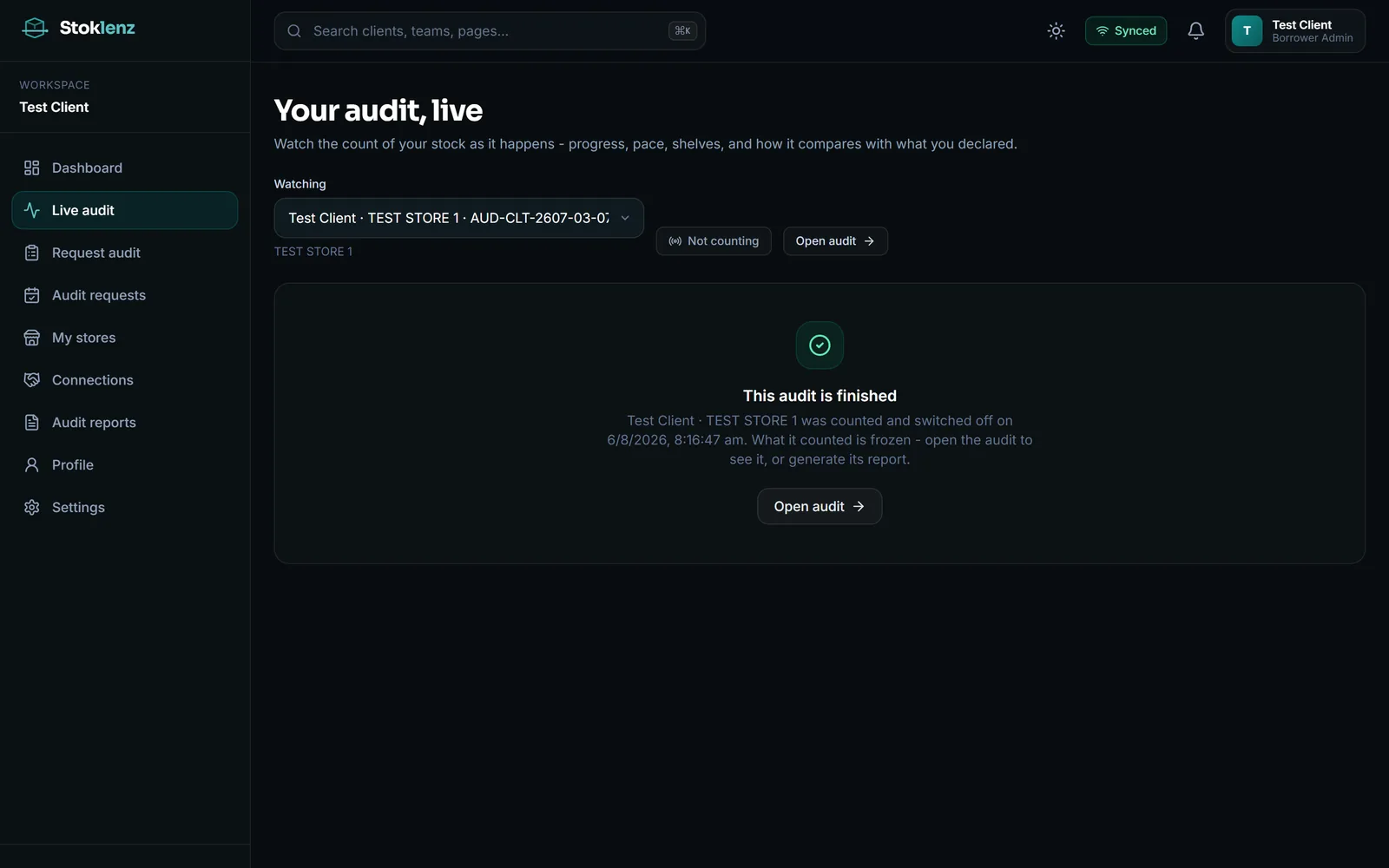
Live audit: the count as it happens on the floor, rather than a status typed up afterwards01

Batch and Expiry Captured at the Point of Count

An FMCG audit records batch and date as each line is scanned, which is what makes the ageing schedule possible instead of requiring a second pass to collect dates.

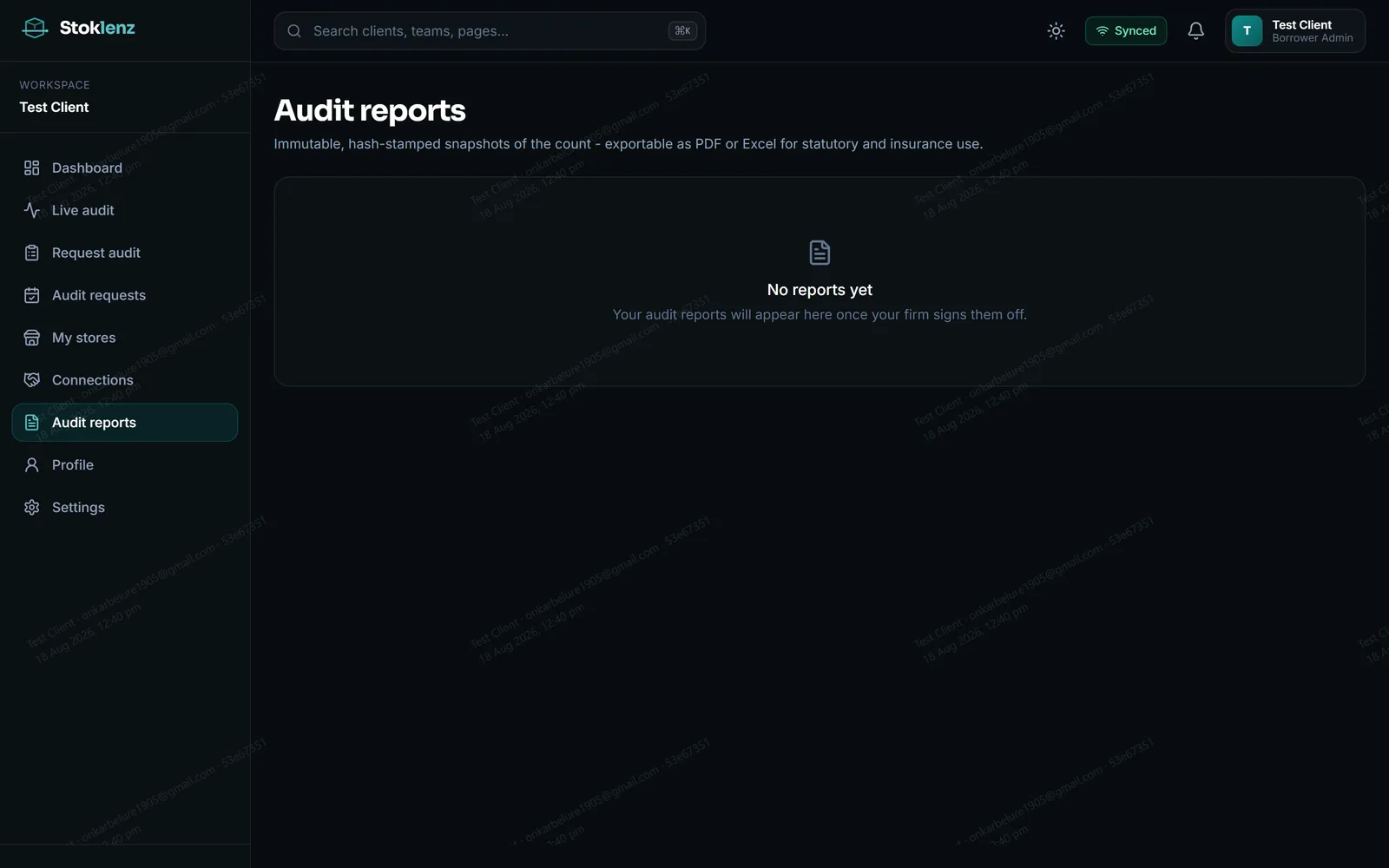
Audit reports: working papers and variance schedules produced from the captured count, not re-keyed from it02

Depot Positions Rolled Up for Head Office

Each depot and agent position consolidates centrally as it closes, so the channel figure builds during the cycle rather than being assembled afterwards.

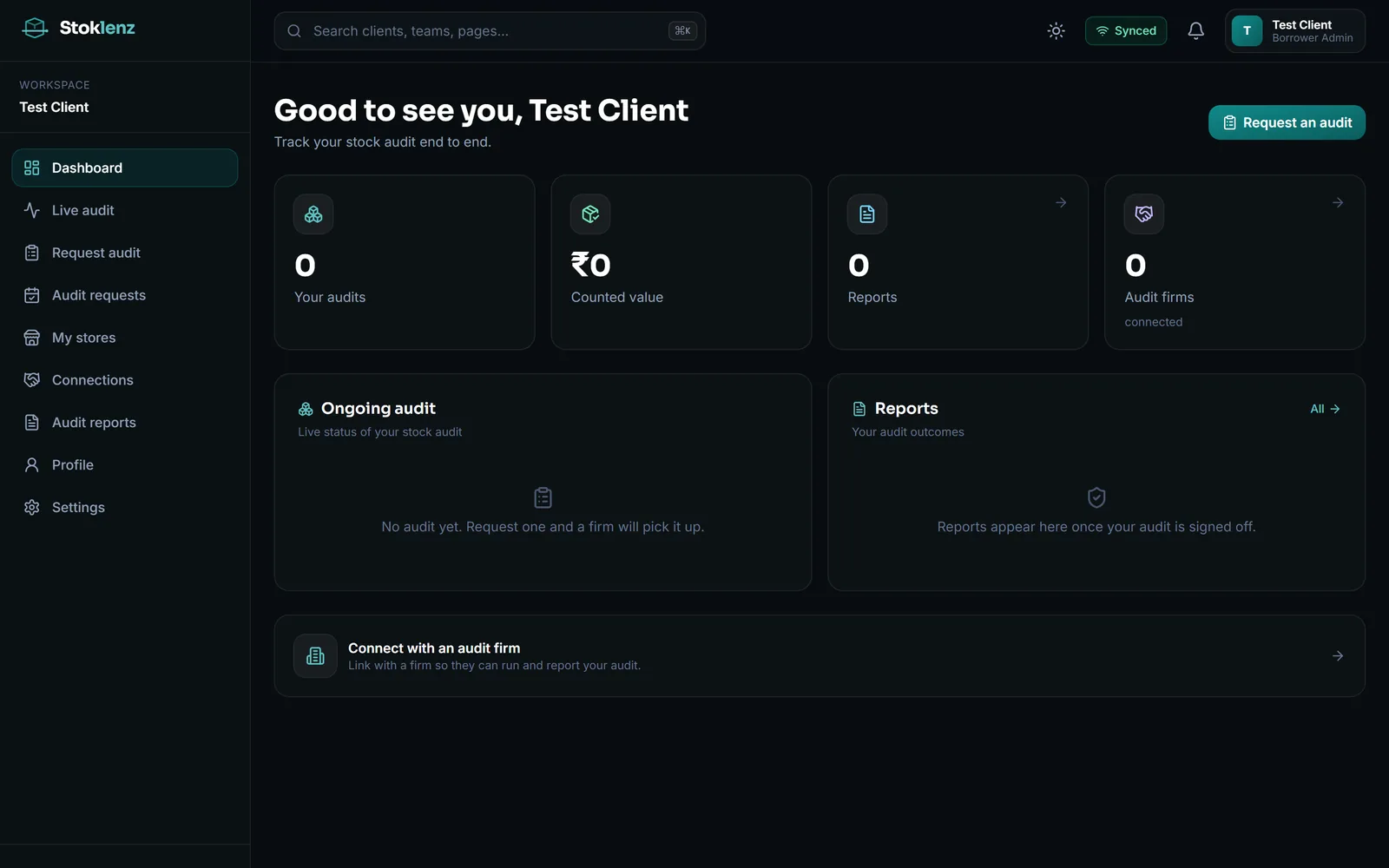
Inside one audit: counted position against book stock, with the differences listed as they are found03

Claim Evidence Photographed Against the Line

Damaged and expired stock is photographed against its batch as it is counted, so the claim pack is built at the point of observation.

Records We Work From

  • Depot and C&F Stock Statements - Statements from each depot and carrying and forwarding agent as at the cut-off, prepared on their own records rather than reconstructed centrally afterwards.
  • Primary Dispatch and Secondary Sales Extracts - What left the depot and what distributors reported selling on. An FMCG audit reads the two together, because the gap between them is where channel loading shows.
  • Damage, Expiry and Saleable Return Registers - Claims raised, credits issued and returns taken back, with dates. Claims settled centrally on a different date from the physical movement are a standard reconciliation item.

Damage, Expiry and Secondary Sales Claims

IssueWhat It Does to the Count
Channel Loading Dressed Up as DemandPrimary dispatch booked as sales while the goods sit at a distributor. An FMCG audit at the distributor point is what separates what sold from what merely moved.
Claims Raised Without Physical EvidenceA claim form, a credit note and no batch record, no photograph and no destruction certificate behind either of them.
Saleable Returns Counted as Fresh StockReturns accepted into the saleable pool without assessment, so damaged and short-dated units sit at full value alongside fresh stock.
Batches Nobody Can Trace to a DispatchStock found at a depot carrying batch numbers absent from the dispatch record, which usually means transfers between depots that were never entered.

What Drives the Fee

What Moves the FeeWhy
Depots and Distributor Points in ScopeAn FMCG audit prices on how far down the channel it reaches. Depots alone is one exercise; adding carrying agents and distributor premises is another.
Batch Depth per SKUCapturing batch and expiry against every line rather than sampling extends counting time, and it is what makes the ageing schedule possible afterwards.
Whether Claim Verification Runs AlongsideMatching damage and expiry claims to batch records and photographing the stock is additional work performed at the same visit.

All fees and charges listed are indicative only and do not constitute a binding offer. Final amounts may vary depending on the volume of work and the complexity involved.

Get a free Stock Audit for FMCG consultation - Call +91 945 945 6700 or WhatsApp us. No-obligation assessment.

Key Benefits

What the Count Finds

Channel Stock You Can Actually Report

An FMCG audit establishes what is physically sitting at depots, agents and distributors, which is the figure planning and revenue recognition both depend on.

Claims Settled on Evidence Instead of Argument

Damage and expiry claims matched to batch records and photographed, so each one either stands or is identified as unsupported before money moves.

Expiry Exposure Quantified Before It Lands

Near-expiry stock aged across the channel, which turns a future write-off into a number the business can act on while there is still time to move the goods.

Counts Run in FMCG

500+ stock audits completed.

  • Depots and Distributor Points Counted
  • Batches Verified
  • Turnaround for a Regional Sweep

Across engagements run by the Patron team. The figure is counted from completed engagements only, and it is restated when it changes rather than rounded up and left. Scope for any one count is still agreed against your own site list.

Why Businesses Choose Patron Accounting

Counting Teams Familiar With C&F Paperwork

An FMCG audit runs on agency records, dispatch documents and claim registers, and crews who read those without instruction spend the day counting rather than learning the filing.

Claim Evidence Built to Survive a Principal Review

Damage and expiry claims are matched to batch records and photographed at the point of count, so the evidence pack stands up when the principal questions it.

One Cycle Across Every Depot in the Region

Depots, agents and distributor points are covered against a single cut-off, which is what stops goods in transit being counted at both ends of the channel.

An FMCG Count We Have Run

Channel Stock That Was Two Weeks Older Than Reported

depots and carrying agents · batch and date captured at the count

A paints manufacturer with depot-held stock

  1. 01The challenge

    Primary dispatch was booked as sales, so the reported channel position said what had left the depot and nothing about what the channel held or how old it was.

  2. 02What we did

    We counted depot and carrying-agent stock and captured batch and manufacture date against every line at the point of counting rather than reconstructing it from dispatch records.

  3. 03What the count found

    Channel stock ran materially older than the reported position, and a slice of it was already inside its near-expiry window. None of this was visible in the system, because the system had stopped tracking it at dispatch.

  4. 04What changed

    The near-expiry quantity was identified while it could still be moved through trade schemes rather than written off, and channel ageing became a monthly report.

A Claim Position Rebuilt on Photographic Evidence

claims register verified alongside the depot count

A paints manufacturer settling damage and expiry claims through its channel

  1. 01The challenge

    Damage and expiry claims were settled centrally against a form and a credit note. The stock behind each claim was usually gone before anyone independent saw it, and the claims line was growing.

  2. 02What we did

    Claim verification ran alongside the count. Claimed stock was matched to batch records and photographed lot by lot at the point of verification, with destruction certificates traced where destruction had been claimed.

  3. 03What the count found

    A proportion of claims could not be supported at all - no batch record, no photograph, no destruction certificate behind any of them. Others were valid but had been claimed twice under different references.

  4. 04What changed

    The claims register was rebuilt on the lines that could be evidenced, and photographic support at the point of claim became a condition of settlement.

How does a stock audit help control channel loading?

Counting stock in the channel reveals how much has been pushed to distributors but not sold through. Persistent high channel stock against flat secondary sales is the pattern that precedes returns and claims, and it is only visible if secondary stock is measured.

Is an FMCG stock audit different from a bank stock audit?

The count procedure is similar but the purpose differs. A bank stock audit tests security value for a lender. An FMCG channel audit tests claim validity and channel visibility for management. The same visit can serve both if the scope is written to cover them.

How do you verify distributor stock you do not physically hold?

Secondary stock at distributors is verified by counting at the distributor premises and reconciling to both the distributor records and your dispatch data. Because the stock is not on your books as inventory, the purpose is claim validation and channel visibility rather than balance-sheet verification.

What are primary and secondary sales in FMCG?

Primary sales are movements from the company to the distributor. Secondary sales are movements from the distributor to the retailer. The gap between them sits as stock in the channel, which is what distorts demand signals when it is not measured.

What evidence is needed for a damage or expiry claim?

A defensible claim needs the physical goods available for inspection or documented destruction, batch and expiry details, the original invoice reference, and the claim quantity reconciled to stock records. Claims settled on a declaration alone are the most common source of leakage.

How is depot stock reconciled to head office books?

Each depot is counted and reconciled locally, then depot balances are aggregated and compared with the head office inventory ledger. Differences usually arise from stock in transit between depots and from transfers recorded in one location but not the other.

What is C&F agent stock and who owns it?

Stock held by a clearing and forwarding agent remains the property of the company. The agent holds and dispatches it. It belongs in the company inventory, must be counted at the agent premises, and is a common gap when audits cover only company-owned warehouses.

Which stock is treated as saleable returns?

Returns that are undamaged, within shelf life and in original packaging can normally be returned to saleable stock. Anything outside that is a write-off or a claim. The audit checks that the distinction is being applied consistently rather than case by case.

How is near-expiry FMCG stock valued?

Stock approaching expiry is usually written down to the value it can realistically fetch, which may be a discounted trade price rather than full value. The audit reports remaining shelf life by batch so the provision can be tested against actual realisability.

Why does FMCG stock need batch-level counting?

FMCG stock moves by batch because expiry, recall and claim decisions all operate at batch level. A count that records only total quantity per SKU cannot support an expiry provision or a recall, so batch identity is captured during the count.

Booking a Count

What We Need per Depot

The depot stock statement, primary dispatch records and the claims register for the period. An FMCG audit reaching distributor premises also needs the distribution agreement.

Timing a Count Around a Quarter Close

Channel counts are most useful just before a quarter closes, which is also when depots are busiest, so the date is agreed against the dispatch calendar.

Book a Free Consultation - No Obligation.

Reviewed by the CA & CS Team, Patron Accounting LLP
ICAI & ICSI registered  ·  15+ years in Indian accounting & certification  ·  Last reviewed 20 August 2026  ·  Next review 20 November 2026
Official sources: ICAIICAI UDIN PortalMCARBI