


Talk to an Expert
Talk to an Expert ✆ +91 945 945 6700
Trusted by 10,000+ Businesses
Mumbai, Maharashtra

E-Commerce Accounting Services in Mumbai

Reviewed by CA and CS Team, Patron Accounting LLP ICAI & ICSI Registered| 15+ Years Experience| Last Updated: July 2026 Verify Credentials →

Gross turnover you can defend: Your books carry gross sales, commission, shipping and returns as separate figures, so the turnover you report matches the portal.

TCS credit actually in hand: You claim the tax each marketplace collected once it shows in your electronic cash ledger.

Channel-wise contribution after deductions: You see commission, shipping, advertising, packaging and return costs sitting against the channel that incurred them.

Stock at fulfilment centres proved: We agree units lying at fulfilment centres to the operator's inventory report and show goods in transit apart.

15+ YearsIndustry Experience
CA & CSCertified Experts
4.9
Based on real Google reviews

Get Free Consultation

Talk to a CA/CS expert today

🇮🇳 +91

Our team will get back to you shortly. No spam.

Real Stories from Real People

Verified Google reviews from founders and businesses Patron works with across India.

Join 3,000+ Founders and Businesses on Patron

Rated 4.9 on Google - trusted for startup accounting since 2019.

Talk to an Expert
10,000+Businesses ServedGST compliance and litigation support across India.
15+Years ExperienceDeep expertise in IP registration, GST & business compliance.
50,000+Documents FiledReturns, appeals, and filings handled accurately.
4.9★Client RatingTrusted by entrepreneurs, startups, and growing businesses.
ISO CertifiedProfessional standards and documented processes.
SSL SecureYour financial and business data is fully protected.

What E-Commerce Accounting Costs and Covers for Mumbai Businesses

📌 TL;DR - E-Commerce Accounting Services at a Glance

E-commerce accounting services in Mumbai reconcile every marketplace settlement against its commission, shipping and return deductions before the payout is booked. GST TCS collected by the marketplace is recovered through GSTR-2B each month. Patron handles RTO provisioning and multi-warehouse stock for sellers shipping out of Bhiwandi and Panvel. Works well for online sellers running their own site alongside a marketplace storefront.

Every payout cycle ends with two versions of one month: what the marketplace released, and what the seller panel reports. Closing that gap means pulling settlement, order and returns files separately, matching them at order level, then posting differences to commission, shipping, penalty and return heads rather than one adjustment line. Sellers importing through Nhava Sheva carry duty and freight into landed cost, so margin per SKU survives the match. Reconciling payouts across state registrations covers the rest.

Credit left unclaimed inside its window is written off, and every unmatched settlement line becomes a difference somebody explains later, usually during a diligence. That is the exposure e-commerce accounting in Mumbai buys down. Complexity depends on marketplace count, on whether stock sits in one warehouse or several, and on SKU spread, with rates read off the Maharashtra tax department portal. Claim disputes stay outside.

What Do E-Commerce Accounting Mean for Mumbai Businesses?

What this service works on is the settlement file, not the sales invoice. A marketplace pays an online seller in batches that name neither the order nor the buyer, and the ledger has to be rebuilt from those payouts backwards. E-commerce accounting services in Mumbai take that file as their raw material, matching it to orders and returns so revenue, commission and shipping each land on their own head.

Once the settlement is reconciled, the second object is the stock. Goods in a seller's own godown, in a marketplace fulfilment centre and with a courier as undelivered returns are three balances that must agree before a close holds. A provision is carried for what will come back, and the operator's collected tax is claimed rather than left to lapse. E-commerce accounting services in Mumbai keep the settlement ledger and the stock record tied to one dated position each month, which is what makes the reported margin per product believable.

Key Terms for E-Commerce Accounting:

What Is E-Commerce Accounting. Every marketplace settlement is a bundle of gross sales, commission, shipping in Mumbai

Who Needs E-Commerce Accounting in Mumbai: From BKC to Growing SMEs

For an online seller the marketplace payout rarely equals the invoice raised, once commission, shipping, returns and TCS are taken out. E-commerce accounting services in Mumbai are for sellers shipping out of Bhiwandi and Panvel who need every settlement broken down before it is booked.

  • Amazon and Flipkart sellers whose settlement report shows deductions they cannot tie to any order.
  • D2C brands on their own Shopify or WooCommerce store matching Razorpay and COD remittances to dispatched orders.
  • Meesho and multi-marketplace sellers claiming the GST TCS credit sitting in the electronic cash ledger.
  • Apparel and footwear labels where returned and RTO stock builds up faster than the books record it.
  • Sellers holding stock at fulfilment centres across several states who need that inventory proved.
  • Online sellers registered under several GSTINs, filing across states every return cycle.
  • Sellers where the operator deducts Section 194-O TDS at 0.1%, to be matched against booked sales.
  • Sellers who also need the wider monthly bookkeeping handled around their marketplace reconciliations.

The software and platforms we work with

Amazon
Flipkart
Shopify
Meesho
Myntra
Nykaa

E-Commerce Accounting Included for Mumbai Businesses

ServiceWhat We Do
Marketplace settlement reconciliationEvery operator settlement file reconciled to order-level sales for D2C brands headquartered around Bandra Kurla Complex, anchoring e-commerce accounting services in Mumbai Monthly
Payment gateway and COD matchingGateway payouts and cash-on-delivery remittances matched to orders and bank credits, so every rupee collected by couriers and gateways is accounted for Monthly
Returns and RTO provisioningCustomer returns, RTO and cancellations booked to the correct supply, with a monthly provision so headline revenue reflects only orders you keep Monthly
GST TCS and 194-O reconciliationSection 52 TCS and Section 194-O operator TDS reconciled to GSTR-8 data and Form 26AS, keeping both credits claimable each tax period Monthly
Multi-warehouse stock accountingStock across operator warehouses and your own store valued per location, connecting daily operations to our E-Commerce Accounting Services for growing brands Monthly
Channel contribution and PTEC workingsA monthly contribution report by marketplace, with the annual PTEC profession-tax working under Maharashtra rules, rounding out e-commerce accounting services Mumbai sellers expect Monthly, PTEC annually
Our Process

How E-Commerce Accounting Works in Mumbai — Step by Step

How Patron delivers e-commerce accounting for Mumbai businesses, step by step.

Step 1

Settlement report reconciliation

Each marketplace settlement is broken back to gross sales, commission, shipping, TCS and returns, because the bank credit is only a net figure. Gross turnover in the books comes from the portal's tax report, never from the amount that landed.

Illustration for Settlement report reconciliation: Each marketplace settlement is broken back to gross sales, commission, in Mumbai
Step 2

Returns and RTO treatment

Returns, cancellations and RTO consignments are matched back to the original order so the credit note references the right supply. Goods that never physically came back are separated from goods received, because the two have different consequences.

Illustration for Returns and RTO treatment: Returns, cancellations and RTO consignments are matched back to the original in Mumbai
Step 3

TCS credit claim from operator

The tax collected by each operator under the e-commerce collection provisions is agreed to the statement it files, and the credit is then confirmed as accepted in the electronic cash ledger. Unaccepted or missing credit is taken back to the portal.

Illustration for TCS credit claim from operator: The tax collected by each operator under the e-commerce collection in Mumbai
Step 4

Operator TDS versus booked sales

Tax deducted by the operator on the gross amount of sales is compared with the turnover recorded per portal. A mismatch usually means the portal has reported sales the books have not picked up, and that difference is chased to the order.

Illustration for Operator TDS versus booked sales: Tax deducted by the operator on the gross amount of sales is compared in Mumbai
Step 5

Gateway and COD settlement matching

For own-website orders, gateway settlements are matched to orders with the discount charge shown as a cost rather than netted against revenue. Cash-on-delivery is tracked from courier remittance advice to bank, leaving unremitted collections visible.

Illustration for Gateway and COD settlement matching: For own-website orders, gateway settlements are matched to orders with in Mumbai
Step 6

Fulfilment centre stock control

Fulfilment centre stock is tied back to the portal's inventory report, with goods in transit kept apart. Units lying at a centre inside Maharashtra sit under the same registration and are declared as an additional place of business; a centre in another state carries its own.

Illustration for Fulfilment centre stock control: Stock held at marketplace fulfilment centres is reconciled to the portal's in Mumbai
Step 7

Channel level contribution

Commission, shipping, platform advertising, packaging and return costs are pushed down to the channel and, where the data allows, the SKU. Only then does it become visible which listings are trading at a loss after all deductions.

Illustration for Channel level contribution: Commission, shipping, platform advertising, packaging and return costs are in Mumbai

Documents Required for E-Commerce Accounting

The portal files do most of the work, while Maharashtra adds profession tax on two counts and a registered agreement for the premises.

  • Marketplace settlement reports (Amazon Payments/Settlement report, Flipkart Seller Settlement, Meesho payment file)
  • Order-level sales register / MTR (Merchant Tax Report) or GST report from each portal
  • Returns, RTO and cancellation report (courier return / customer return files)
  • GST TCS statement from the operator (GSTR-8 data / TCS certificate) and the electronic cash ledger TCS credit
  • Form 26AS and AIS showing Section 194-O TDS deducted by the operator
  • Purchase invoices from suppliers and vendors
  • Bank statements for every current account, in PDF and Excel or CSV
  • PTEC certificate (Certificate of Enrolment, Profession Tax) issued under the Maharashtra State Tax on Professions, Trades, Callings and Employments Act, 1975, plus the annual PTEC payment challan
  • PTRC certificate (Certificate of Registration, Profession Tax) plus the monthly/annual PTRC return and payment challans
Client Portal

How You Work With Patron

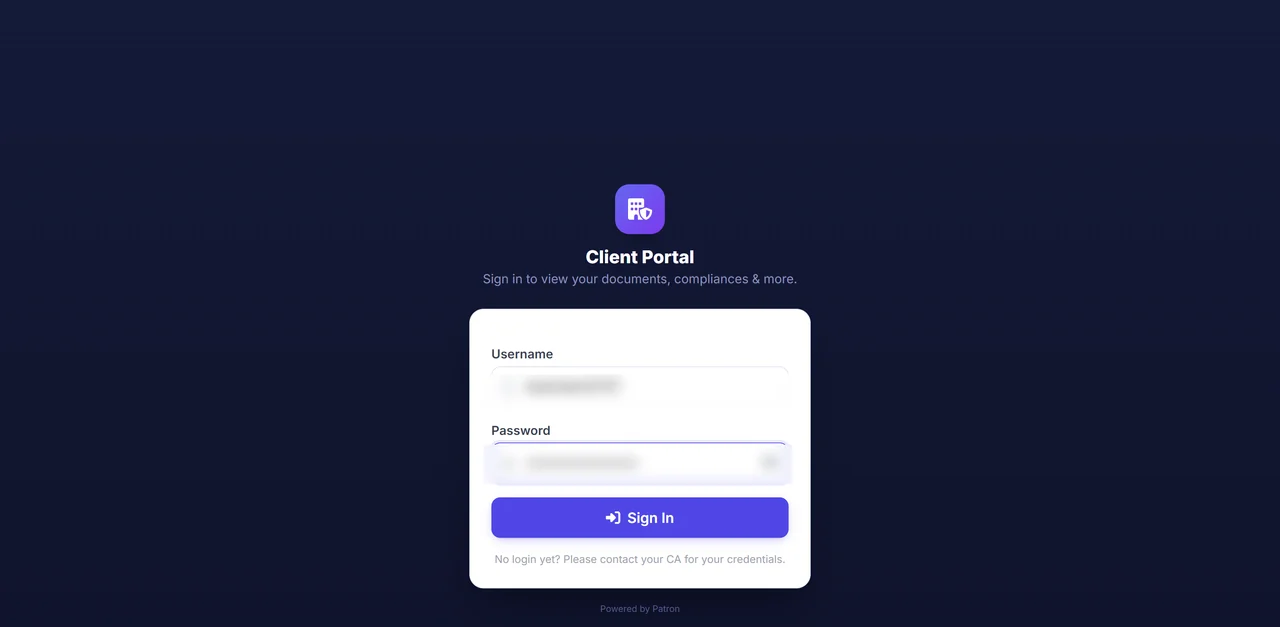
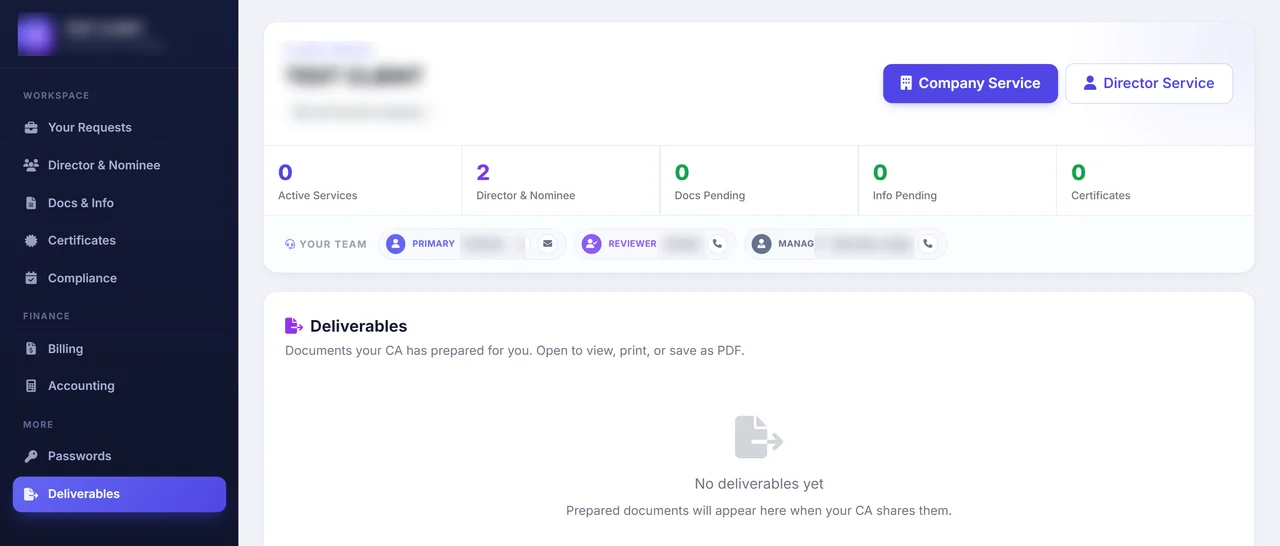
Everything happens in one secure login. You can see your active services, the Patron team on your account, and anything still pending. Once you raise a request, it moves through the same clear steps every time, so you always know exactly where your work stands.

Secure client portal login screen
1

Sign in securely

Your books, documents and requests all sit behind one private, password protected login. The team handling your account is shown on screen, so nothing sensitive ever needs to travel over email or WhatsApp.

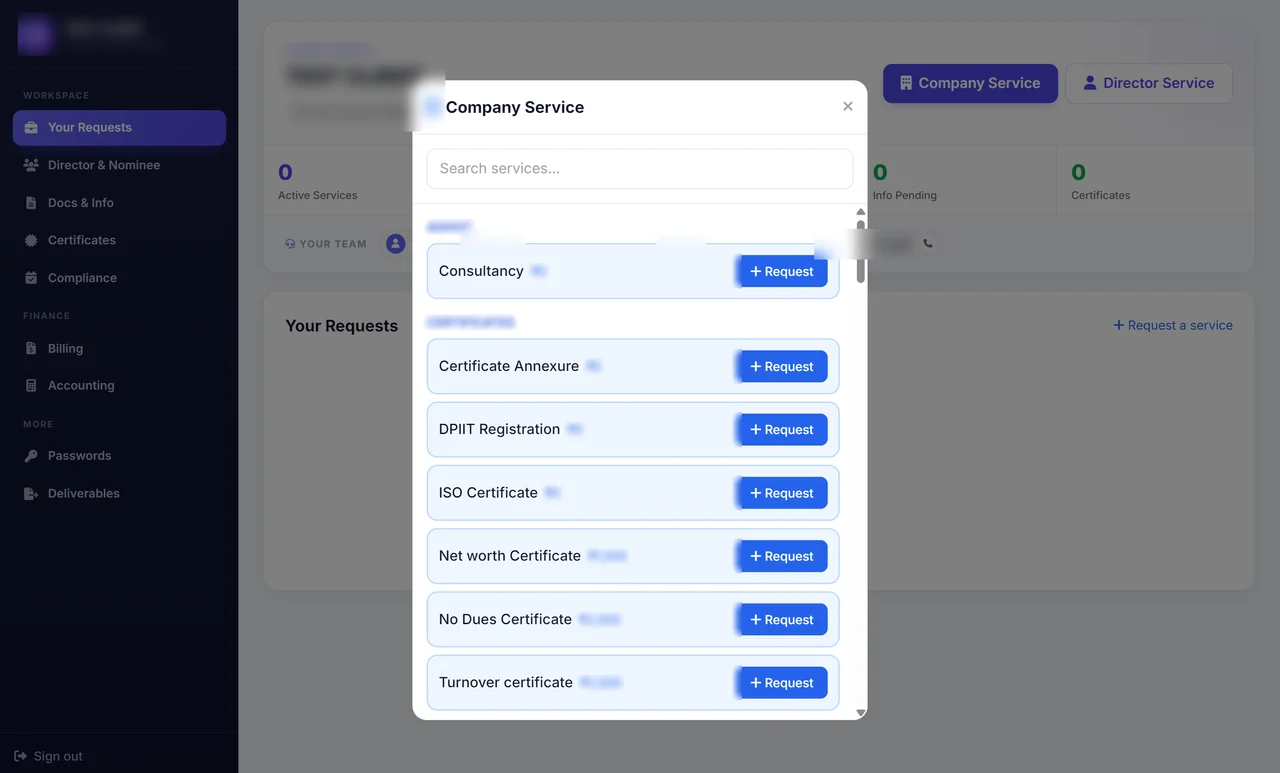
Service catalogue inside the client portal
2

Raise your request

Choose the service you need from the menu inside the portal, where the price is shown before you go ahead. Your request is logged the moment you send it, with no phone calls or reminder emails to wait on.

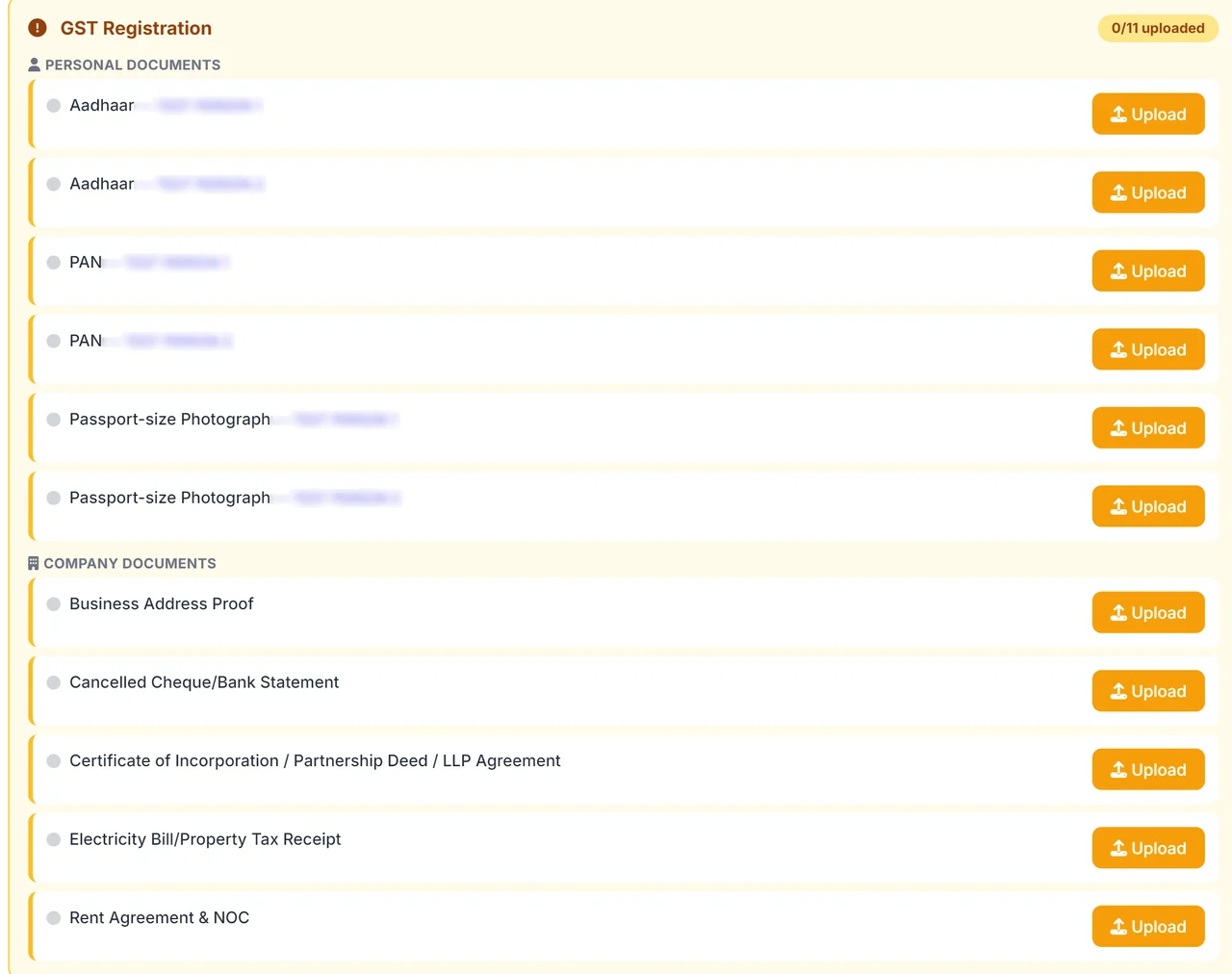
GST registration document checklist in the client portal, with an upload button beside each item
3

Share what the service asks for

For every service, the portal lists the exact documents it needs, each with its own upload button. The example shown here is the GST registration checklist. When a service needs nothing from you, it simply asks for nothing.

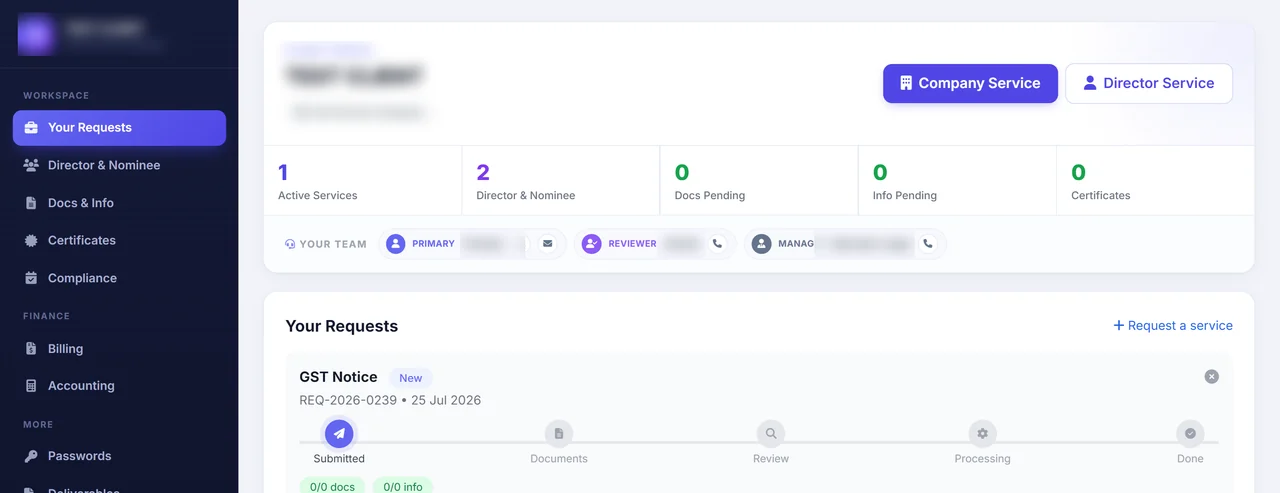
Live request tracker inside the client portal
4

We review, prepare and file

Once your documents are in, your team checks them, prepares the work and files it for you. A live tracker shows each stage as it happens, from review to processing to done, so you never have to ask where things stand.

Deliverables area of the client portal
5

Collect your finished work

Every completed return, computation and certificate is placed in your Deliverables area. You can open, print or download any of them as a PDF whenever you need a copy.

E-Commerce Accounting Challenges Specific to Mumbai: BKC Corporate Reporting, SEEPZ SEZ Units and LBT History

ChallengeImpactHow Patron Accounting Solves It
SEEPZ SEZ fulfilment billed to DTA buyers without a splitNet foreign exchange records and DTA sales blur, so the SEZ unit's reporting fails reconciliation.Our team splits SEEPZ SEZ-to-DTA billing and tracks net foreign exchange against each dispatch.
Legacy LBT assessment demand raised on pre-2017 Mumbai stockAn old octroi-era demand resurfaces with no matching records, threatening an unbudgeted provision.Patron reconciles the legacy LBT assessment records and prepares the reply from archived registers.
Marketplace GST TCS not reconciled to the electronic cash ledgerTCS collected under Section 52 sits unclaimed, so cash-ledger credit and reported turnover never agree.We reconcile GSTR-8 TCS to the cash ledger, claiming the credit against each marketplace payout.
Returns and RTO stock flow back without a provisionUnlogged returns leave revenue and inventory overstated, with shrinkage buried until a physical count exposes it.Patron provisions RTO and returns, reversing sale, tax and cost, then reconciles restocked units to inward entries.
Stock held under multiple state GSTINs without place-of-supply mappingBranch transfers and inter-state sales post to the wrong GSTIN, so returns and stock ledgers mismatch.Our team maps despatches to the correct GSTIN and reconciles transfers for Mumbai multi-state GST sellers.

E-Commerce Accounting Fees in Mumbai

Fee ComponentAmount
Starter — one seller on a single marketplace with routine ordersINR 3,499 per month
Excl. GST & Government Charges
Growth — several marketplaces, higher order volume or added GST registrationsOn quote
Managed — multi-entity sellers with custom settlement and reportingOn quote

E-commerce accounting services in Mumbai carry the same INR 3,499 entry fee as anywhere in India, priced by scope rather than location. Marketplace count, monthly orders and settlement lines are what move it. Maharashtra profession-tax registration is a statutory charge billed at actuals outside the fee. Ask for a fixed quote on +91 94594 56700.

Fees exclude GST and government charges. Final quote confirmed after a scoping review.

All fees and charges listed are indicative only and do not constitute a binding offer. Final amounts may vary depending on the volume of work and the complexity involved.

Professional accounting and compliance charges are scoped to your number of entities, funding stage and monthly transaction volume, and are separate from statutory and government charges. Contact us for a detailed, fixed quote.

Get a free E-Commerce Accounting consultation - Call +91 945 945 6700 or WhatsApp us. No-obligation assessment.

E-Commerce Accounting Compliance Calendar 2026 for Mumbai Businesses

ComplianceDue DateApplies To
TDS / TCS deposit (Challan ITNS-281)7th of every month (30 April for March)Every business that deducts tax at source on salaries, rent, contractor or professional fees
TCS return by e-commerce operators (GSTR-8)10th of every monthE-commerce operators collecting 0.5% TCS (0.25% CGST + 0.25% SGST) on supplies
GSTR-1 (outward supplies)11th of every month for monthly filersGST-registered Mumbai businesses filing monthly returns
TDS under Section 194-O on e-commerce sales (0.1%)7th of the following monthE-commerce operators deducting TDS on participant sales
GSTR-3B (summary return and tax payment)20th monthly for turnover above Rs 5 crore; 22nd quarterly under QRMP for turnover up to Rs 5 crore (Category X)GST-registered businesses in Mumbai
Professional tax: PTRC monthly return and PTECPTRC by the 15th of every month; PTEC annually by 31 MarchEmployers and companies registered for profession tax in Maharashtra (Mumbai)
Tax audit report (Form 3CA/3CB-3CD)30 September 2026Businesses crossing the Section 44AB turnover threshold
Income-tax return, audit cases31 October 2026Companies and audit-liable firms
Annual GST return GSTR-9 and reconciliation GSTR-9C31 December 2026GST-registered Mumbai businesses above the annual-return and audit thresholds

In Mumbai, an online seller's tightest dates are the GSTR-8 TCS return on the 10th and the GSTR-3B on the 22nd. Each marketplace settlement is reconciled and its TCS credit matched in GSTR-2B first. Maharashtra profession tax (PTRC) is also due by the 15th each month. Patron handles e-commerce accounting services in Mumbai and sets filing reminders; call +91 94594 56700 or read our local guide.

Key Benefits

Why Professional E-Commerce Accounting Matters

Gross turnover you can defend

Your books carry gross sales, commission, shipping and returns as separate figures, so the turnover you report matches the portal.

  • Figures taken from the portal tax report, not net bank credit
  • Order level sales register reconciled to settlement reports
  • Without the split, turnover understates what the operator already reported

TCS credit actually in hand

You claim the tax each marketplace collected once it shows in your electronic cash ledger.

  • Collected TCS agreed to the operator's GSTR-8 statement
  • Missing credit chased while the settlement file is still available
  • Without it, collected tax is quietly written off as cost

Channel-wise contribution after deductions

You see commission, shipping, advertising, packaging and return costs sitting against the channel that incurred them.

  • Costs tied to the channel and, where data allows, the SKU
  • True contribution shown even when the account payout looks positive
  • Without it, you scale listings that lose money every order

Stock at fulfilment centres proved

We agree units lying at fulfilment centres to the operator's inventory report and show goods in transit apart.

  • FBA and Flipkart Assured stock tied to the inventory report
  • Lost and damaged units matched to the reimbursement credited
  • Without it, unreimbursed shrinkage stays buried in cost of goods sold

Returns recorded against the right supply

We tie every return, cancellation and RTO to the order it reverses, so each credit note points at the right supply.

  • Goods that never came back kept apart from goods received
  • Without it, revenue holds sales that were reversed months ago

Operator TDS matched to sales

We compare the tax each operator deducted against the turnover your books recorded for that portal.

  • Section 194-O deduction at 0.1% checked against Form 26AS and AIS
  • Portal-reported sales chased to the order they belong to
  • Without it, portal-reported sales stay missing from your books

Why E-Commerce Accounting Services Clients in Mumbai Choose Patron Accounting

Five things a founder can check before handing over the books. Each is a claim with the proof behind it.

Marketplace settlements reconciled to the rupee

Every marketplace payout hides shipping, commission and RTO deductions. Over 15+ years our team has learned to reconcile Amazon and Flipkart settlements for D2C sellers, tying each credit back to the order behind it.

Section 194-O TDS at 0.1% and GST TCS at 0.5%

We credit the 0.5% GST TCS to your electronic cash ledger from the operator GSTR-8, and match the Section 194-O TDS at 0.1% to Form 26AS. Our 25,000+ filings make this monthly routine.

Amazon, Flipkart, Shopify and your 3PL feeding one ledger

You keep the ledger you already run, Zoho Books, Xero, Tally Prime or Odoo. We configure whichever tool you run so Amazon, Flipkart, Shopify and your 3PL feed one ledger.

Settlement-to-books reconciliation closed every payout cycle

Each marketplace payout is reconciled back to your books every settlement cycle, GST TCS and Maharashtra profession tax included. This routine is part of our 25,000+ filings completed.

Serving Mumbai sellers from Bhiwandi to Lower Parel

We support sellers from Bhiwandi warehouses to Lower Parel offices, on Maharashtra PTRC and PTEC. Behind that stand 15+ years and 3,000+ businesses served since 2019 at a 4.9 star Google rating.

Figures reflect Patron Accounting LLP engagements since 2019. Scope and turnaround are confirmed in your engagement letter.

Marketplace Panel Reports vs Reconciled Books: for Mumbai Businesses

CriterionMarketplace Panel ReportsReconciled Books
Data sourceEverything drawn from the marketplace panel, one net payout figure per cycleBooks assembled from invoices, tax data and bank statements independently
Revenue recognitionGross sales blur into net settlements, risking an understated turnoverRevenue recognised gross on supply, with all deductions disclosed separately
TCS and operator TDSThe 194-O 0.1% and GST TCS credits are difficult to isolate from payoutsOperator TCS and TDS credit matched to sales, none left unclaimed
Returns and RTOReturn and RTO costs hide inside net figures, distorting BKC brand marginsReturns and RTO tracked against original supplies for accurate margin
Multi-channel MISCross-channel contribution stays unclear once several marketplaces and a website run togetherChannel-wise MIS after deductions, usable for SEEPZ SEZ export reporting too
Tax defensibilityPoor audit trail, so turnover above the presumptive limit cannot rest on panelsDefensible books that withstand a tax audit and a clean turnover claim
VerdictFor Mumbai sellers, from BKC brands to SEEPZ SEZ exporters, reconciled books are defensible and panels remain raw input. Above the presumptive limit reconciliation is compulsory, so e-commerce accounting services in mumbai rely on specialist e-commerce accounting.

Mumbai Rules for E-Commerce Sellers — Maharashtra PTRC/PTEC, Section 194-O TDS

A Mumbai marketplace seller registers its warehouse or office under the Maharashtra Shops Act, and its staff wages then carry the state's two profession-tax lines - a payroll detail no national settlement report ever shows. That local layer sits on top of the marketplace taxes that already arrive netted into each payout.

So the books here answer to Maharashtra and to the marketplace at once. The state deductions are tracked alongside the TDS and TCS the operator has already taken, and the Marketplace Settlement Reconciliation ties every payout back to the orders behind it. E-commerce accounting services in Mumbai keep the state overlay and the marketplace figures reconcilable against the provisions below.

  • Maharashtra State Tax on Professions, Trades, Callings and Employments Act 1975Profession tax runs on PTEC for the entity and PTRC on warehouse and support-staff salaries, both carried in the Mumbai payroll ledger.
  • Section 194-O, Income-tax Act 1961 with Section 52, CGST Act 2017Takes income-tax TDS at 0.1% and GST TCS at 0.5% of net supplies (the rate since 10 July 2024), both reconciled to the seller’s ledgers.
  • Maharashtra Shops and Establishments Act 2017The establishment registers under the Maharashtra Shops Act, which frames the employment records behind that payroll.
  • Section 35(1), CGST Act 2017Input tax credit and output tax sit at the principal place of business, reconciled to each settlement report.
  • Rule 3(1), Companies (Accounts) Rules 2014The audit trail stays enabled, so a corrected settlement or a returned order is logged. The full national framework sits on the parent e-commerce page.
  • Local Body Tax (LBT), discontinuedLBT was withdrawn from 1 August 2015 and subsumed into GST, so a Mumbai seller treats it as a legacy point, not a current levy.

Practical note: a Mumbai seller's most common gap is a PTEC or PTRC lapse discovered only at assessment, long after the marketplace taxes have been reconciled.

Official sources: Ministry of Corporate Affairs · Income Tax Department · GST Portal · Startup India (DPIIT)

What rate of GST TCS do marketplaces deduct from a Mumbai seller, and how is it recovered?

Marketplace operators deduct GST TCS at 0.5% of net taxable supplies under Section 52, split as 0.25% CGST and 0.25% SGST on sales made within Maharashtra. We reconcile the operator's TCS statement to your GSTR-2B every month and accept it on the portal so the credit reaches your electronic cash ledger, flagging any month where a wrong GSTIN was reported.

Is Section 194-O TDS deducted on top of GST TCS on marketplace orders?

Yes, Section 194-O income tax TDS of 0.1% is deducted on gross order value and runs entirely separately from the 0.5% GST TCS. One order therefore carries two deductions, which is why Mumbai sellers see payouts far below invoiced sales. We post both to distinct receivable heads and tie the 194-O amount to Form 26AS each quarter.

Are PTRC and PTEC needed when the packing team is in Andheri but customers are across India?

Yes. Maharashtra charges PTEC on the entity or its partners and PTRC on salaried staff, so an Andheri packing, photography or customer-care team triggers PTRC no matter where buyers live. Liability follows the place of employment, never the customer's state. We run the PTRC deduction inside the payroll journal and match it to the challan before each month closes.

How is stock recorded when a BKC office sells through marketplace fulfilment centres?

Goods lying in a fulfilment centre remain your inventory until the customer is billed, so a BKC-registered seller reports them as stock with third parties rather than as a sale. We maintain a warehouse-wise stock and stock-in-transit schedule, reconcile it to the operator's inventory report monthly, and match every write-off to a lost or damaged goods claim.

How are Andheri-SEEPZ SEZ supplies kept apart from domestic D2C sales?

Supplies out of an Andheri-SEEPZ SEZ unit are zero-rated, while D2C sales into the domestic market are ordinary taxable supplies, so both need separate revenue, stock and input credit ledgers from day one. We tag each invoice at entry, keep DTA clearance workings apart from export receipts, and hand your specified officer a segregated statement without a year-end rebuild.

Why does a Mumbai seller's marketplace payout differ from the sales figure recorded in the books?

A payout arrives net of commission, shipping, storage, advertising, TCS and return adjustments, so it can never equal gross sales. We explode every settlement line into revenue, expense heads and statutory deductions, then tie the residual to the bank credit. Mumbai brands rebuilding their first three months usually surface two to four percent of revenue in unclaimed reimbursements.

How should RTO and customer returns be provisioned so a closed month stays closed?

Provide for returns in the month of dispatch, not the month the parcel physically returns, because RTO shipments leaving Mumbai for tier-2 pin codes come back twenty to forty days later. We build a rolling return rate per category from your own settlement history, book the provision at month end, and true it up when the credit note is finally issued.

When is GSTR-3B due for a Mumbai seller and does the settlement cycle fit that date?

Maharashtra sits in Category X, so QRMP filers are due on the 22nd of the month after the quarter and monthly filers above Rs 5 crore turnover file by the 20th. Marketplace settlement reports for the prior month are normally complete in the first week, leaving a clear two-week window to reconcile before anything is filed.

What drives the monthly fee for e-commerce accounting in Mumbai?

Settlement volume drives the fee, not turnover, so the number of marketplaces, fulfilment centres and monthly orders sets the price rather than your revenue line. A single-channel Mumbai seller pays materially less than a five-marketplace brand running three warehouses. We review three months of settlement reports first and then quote one fixed monthly retainer.

Is on-site work available in Mumbai, and how is marketplace settlement data handed over?

Work is delivered remotely, with on-site visits to your Mumbai premises arranged when a stock count, auditor meeting or handover genuinely needs someone present. There is no walk-in office here. Settlement reports, bank statements and read-only marketplace access move through a shared secure folder, and every reconciled ledger stays exportable to you in Tally or Zoho format.

Quick Answers

Every payout cycle ends with two versions of one month: what the marketplace released, and what the seller panel reports. Closing that gap means pulling settlement, order and returns files separately, matching them at order level, then posting differences to commission, shipping, penalty and return heads rather than.

E-Commerce Accounting Deadlines in Mumbai You Cannot Afford to Miss

TDS / TCS deposit (Challan ITNS-281) is due 7th of every month (30 April for March). TCS return by e-commerce operators (GSTR-8) is due 10th of every month. GSTR-1 (outward supplies) is due 11th of every month for monthly filers. Patron tracks each against your books so nothing is reconstructed after the fact. Call +91 94594 56700 to set up a filing-reminder schedule.

Start Your E-Commerce Accounting in Mumbai with Patron Accounting

It becomes obvious after a festive sale. Orders multiply for a fortnight, returns keep landing for a month after that, and books that coped at a steady run rate stop coping. E-commerce accounting services in Mumbai are most often taken on in the quarter straight after one of those peaks, once the backlog is visible.

Money still owed by the operators at any given date stops being a figure you estimate for a bank or a board. Proper e-commerce accounting services put it in the ledger as a receivable per channel, ageing like any other debtor and chased against evidence rather than memory.

Settlement file volume is the unknown: how many arrive each month, in which formats, and how many of them your team currently opens at all. Where stock sits in more than one state, our national e-commerce practice settles the registration position early.

Book a Free Consultation - No Obligation.

E-Commerce Accounting Across Key Cities

Your city is highlighted below — we run the same on-ground service across these cities too.

MumbaiYou are here
Maharashtra
Delhi
Delhi
Gurugram
Haryana
Pune
Maharashtra
Reviewed by the CA & CS Team, Patron Accounting LLP
ICAI & ICSI registered  ·  15+ years in Indian accounting & compliance  ·  Last reviewed 23 July 2026  ·  Next review 23 October 2026