


Talk to an Expert
Talk to an Expert ✆ +91 945 945 6700
500+ stock audits completed

Stock Audit for Seeds and Agro-Inputs in India

Reviewed by CA and CS Team, Patron Accounting LLP ICAI & ICSI Registered| 15+ Years Experience| Last Updated: 20 August 2026 Verify Credentials →

Season Carry-Over Priced Honestly: Stock held across a season identified by lot and age, because seed storage over a full cycle changes what the material is worth without changing how it looks.

Damaged Bulk Stock Separated From Saleable: Caked, wet or contaminated fertiliser identified and quantified apart, rather than absorbed into a heap total that overstates what can be sold.

Dealer Exposure Confirmed Physically: Stock at dealer points established by count and confirmation, so the position rests on what remains saleable rather than on what was dispatched.

Counted in the window your season allows.

15+ YearsIndustry Experience
CA & CSCertified Experts
4.9
Based on 500+ reviews

Get Free Consultation

Talk to a CA/CS expert today

🇮🇳 +91

Our team will get back to you shortly. No spam.

What Clients Say

Hear how teams across industries use Patron to save time, cut costs, & stay in control.

Fetching latest Google reviews…
Sunny Ashpal
Sunny Ashpal
Director - Demandify Media

I've had an outstanding experience working with Patron Accounting. Their professionalism, attention to detail, and timely communication made the entire process smooth and stress-free. Highly recommended for anyone seeking reliable and knowledgeable financial guidance!

Anjanay Srivastava
Anjanay Srivastava
Founder - Hunarsource Consulting

I'm glad that I was able to connect with Patron. They took the minimum time to do the calculations based on the details provided by me and were really impressed by their acumen. And it's not expensive at all. Good guidance while filling was given as well.

From the very beginning, their approach has been highly professional, prompt, and solution-oriented. Every interaction reflected their deep knowledge, attention to detail, and a genuine willingness to help. It gave me immense confidence and peace of mind.

Patron Accounting gives the best service related to all account handling of our firm. I am blessed and extremely happy that Patron Accounting assigned Anu to take care of our company's needs. She files all returns timely and is most kind and respectful towards us.

I got financial services from them for my private limited company. They are having good and qualified staff to provide services in a professional manner which is beneficial for me.

I have been taking services of Patron Accounting from 5 years and found them highly professional and the best people for all taxation related work be it individual or company services. Highly recommended.

500+ stock audits completed

Rated 4.9 on Google across 13 reviews.

Talk to an Expert
500+Stock Audits CompletedCounts run across borrower sites and cities.
15+Years ExperienceICAI and ICSI registered, in Indian accounting and certification.
CA-SignedAudit ReportsSigned by a Chartered Accountant in practice, not a checker.
4.9★Google RatingAcross 13 verified Google reviews.
UDIN on Every ReportVerifiable against the ICAI record before a lender relies on it.
SSL SecureYour financial and business data is fully protected.

What Makes Agro-Inputs Stock Different

📌 TL;DR - Stock Audit for Agro-Inputs Services at a Glance

A stock audit for seeds and agro-inputs is timed to the sowing calendar, because stock peaks before kharif and empties within weeks. Dealer points, bulk fertiliser measured by weight, and carry-over seed are each verified on the basis that material demands. Seed must meet the germination standard it is labelled to under the Seeds Act 1966, which any write-off has to evidence. Ideal where most exposure sits outside the plant.

The calendar governs everything here, and nobody controls the calendar. Seed, fertiliser and crop-protection stock builds ahead of a sowing season, empties within weeks of it starting, and what remains afterwards is worth markedly less than what was there a month earlier. Most of the exposure is not at the plant but at dealer points spread across districts, and much of the material cannot be counted by opening a carton.

Stock Whose Value Changes With the Season

The kharif and rabi seasons set the whole cycle. Stock counted in the build-up is fresh, saleable and fully valued. The same stock counted after the sowing window has closed is carry-over that will sit for months and may not carry its labelled germination into the next season. Seed storage conditions between those two dates do more to the value than any accounting policy does.

Bulk Material That Cannot Be Counted by Unit

Fertiliser in a heap, held loose in a godown, has no unit to count. It is established by weight, by measured volume against density, and by reconciling inward and outward weighments. weighbridge verification matters here because the entire quantity rests on that instrument being calibrated and stamped; an uncalibrated weighbridge does not produce a smaller error, it produces an unusable record.

Dealer Points Holding Most of the Exposure

Agro-input distribution pushes stock out to dealers and retailers well before the season, often on credit. The company's balance sheet carries the receivable, the dealer's shelf carries the material, and germination loss between the two is nobody's line item until somebody looks. A stock audit across dealer points is where that exposure is measured, because head office records show what was dispatched rather than what is still saleable.


What an Agro-Inputs Stock Audit Covers

Coverage takes in three product families that share a godown and nothing else, and seed storage governs how one of them is verified. Seed, fertiliser and agrochemicals are counted on different bases because they are held, measured and valued differently. The boundary is what can be established by measurement and record. Whether seed will germinate, whether fertiliser meets its declared nutrient content and whether a chemical retains potency are laboratory questions.

01

Seed, Fertiliser and Agrochemical Counted on Different Bases

Seed is counted in packed units and identified by lot, because lot governs both traceability and the germination standard it was labelled to. Fertiliser is frequently held loose and is established by weight and measured volume rather than counted at all. Agrochemicals are packed, dated and often regulated in storage, so they are counted by pack with batch and date captured. One counting method applied across all three produces a figure that is wrong for at least two of them.

02

Weight, Volume and Lot Records Reconciled

Where quantity comes from an instrument rather than a tally, the instrument becomes part of the evidence. Inward and outward weighments are reconciled to the movement records, a sample is re-weighed during the count, and the calibration status of the weighbridge is checked before its readings are relied on. For bagged material, bag count multiplied by declared weight is cross-checked against a sample weighing, since bags settle and short-fill is common.

03

What a Count Cannot Tell You About Viability

Germination is not visible. A lot that is dry, intact and correctly labelled may already have fallen below the standard it was sold against, and nothing at the count will reveal it. Viability is established by testing a retained sample, which is a laboratory exercise with its own timing. The count records lot, quantity, storage condition and age, which is what a viability question needs as its starting point rather than its answer.

Key terms on this page:

  • Germination lossThe fall in viability that reduces seed value without changing its weight.
  • Weighbridge verificationConfirming the instrument behind a weight-based quantity is calibrated and stamped.
  • Kharif and rabiThe two sowing seasons that set when stock peaks and empties.
Stock Audit for Agro-Inputs in India
Counting seed and fertiliser sacks, with a sample drawn because quality decides the value

Who Commissions an Agro-Input Stock Audit

Agro-input readers are separated by product and by where the exposure sits, and seed storage decides the timing for one of them. Seed carrying a season, fertiliser financed in a godown, or agrochemicals pushed out to a dealer network well before anyone pays.

Seed Companies Carrying Season Stock

A seed company builds stock against a sowing window it cannot move. The reader's exposure is that carry-over stock looks identical to fresh stock and is worth considerably less, because viability falls whether or not the bag has been opened. Timing the count against the season is the decision this group has to get right.

Fertiliser Handlers Financed Against Godown Stock

A handler borrowing against bulk fertiliser holds material measured rather than counted, often loose and open to the weather. The reader needs the weighment evidence to stand up, since the entire quantity rests on it. Subsidy and movement records add a second reconciliation this group cannot avoid.

Agrochemical Distributors Holding Dealer Networks

A distributor supplying hundreds of dealer points on credit carries most of its risk outside its own premises. The reader knows what was dispatched and not what remains saleable. Because product is dated and regulated in storage, the position at a dealer can deteriorate without anybody reporting it upward. Food-adjacent lines may also sit under FSSAI renewal.

Scope and Deliverables for Agro-Inputs

DeliverableWhat It Includes
Lot-Wise Seed Position With Season AgeingSeed listed by lot with its labelled germination standard and its age against the sowing season, since seed storage conditions decide what carry-over stock is worth.
Certified and Truthful Label Seed Reconciled ApartThe two categories counted and reported separately, because they carry different certification records and cannot be added into a single saleable figure.
Bulk Fertiliser Position With Weighment WorkingQuantity derived from weighment and measured volume, with the workings and the weighbridge calibration status attached so the figure can be re-performed.
Dealer Point Stock ConfirmationStock at dealer premises confirmed where access allows, since most of the exposure sits outside the plant and head office records only what was dispatched.
Our Process

How the Count Runs in Agro-Inputs

Each phase is fixed before the next begins, so a difference found on site can be traced back to the point it arose.

Step 1

Counting Before the Season Draw Begins

Counting is timed ahead of the sowing draw, when the holding is at its largest and still intact. Once the season opens, stock leaves daily to hundreds of dealer points and any position agreed on a Monday is gone by the weekend.

Counting Before the Season Draw Begins
Step 2

Weighbridge and Sample Weight Verification

Calibration and stamping status are confirmed before any weighbridge reading is relied upon. A sample of bags is re-weighed against the declared weight, because seed storage and bulk handling both cause settling and short fill over time.

Weighbridge and Sample Weight Verification
Step 3

Dealer Points Confirmed Inside the Same Window

Dealer holdings are confirmed within the same cut-off as the plant and the godown, since material moves between them constantly through the season. Where a dealer cannot be reached, the position is reported as unconfirmed rather than assumed from dispatch records.

Dealer Points Confirmed Inside the Same Window

Counting Agro-Inputs Stock on Stoklenz

Play the interactive demoWalk a count through Stoklenz, scan by scan

Run your next count on Stoklenz

Barcode counting against live book stock, geo-fenced attendance and a variance schedule that comes out of the captured data. Send your site list and the scope comes back against it.

Explore Stoklenz →
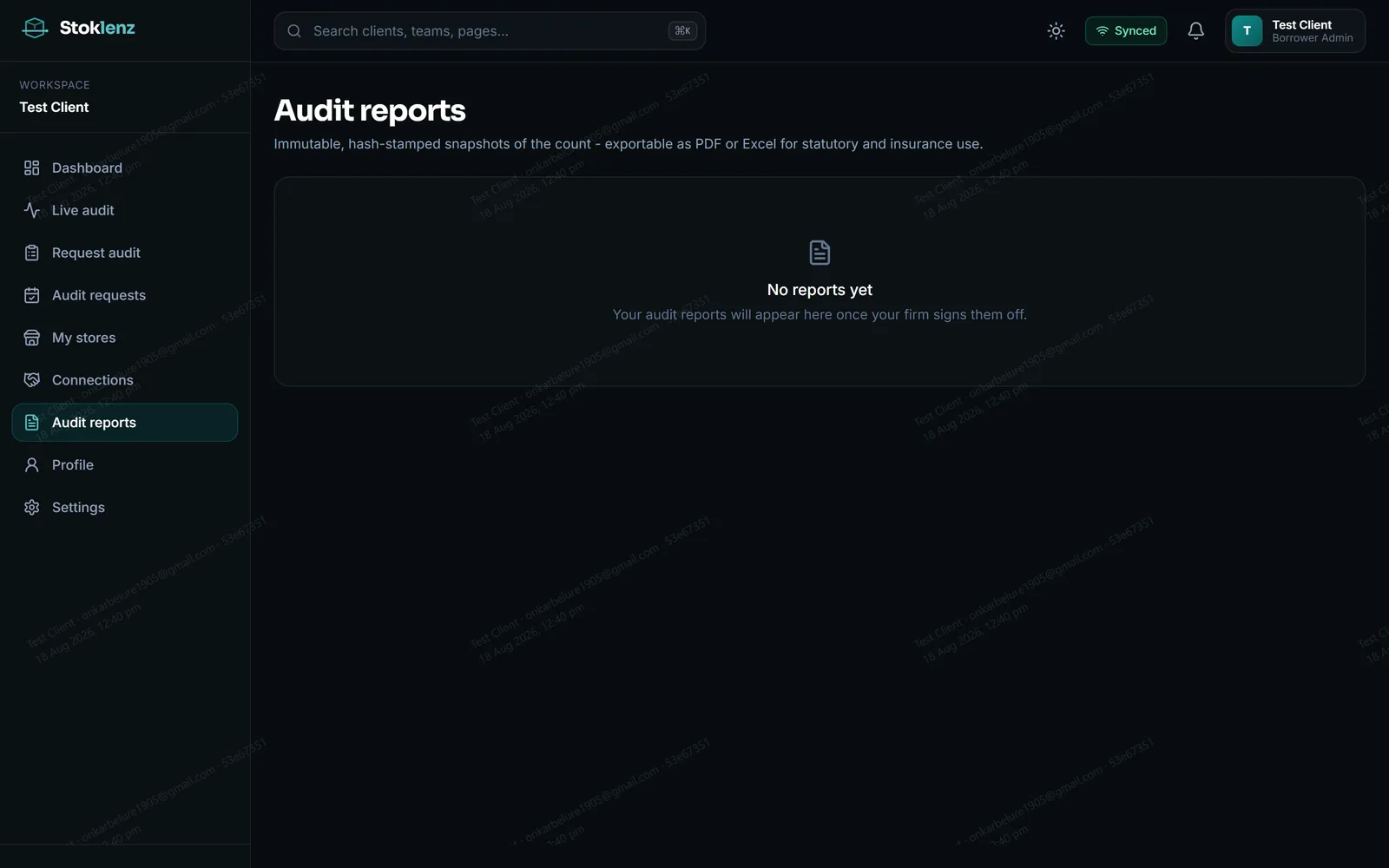
Audit reports: working papers and variance schedules produced from the captured count, not re-keyed from it01

Weighment Slips Captured Alongside the Count

Inward and outward weighments are attached to the recorded quantity, so a bulk figure carries the instrument record that produced it.

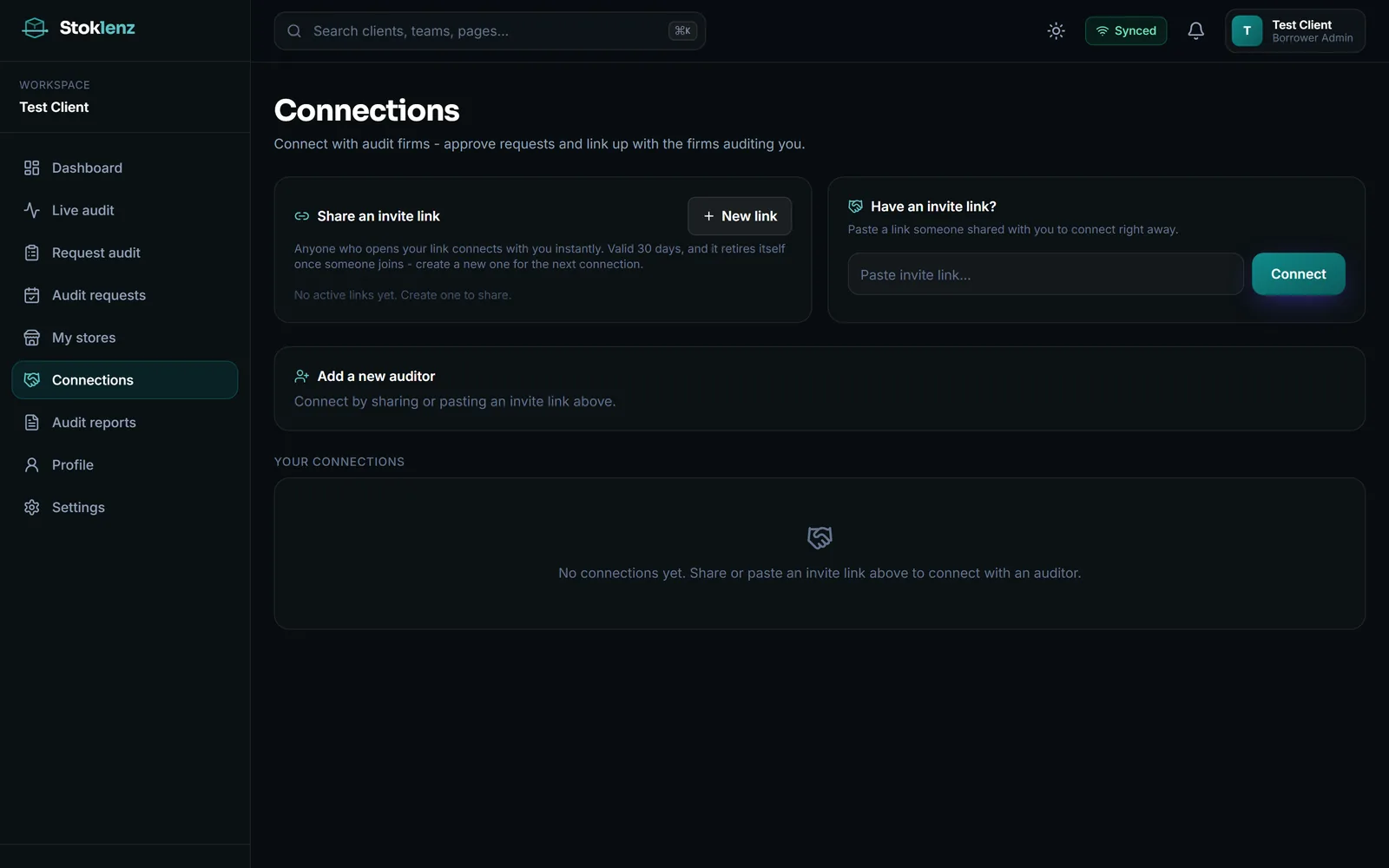
Connections: the audit firm linked to the borrower's workspace, which is what lets it run and report the count02

Dealer Point Confirmations Logged Centrally

Confirmations from dealer premises enter the same file as the godown count, so exposure held outside the plant is part of one position.

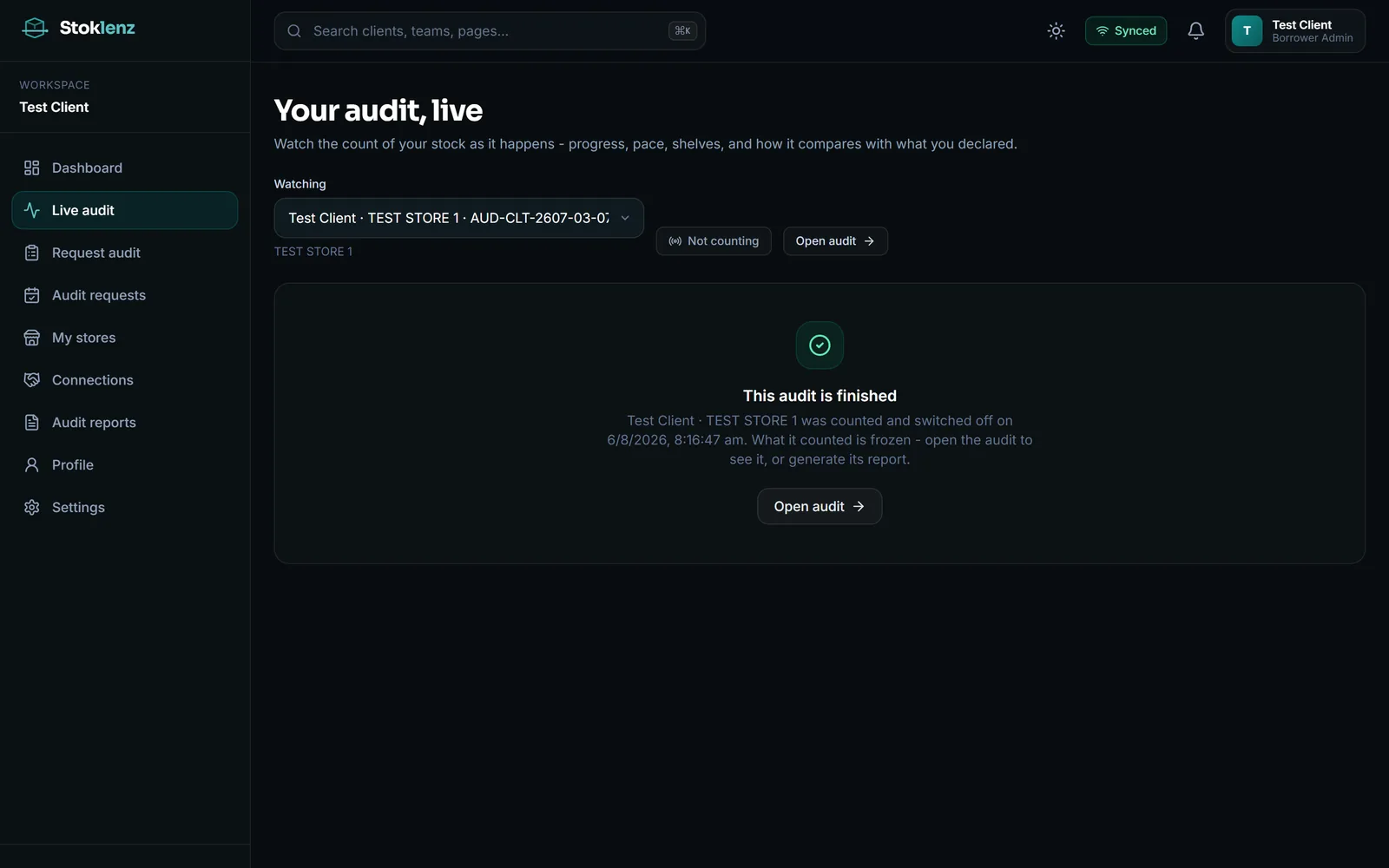
Live audit: the count as it happens on the floor, rather than a status typed up afterwards03

Lot Numbers Recorded With Season Codes

Each lot is captured with its season, because seed storage across a cycle changes value and carry-over cannot otherwise be told apart from fresh material.

Records We Work From

  • Lot Registers and Germination Test Reports - Lot-wise stock with the germination test results behind it. Seed storage condition and test evidence together decide value, which quantity alone cannot establish.
  • Weighbridge Slips for the Count Period - Inward and outward weighments for the period with the calibration and stamping status of the instrument, since bulk quantities rest entirely on that record.
  • Dealer Agreements and Stock Confirmations - The terms on which dealers hold stock and their confirmations of what is on hand, because most of the exposure sits outside the plant and beyond direct control.

Germination Loss, Season Carry-Over and Dealer Stock

IssueWhat It Does to the Count
Carry-Over Stock Valued at Fresh Season RatesLast season's material is indistinguishable from new by sight, and seed storage across a full cycle reduces what it is worth without changing the bag.
Caking and Moisture Damage Nobody RecordedFertiliser that has absorbed moisture and set hard is still counted by weight, and nothing in the record says it can no longer be spread.
Germination Loss Discovered After the Sale WindowViability only shows up in a laboratory result on a retained sample, and where nobody tested before the season the shortfall surfaces after the material has gone out.
Dealer Stock Confirmed Only by TelephoneA verbal confirmation recorded as verification. Where most of the exposure sits at dealer points, a phone call is not evidence of anything.

What Drives the Fee

What Moves the FeeWhy
Godowns and Dealer Points in ScopeMost of the exposure sits away from the plant, so the number of dealer points included moves the number far more than the size of the central godown does.
Whether Bulk Weighment Verification Is RequiredEstablishing loose fertiliser by weight and measured volume, with calibration checked and sample re-weighing performed, is materially more work than counting bags.
Season Timing of the CountCounting at the pre-sowing peak covers the largest holding of the year, and seed storage conditions mean a post-season count answers a different question in less time.

All fees and charges listed are indicative only and do not constitute a binding offer. Final amounts may vary depending on the volume of work and the complexity involved.

Get a free Stock Audit for Agro-Inputs consultation - Call +91 945 945 6700 or WhatsApp us. No-obligation assessment.

Key Benefits

What the Count Finds

Season Carry-Over Priced Honestly

Stock held across a season identified by lot and age, because seed storage over a full cycle changes what the material is worth without changing how it looks.

Damaged Bulk Stock Separated From Saleable

Caked, wet or contaminated fertiliser identified and quantified apart, rather than absorbed into a heap total that overstates what can be sold.

Dealer Exposure Confirmed Physically

Stock at dealer points established by count and confirmation, so the position rests on what remains saleable rather than on what was dispatched.

Counts Run in Agro-Inputs

500+ stock audits completed.

  • Godowns and Dealer Points Counted
  • Tonnage Verified
  • Turnaround Ahead of a Season Start

Across engagements run by the Patron team. The figure is counted from completed engagements only, and it is restated when it changes rather than rounded up and left. Scope for any one count is still agreed against your own site list.

Why Businesses Choose Patron Accounting

Crews Who Work in Godown Conditions

Counting bulk agro-inputs means working in open godowns with loose material and dust, and crews equipped for it record seed storage conditions alongside the quantity.

Weighment Workings Attached to the Report

Where quantity rests on a weighbridge, the calibration status, the slips and the density basis are attached, so the figure can be re-performed rather than believed.

Reach Into Rural Dealer Points

Dealer holdings away from the main road are confirmed physically where access allows, because most of the exposure in this sector sits outside the plant.

An Agro-Inputs Count We Have Run

Carry-Over Seed That Failed a Germination Retest

carry-over lots matched to current germination results

A seeds and crop-input company

  1. 01The challenge

    Seed carried over from the previous season was valued at cost. Germination certificates on file were the ones issued at first packing.

  2. 02What we did

    Every carry-over lot was matched to its current germination result rather than the original certificate, and lots without a current test were identified.

  3. 03What the count found

    A portion had either failed retest or was carrying an expired certificate, and was therefore not saleable as seed at all - though it retained value as feed or crush.

  4. 04What changed

    The affected lots were reclassified before the season rather than discovered during it, and retesting was scheduled ahead of each season rather than on request.

Bulk Tonnage That Weighed Short

sample weighed against a calibrated platform scale

A crop-input company holding bagged fertiliser

  1. 01The challenge

    Bagged stock is counted in bags and valued in tonnes. The conversion used a standard bag weight that had been in the system for years and had never been re-checked.

  2. 02What we did

    We weighed a sample across lots and suppliers against a calibrated platform scale and compared actual weight to the assumed standard.

  3. 03What the count found

    Actual weight ran under the assumed standard consistently rather than randomly, which pointed at the standard rather than at individual bags. Every valuation built on that conversion had been overstated for as long as it had been in use.

  4. 04What changed

    The standard was corrected and the holding restated. Incoming consignments are now weight-checked on receipt rather than accepted on the supplier's declaration.

When should an agro-input stock audit be scheduled?

Timing should avoid the peak dispatch weeks before Kharif and Rabi sowing, when stock moves fastest and a count is least reliable. Counting just after a season ends gives a cleaner cut-off and a more meaningful view of unsold stock.

Does a weighbridge need to be verified for stock audit purposes?

A weighbridge used for trade must be verified and stamped under the Legal Metrology Act, typically on an annual cycle. Where stock is measured by weight, the auditor checks the current stamping, because an unverified weighbridge undermines every quantity derived from it.

What documentation supports an agro-input stock count?

Weighbridge slips, lot-wise bag records, germination certificates for seed, batch and expiry records for agrochemicals, and dealer confirmations for stock held outside your premises. Weighbridge slips are the primary evidence where stock is weight based.

How is seed stock affected by germination loss?

Seed viability declines over time and with poor storage, so a physically present lot may no longer be saleable as certified seed. The audit records germination test results alongside quantity, because value depends on viability rather than weight alone.

How is fertiliser stock counted when it is stored in bulk?

Bulk fertiliser is established by weighbridge records, bag counts by lot, or measured stack volume with a documented density assumption. The method must be stated, because a stack measurement carries a wider tolerance than a bag count.

How is caking or moisture damage assessed?

Fertiliser that has absorbed moisture and hardened may be unsaleable or saleable only at a discount. The auditor records the affected quantity separately and reports whether it has been provided for, since physical presence does not equal realisable value.

What is the difference between certified and truthful label seed for audit purposes?

The two categories carry different certification requirements and sell at different price points, so they must be counted and valued as separate lines. Mixing them into a single item misstates inventory value even when the total quantity counted is entirely correct.

How is stock at dealer points verified?

Agro-input distribution runs through many small dealers, so verification is done on a sample of dealer locations weighted by value, with confirmations sought for the rest. Full physical coverage is rarely practical and rarely necessary.

Why does seasonality make agro-input stock hard to value?

Because the same physical quantity is worth different amounts at different points in the cycle. A pesticide held past its application window has no buyer until the following year, and seed loses germination in storage. The audit therefore tests age and viability, not quantity alone.

How is pesticide and agrochemical stock handled?

Agrochemicals carry expiry dates and defined storage requirements, so the count records batch and expiry for each lot and notes the storage conditions observed. Expired agrochemical stock is both a write-off and a disposal obligation, not something that can be cleared at a discount.

Booking a Count

What the Godown Team Should Have Ready

Lot registers with germination results, weighbridge slips for the period, and the dealer list with confirmations. Seed storage conditions are recorded alongside the count.

Booking Ahead of the Sowing Window

Counting before the season draw covers the largest holding of the year, so the date is fixed against the sowing calendar rather than the finance calendar.

Book a Free Consultation - No Obligation.

Reviewed by the CA & CS Team, Patron Accounting LLP
ICAI & ICSI registered  ·  15+ years in Indian accounting & certification  ·  Last reviewed 20 August 2026  ·  Next review 20 November 2026
Official sources: ICAIICAI UDIN PortalMCARBI