Talk to an Expert
Talk to an Expert ✆ +91 945 945 6700
Trusted by 10,000+ Businesses

Retail Sector Accounting in Delhi

Reviewed by CA and CS Team, Patron Accounting LLP ICAI and ICSI Registered| 15+ Years Experience| Last Updated: 23 June 2026 Verify Credentials →

Scope: Cash-heavy market books, wholesale and retail GST, POS reconciliation, marketplace settlement matching

Fees: Starting from INR 3,499/mo (Exl GST and Govt. Charges)

Eligibility: Delhi market traders, wholesale-cum-retail dealers, brand flagships, boutiques, and online sellers

Reporting: Monthly margin and stock MIS by outlet, product line, and sales channel

10,000+ Businesses Served | 4.9 Google Rating | 15+ Years Experience

15+ YearsIndustry Experience
CA and CSCertified Experts
4.9
Based on 500+ reviews

Get Free Consultation

Talk to a CA/CS expert today

🇮🇳 +91

Our team will get back to you shortly. No spam.

10,000+Businesses ServedShops, chains, and online sellers across India.
50,000+Books ReconciledPOS, settlements, and stock handled accurately.
4.9★Client RatingTrusted by retailers, boutiques, and e-tailers.
ISO CertifiedProfessional standards and documented processes.
SSL SecureYour sales and financial data is fully protected.

Retail Sector Accounting in Delhi - Overview

📌 TL;DR - Retail Accounting in Delhi at a Glance

Delhi retail spans dense wholesale-to-retail bazaars and polished brand flagships, and the books have to cope with both. Patron Accounting handles cash-heavy day-closes, splits wholesale B2B from counter B2C under one GSTIN, reconciles card and UPI tenders, grosses up Amazon and Flipkart settlements, and tracks stock by store. You get a monthly margin and stock MIS, and because Delhi has no profession tax, compliance is lighter than in Maharashtra cities. Fees start from INR 3,499/mo. Serving Karol Bagh, Sadar Bazaar, Connaught Place, and online sellers.

Quick ReferenceDetails for Delhi Retailers
Governing LawCGST Act 2017 Sections 10, 35, 52; Income Tax Act Section 44AA and Section 194-O
Applicable ToDelhi market traders, wholesale-cum-retail dealers, brand flagships, boutiques, and marketplace sellers
Starting PriceStarting from INR 3,499/mo (Exl GST and Govt. Charges)
Composition LimitTurnover up to INR 1.5 crore for 1 percent levy under Section 10 (no marketplace sales)
Marketplace TCS1 percent under Section 52, reported in seller GSTR-8, matched to GSTR-2B
Records Retention6 years under Section 35 CGST Act and Rule 6F
Local AuthorityGST Delhi; RoC Delhi (MCA); note: Delhi levies no profession tax (unlike Maharashtra)

Few retail markets in India are as layered as Delhi. Walk through Karol Bagh and an apparel-and-jewellery store rings up cash bills beside bullion-linked stock; cross to Sadar Bazaar or Chandni Chowk and a single dealer sells in bulk to small shops while also shipping retail orders online. A few kilometres south, a Connaught Place flagship runs almost entirely on card and UPI footfall, and a Lajpat Nagar boutique is busy launching its first listings on Amazon, Flipkart, and Meesho. One accounting template cannot serve all four. See our national Retail Sector Accounting service for the wider view.

What Patron Accounting's Delhi team does is structure books to each format: tight cash controls for market shops, channel tagging for wholesale-plus-retail dealers, tender reconciliation for flagships, and settlement gross-ups for online sellers. GST is filed so B2C and B2B figures both tie out. For the day-to-day ledgers that sit beneath this, see our Accounting Services. This page is reviewed quarterly for accuracy.

What Is Retail Sector Accounting?

Retail sector accounting is the specialised bookkeeping built for high-volume, low-value selling: it captures sales across counters and online channels, settles every payment tender against the bank, and values inventory so the owner sees a genuine margin rather than a guess.

In a Connaught Place flagship that mostly means importing the POS close, splitting card and UPI, and tying both to the bank. In a cash-driven Karol Bagh shop it adds drawer-level cash control and bullion-linked stock valuation. For a Sadar Bazaar wholesaler who also sells retail online, it means separating bulk B2B invoices from counter B2C, then decoding marketplace settlement files where the bank credit survives only after commission, Section 52 TCS, Section 194-O TDS, shipping, and returns.

Because Delhi retail blends counter sales, wholesale, and marketplace TCS, this work runs hand in hand with GST. If your model is purely online, our E-commerce Accounting in Delhi page covers platform reconciliation in more depth.

Key Terms for Retail Accounting in Delhi:

POS Reconciliation: Tying each store day-close (cash, card, UPI) back to the bank deposit and the sales ledger.

Inventory and Stock Accounting: Valuing closing stock, including bullion-linked lines, recording transfers, and booking shrinkage so margin is real.

Settlement Reconciliation: Rebuilding a marketplace payout into taxable sales by adding back commission, TCS, TDS, shipping, and returns.

Wholesale plus Retail GST: Reporting B2B bulk invoices and consolidated B2C counter sales under one GSTIN in GSTR-1 and GSTR-3B.

Composition Levy: A flat 1 percent scheme under Section 10 for small traders below INR 1.5 crore who do not supply through TCS marketplaces.

POS, Stock, GST Reconciled
Delhi Retail POS | Stock | GST 2B

Who Needs Retail Accounting in Delhi?

If your Delhi business sells goods to end buyers, or to small shops and end buyers at once, retail-specific accounting is what keeps margins legible and GST defensible across cash, card, and online channels.

  • Cash-Heavy Market Shops (Karol Bagh/Chandni Chowk) - Apparel, jewellery, and general stores with large daily cash takings and bullion-linked stock to control.
  • Wholesale-cum-Retail Dealers (Sadar Bazaar) - Traders billing bulk B2B to small shops while also selling retail online, needing channel-split GST.
  • Brand Flagships (Connaught Place/Khan Market) - Premium and brand outlets driven by card and UPI footfall, with tight tender reconciliation needs.
  • Boutiques and Fashion Sellers (Lajpat Nagar/Sarojini Nagar) - Curated fashion stores launching on Amazon, Flipkart, and Meesho alongside their counter.
  • Multi-Store and Omnichannel Brands - Chains across NCR needing store-wise stock, group margin, and marketplace settlement reconciliation.
  • Composition-Scheme Traders - Small Delhi shops below INR 1.5 crore needing CMP-08 and GSTR-4 filed correctly under Section 10.

Our Retail Accounting Services in Delhi

ServiceWhat We Do
Cash and Tender ReconciliationReconcile high-cash drawers, card, and UPI from each day-close to the bank, with denomination tracking to catch short banking in market shops.
Wholesale and Retail GSTSplit B2B bulk invoices from consolidated B2C counter sales under one GSTIN, flowing both correctly into GSTR-1 and GSTR-3B.
Marketplace Settlement MatchingRebuild Amazon, Flipkart, and Meesho payouts to taxable value, separating commission, TCS, Section 194-O TDS, shipping, and returns, then tie to bank.
Inventory and Bullion-Linked StockValue closing stock by outlet, including gold-rate-linked jewellery lines, book transfers and shrinkage, and reconcile physical counts.
Margin and Channel MISMonthly dashboards covering gross margin, bulk versus retail mix, fast and slow SKUs, and channel performance so owners price sharper.
Payroll and Statutory SupportStore staff payroll, PF, ESI, and TDS, with no profession tax filings since Delhi does not levy one.

Need the underlying compliance too? See GST Return Filing and Income Tax Return Filing across India.

Our Process

How Retail Accounting Works in Delhi: 6-Step Process

A CA-supervised method for Delhi retailers, from scoping your markets and marketplaces to a monthly margin MIS.

Step 1

Store and Channel Mapping

Our CA scopes every outlet, POS, bank account, GSTIN, and marketplace you operate. A Karol Bagh cash store, a Connaught Place flagship, and a Meesho listing are each defined up front, with wholesale and retail channels flagged, so the books are structured before a single entry is posted. A fixed quote follows.

Outlets MappedFixed Quote
Mapped01
Step 2

POS, Bank, and Marketplace Setup

We pull your POS day-close, bank feeds, and Amazon and Flipkart settlement reports into Tally or Zoho Books. The chart of accounts is laid out with cost centres for each store, plus separate tags for wholesale and retail, so every rupee can be traced to where it was actually earned.

Feeds ConnectedCost Centres
Set Up02
Step 3

Daily Sales and Stock Posting

Counter, wholesale, and online sales are posted day-wise against the right outlet, HSN, and tax rate. Purchases, transfers, and stock adjustments, including bullion-linked jewellery lines, go in so closing inventory and cost of goods sold stay accurate for each Delhi store.

Sales PostedStock Tracked
POSBooks
Posted03
Step 4

Tender and Settlement Reconciliation

Cash, card, and UPI tenders are reconciled to the bank, with cash drawers checked closely for market shops, and each marketplace payout is rebuilt to taxable sales. Section 52 TCS is verified against GSTR-2B so no input credit slips through the cracks for the period.

Tenders MatchedTCS Verified
Reconciled04
Step 5

GST Filing and Compliance

B2B and B2C sales flow into GSTR-1 and GSTR-3B for regular dealers, or CMP-08 and GSTR-4 for composition shops. We compute liability, reconcile marketplace TCS, and file on time with the GST Delhi authority so a Delhi retailer never carries an unmatched credit forward.

Returns FiledCredit Protected
Filed05
Step 6

Monthly Margin and Stock MIS

Each month a CA reviews the books and hands over a clear MIS: gross margin by store and channel, wholesale versus retail split, best and slow-moving SKUs, and a closing stock position. You see exactly which Karol Bagh or CP outlet earns and where cash is tied up in stock.

MIS DeliveredMargin Clear
MIS READY
Reported06

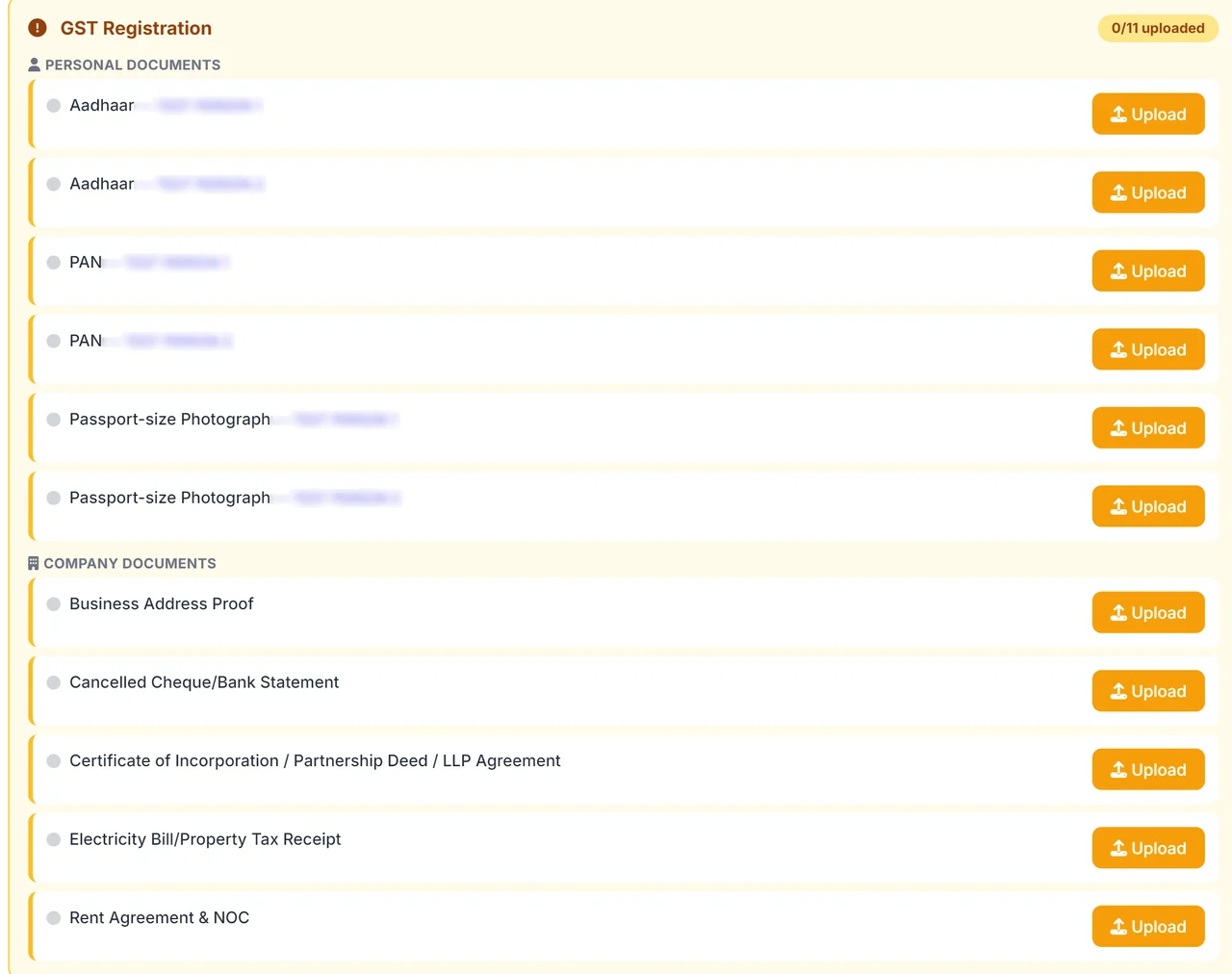
Documents Required for Retail Accounting in Delhi

  • POS Day-Close Reports - Daily tender-wise sales summary for each outlet
  • Cash, Bank, and Gateway Statements - Cash registers for market shops, plus card and UPI settlement files
  • Marketplace Settlement Reports - Amazon, Flipkart, and Meesho payout and tax statements
  • Sales and Purchase Invoices - Both B2B bulk and B2C, with credit and debit notes
  • Stock and Inventory Registers - Opening stock, purchases, transfers, and physical count sheets, including bullion-linked items
  • GST Registration Certificate - GSTIN for each registration or composition enrolment
  • PAN of the Business Entity
  • Payroll and Staff Records - Store staff salary, PF, and ESI details (no profession tax in Delhi)
  • Rent and Expense Bills - Shop rent, electricity, and operating costs
  • Existing Accounting File - Tally, Zoho Books, or QuickBooks data, if any

All fees and charges listed are indicative only and do not constitute a binding offer. Final amounts may vary depending on the volume of work and the complexity involved.

Common Retail Challenges and How Patron Solves Them

ChallengePatron's Solution
Heavy cash takings hard to reconcileDenomination-level cash control and daily drawer-to-bank matching so short banking in Karol Bagh or Sadar Bazaar shops surfaces fast.
Wholesale and retail muddled under one GSTINChannel tagging that splits B2B bulk invoices from consolidated B2C, so both report cleanly and margins stay separate.
Marketplace payout mistaken for revenueEvery Amazon and Flipkart settlement is rebuilt to taxable sales, with commission, TCS, and TDS recorded as their own lines.
Bullion-linked jewellery stock hard to valueCost valuation with rate-date records and physical weight reconciliation, keeping closing stock audit-ready as gold rates move.

Retail Accounting Fees in Delhi

Fee ComponentAmount
Patron Accounting Professional FeesStarting from INR 3,499/mo (Exl GST and Govt. Charges)
Additional Store or ChannelPriced per outlet and per marketplace based on volume
Marketplace TCS (Section 52)1 percent collected by the platform, claimed back via GSTR-2B (govt mechanism)
Section 194-O TDS0.1 percent on gross sales, deducted by the platform (govt charge)
Accounting Software SubscriptionCharged separately by Tally, Zoho, or the chosen provider

All fees and charges listed are indicative only and do not constitute a binding offer. Final amounts may vary depending on the number of stores, channels, and transaction volume. Government taxes such as TCS and TDS are statutory and adjusted through your GST and income tax returns.

Get a fixed monthly quote for your Delhi retail business

Tell us your stores and channels and we respond within 2 hours.

Call +91 945 945 6700

Retail Accounting Turnaround in Delhi

Retail SetupTypical Cycle
Single counter shopOnboarding in 3 to 5 days; books closed within 5 days of month-end
Wholesale-cum-retail dealerOnboarding in 1 to 2 weeks; channel-split close within 7 to 10 days of month-end
Online and omnichannel sellerOnboarding in 1 to 2 weeks; settlement reconciliation monthly before GSTR-3B
Cash-heavy or high-SKU market shopOnboarding in 2 to 3 weeks; daily cash and POS posting with monthly stock reconciliation

How fast we onboard depends on how cleanly your POS, cash records, and settlement data export, and on the number of outlets and channels in play. A single CP shop moves quickest; a Sadar Bazaar dealer running wholesale, retail, and Amazon takes a little longer to map.

Why Choose Patron for Retail Accounting in Delhi

Retail-Specialised CAs

Our team reads POS data, cash drawers, store-wise stock, and marketplace settlements fluently, so reconciliations land right the first time, not after rework.

GST and TCS Accurate

We split wholesale B2B from retail B2C, reconcile marketplace TCS to GSTR-2B, and weigh composition against regular GST under Section 10.

Software Agnostic

Your books run inside Tally Prime, Zoho Books, or QuickBooks, fitting around your current POS and billing rather than forcing a switch.

Fixed Monthly Pricing

A transparent retainer from INR 3,499/mo, scoped to your outlets and channels, so the cost stays predictable as you scale.

Local Delhi Knowledge

We know GST Delhi practice and the trading belts of Karol Bagh, Sadar Bazaar, Chandni Chowk, Connaught Place, and Lajpat Nagar, including that Delhi has no profession tax.

Margin You Can Act On

A monthly MIS that breaks margin down by store, channel, and SKU, so you back the winners and clear the dead stock.

In-House Bookkeeping vs Patron Retail Accounting

FactorPatron ProfessionalIn-House / DIY
Cash and tender controlDaily drawer-to-bank matching with denomination checksCash counted loosely; short banking goes unnoticed
Wholesale vs retail GSTChannels split cleanly under one GSTINB2B and B2C mixed; returns and margin distorted
Marketplace settlementRebuilt to taxable value; commission, TCS, TDS split outNet payout treated as sales; margin overstated
Stock and bullion valuationPer outlet, rate-date records, audit-readyRough estimates; gold-rate swings hide true margin
Cost and owner focusFixed retainer; owner trades, not bookkeepsStaff hours and rework land on the founder

Selling heavily online as well? Compare with E-commerce Accounting in Delhi and our national GST Return Filing service.

How do you keep books for a cash-heavy Delhi market shop?

For a high-cash store in Karol Bagh or Sadar Bazaar, Patron posts every day-close, reconciles the cash drawer against the bank deposit, and separates card and UPI tenders. Daily denomination tracking exposes short banking early, and counter sales are booked as B2C supplies in GSTR-1 so cash turnover and declared GST stay aligned under the CGST Act 2017.

We sell wholesale and retail under one GSTIN in Chandni Chowk. How is GST handled?

A Sadar Bazaar or Chandni Chowk dealer running both wholesale B2B and counter B2C uses one GSTIN with split reporting. Patron records B2B invoices with buyer GSTINs and books counter sales as consolidated B2C, both flowing into GSTR-1 and GSTR-3B. We tag each channel so margins on bulk and retail lines read separately.

Is there a profession tax on retail staff in Delhi?

No. Delhi does not levy profession tax, so there is no PTRC or PTEC registration as there is in Maharashtra cities like Pune or Mumbai. Patron still runs your store payroll with PF, ESI, and TDS where applicable, but a Delhi retailer skips the profession tax filings entirely, which lightens monthly compliance for shops in CP or Lajpat Nagar.

How is jewellery and bullion-linked stock valued for a Karol Bagh store?

Apparel-and-jewellery shops in Karol Bagh carry stock whose value moves with gold rates. Patron values bullion-linked inventory at cost with rate-date records, books making charges separately, and reconciles physical weight to the stock register. This keeps closing stock defensible in an audit and shows true margin once metal price swings are stripped out.

How much does retail accounting cost in Delhi?

Fees start from INR 3,499/mo (Exl GST and Govt. Charges). The exact retainer scales with store count, billing volume, marketplace channels, and the number of GST registrations. A single Khan Market boutique sits at the lower end; a Sadar Bazaar wholesaler also selling online pays more. We confirm a fixed quote before any onboarding begins.

How do you reconcile Amazon, Flipkart, and Meesho payouts for Delhi sellers?

Each payout is grossed back up to taxable sales by adding commission, Section 52 TCS, Section 194-O TDS, shipping, and return adjustments, then matched to the bank credit and your GSTR-1. The 1 percent TCS shown in the platform GSTR-8 is reconciled to your GSTR-2B every month so a Lajpat Nagar seller loses no input credit.

Should a Delhi trader pick the GST composition scheme or regular GST?

A trader below INR 1.5 crore can elect composition under Section 10 and pay a flat 1 percent, but loses input credit, cannot issue a tax invoice, and cannot sell on TCS marketplaces. A Connaught Place flagship or any seller listing on Amazon must stay in regular GST. Patron models both routes against your turnover before you lock in.

Which records must a Delhi retail business retain?

Section 35 of the CGST Act 2017 and Section 44AA of the Income Tax Act require sales and purchase registers, stock records, the cash book, and bank statements to be kept for 6 years. Patron maintains these by store and channel for the GST Delhi authority and RoC Delhi, so a notice or assessment is answered without scrambling for papers.

Quick Answers

Most common retail mistake? Treating the net marketplace payout as revenue; the gross sale, commission, TCS, and TDS each need their own line so margin and GST stay correct.

Does Delhi charge profession tax? No, Delhi has no profession tax, so there is no PTRC or PTEC to file, unlike Pune or Mumbai in Maharashtra.

Can it be done remotely? Yes. POS, cash, bank, and settlement files are shared online; we arrange store visits for physical stock counts when needed.

What do I get each month? Reconciled books, filed GST, and a margin and stock MIS split by store, channel, and product line.

Run Your Delhi Retail Business on Clear Numbers

In Delhi, margins are made store by store and SKU by SKU, and lost the moment cash, stock, and marketplace settlements stop agreeing. Whether you run a cash-heavy shop in Karol Bagh, a wholesale-cum-retail counter in Sadar Bazaar, a brand flagship in Connaught Place, or a boutique listing on Amazon and Flipkart, Patron Accounting's CA-supervised retail service reconciles every tender and channel, files your GST, and delivers a monthly margin MIS from INR 3,499/mo.

Explore the national Retail Sector Accounting page, then pair it with GST Return Filing to keep compliance tight. Patron Accounting LLP serves 10,000+ businesses with a 4.9 Google rating.

Book a Free Consultation - No Obligation.

Content Created: 23 June 2026 | Last Updated: 23 June 2026 | Next Review: 23 September 2026

Reviewed by CA and CS Team, Patron Accounting LLP. Review Triggers: changes to GST composition limits, marketplace TCS or TDS rates, or Patron Accounting fees.