How To Avoid Errors While Filing Your Income Tax Return
Income Tax Return (ITR) filing is more than just an annual compliance task; it’s a critical part of maintaining your financial and legal credibility. Whether you're a salaried professional working in an MNC or a business owner running operations remotely or independently, the risk of errors in ITR filing can lead to processing delays, refund rejections, tax notices, or future scrutiny.
Despite the Income Tax Department's simplified digital interface, several common mistakes still affect both individuals and businesses. These are frequently the result of incorrect assumptions, a lack of documentation, or a failure to comply with updated Income Tax Act requirements.
Common Errors for Both Professionals and Businesses
For salaried individuals, one of the most frequent mistakes is selecting the wrong ITR form. For instance, professionals earning capital gains or holding foreign assets often use ITR-1 instead of ITR-2 or ITR-3, rendering their return defective. Similarly, business owners and freelancers who opt for presumptive taxation under Section 44ADA sometimes skip necessary disclosures or choose an incorrect form altogether (e.g., using ITR-4 when ITR-3 is required due to additional income streams).
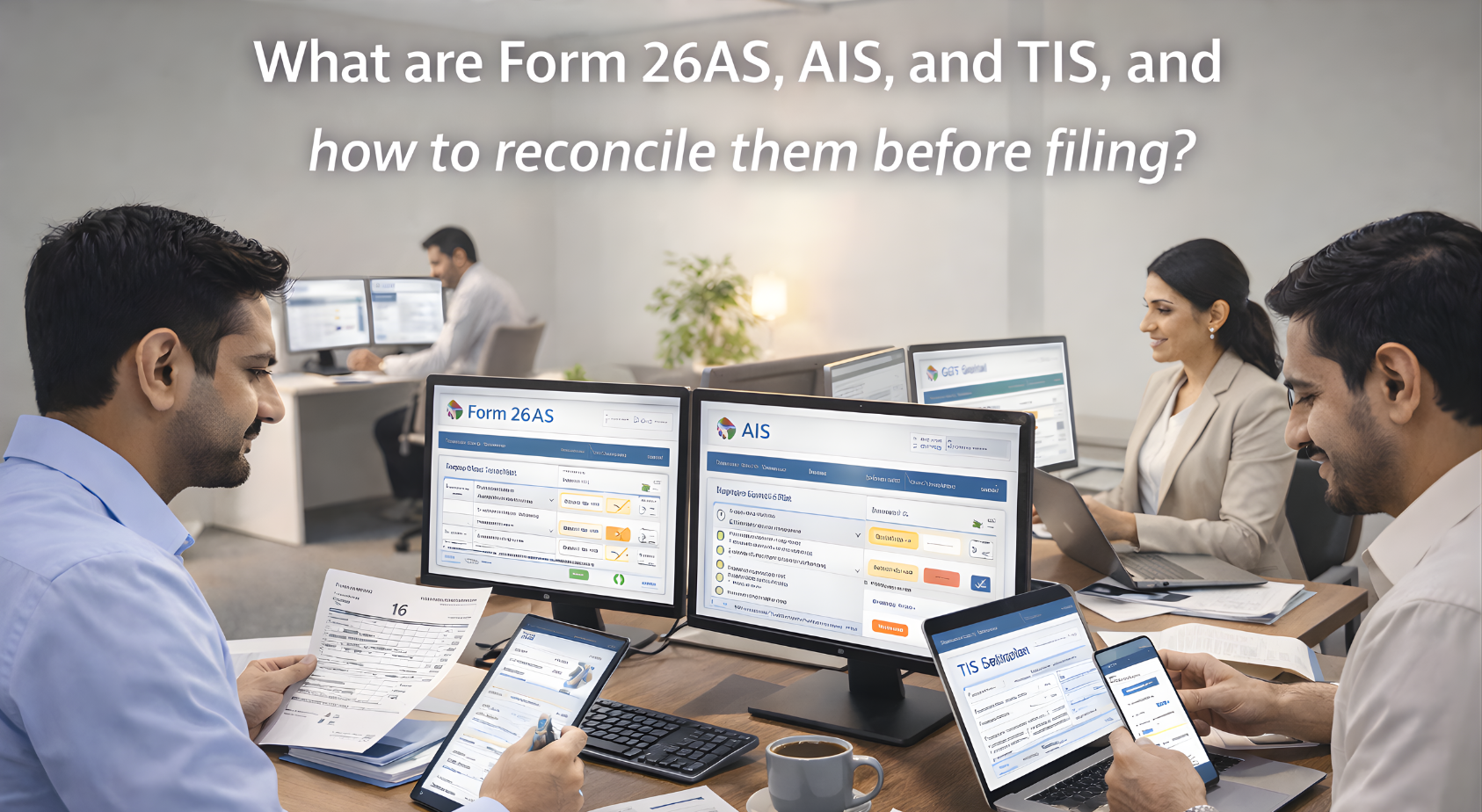
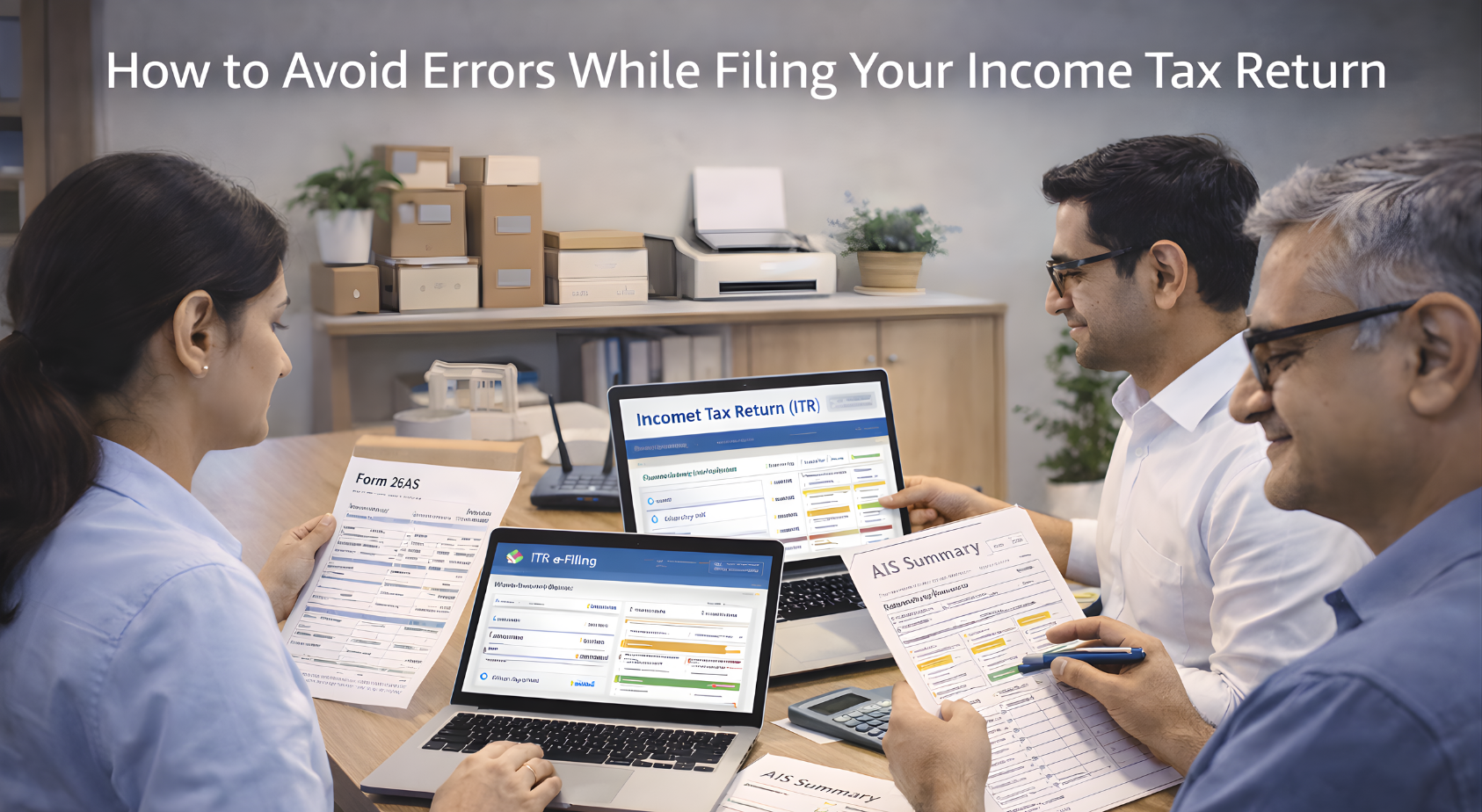
Another recurring error involves a mismatch in TDS data. Your Form 26AS and AIS must align with your reported income, whether that’s salary, consulting fees, rent, or interest. Discrepancies such as unreported bank interest, dividend income, or missed freelance invoices can prompt unnecessary scrutiny or delay refunds.
Overstated or unsupported deduction claims under Sections 80C, 80D, or 80G also lead to red flags. This is particularly relevant for business owners trying to claim home office expenses, depreciation, or donations without adequate documentation.
Furthermore, failing to e-verify the return after submission is an incredibly common error. Regardless of how accurately the return is filed, it remains invalid if it is not verified within the specified time frame using Aadhaar OTP, net banking, or digital signature.
Smart, Compliant Filing for Professionals and Businesses
At Patron Accounting, we help both professionals and business owners file ITRs accurately, choosing the correct forms, reconciling income and TDS data, and optimizing legitimate deductions. Whether you earn a fixed salary, freelance income, or manage a service-based business, our experts ensure error-free filing aligned with your financial profile.