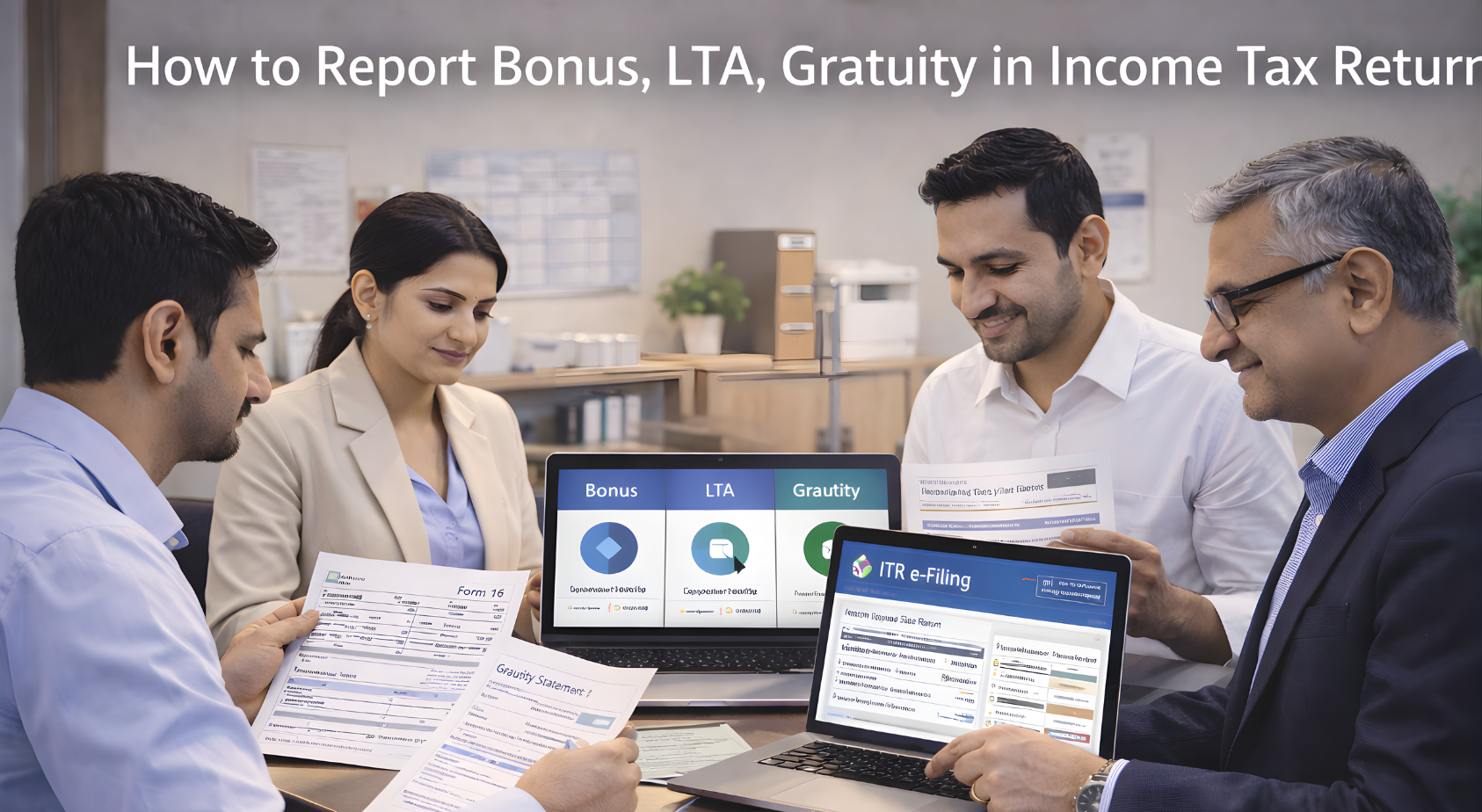
How to Report Bonus, LTA, Gratuity in Income Tax Return
Understanding how to report components like bonus, Leave Travel Allowance (LTA), and gratuity in your Income Tax Return (ITR) is critical, whether you're a salaried professional working for a multinational corporation or a business owner dealing with team payrolls and past employment dues. These are more than just payroll entries; they affect your taxable income, exemptions, and disclosure obligations under the Income Tax Act.
For the Assessment Year 2025–26, several professionals and independent earners are filing ITRs that include accumulated arrears, bonus payouts, or parting benefits from past employers. Accurate classification of such receipts is crucial to avoid misreporting, tax mismatch notices, or refund delays.
Bonus Income
Bonus received during a financial year is fully taxable as part of “Income from Salary” in the hands of employees. It must be declared in the ITR of the year in which it is received, even if it pertains to the previous financial year. Business owners or freelancers who receive performance-based payouts under contract must report them as “Profits and Gains from Business or Profession” if not classified under salary by the payer.
Note: If you’ve received a delayed bonus that causes a jump in your tax slab, consider relief under Section 89(1) by submitting Form 10E before filing the return.
Leave Travel Allowance (LTA)
LTA is only tax-exempt if you have traveled within India and have given your employer official documentation. The exemption only applies to travel expenses and is good for two trips over a four-year period. Your LTA is fully taxable and needs to be included in your pay if it is paid but not claimed or verified by bills.
Business owners may reimburse travel under different clauses, but those are not eligible for LTA exemptions unless they’re structured via payroll.
Gratuity
The Payment of Gratuity Act exempts private sector workers from paying a gratuity of up to ₹20 lakh when they leave their employer. Depending on the average salary and the number of years served, others have different exemption rules. Any amount above the exemption threshold needs to be declared as salary income and subject to the proper taxes.
If you are a founder or business owner and paying out gratuity to employees, it is allowed as a business expense, but not deductible unless the gratuity is actually paid (not just provisioned).
Simplify Complex Salary Components with Patron Accounting
At Patron Accounting, we help both professionals and business owners ensure proper classification and reporting of salary-linked components like bonus, LTA, and gratuity. Whether you’re receiving these or paying them out, our ITR experts guide you in filing with accuracy and maximum compliance.