


Trusted by 10,000+ Businesses

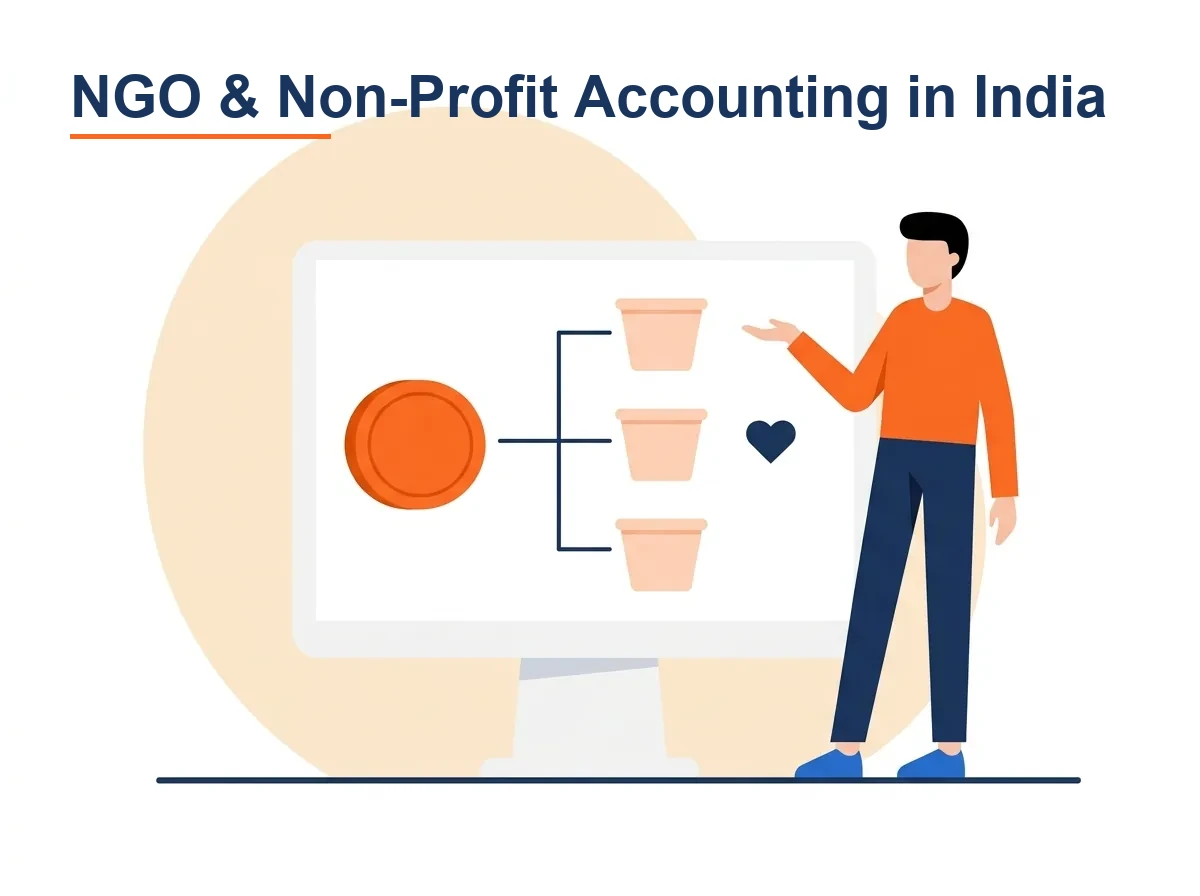
NGO and Non-Profit Accounting Services in India

FCRA compliance and reporting

12A and 80G registration support

Donor-specific fund tracking systems

15+ Years Industry Experience
CA & CS Certified Experts
4.9
Based on 500+ reviews

Request a call back

India Flag +91
10,000+ Happy Clients
15+ Years Experience
50,000+ Documents Filed
4.9★ Client Rating
ISO Certified
SSL Secure

Real Stories from Real People

Hear how teams across industries use patron to save time, cut costs, & stay in control.

Sunny Ashpal
Sunny Ashpal

Director - Demandify Media

Anjanay Srivastava
Anjanay Srivastava

Founder and Managing Director - Hunarsource Consulting

I’ve had an outstanding experience working with my CA-patron Accounting . Their professionalism, attention to detail, and timely communication made th...

I'm glad that I was able to connect with Patron. They took the minimum time to do the calculations based on the details provided by me and were really...

Really a fantastic experience with Patron accounting especially Shubham, he was extremely great. Knowledgeable person who deserves the 5 star for smoo...

Patron Accounting gives the best service related to all account handling of our firm. I am blessed and extremely happy that Patron Accounting assigned...

I have called Patron to file ITR for my 5 family members. I worked with Shubham Junjunwala and Amin Jain. It was a smooth process. They understand bas...

From the very beginning, their approach has been highly professional, prompt, and solution-oriented. Every interaction reflected their deep knowledge,...

Very proficient and professional staff. Do fantastic job and instant response. Strongly recommended engaging them for all accounting needs specially f...

I contacted them to file the ITR. Shubham was the POC for me and he was really very professional and giving prompt responses. Recommend to give them a...

Join 10,000+ Satisfied Businesses

Get expert assistance for all your business registration needs

Transparent Financial Management for Non-Profit Organizations

The non-profit sector in India consists of a variety of organizations like NGOs, charitable trusts, and societies, as well as Section 8 companies, that are involved in education, healthcare, environmental conservation, women's empowerment, and rural development. Each of these organizations has specific and different accounting problems to deal with, like the management of donor-restricted funds, adherence to FCRA rules for foreign contributions, the maintenance of tax exemption status under Sections 12A and 80G, and multiple stakeholders requiring transparent financial reporting.

To meet specialized requirements such as corpus fund segregation, project-wise expense tracking, utilization certificate preparation for grants, annual audit compliance under various acts, and financial statement preparation following fund accounting principles, professional accounting services for NGOs provide extensive help. Expert financial management allows non-profits to gain and maintain donor confidence, compliance with all regulations, the optimum tax benefits, and support for their mission through the demonstration of transparent fund utilization.

What is NGO Accounting?

NGO accounting is the process of dealing with financial management that is specialized for non-profit organizations that have been registered as trusts, societies, or Section 8 companies according to the law. This accounting system is significantly different from that of profit-making companies as it emphasizes accountability of funds rather than the maximization of profits. The financial reports consist of the Receipts and Payments Account that indicates the real cash movements, the Income and Expenditure Account that shows the accrual-based surplus or deficit, and the Balance Sheet that discloses the financial position with separate corpus fund disclosure.

Applicability for NGO and Non-Profit Accounting Services in India

All the registered trusts, societies, and Section 8 companies engaged in charitable activities are in need of professional accounting to comply with the registration acts. The societies registered under the Societies Registration Act have to file their annual financial statements, the trusts governed by different state trust acts are required to undergo audits if their income exceeds a certain limit, and the Section 8 companies are subject to the provisions of the Companies Act with the specific non-profit exemptions.

NGOs that receive foreign funding in excess of the threshold limits are required to get FCRA registration and make sure their accounting is compliant. This involves the maintenance of a separate designated bank account, the adherence to the twenty percent limit for administrative expenses, the tracking of foreign fund utilization per project, and the annual filing of the FC-4 return along with the certification of a chartered accountant proving compliance with the regulations.

 Eligibility for Section 12A tax exemption and 80G donation receipt attracts professional accounting ensuring compliance with the definitions of charitable purposes, proper maintenance of the corpus fund, filing of Form 10B when gross receipts exceed one crore, and submission of renewal applications every five years with complete financial documentation supporting continued eligibility.

Our NGO and Non-Profit Accounting Services

FCRA Compliance Management

The entire processing of the Foreign Contribution Regulation Act requirements has included the management of the particular bank account, observation of the twenty percent administrative costs, utilization of foreign funds per project, the preparation of the FC-4 return for the year, and the certification of a chartered accountant as a support for the accountability to the regulators.

12A and 80G Registration Services

We will help you with your initial registration application, renewal documentation every five years, annual Form 10B filing when receipts go over one crore, maintenance of the corpus fund, and compliance monitoring so as to keep the tax exemption and donor deduction eligibility.

Fund Accounting and Tracking

The donor-restricted fund segregation is carried out in a sophisticated manner, separate accounting of the corpus fund is done, allocation of the expenses is done on project-wise basis, grant utilization is tracked, and reporting is done in a transparent manner showing that the funds are properly stewarded and the donor's intent is complied with.

Utilization Certificate Preparation

Professional preparation of grant utilization certificates for government agencies, corporate CSR donors, and international funding organizations. Covers project expense documentation, budget variance analysis, beneficiary verification support, and compliance with the reporting formats required by the grant.

Statutory Audit Coordination

Total audit preparation under the Trust Act, Societies Registration Act, or Companies Act. Including the drafting of financial statements, preparing supporting schedules, coordinating with auditors, resolving queries, and certifying compliance to ensure timely audit completion.

Procedure for NGO and Non-Profit Accounting Services in India

Organization Structure Assessment

To start with, the analysis of NGO registration type will be carried out with respect to Trust Act, Societies Act, or Companies Act, along with governing documents review, identification of regulatory requirements applicable, including FCRA registration status, Section 12A and 80G approvals, and donor reporting obligations. Then, an accounting framework will be established, which will be in line with the organization structure and compliance needs.

Configuration of Fund Accounting

Next, the fund accounting structure will be configured in such a way that it will segregate unrestricted general funds, temporarily restricted project-specific funds, and permanently restricted corpus funds. Besides, major contributors will be tracked donor-wise, project codes will be created for grant management, and fund segregation will be implemented, ensuring compliance with donor restrictions.

Fund Classification Setup

Make a distinct account framework, particularly for NGOs, with income categories set up for the different sources of funds like donations, grants, corpus contributions, membership fees, and revenue from program services. On the other hand, expenses are divided into categories of costs for programs by activity area, management and general expenses, and fundraising costs, respectively, which then reflects the appropriate functional expense reporting.

Chart of Accounts Configuration

Receive all receipts along with accurate fund classification, donor attribution, and restriction documentation. Charges for expenses should be made against the relevant projects and funds, keep supporting documentation like invoices and approvals, and make sure that the costs shared among programs are allocated properly by using reasonable allocation methods.

FCRA Compliance Monitoring

Separate tracking of foreign contributions in a special bank account, keeping a watch on the twenty percent limit of administrative expenses, quarterly preparation of internal reports indicating usage against restrictions, project-wise foreign fund accounting, and stacking the documents to support the annual FC-4 return and the process of auditing certification requirements.

Grant Reconciliation

To align the amount of grants received with the grants sanctioned, to keep a record of expenditures in relation to budgets approved, to pinpoint the differences in budgets that make it necessary to communicate with the donor, to prepare certificates for utilization along with the documentation support, and to have a suitable filing system in place that will assist in audit and donor inquiries.

Statutory Compliance Processing

Prepare annual financial statements in accordance with the ICAI guidance for NGOs, coordinate statutory audit as per the applicable acts, and file Form 10B if gross receipts cross one crore, deal with 12A and 80G renewal applications when they are due and have compliance calendar maintenance for timely submissions.

Financial Reporting

Prepare financial reports on quarterly basis for the review of the governing board, and produce reports that are donor-specific depicting utilization of fund and impact, compile annual reports with financial highlights and program achievements, and reply to donor queries which are beneficial for the maintaining of funding relationships and organizational transparency.

Checklist for NGO and Non-Profit Accounting Services in India

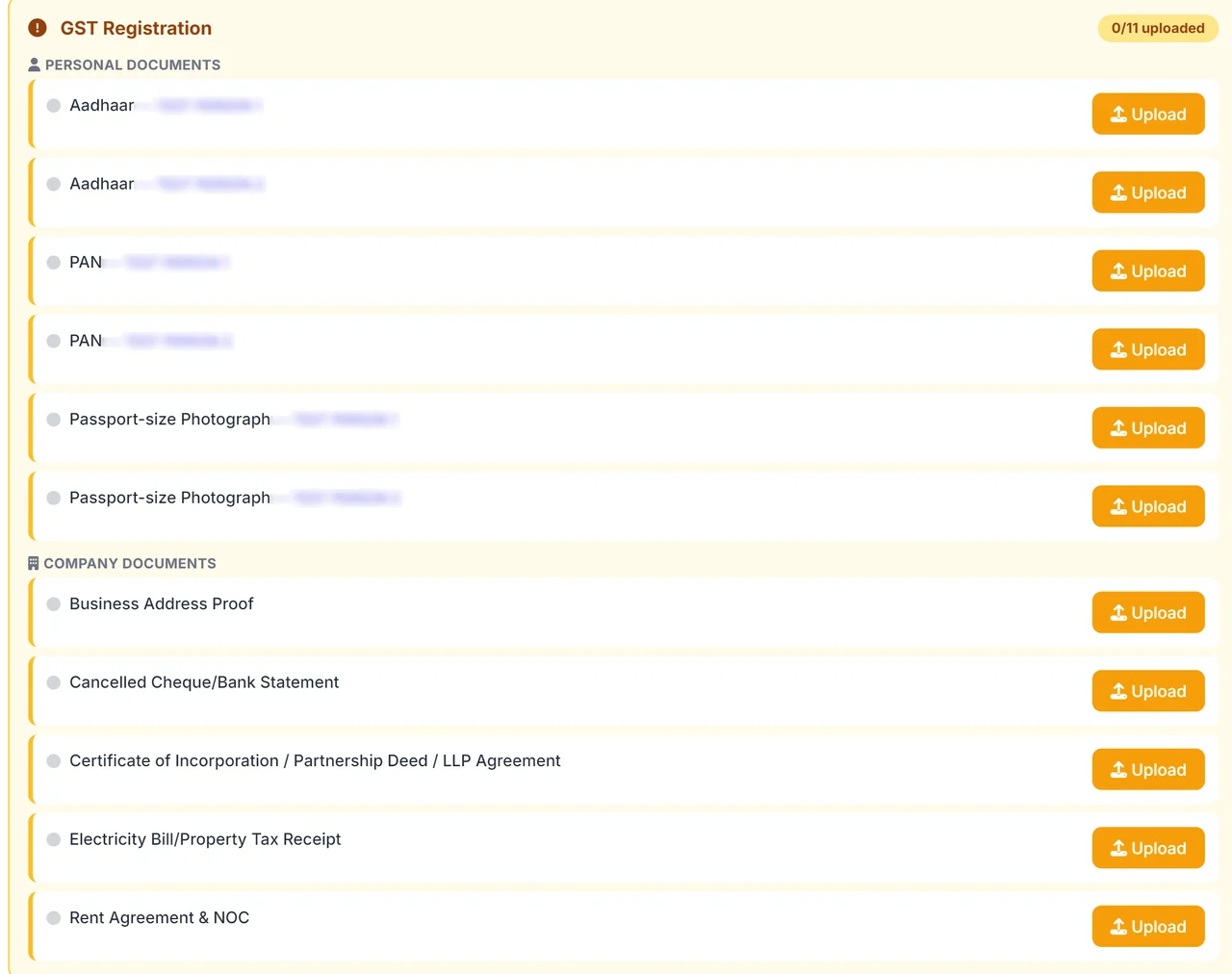
  • Checklist Icon

    Registration documents: Trust/Society/Section 8 incorporation, PAN, TAN, 12A/12AB and 80G approvals.

  • Checklist Icon

    FCRA registration, designated bank account details, and foreign contribution records (if applicable).

  • Checklist Icon

    Donor agreements, grant sanction letters, and project budgets with approved revisions.

  • Checklist Icon

    Fund‑wise and project‑wise ledgers showing receipts, utilisation, and closing balances.

  • Checklist Icon

    Receipts and Payments Account, Income & Expenditure Account, Balance Sheet from previous years.

  • Checklist Icon

    Bank statements for all accounts, cash book, and monthly bank reconciliations.

  • Checklist Icon

    Voucher files for expenses, honorarium, program activities, and administrative overheads.

  • Checklist Icon

    Payroll records, volunteer reimbursements, and compliance proofs for TDS and labour laws.

  • Checklist Icon

    Fixed asset register for buildings, equipment, and vehicles with purchase invoices.

  • Checklist Icon

    Statutory filings and notices: income‑tax returns, FCRA returns, utilisation certificates, and audit reports.

Challenges and Solutions

Common challenge in NGO & non‑profit accountingPatron Accounting solution
Difficulty tracking restricted, unrestricted, and project‑wise funds separatelyImplement fund‑based accounting with separate ledgers for each grant/donor, ensuring clear utilisation tracking, unspent balances, and compliance with ICAI’s guidance for NPOs. 
Complex compliance under 12A/12AB, 80G, FCRA, and state lawsSet up compliance calendars, dedicated books for foreign/local funds, and documentation workflows so registrations, renewals, and returns are filed correctly and on time. 
Limited transparency for donors and boards on how money is usedDesign donor‑wise and project‑wise MIS showing receipts, utilisation, overhead ratios, and outcome‑linked spending to strengthen governance and fundraising narratives. 
Inadequate documentation and reconciliations for statutory and donor auditsMaintain voucher controls, grant files, bank and cash reconciliations, and fixed‑asset registers to make statutory, internal, and donor audits smoother and lower the risk of qualifications.
Manual bookkeeping leading to errors and weak controls in growing NGOsDeploy cloud accounting with role‑based access, standard charts of accounts for NGOs, and periodic review by specialists to improve accuracy, segregation of duties, and real‑time reporting. 

Benefits of NGO and Non-Profit Accounting Services in India

Regulatory Compliance Assurance

Regulatory Compliance Assurance

Systematic compliance monitoring ensures full compliance with all Federal Consumer Reporting Act (FCRA) requirements, Section 12A and 80G of the Income Tax Act, and Trust and Society Acts as well as Sections 8 and 9 of Companies Act, thereby preventing cancellation of registration, loss of tax exemption and any legal complications.
Transparent Fund Accountability

Transparent Fund Accountability

Demonstration of sophisticated fund accounting practices that appropriately segregate unrestricted, temporarily restricted and permanently restricted funds meets donor requirements for restrictions on funds; additionally, prevents any allegations of misappropriation of funds; builds confidence in stakeholders through an accurate and transparent financial report.
Enhanced Donor Confidence

Enhanced Donor Confidence

A means to demonstrate clear usage of funds, measure impact, and communicate with donors regarding the use of donated funds is required for all professional financial reporting in order to maintain relationships with existing donors, establish new donor relationships, and enhance an organization’s credibility in a highly competitive funding environment.

Why Choose Patron Accounting for NGO Services?

Not-for-profit organizations have different accounting requirements than for-profit organizations. The accounting for not-for-profits requires special knowledge in the areas of Fund Accounting, FCRA compliance, Maintenance of Tax-Exempt Status and Transparent Reporting to Donors. Patron Accounting provides all of these financial services so that Non-Governmental Organizations (NGO), Charitable Trusts, Societies, or Section 8 companies operate in a variety of Social Impact Sectors.

Patron Accounting provides all of the tools and support necessary to: (a) Be in full compliance with government regulations; (b) Hold your funds accountable in a sophisticated way; (c) Report Professionally to Donors; and (d) Provide Strategic Financial Insight to support the achievement of your Mission. By allowing Patron Accounting to manage your Financial Operations, you are free to focus all of your time and energy on delivering Programs and Services to Beneficiaries and to making a Positive Impact on the Community. You will also retain your Donors' Trust, be in Full Compliance with Government Regulations, and have Full Transparency in your Financials, which supports Sustainable Growth in the rapidly changing Indian Non-Profit Sector.

Your one-stop partner for Business Registration

AccountingTaxAuditCompliance

Frequently Asked Questions

Have a look at the answers to the most asked questions.

FAQ Illustration

NGO accounting focuses on fund accountability rather than profit, tracking restricted and unrestricted donations, grants, and programme expenses in line with Indian Trusts/Societies/Companies Acts and guidance for not‑for‑profit organisations.

Key compliances include registration under Trust/Societies Act or Section 8, income‑tax registration under Sections 12A/12AB and 80G, GST where applicable, and FCRA for foreign contributions, each with separate books and reporting requirements.

Foreign contributions must pass through a designated FCRA bank account, be recorded separately from local funds, and reported annually with detailed donor, purpose, and utilisation disclosures to the Ministry of Home Affairs and in audited financials.

Standard statements include Receipts and Payments Account, Income and Expenditure Account, and Balance Sheet, along with schedules for funds, programmes, and assets, often following ICAI’s Technical Guide for not‑for‑profit organisations.

Sector‑focused accountants help design fund‑wise ledgers, ensure compliance with 12A/80G, GST, and FCRA, prepare audit‑ready records, and produce donor‑friendly reports, improving transparency, grant eligibility, and long‑term sustainability.
Back to Top