In this guide
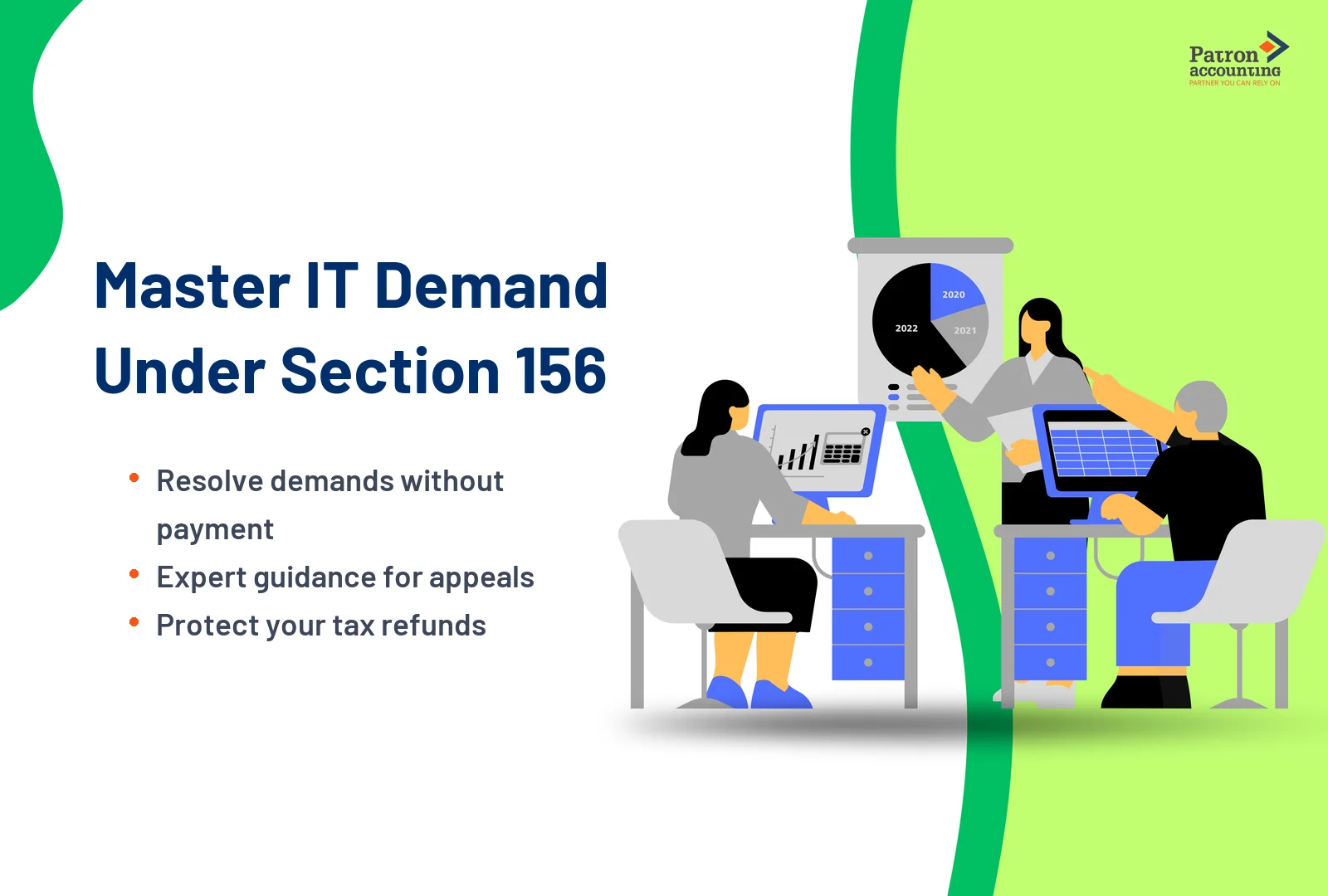
A Section 156 demand notice is the most common - and most misunderstood - communication from the Income Tax Department. Most taxpayers who receive one assume they owe money. Many pay immediately without verifying whether the demand is correct.
Our data across 25,000 clients tells a different story: 60% of IT demands we analyse are either system errors (CPC processing mismatches) or TDS credit discrepancies (deductor’s error, not the taxpayer’s). These demands are fully resolvable through rectification under Section 154 - with zero additional tax payment.
This blog describes our seven-step methodology for handling IT demands: the triage that identifies whether you actually owe money, the rectification strategy that resolves most demands, the appeal framework for complex cases, and the prevention approach that reduces future demands by 80%.
What Is a Section 156 Demand Notice?
Section 156 of the Income Tax Act empowers the Assessing Officer to issue a notice of demand to the taxpayer requiring payment of any tax, interest, penalty, fine, or other sum payable following an assessment or any order under the Act.
The notice is issued after: (a) intimation under Section 143(1) - CPC processing of the ITR identifies a difference between the tax paid and the tax computed, (b) scrutiny assessment under Section 143(3) - the AO completes assessment and determines additional tax, (c) reassessment under Section 147/148 - income escaped assessment, (d) penalty proceedings - penalty imposed under various sections, or (e) TDS/TCS default - demand on the deductor for short deduction or late deposit.
The taxpayer must respond within 30 days from the date of service of the notice. Failure to respond triggers: interest at 1% per month (Section 220(2)), penalty up to the demand amount (Section 221), and potential refund adjustment (the department offsets any pending refund against the demand). Businesses using income tax notice services (know more) get professional demand management.
Key Terms You Should Know
Section 143(1) Intimation: The CPC processes the ITR and sends an intimation. If tax payable > tax paid, the intimation is deemed a demand notice under Section 156. This is the most common source of IT demands - and the most common source of incorrect demands.
Section 154 Rectification: The taxpayer (or the AO) can rectify mistakes apparent from the record in any order passed. Rectification is the fastest resolution for demand arising from data entry errors, TDS mismatches, or incorrect processing. Can be filed online on the e-filing portal.
Section 220(2) Interest: 1% per month (or part of month) on the unpaid demand amount after the expiry of the 30-day payment window. Accrues even if the taxpayer has applied for extension or installments.
Section 221 Penalty: The AO can impose penalty up to the demand amount if the taxpayer defaults in payment. Taxpayer must be given a reasonable opportunity to be heard. No penalty if default is due to reasonable cause.
Section 245 - Refund Adjustment: The AO can adjust any refund due to the taxpayer against outstanding demands. The taxpayer must be given prior notice before adjustment - but in practice, the system often adjusts automatically. This is the most financially damaging consequence of unresolved demands.
Section 246A - Appeal to CIT(A): If the demand arises from an assessment order (143(3), 147, penalty) and the taxpayer disagrees, they can appeal to the Commissioner of Income Tax (Appeals) within 30 days of the order.
Form 26AS / AIS: The taxpayer’s tax credit statement. TDS, TCS, advance tax, and self-assessment tax credits are reflected here. Demand often arises when the ITR claims TDS credit that does not appear in 26AS.
Who Receives IT Demand Notices Most Often?
- Salaried individuals with multiple employers in the same year (TDS from both employers may not be correctly aggregated)
- Professionals and businesses with TDS mismatches (clients deducted TDS but filed returns with wrong PAN or late)
- NRI taxpayers with Indian income (TDS on property sale, interest, rent - often incorrectly processed by CPC). For NRI-specific guidance, see our NRI income tax notice guide (know more)
- Companies that claimed deductions disallowed by the CPC (Section 80C/80D timing, Chapter VI-A eligibility)
- Taxpayers who filed under the wrong ITR form or selected the wrong tax regime
- Taxpayers with advance tax or self-assessment tax challan mismatches (wrong AY, wrong PAN on challan)
The Seven-Step Methodology: How We Handle IT Demands
Step 1: Triage - Classify the Demand (Day 1-2)
When a demand notice is received (or flagged on the e-filing portal), we first classify it into one of four categories:
| Category | Description | Resolution Path |
|---|---|---|
| A: System/CPC Error | CPC processed the ITR incorrectly: wrong schedule mapped, deduction disallowed despite correct claim, income computed differently from ITR | Section 154 rectification - file online; resolved in 30-60 days. Zero payment. |
| B: TDS/Tax Credit Mismatch | TDS claimed in ITR does not match 26AS (deductor error: wrong PAN, late filing, incorrect section). Advance tax challan not reflected. | Fix the source: get deductor to correct TDS return (or file correction yourself if you’re the deductor). Then file 154 rectification. Zero payment. |
| C: Genuine Underpayment | The taxpayer actually underpaid: income not reported, advance tax short, TDS not deducted on certain income | Pay the demand + interest. File revised return if applicable. Actual payment required. |
| D: Disputed Assessment | AO added income or disallowed deductions during scrutiny (143(3)) or reassessment (147). Taxpayer disagrees with the addition. | Appeal to CIT(A) under Section 246A. Stay of demand application (Section 220(6)). Payment may or may not be required pending appeal. |
Our data: Categories A and B together account for approximately 60% of all demands we handle. Category C is 25%. Category D is 15%. The triage determines the resolution strategy - and prevents unnecessary payment on Categories A and B.
Step 2: Verify - Cross-Check the Demand Computation (Day 2-5)
For every demand, we download and analyse: (a) the demand computation sheet (available on the e-filing portal under the notice), (b) the taxpayer’s ITR as filed, (c) Form 26AS / AIS (for TDS/TCS/advance tax credits), and (d) the original assessment order (if 143(3) or 147).
We compare line by line: income reported in ITR vs income computed by CPC, deductions claimed vs deductions allowed, TDS credit claimed vs 26AS credits, advance tax claimed vs challans reflected, and tax computation (rate, surcharge, cess). The discrepancy between the ITR computation and the CPC computation reveals the exact cause of the demand. For TDS-related demands, see our TDS returns methodology (know more).
Step 3: Rectify - File Section 154 Rectification (Day 5-15)
If the demand is Category A (CPC error) or Category B (TDS mismatch after correction), we file a rectification request under Section 154 on the e-filing portal. The rectification corrects the ‘mistake apparent from the record’ - and the CPC reprocesses the return with the correct data.
Common rectifications we file: (a) TDS credit not given - after confirming the deductor’s correction is reflected in 26AS, we request reprocessing, (b) deduction under Chapter VI-A disallowed - we attach the supporting schedule and request reconsideration, (c) advance tax challan not matched - we provide challan details (BSR, date, serial number) for manual matching, (d) wrong ITR form processed - rare, but the CPC may have processed Schedule entries differently.
Rectification processing time: 30-60 days by the CPC. Once processed, the demand is either reduced, zeroed out, or a refund is generated. No payment required if the rectification is accepted.
Step 4: Respond on the E-Filing Portal (Day 5-15)
While the rectification is being processed, we submit the appropriate response on the e-filing portal (Pending Actions > Response to Outstanding Tax Demand):
- If Category A/B and rectification filed: select ‘Disagree with the demand’ + reason: ‘Demand has already been reduced by rectification/revision’
- If Category C (genuine underpayment): select ‘Demand is correct’ + pay the amount
- If Category D (disputed assessment): select ‘Disagree with the demand’ + reason: ‘Appeal has been filed / Appeal effect to be given’
- If partially correct: select ‘Disagree partially’ + pay the agreed portion + submit reasons for the disputed portion
The portal response is critical because it prevents the automatic refund adjustment under Section 245. If you do not respond, the department may adjust any pending refund against the demand - even if the demand is incorrect.
Step 5: Appeal - When Rectification Is Not Possible (Day 15-30+)
Category D demands (disputed assessment) cannot be resolved through rectification. These require a formal appeal to the CIT(A) under Section 246A. We file the appeal within 30 days of the assessment order (not the demand notice). With the appeal, we also file a stay of demand application under Section 220(6) requesting that the demand not be enforced pending the appeal.
Stay of demand: The AO/CIT can grant a stay (pause enforcement) if the taxpayer: (a) pays a specified portion (typically 20% of the disputed demand as per CBDT instructions), and (b) demonstrates a prima facie case that the assessment order is incorrect. The stay prevents the department from initiating recovery proceedings (attachment of bank accounts, etc.) during the appeal.
Appeal timeline: CIT(A) - 6-24 months. ITAT (Income Tax Appellate Tribunal) if CIT(A) order is unfavourable - additional 12-36 months. High Court and Supreme Court - additional years. Use statutory audit (know more) services for assessment-related demand analysis during audit.
Step 6: Prevent Refund Offset - Protect Pending Refunds (Ongoing)
The most financially damaging consequence of an unresolved IT demand is refund adjustment under Section 245. If you have a refund due for AY 2025-26 and an outstanding demand for AY 2023-24, the department will adjust the refund against the demand - even if the demand is disputed.
Our approach: for every client with both outstanding demands and pending refunds, we: (a) respond to the demand on the portal (Disagree + reasons) - this puts the demand in ‘disputed’ status, (b) file rectification or appeal for the demand, and (c) write to the AO requesting that the refund not be adjusted against the disputed demand (citing CBDT Circular 530 and judicial precedents). The response on the portal is the minimum protection - without it, the system adjusts automatically.
Step 7: Document and Prevent - The Demand Register (Ongoing)
For every client, we maintain a demand register tracking: every outstanding demand (AY-wise), status (pending/rectified/appealed/paid/zeroed out), interest exposure, refund adjustment risk, and next action date. This register is reviewed quarterly.
Prevention: The best approach to IT demands is preventing them. Our prevention methodology: (a) ensure TDS credits match 26AS before filing ITR (reconcile in June, not September), (b) claim deductions only with complete documentation (avoid Chapter VI-A rejections), (c) pay advance tax on time to prevent 234B/234C interest, (d) use the correct ITR form and tax regime, and (e) verify challan details (AY, PAN, minor head) before payment. For TDS return filing (know more) services that prevent TDS mismatch demands, we handle the complete cycle.
Documents Required for IT Demand Response
- Demand notice / intimation under Section 143(1) or assessment order
- ITR as filed for the relevant AY (acknowledgement + computation)
- Form 26AS / AIS for the relevant AY
- TDS certificates (Form 16 / 16A) from all deductors
- Advance tax and self-assessment tax challans with CIN details
- Bank statements showing tax payments
- Supporting documents for deductions claimed (80C, 80D, etc.)
- Previous rectification orders (if any)
- Appeal orders from CIT(A) / ITAT (if appeal was filed for earlier AYs)
- Correspondence with the AO (emails, letters, submissions)
- TDS return filing confirmations from the deductor
The Five Most Common IT Demands - And How We Resolve Them
| # | Demand Type | Root Cause | Resolution | Payment Required? |
|---|---|---|---|---|
| 1 | TDS credit not allowed by CPC | Deductor filed TDS return with wrong PAN or filed late. TDS appears in ITR but not in 26AS. | Get deductor to correct TDS return. Verify 26AS update. File Section 154 rectification. | No - resolved via rectification |
| 2 | Advance tax challan not matched | Taxpayer paid advance tax but challan has wrong AY or PAN. Payment exists in bank but not in IT system. | Request challan correction through AO or bank. File Section 154 with corrected challan details. | No - resolved via rectification |
| 3 | Chapter VI-A deduction disallowed | CPC disallowed deduction (80C, 80D, 80E, etc.) due to missing or mismatched schedule in ITR. | Verify if deduction was correctly claimed in the ITR schedules. If yes, file Section 154. If entry error, file revised return (if within time). | No if rectified; Yes if deduction was wrongly claimed |
| 4 | Interest on advance tax (234B/234C) | Advance tax paid was less than 90% of assessed tax. Interest computed by CPC at 1%/month. | Verify the interest computation. If correct: pay. If advance tax challan is missing: file 154 with challan details. If income was genuinely higher than estimated: pay the differential + interest. | Yes if interest is correctly computed; No if challan was missing |
| 5 | Scrutiny assessment addition (143(3)) | AO added income (undisclosed income, disallowed expense, transfer pricing adjustment) during scrutiny. | If disputed: Appeal to CIT(A) + stay of demand application. Pay 20% disputed amount as per CBDT instructions. If accepted: pay full demand + interest. | 20% upfront if appealing; Full if accepting |
Penalties and Interest for Non-Response
| Consequence | Amount / Rate | Legal Provision |
|---|---|---|
| Interest on unpaid demand | 1% per month or part of month from expiry of 30-day period until payment | Section 220(2) |
| Penalty for non-payment | Up to 100% of the demand amount. AO must give opportunity to be heard. Waived if reasonable cause. | Section 221 |
| Refund adjustment | Any pending refund from other AYs is adjusted against the outstanding demand. Prior notice required but often automatic. | Section 245 |
| Recovery proceedings | Tax Recovery Officer can: attach salary/bank accounts, attach and sell movable/immovable property, arrest and detention. | Sections 222-232 (Recovery provisions) |
| Prosecution for wilful default | If the AO certifies that the taxpayer is in wilful default: rigorous imprisonment up to 2 years + fine. | Section 276C(2) |
Step-by-Step: How to Respond on the E-Filing Portal
Step 1: Log in at www.incometax.gov.in.
Step 2: Navigate to Pending Actions > Response to Outstanding Tax Demand.
Step 3: View all outstanding demands against your PAN. Click ‘Submit Response’ for the relevant AY.
Step 4: Choose one of four options: (a) Demand is correct (pay or confirm payment), (b) Demand is partially correct (pay agreed portion, dispute remainder), (c) Disagree with demand (select reasons: already paid, rectification filed, appeal filed, demand reduced by order), (d) Demand is not correct but agree for adjustment (rare - allows refund adjustment against a demand you dispute).
Step 5: Upload supporting documents (challan receipts, rectification order, appeal acknowledgement).
Step 6: Submit response and note the Transaction ID.
Critical: Once you select ‘Demand is correct’, you cannot change this response later. If you are unsure, select ‘Disagree’ first, investigate, and then change to ‘Correct’ only after confirming.
2026 Changes Affecting IT Demands
| 2026 Change | Impact on IT Demands | Action Required |
|---|---|---|
| Income Tax Act 2025 (from April 2026) | Section 156 gets a new number under the 2025 Act. Demand notice format and portal interface may change. All section references in demand orders will use new numbers. | From April 2026: familiarise with new section numbers. Demands for AY 2025-26 and earlier: respond under old Act provisions. |
| TDS correction window expires 31 March 2026 | Under the old IT Act, TDS correction statements can be filed up to March 31, 2026 for returns filed before April 2026. After this, correction is barred. Unresolved TDS mismatches become permanent. | File ALL pending TDS corrections before 31 March 2026. Any TDS mismatch demand that cannot be fixed after this date becomes irrecoverable. |
| Updated Form 26AS / AIS integration | AIS now includes more data: share transactions, property purchases, bank interest. Demands may arise from income reported in AIS but not in ITR. | Reconcile AIS with ITR before filing. Address all AIS items proactively. |
| Faceless assessment expansion | More assessments are faceless (online, no physical AO meeting). Demands from faceless assessments increase. Response is portal-based only. | Maintain all documentation digitally. Respond within portal timelines. No scope for in-person representation at initial stage. |
| Budget 2026: penalty-to-fee conversion | Several penalties under the IT Act are being converted to fees (similar to Section 271B for tax audit). This may affect how Section 221 penalty is applied. | Monitor CBDT notifications for changes to Section 221 penalty framework. |
Common Mistakes Taxpayers Make When Handling IT Demands
Mistake 1: Paying the demand without verifying the computation. If the demand is Category A or B (60% of cases), the payment is unnecessary. Verify first; pay only if the demand is genuinely correct.
Mistake 2: Ignoring the demand hoping it will go away. Outstanding demands accumulate 1% monthly interest (12% annual effective rate). After 12 months, the interest alone can be 12% of the demand. Plus: refund adjustments happen automatically.
Mistake 3: Selecting ‘Demand is correct’ on the portal to ‘clear the notice.’ Once you confirm ‘Demand is correct,’ you cannot reverse this. If the demand was incorrect, you have permanently waived your right to dispute it. Always select ‘Disagree’ first and investigate.
Mistake 4: Not filing Section 154 rectification when TDS mismatch is resolved. Even after the deductor corrects their TDS return and the 26AS is updated, the CPC does not automatically reprocess your return. You must file a Section 154 request explicitly.
Mistake 5: Missing the appeal deadline (30 days from assessment order). For Category D demands (scrutiny additions), the appeal to CIT(A) must be filed within 30 days of the assessment order. The demand notice date is irrelevant - the appeal clock starts from the order date. Missing this deadline requires a condonation of delay application. For tax planning framework (know more) including demand prevention strategy, we advise proactively.
Our Prevention Methodology: Reducing Demands by 80%
Prevention is more effective than response. Our prevention methodology - applied during ITR preparation, not after the demand is issued:
(1) TDS reconciliation before ITR filing: In June each year, we download 26AS/AIS for every client and reconcile against their TDS certificates. Any mismatch (deductor’s error) is flagged and the deductor is asked to correct before the ITR is filed. Result: TDS mismatch demands reduced by 85%.
(2) Challan verification: Every advance tax and self-assessment tax challan is verified against the IT system (Challan Status Inquiry on OLTAS) before the ITR is filed. Result: challan mismatch demands reduced by 90%.
(3) Deduction documentation: Chapter VI-A deductions are claimed only with complete documentation. If documentation is incomplete, we advise not claiming the deduction rather than claiming and facing a demand. Result: deduction disallowance demands reduced by 70%.
(4) Tax regime selection: We compute tax under both old and new regimes before filing and select the optimal regime. Incorrect regime selection is a common CPC rejection trigger. Result: regime-related demands reduced by 95%.
(5) AIS reconciliation: From FY 2024-25, we reconcile the Annual Information Statement (AIS) with the ITR for every client. Income items appearing in AIS but not reported in the ITR are either included or documented with reasons (exempt income, already disclosed under a different head, etc.). This prevents future demand from AIS-based scrutiny. For tax planning services (know more), demand prevention is built into the annual tax planning cycle.
Key Takeaways
60% of IT demands under Section 156 are resolvable through rectification (Section 154) with zero additional tax payment. The key is proper triage - identifying whether the demand is a system error, TDS mismatch, genuine underpayment, or disputed assessment.
The seven-step methodology - triage, verify, rectify, respond, appeal, prevent offset, document - is built from patterns across 25,000 clients. It applies to every demand regardless of amount (Rs 500 or Rs 50 lakh).
The most dangerous mistake is selecting ‘Demand is correct’ without verification - it permanently waives your right to dispute. Always select ‘Disagree’ first, investigate, and only confirm correctness after verification.
TDS correction deadline of March 31, 2026 (under the old IT Act) is critical. Any TDS mismatch demand that cannot be corrected after this date becomes permanent. File all pending TDS corrections immediately.
Prevention is 10x more cost-effective than response. Reconciling 26AS, verifying challans, and documenting deductions before filing the ITR reduces demands by 80% across our client base.
Need Help With IT Demand Resolution?
Whether you have a Rs 500 TDS mismatch demand or a Rs 50 lakh scrutiny assessment demand - our seven-step methodology applies equally. 60% of demands we handle are resolved with zero payment.
Explore our income tax notice services (know more) and tax planning services (know more) for demand resolution and prevention across Pune, Mumbai, Delhi, and all-India.