Talk to an Expert
Talk to an Expert ✆ +91 945 945 6700
Trusted by 10,000+ Businesses
Delhi, Delhi

Accounting for Consultants and Service Businesses in Delhi

Reviewed by CA and CS Team, Patron Accounting LLP ICAI & ICSI Registered| 15+ Years Experience| Last Updated: July 2026 Verify Credentials →

Revenue tied to the fee basis: How each engagement earns comes from the signed contract, and that basis drives the accounting, not the invoice date.

Unbilled work valued monthly: We value open engagements against the billing plan each month end, so delivered but uninvoiced effort shows as an asset.

Realisation per engagement: Each month closes with fee earned, delivery cost, write-offs and recovery against the contracted rate, engagement by engagement.

Client advances kept as liabilities: You hold retainers and advances as liabilities, released only against the invoice they belong to.

15+ YearsIndustry Experience
CA & CSCertified Experts
4.9
Based on real Google reviews

Get Free Consultation

Talk to a CA/CS expert today

🇮🇳 +91

Our team will get back to you shortly. No spam.

Real Stories from Real People

Verified Google reviews from founders and businesses Patron works with across India.

Join 3,000+ Founders and Businesses on Patron

Rated 4.9 on Google - trusted for startup accounting since 2019.

Talk to an Expert
10,000+Businesses ServedGST compliance and litigation support across India.
15+Years ExperienceDeep expertise in IP registration, GST & business compliance.
50,000+Documents FiledReturns, appeals, and filings handled accurately.
4.9★Client RatingTrusted by entrepreneurs, startups, and growing businesses.
ISO CertifiedProfessional standards and documented processes.
SSL SecureYour financial and business data is fully protected.

What Service Sector Accounting Costs and Covers for Delhi Businesses

📌 TL;DR - Service Sector Accounting Services at a Glance

Service industry accounting in Delhi values work delivered but not yet billed, at every month end. Patron reports engagement realisation and fixes place of supply where a Connaught Place office invoices clients seated in Noida or Gurugram. The Section 194J deposit falls due on the 7th, and quarterly GSTR-3B on the 24th for firms under Rs 5 crore. Best suited to consultancies and agencies across the capital.

Every month opens with the same handover: bank statements, the sales invoice file, purchase bills and a timesheet export. Back comes a coded ledger, an engagement-wise statement of the work still open, and a reconciliation of the tax your clients have deducted against your books. For a practice holding a Connaught Place lease the rent line returns split as well, licence fee apart from maintenance, because the two are not treated alike. A working guide for consultancies shows the exchange.

The work changes shape once subcontracted associates outnumber salaried staff, because each associate bill has to be accrued against the engagement it served and deducted on before payment, not at year end. Service sector accounting in Delhi absorbs that alongside the month-end close and ledger review, with returns lodged through the GST portal. Litigation support and valuation work stay separate.


What Do Service Sector Accounting Mean for Delhi Businesses?

This service is easily mistaken for the compliance work that files a firm's returns, but the two answer entirely different questions. Service industry accounting in Delhi is not there to file; it is there to measure. It puts a value on work delivered but not yet billed, and shows what each engagement earns after its own costs. Filing takes the ledger as given. The work here is what makes the ledger worth relying on.

Once the two are separated, the real content of the service is clear. Revenue is recognised as a project is performed, not when the invoice issues. Retainers and milestone fees are treated on their proper basis, and client advances are kept apart from fees genuinely earned. Delhi charges no profession tax, so the payroll layer stays light for a small consultancy. Service industry accounting in Delhi delivers a profit figure by engagement that a firm selling time can actually trust and act on.

Key Terms for Service Sector Accounting:

What Is Service Sector Accounting. Accounting for consultants is the engagement that turns time and contracts into a in Delhi

Who Needs Service Sector Accounting in Delhi: From Connaught Place to Growing SMEs

From Nehru Place to Okhla and Netaji Subhash Place, agencies and consultancies invoice for advice and creative output, not goods on a shelf. Because the fee is earned before the bill is raised, service industry accounting in Delhi puts a value on that unbilled work before month close.

  • Management consultancies near Connaught Place carrying advice already delivered but still waiting to be invoiced.
  • Advertising and media shops in Okhla running client retainers beside one-off project fees on a single brand.
  • Architecture and design practices billing in stages, valuing each drawing set before the fee note issues.
  • PR and events agencies fronting venue and print costs that clients reimburse well after the event.
  • Management and professional-services firms invoicing customers in other states, fixing place-of-supply on each contract.
  • Legal and tax advisers testing the Section 194J TDS a client deducts against Form 26AS.
  • Firms with salaried consultants where the Delhi Labour Welfare Fund applies in place of profession tax.

Service Sector Accounting Included for Delhi Businesses

ServiceWhat We Do
Bookkeeping for Nehru Place consultanciesFirms around Okhla and Nehru Place get monthly books and management accounts, delivering service industry accounting in Delhi with a reviewed trial balance Monthly
Retainer billing and WIP scheduleRetainer advances stay as liabilities until earned, and work in progress on open projects is valued so revenue matches delivery each month Monthly
Inter-state GST reconciliationClient billing across the NCR is checked for place of supply, with IGST and the outward GST return workings reconciled before filing Monthly
Engagement realisation and cost reviewProfessional services accounting in Delhi groups fees against associate and subcontractor costs, reporting realisation and margin for each client engagement Monthly
TDS and pass-through cost handlingWe compute TDS with 26AS reconciliation and separate reimbursable client costs, and pair this with bookkeeping services in Delhi where wider support is needed Monthly
Annual accounts and audit schedulesAudit-ready schedules and yearly financial statements are prepared for consultants and agencies, with TDS and GST dues reviewed, as Delhi levies no profession tax Annually
Our Process

How Service Sector Accounting Works in Delhi — Step by Step

How Patron delivers service sector accounting for Delhi businesses, step by step.

Step 1

Reading engagement terms into billing

We work through each signed engagement letter, SOW and retainer agreement and record how that engagement earns: fixed fee, time and materials, milestone or monthly retainer. That fee basis, not the invoice date, drives how the engagement is accounted for.

Illustration for Reading engagement terms into billing: We work through each signed engagement letter, SOW and retainer in Delhi
Step 2

Matching timesheets to invoices

The time-tracking export is reconciled by client, project and person against invoices actually raised. Hours recorded but not billed are carried as unbilled; hours abandoned are written off only against a named approval, so realisation is visible rather than hidden.

Illustration for Matching timesheets to invoices: The time-tracking export is reconciled by client, project and person in Delhi
Step 3

Valuing unbilled work in progress

At each month end we value open engagements against the billing plan and recognise revenue as the promised service is delivered, not as bills go out. The unbilled schedule is rolled forward so the balance is explainable line by line.

Illustration for Valuing unbilled work in progress: At each month end we value open engagements against the billing plan and in Delhi
Step 4

Tracking unadjusted client advances

Retainers and advances are held as liabilities and adjusted only against the invoice they relate to. Because GST on a service falls due on the earlier of invoice or receipt, we check that receipt vouchers and the advance ledger agree with what was reported.

Illustration for Tracking unadjusted client advances: Retainers and advances are held as liabilities and adjusted only in Delhi
Step 5

Separating pass-through client costs

Reimbursables are tested against the pure agent conditions: third-party bill in the client's name, client authorisation on record and recovery at actual. Costs that fail the test are treated as your own expense and recovered as taxable value instead.

Illustration for Separating pass-through client costs: Reimbursables are tested against the pure agent conditions: in Delhi
Step 6

Costing associates and subcontractors

Associate, freelancer and subcontractor invoices are tagged to the engagement they served, and deduction is applied at the rate their engagement terms call for. This keeps delivery cost against the right revenue instead of pooling it in overheads.

Illustration for Costing associates and subcontractors: Associate, freelancer and subcontractor invoices are tagged to the in Delhi
Step 7

Reporting engagement level profitability

Each month closes with a view per engagement: fee earned, cost of delivery, write-offs and realisation against the contracted rate. Loss-making engagements and stale unbilled balances are listed for you to price or close.

Illustration for Reporting engagement level profitability: Each month closes with a view per engagement: fee earned, cost of in Delhi

Documents Required for Service Sector Accounting

A Delhi practice pays no profession tax, so it contributes an establishment certificate, the welfare fund statement, and STPI papers where services are exported.

  • Signed engagement letters, SOWs and retainer agreements with fee basis and milestone terms
  • Timesheets / time-tracking export by client, project and person
  • Unbilled revenue / work-in-progress schedule and the billing plan for open engagements
  • Advance / retainer receipts register showing unadjusted client advances
  • Reimbursable / pass-through expense records with client approval and supporting third-party bills
  • Sales invoices raised, with credit notes and write-offs
  • Bank statements for all accounts, and business credit card statements
  • Registration certificate under the Delhi Shops and Establishments Act, 1954
  • Delhi Labour Welfare Fund Form A statement and half-yearly contribution challan (six months ending 30 June and 31 December)
  • STPI registration/Letter of Permission with MPR, Annual Performance Report, and SOFTEX certifications (or the Export Declaration Form for periods from 1 October 2026), only where you are STPI-registered
Client Portal

How You Work With Patron

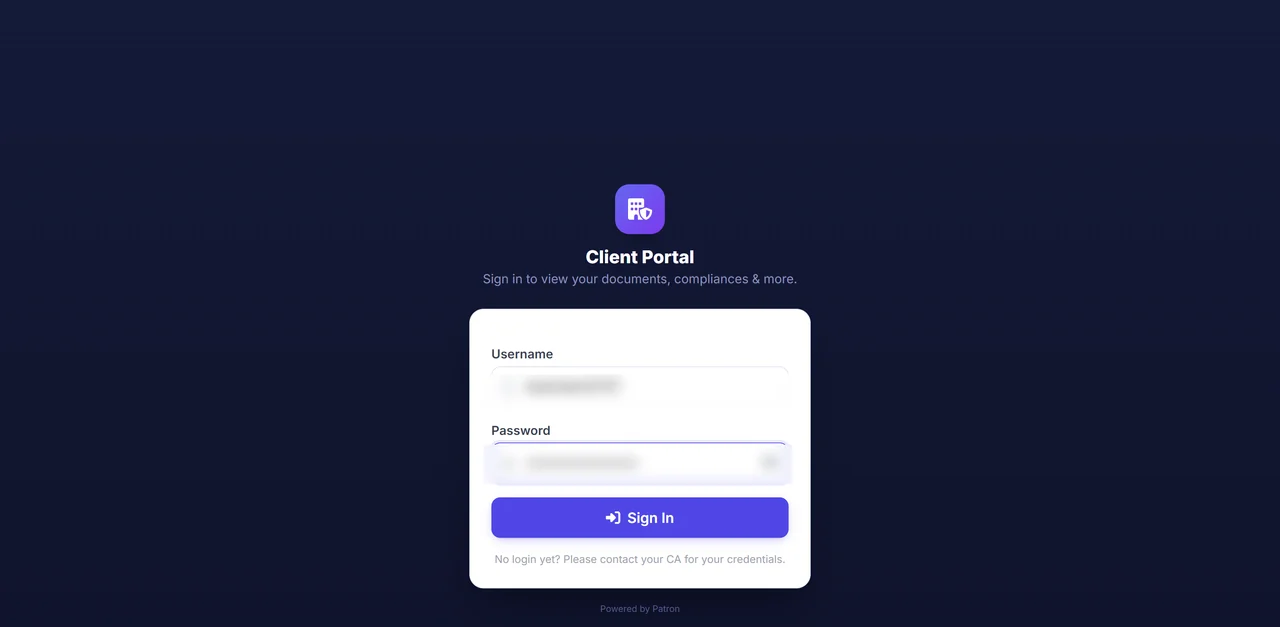
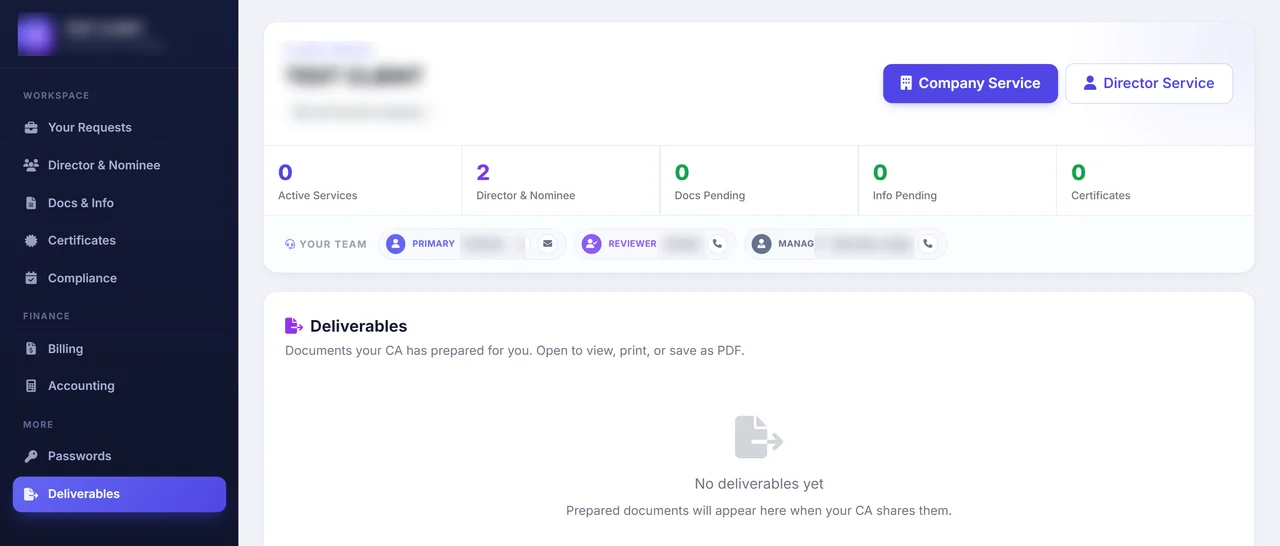
Everything happens in one secure login. You can see your active services, the Patron team on your account, and anything still pending. Once you raise a request, it moves through the same clear steps every time, so you always know exactly where your work stands.

Secure client portal login screen
1

Sign in securely

Your books, documents and requests all sit behind one private, password protected login. The team handling your account is shown on screen, so nothing sensitive ever needs to travel over email or WhatsApp.

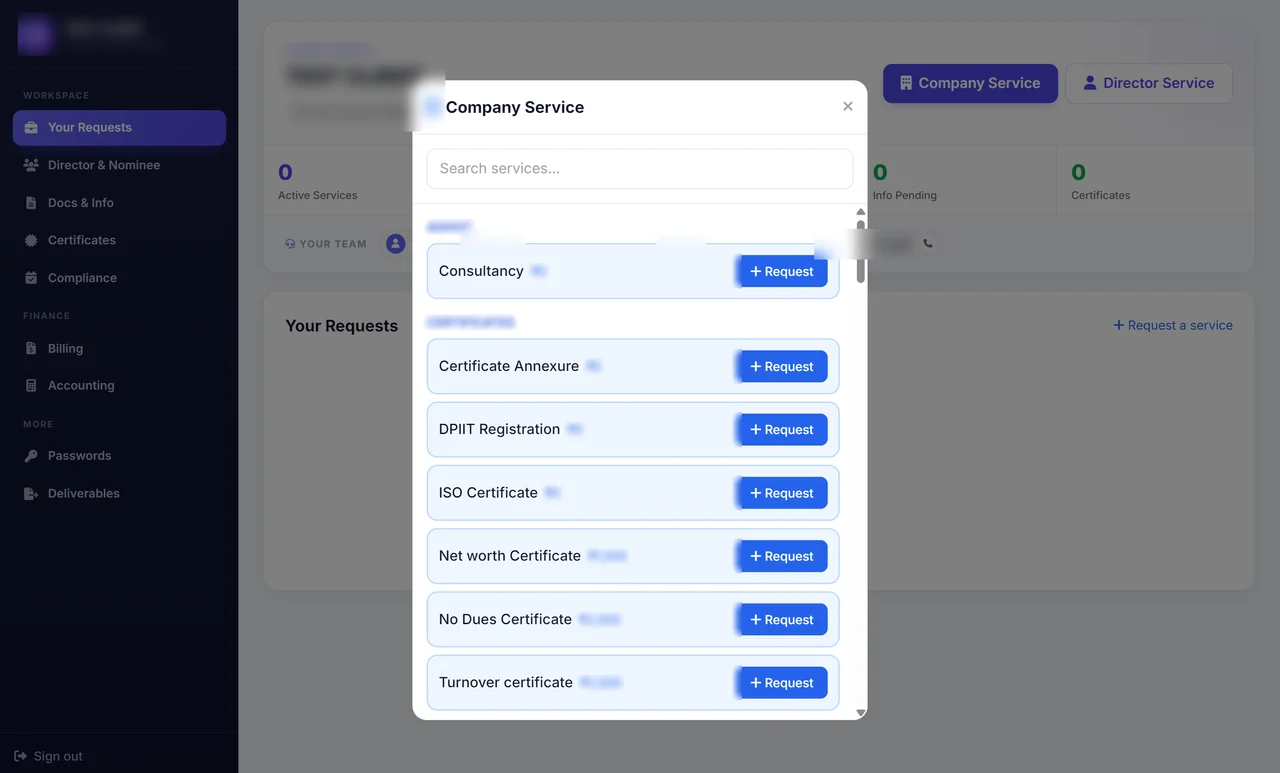
Service catalogue inside the client portal
2

Raise your request

Choose the service you need from the menu inside the portal, where the price is shown before you go ahead. Your request is logged the moment you send it, with no phone calls or reminder emails to wait on.

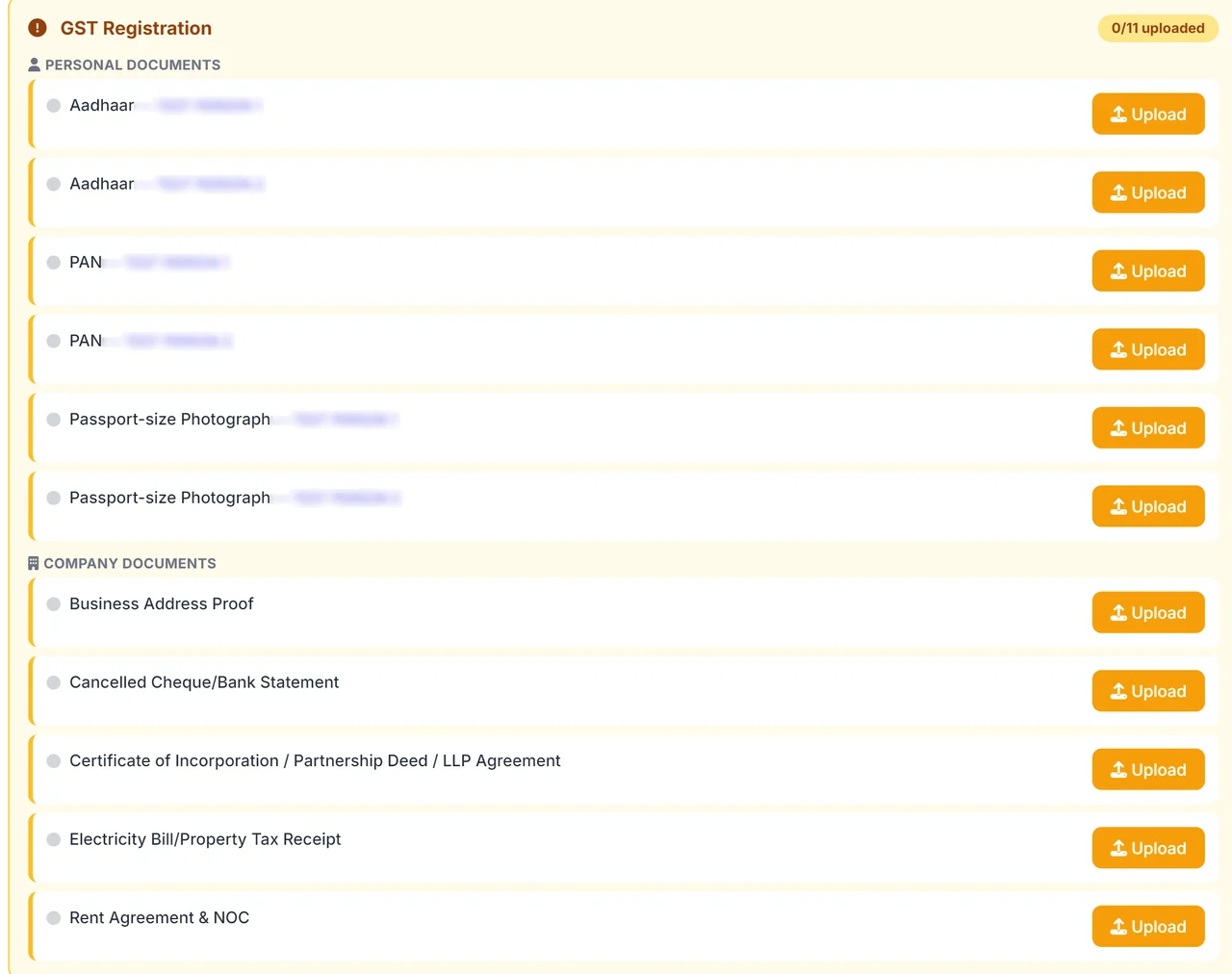
GST registration document checklist in the client portal, with an upload button beside each item
3

Share what the service asks for

For every service, the portal lists the exact documents it needs, each with its own upload button. The example shown here is the GST registration checklist. When a service needs nothing from you, it simply asks for nothing.

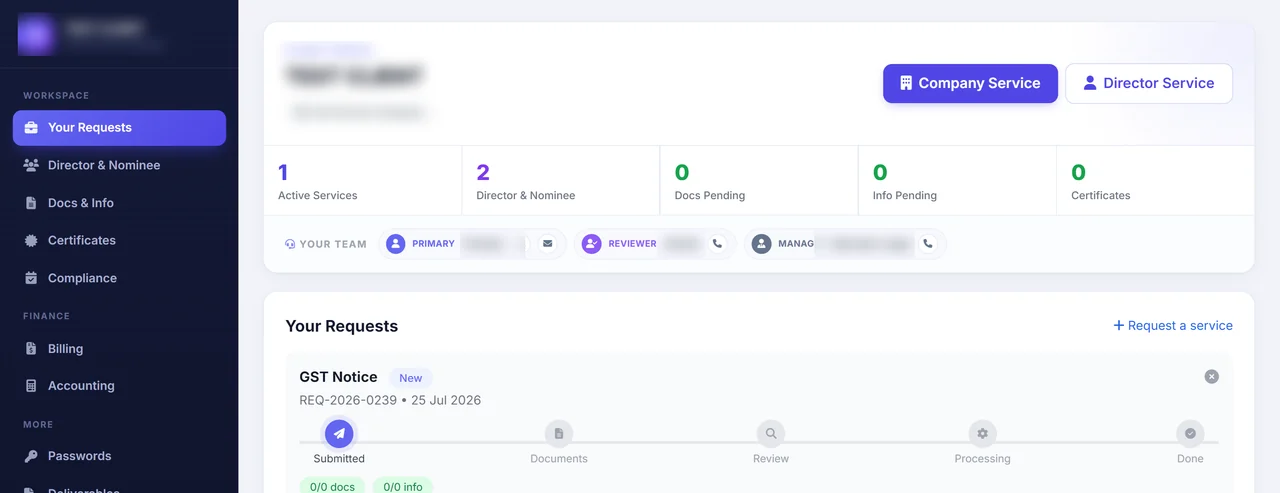
Live request tracker inside the client portal
4

We review, prepare and file

Once your documents are in, your team checks them, prepares the work and files it for you. A live tracker shows each stage as it happens, from review to processing to done, so you never have to ask where things stand.

Deliverables area of the client portal
5

Collect your finished work

Every completed return, computation and certificate is placed in your Deliverables area. You can open, print or download any of them as a PDF whenever you need a copy.

Service Sector Accounting Challenges Specific to Delhi: MCD Trade Licensing and NCR Inter-State GST Reconciliation

ChallengeImpactHow Patron Accounting Solves It
Common input credits stuck at a Connaught Place head officeAn NCR branch bears costs it cannot claim, so input credit strands instead of offsetting output tax.Our team distributes shared input credit through the Input Service Distributor mechanism across the NCR establishments.
Associate work at a Nehru Place firm billed without job-costingProject margin stays hidden, so loss-making engagements are repeated at the same thin rates.Patron job-costs each associate and subcontractor invoice to its engagement; read accounting for Delhi consultancy firms.
Disputed or short-delivered fees still sit at full invoice valueRevenue and receivables hold amounts the client will not pay, so both overstate until the dispute clearsWe raise credit notes for disputed billing promptly, so revenue and debtors reflect only amounts genuinely due
Fixed-fee engagements running over budget carry no loss provisionForeseeable losses on committed scope stay unrecognised, so a period's profit is overstated until the overrun bitesPatron provides for the foreseeable loss once an engagement's costs are set to exceed its fixed fee
Client-deducted TDS not reconciled to the 26AS and AISTDS credit claimed differs from what clients deposited, so refunds stall and mismatch notices followOur team reconciles the TDS receivable ledger to 26AS each quarter, so credit claimed matches tax actually deposited

Service Sector Accounting Fees in Delhi

Fee ComponentAmount
Starter — one service entity with routine monthly billing and receivablesINR 2,499
Excl. GST & Government Charges
Growth — higher invoice volume, added GST states or a second entityOn quote
Managed — multi-entity books with custom receivable and revenue reportingOn quote

Service firms and consultancies in Delhi are charged the same INR 2,499 Starter fee we quote nationally, because invoice volume and receivable tracking set the price, not your location. Rising invoice counts or a second entity lift the tier. Local statutory registrations, if any, are billed at actuals. Schedule a pricing consultation on +91 94594 56700.

Fees exclude GST and government charges. Final quote confirmed after a scoping review.

All fees and charges listed are indicative only and do not constitute a binding offer. Final amounts may vary depending on the volume of work and the complexity involved.

Professional accounting and compliance charges are scoped to your number of entities, funding stage and monthly transaction volume, and are separate from statutory and government charges. Contact us for a detailed, fixed quote.

Get a free Service Sector Accounting consultation - Call +91 945 945 6700 or WhatsApp us. No-obligation assessment.

Service Sector Accounting Compliance Calendar 2026 for Delhi Businesses

ComplianceDue DateApplies To
TDS / TCS deposit (Challan ITNS-281)7th of every month (30 April for March)Every business that deducts tax at source on salaries, rent, contractor or professional fees
GSTR-1 (outward supplies)11th of every month for monthly filersGST-registered Delhi businesses filing monthly returns
GSTR-3B (summary return and tax payment)20th monthly for turnover above Rs 5 crore; 24th quarterly under QRMP for turnover up to Rs 5 crore (Category Y)GST-registered businesses in Delhi
GST PMT-06 (QRMP monthly tax payment)25th of the month for the first two months of each quarterQRMP filers paying tax monthly while filing GSTR-3B quarterly
TDS return for Jan-Mar quarter (Form 24Q / 26Q)31 May 2026Deductors filing quarterly TDS statements
Income-tax return, non-audit cases31 July 2026Proprietors, firms and individuals not liable to tax audit
Advance tax second instalment (45% cumulative)15 September 2026Companies, firms and individuals liable to advance tax
Annual GST return GSTR-9 and reconciliation GSTR-9C31 December 2026GST-registered Delhi businesses above the annual-return and audit thresholds

For a Delhi service business the 194J TDS on the 7th and GSTR-3B on the 24th set the pace, with an unbilled-revenue cut-off before every close. Delhi levies no professional tax, so the local rhythm stays GST and TDS led. For service industry accounting in Delhi, Patron keeps every date on schedule; book a review on +91 94594 56700 or see our local notes.

Key Benefits

Why Professional Service Sector Accounting Matters

Revenue tied to the fee basis

How each engagement earns comes from the signed contract, and that basis drives the accounting, not the invoice date.

  • Basis read from engagement letters, SOWs and retainer agreements
  • Fixed fee, milestone, time and materials or retainer each treated on its terms
  • Without it, bill-date accounting lands income in the wrong month

Unbilled work valued monthly

We value open engagements against the billing plan each month end, so delivered but uninvoiced effort shows as an asset.

  • Unbilled revenue carried on a rolled-forward WIP schedule
  • Without it, a year's leakage surfaces only at the annual accounts

Realisation per engagement

Each month closes with fee earned, delivery cost, write-offs and recovery against the contracted rate, engagement by engagement.

  • Recovery measured against the rate each engagement was contracted at
  • Without it, a loss-making job is repriced only after it finishes

Client advances kept as liabilities

You hold retainers and advances as liabilities, released only against the invoice they belong to.

  • Receipt vouchers agreed to the advance and retainer register
  • Released against the specific invoice, keeping the tax position supported
  • Without it, advances booked as income inflate a good month

Pass-through costs tested properly

We test each reimbursable against the pure agent conditions, so genuine recharges stay out of your taxable value.

  • Pure agent conditions: client-name bill, written authorisation, recovery at actual
  • Costs that fail the test recovered as taxable value
  • Without it, travel and printing recharges become a liability at assessment

Delivery cost against the right revenue

We tag associate and subcontractor invoices to the engagement they served rather than pooling them in overheads.

  • Deduction applied on the terms of each subcontractor's contract
  • Without it, true engagement margin stays hidden in overheads

Why Service Sector Accounting Clients in Delhi Choose Patron Accounting

Five things a founder can check before handing over the books. Each is a claim with the proof behind it.

Unbilled WIP visible every month, not discovered at year end

Retainers and milestone fees leave work unbilled between invoice runs. Across 15+ years serving consultancies, we value unbilled revenue and WIP every month, so realisation is visible long before the year-end review.

Place-of-supply on inter-state work and Section 194J deduction

We set place-of-supply correctly on inter-state engagements and deduct Section 194J at source. With 25,000+ filings behind us, clients can claim 194J credit via 26AS without the year-end scramble.

Project billing and time capture wired into the ledger

Your existing platform stays in place, whether Zoho Books, Xero, Tally Prime or Odoo. We wire your project billing and time capture into the ledger, so hours booked flow straight to revenue.

Engagement-wise realisation and WIP ageing each month

Every month we deliver engagement-wise realisation and WIP ageing reports, with GST and Section 194J TDS filed on time, work drawn from our 25,000+ filings completed.

A Delhi team for consultancies and agencies

Our Delhi team serves consultancies around Barakhamba Road, Nehru Place and Laxmi Nagar. We handle inter-state place-of-supply, MCD licensing and Labour Welfare Fund dues, backed by 15+ years and a 4.9 star rating.

Figures reflect Patron Accounting LLP engagements since 2019. Scope and turnaround are confirmed in your engagement letter.

Milestone Billing vs Retainer Billing: for Delhi Businesses

CriterionMilestone BillingRetainer Billing
Core billing basisInvoice raised only when an agreed project stage is delivered and signed off.A recurring fixed fee for continuing work, billed each month by the calendar.
How revenue is bookedBooked as stages complete, over time or at a point under Ind AS 115.Spread evenly over the retainer period as service is rendered through the month.
NCR inter-state GSTMilestone invoices across NCR states need careful place of supply tagging each time.A steady monthly invoice simplifies inter-state GST reconciliation for cross-border NCR clients.
Cash flow rhythmReceipts arrive in lumps at delivery, so a delayed sign off strains liquidity.Predictable monthly cash funds payroll for Okhla and Nehru Place consultancies.
Unbilled WIPWork in progress accumulates between stages and must be valued at each month end.Minimal WIP because the fee accrues in line with the passing month.
Margin visibilityClear profit read per project stage, useful for scoped agency mandates.A blended figure that can mask a loss making client until year end.
VerdictFirms around Okhla and Nehru Place doing scoped project work gain clearer margins from milestone billing, while ongoing NCR retainers reward steady cash. Anchor service industry accounting in delhi to your contracts; read the parent Service Sector Accounting (Project Billing).

Delhi Rules for Service Businesses — Delhi's Nil Professional Tax, Section 194J TDS

A Delhi consultancy runs its professional payroll without profession tax, a saving unavailable to a Mumbai firm, and instead manages a central regime built on where a service is supplied. In a city on the NCR edge, that place-of-supply question is sharper than most.

With no state payroll tax to run, the compliance turns on the central place-of-supply and TDS rules. Income is booked as the service is rendered, professional fees are deducted at source, and a client over the NCR line reads as inter-state, so Unbilled Revenue (WIP Hours) is tracked carefully. Service industry accounting in Delhi answers to the provisions below.

  • No profession tax in DelhiProfessional and support staff carry no profession-tax deduction, unlike their Maharashtra counterparts.
  • Sections 12 and 13, IGST Act 2017The place-of-supply test decides intra-state versus inter-state treatment, which is unusually live for a client just across the NCR line.
  • Section 194J, Income-tax Act 1961A 10% deduction applies to professional fees, or 2% where the service is technical, tracked against Form 26AS.
  • Section 25(4), CGST Act 2017A Delhi office and an NCR branch are distinct persons, so inter-branch service supplies are invoiced and valued.
  • AS 9 / Ind AS 115 with Rule 3(1), Companies (Accounts) Rules 2014Income is recognised as the service is rendered, with the audit trail running behind every entry. Full national detail sits on the parent service-sector page.

Official sources: Ministry of Corporate Affairs · Income Tax Department · GST Portal · Startup India (DPIIT)

What TDS do Delhi clients deduct from consultancy invoices, and by when is deducted TDS deposited?

Clients deduct 10% under Section 194J on professional fees once payments cross Rs 30,000 in a financial year, with a reduced 2% rate for technical services and call-centre operations. Your own deductions are payable by the 7th of the following month, with the quarterly 26Q after that. We reconcile 26AS credits against billed and unbilled revenue every month.

Does a Delhi consultancy billing a Gurugram client charge CGST plus SGST or IGST?

IGST. For services supplied to a registered person the place of supply is the recipient's location, so a Delhi firm billing a Gurugram or Noida entity charges IGST, while a Connaught Place client attracts CGST plus SGST. Getting the head wrong strands your client's input credit and forces a credit note. We build the rule into your invoicing masters.

What recurring compliance does a Delhi service firm have that a Mumbai firm does not?

Delhi charges no professional tax, so there is no PTRC or PTEC filing at all, and quarterly GSTR-3B under QRMP falls on the 24th for turnover up to Rs 5 crore against the 22nd in Maharashtra and Gujarat. Monthly filers above Rs 5 crore pay by the 20th everywhere. Your compliance calendar is built on the Category Y dates.

How are Connaught Place and Nehru Place clients who pay 60 to 90 days late made visible in the books?

A weekly ageing report split by client into unbilled work, billed and overdue replaces the single debtors figure that hides everything. Disputed invoices are tagged separately so genuine collection risk is not confused with slow payment. For Delhi consultancies the follow-on step is providing for doubtful debts through the year rather than discovering the whole problem at audit.

Does a consulting firm working from a Delhi office need an MCD trade licence?

Professional consultancy run from an office is generally outside the MCD trade licence list, which targets trades, eating houses, storage and manufacturing, but Delhi Shops and Establishment registration still applies to the premises. The position varies by zone and by what your lease permits. We check the specific activity and zone before you commit to a Nehru Place or Okhla lease.

How do you track unbilled revenue on assignments that run across month end?

Unbilled revenue is recognised each month from timesheets or milestone completion and carried in a work-in-progress account until the invoice goes out, so a Delhi firm sees real monthly margin instead of lumpy invoice-date profit. GST is payable on the earlier of invoice or payment, so the accounting entry and the tax point are kept separate and reconciled each month.

Is retainer or milestone billing better, and does the choice change the accounting?

Retainers give predictable monthly revenue and simple GST timing, while milestone billing defers cash and creates unbilled WIP plus arguments about acceptance. The accounting differs materially: a retainer is recognised as the period runs, a milestone only when that obligation is met. We set the revenue policy and the invoice format together so the books support whichever model your clients accept.

Is GST charged on travel and out-of-pocket costs rebilled to clients?

Yes, unless the strict pure-agent conditions in Rule 33 are satisfied, in which case the reimbursement is excluded from your taxable value. Most consultancy rebills fail those conditions because the hotel or airline invoice is in your own name, not the client's. We restructure how third-party costs are contracted and invoiced so you stop paying 18% GST on your own expenses.

What does accounting for a Delhi consultancy or agency cost?

Pricing follows the number of client invoices, headcount and whether payroll and TDS returns are included, rather than fee income alone. A four-partner Connaught Place practice on monthly retainers costs less than an agency raising two hundred project invoices with foreign receipts. We quote a fixed monthly retainer after reviewing three months of invoicing. Fees exclude GST and government charges.

Is the work done inside the client's own accounting software, and are visits to a Delhi office needed?

We work inside your own Zoho Books, Xero or Tally licence so the data stays yours, and the work is handled remotely with on-site visits to your Delhi office by arrangement rather than from a walk-in Delhi branch. QuickBooks is not an option because Intuit withdrew from India in 2023. Monthly inputs move through a shared folder and each period is locked.

Quick Answers

Every month opens with the same handover: bank statements, the sales invoice file, purchase bills and a timesheet export. Back comes a coded ledger, an engagement-wise statement of the work still open, and a reconciliation of the tax your clients have deducted against your books. For a practice holding a Connaught.

Service Sector Accounting Deadlines in Delhi You Cannot Afford to Miss

TDS / TCS deposit (Challan ITNS-281) is due 7th of every month (30 April for March). GSTR-1 (outward supplies) is due 11th of every month for monthly filers. GSTR-3B (summary return and tax payment) is due 20th monthly for turnover above Rs 5 crore; 24th quarterly under QRMP for turnover up to Rs 5 crore (Category Y). Patron tracks each against your books so nothing is reconstructed after the fact. Call +91 94594 56700 to set up a filing-reminder schedule.

Start Your Service Sector Accounting in Delhi with Patron Accounting

Bookkeeping left half done costs a consultancy its own chargeable hours. A director spends a Saturday coding bank lines; a manager reformats the same figures for a third audience inside one month. Neither of those hours is billable to anybody. Service industry accounting in Delhi turns that time back into fee earning work.

One figure earns its place in accounting for agencies in Delhi: what a chargeable day must recover before the practice covers itself. With salaries, associate cost and office charge sitting behind it, a rate quoted to a client can be tested against a number, and a discount stops being invisible.

Your monthly reporting pack is mapped before anything else. Who reads it, and whether partners settle profit between themselves on those numbers. How soon after the month end the figures have to exist sets the calendar that the recurring work runs to, matching how professional practices are handled.

Book a Free Consultation - No Obligation.

Service Sector Accounting Across Key Cities

Your city is highlighted below — we run the same on-ground service across these cities too.

Reviewed by the CA & CS Team, Patron Accounting LLP
ICAI & ICSI registered  ·  15+ years in Indian accounting & compliance  ·  Last reviewed 23 July 2026  ·  Next review 23 October 2026