


Talk to an Expert
Talk to an Expert ✆ +91 945 945 6700
Trusted by 10,000+ Businesses

Travel Agency and Logistics Accounting Services

Reviewed by CA and CS Team, Patron Accounting LLP ICAI & ICSI Registered| 15+ Years Experience| Last Updated: July 2026 Verify Credentials →

Recoveries kept out of turnover: We keep amounts collected on a customer's behalf, from airfare to port charges, out of your own billing value.

Job margin released when closed: We hold your bookings and freight jobs in a job-wise ledger until the trip or lane is complete.

Driver advances that come back: We close every trip sheet against the advance drawn, covering diesel, toll, loading, detention and batta actually spent.

Hired truck deductions properly supported: We process attached and market vehicle bills only against the small transporter declaration that removes the deduction obligation.

15+ YearsIndustry Experience
CA & CSCertified Experts
4.9
Based on real Google reviews

Get Free Consultation

Talk to a CA/CS expert today

🇮🇳 +91

Our team will get back to you shortly. No spam.

Real Stories from Real People

Verified Google reviews from founders and businesses Patron works with across India.

Join 3,000+ Founders and Businesses on Patron

Rated 4.9 on Google - trusted for startup accounting since 2019.

Talk to an Expert
10,000+Businesses ServedGST compliance and litigation support across India.
15+Years ExperienceDeep expertise in IP registration, GST & business compliance.
50,000+Documents FiledReturns, appeals, and filings handled accurately.
4.9★Client RatingTrusted by entrepreneurs, startups, and growing businesses.
ISO CertifiedProfessional standards and documented processes.
SSL SecureYour financial and business data is fully protected.

What Travel and Logistics Accounting Covers — Scope, Deliverables and Who It Suits

📌 TL;DR - Travel and Logistics Accounting Services at a Glance

Travel agency accounting reports margin trip by trip and lane by lane rather than as one freight revenue line. Pure-agent recoveries are separated by Patron under Rule 33, so GST applies to your commission alone. Agent and airline settlements are reconciled monthly, with route costing kept beside the statutory books. Works well for travel agencies, freight forwarders and fleet operators.

Money arrives ahead of the service in this trade. A customer pays for a booking weeks before departure, the airline or consolidator settles later at a net figure, and a freight job is invoiced when the container moves but costed only once demurrage and detention are known. Patron parks all of it in a job-wise ledger until the trip or lane closes, then releases the margin. How operators choose their GST route matters here.

Treat a recovery as your own revenue and tax is paid on money that was never yours. Scope for logistics accounting services follows the count of jobs, agents and settlement statements handled each month, and each additional branch raising them. Job costing, reconciliation and the pure-agent split are included. Returns submitted to the government GST portal and audit representation are separate engagements.

What Is Travel and Logistics Accounting?

Each trip or freight job, with its own fares, hire, fuel and settlement, is the unit this work is built on. Travel agency accounting is the service that keeps a job-wise ledger over it. It holds every booking or consignment in that ledger while a trip or lane is still running, releasing the margin only once the job closes. A booking still awaiting departure is treated as a liability until the service is delivered.

Airline, agent and aggregator settlements are reconciled each month, matching gross billing to the net figure finally remitted. It separates pure-agent recoveries from fees, so tax attaches only to your own commission and not to money passing through. Logistics accounting services here also cost each route and vehicle beside the statutory books. Demurrage and detention are held against the job until the final figure is known. Travel agency accounting stays with job costing and reconciliation; the GST returns and any assessment are handled by other teams.

Key Terms for Travel and Logistics Accounting:

What Is Travel and Logistics Accounting. Each trip or freight job, with its own fares, hire, fuel and settlement, is

Who Needs Travel and Logistics Accounting in India?

Travel agency accounting and logistics accounting sit together because both trades bill and settle out of step. On one side, travel agents, tour operators and ticketing desks. On the other, freight forwarders, goods transporters and fleet owners. Each needs profit seen at the level of a single trip or booking.

  • Freight forwarders invoicing a container job that can only be costed once demurrage and detention land.
  • Fleet operators running owned and hired trucks who need cost measured vehicle by vehicle.
  • Goods transport agencies issuing consignment notes and deciding the charge mechanism customer by customer.
  • Travel agencies collecting the full fare weeks before departure, then settled net by the airline.
  • Tour operators selling overseas packages where TCS falls on the amount collected from the traveller.
  • Transporters hiring market vehicles who must gather PAN declarations to support the lower deduction.
  • Operators running warehousing and CFS handling beside movement, billing storage and demurrage.
  • Ticketing and IATA agents earning commission that must be split from fare passed to the airline.

Our Travel and Logistics Accounting Services

ServiceWhat We Do
Consignment note and e-way bill controlSerially numbered lorry receipts and e-way bills tracked against invoices, with cancelled notes accounted, keeping your consignment series under control Monthly
Trip settlement and driver advance accountingDriver advances settled against trip sheets for diesel, toll and detention, so trip margins are released only when each trip closes On event / as needed
Trip-wise profit and loss reportingRevenue and cost captured per trip and vehicle to deliver trip-wise profitability accounting that shows which routes and vehicles earn Monthly
GTA and RCM position accountingCustomer-wise reverse charge or forward charge position on GTA freight documented and applied, with the annual forward-charge option recorded for logistics accounting services Monthly
Vehicle cost and compliance trackingFuel, FASTag, tyre and repair costs pooled per vehicle alongside insurance, permit and fitness validity, showing each vehicle earning against its cost Monthly
Hired truck deduction and PAN declarationsAttached and market-vehicle hire bills accounted with Section 194C(6) PAN declarations captured, so hired truck deductions are properly supported Monthly
Travel booking and commission accountingAir, hotel and tour bookings valued correctly with agent commissions and recoveries separated from turnover, delivering reliable travel agency accounting Monthly
Our Process

How Travel and Logistics Accounting Works — Our Process

How Patron delivers travel and logistics accounting, step by step from onboarding to a clean monthly close.

Step 1

Consignment note series control

Lorry receipts are accounted as a controlled serial series, issued, used and cancelled, with each one tied to the freight bill it supports. The consignment note is what makes the movement a transport agency service, so gaps in the series are chased.

Illustration for Consignment note series control: Lorry receipts are accounted as a controlled serial series, issued, used
Step 2

Setting the charge mechanism customer-wise

For each customer we record whether tax on the transport service is paid by them under reverse charge or by you under forward charge. We also record whether the forward-charge option was validly exercised for the year, then check that invoice wording matches that position.

Illustration for Setting the charge mechanism customer-wise: For each customer we record whether tax on the transport
Step 3

Settling trips and driver advances

Each trip sheet is closed against the advance drawn: diesel, toll, loading and unloading, detention and driver batta actually incurred. Unsettled advances are aged by driver so cash on the road does not quietly become an unrecoverable balance.

Illustration for Settling trips and driver advances: Each trip sheet is closed against the advance drawn: diesel, toll,
Step 4

Hired truck deduction declarations

Bills from attached and market vehicles are processed against the small-transporter declaration and identification number that removes the deduction obligation. Missing declarations are collected before payment, and the payments are still reported in the return.

Illustration for Hired truck deduction declarations: Bills from attached and market vehicles are processed against the
Step 5

Matching e-way bills to invoices

E-way bills generated are matched to the invoices and consignment notes behind them, including the vehicle-update entries made in transit. Bills generated but never billed, or expired without closure, are listed and explained.

Illustration for Matching e-way bills to invoices: E-way bills generated are matched to the invoices and consignment notes
Step 6

Cost and validity per vehicle

Fuel, toll tag, tyre and repair spend is pooled vehicle by vehicle and read against kilometres and revenue to give cost per vehicle. Registration, insurance, permit and fitness expiry dates are tracked alongside, since a lapsed document stops the asset earning.

Illustration for Cost and validity per vehicle: Fuel, toll tag, tyre and repair spend is pooled vehicle by vehicle and read
Step 7

Valuing travel bookings correctly

On the travel desk, we establish whether you are billing a commission on bookings, an agent's value determined on the prescribed basis, or an inclusive tour price. That choice decides both the taxable value and whether input credit on bought-in services is available.

Illustration for Valuing travel bookings correctly: On the travel desk, we establish whether you are billing a commission on

Documents Required for Travel and Logistics Accounting

The consignment note is what the whole engagement hangs on, evidencing the service, the GST position and the customer's claim in one document.

  • Consignment notes / lorry receipts (LR, bilty): serially numbered, issued and cancelled
  • E-way bills generated and the transporter's Part-B / vehicle-update records
  • Trip sheets with driver advance vouchers and the trip settlement (diesel, toll, loading/unloading, detention)
  • Market-vehicle / attached-truck hire bills with Section 194C(6) PAN declarations from small transporters
  • Vehicle-wise fuel, FASTag/toll, tyre and repair statements plus vehicle documents (RC, insurance, permit, fitness, hypothecation)
  • Warehouse and CFS storage, handling and demurrage bills, and the record of goods handled for clients
  • RCM position paper: customer-wise declarations of whether GST on the GTA service is paid by the recipient or under forward charge, plus the annual forward-charge option filing
  • Freight bills / service invoices raised on customers, with the customer-wise rate contract
  • Bank statements, cash book and the branch cash imprest / petty-cash statements
Client Portal

How You Work With Patron

Everything happens in one secure login. You can see your active services, the Patron team on your account, and anything still pending. Once you raise a request, it moves through the same clear steps every time, so you always know exactly where your work stands.

Secure client portal login screen
1

Sign in securely

Your books, documents and requests all sit behind one private, password protected login. The team handling your account is shown on screen, so nothing sensitive ever needs to travel over email or WhatsApp.

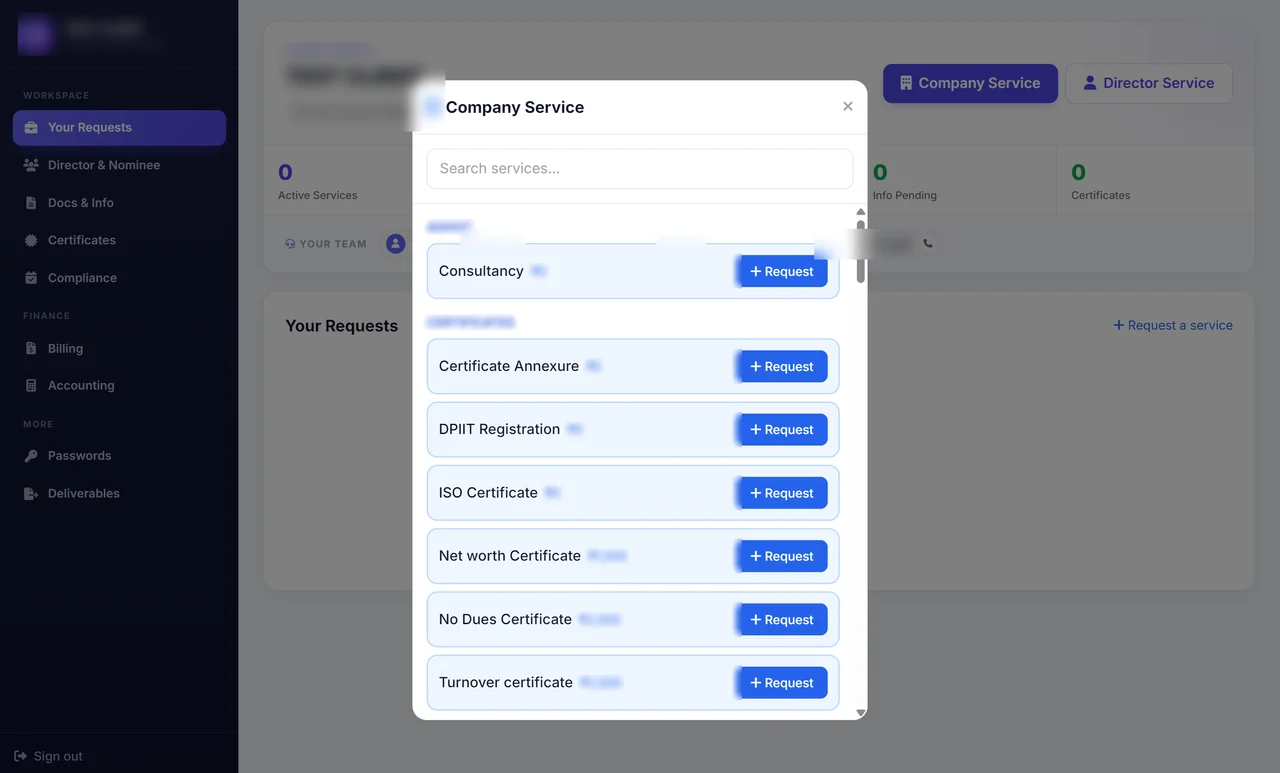
Service catalogue inside the client portal
2

Raise your request

Choose the service you need from the menu inside the portal, where the price is shown before you go ahead. Your request is logged the moment you send it, with no phone calls or reminder emails to wait on.

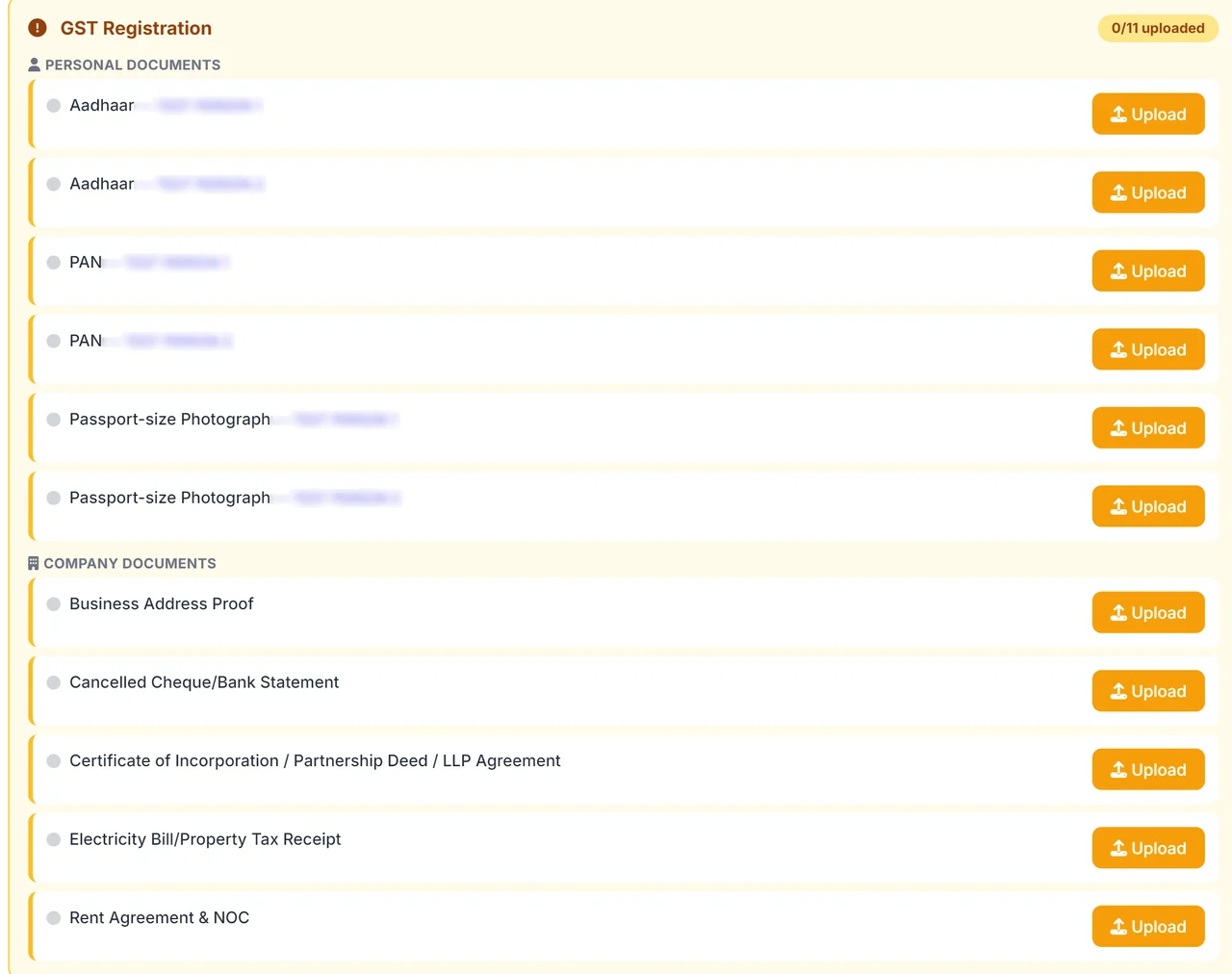
GST registration document checklist in the client portal, with an upload button beside each item
3

Share what the service asks for

For every service, the portal lists the exact documents it needs, each with its own upload button. The example shown here is the GST registration checklist. When a service needs nothing from you, it simply asks for nothing.

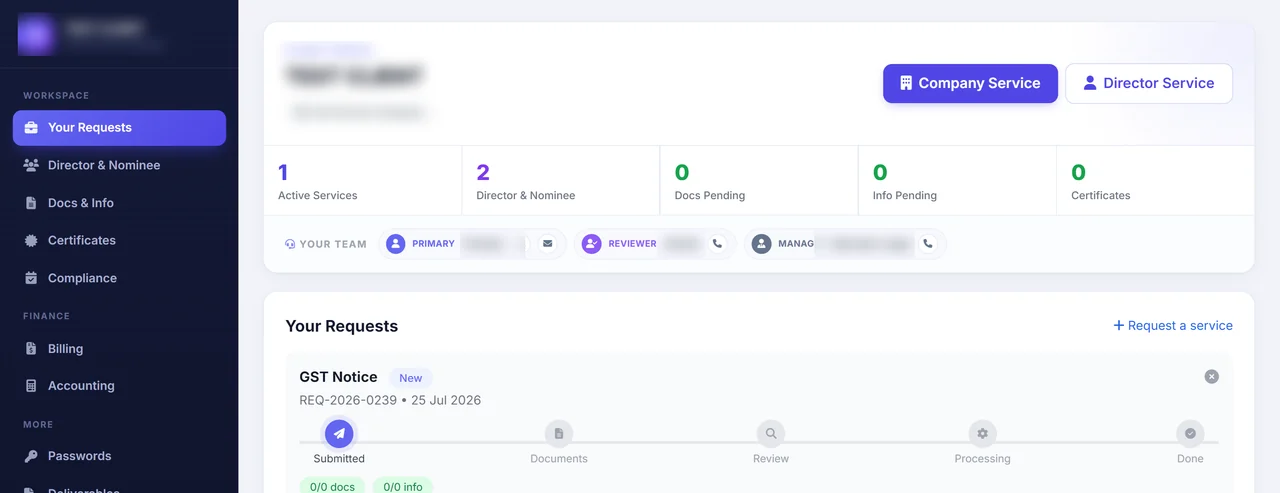
Live request tracker inside the client portal
4

We review, prepare and file

Once your documents are in, your team checks them, prepares the work and files it for you. A live tracker shows each stage as it happens, from review to processing to done, so you never have to ask where things stand.

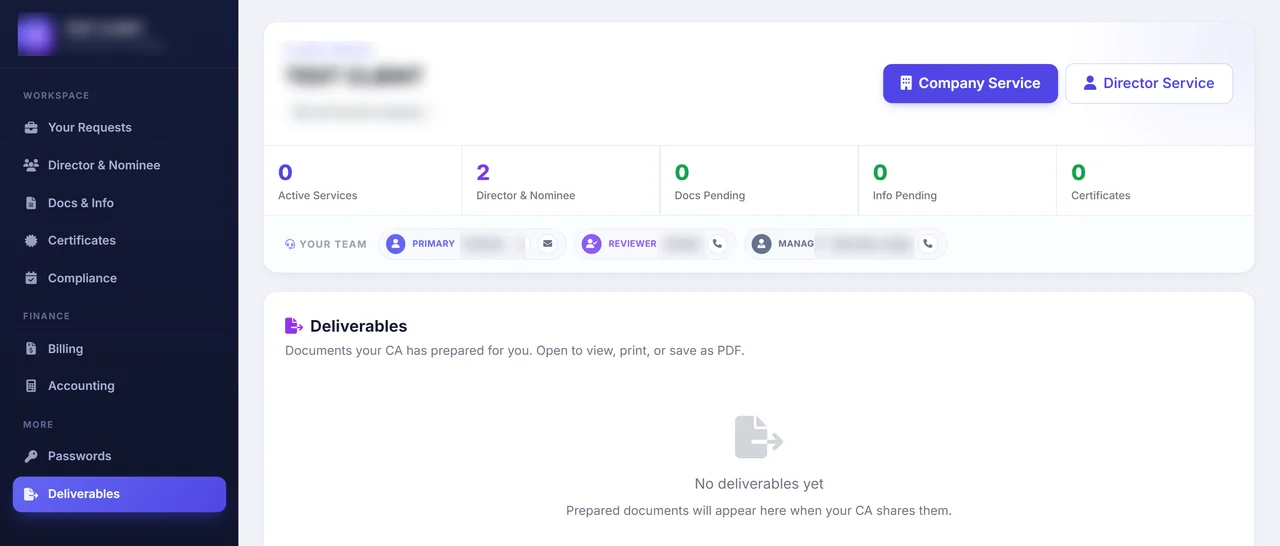
Deliverables area of the client portal
5

Collect your finished work

Every completed return, computation and certificate is placed in your Deliverables area. You can open, print or download any of them as a PDF whenever you need a copy.

Common Travel and Logistics Accounting Challenges and How We Solve Them

ChallengeImpactHow Patron Accounting Solves It
Customer booking advances recognised as revenue before travelRevenue overstated pre-departure, and refunds on cancellation reverse income already bookedHold booking receipts as advance liability and recognise on the travel date, with a cancellation-refund provision
IATA BSP settlements not matched to ticket salesAirline dues and commission drift from the sales register, and unreconciled balances build upReconcile the BSP billing statement to ticket-wise sales each fortnight, so payables and commission tie out
Demurrage and detention costs booked only when invoicedFreight-job margin looks strong, then collapses when the port charge lands lateAccrue demurrage and detention against the job at close, so lane margin reflects true cost
Driver imprest and fuel advances left unsettled on the ledgerCash advances masquerade as expense, so trip cost and cash-in-hand both read wrongRun imprest accounts settled against fuel and toll vouchers per trip, before cost is booked
GTA freight under reverse charge posted as ordinary expenseThe RCM liability and its credit go unrecorded, exposing interest on the shortfallFlag GTA reverse charge under GST bills, so the liability and matching credit both hit the books

Travel and Logistics Accounting Fees

Fee ComponentAmount
Starter — one entity with routine trips or consignments billedINR 3,499 per month
Excl. GST & Government Charges
Growth — higher trip or consignment volume across added branchesOn quote
Managed — multi-branch books with trip-wise profitability and custom reportingOn quote

Travel agency accounting and logistics books start at INR 3,499 per month for one entity with routine billing. Your fee tracks the trips or consignments billed each month and how many branches you run. Ask for a fixed quote on +91 94594 56700.

Fees exclude GST and government charges. Final quote confirmed after a scoping review.

All fees and charges listed are indicative only and do not constitute a binding offer. Final amounts may vary depending on the volume of work and the complexity involved.

Professional accounting and compliance charges are scoped to your number of entities, funding stage and monthly transaction volume, and are separate from statutory and government charges. Contact us for a detailed, fixed quote.

Get a free Travel and Logistics Accounting consultation - Call +91 945 945 6700 or WhatsApp us. No-obligation assessment.

Travel and Logistics Accounting Compliance Calendar 2026

ComplianceDue DateApplies To
TDS / TCS deposit (Challan ITNS-281)7th of every month (30 April for March)Every business that deducts tax at source on salaries, rent, contractor or professional fees
GSTR-1 (outward supplies)11th of every month for monthly filersGST-registered businesses filing monthly returns
Provident Fund (ECR) and ESI contribution15th of every monthEmployers registered under EPF and ESI
GSTR-3B (summary return and tax payment)20th of every month for monthly filersGST-registered businesses filing monthly; QRMP filers pay via PMT-06
Advance tax second instalment (45% cumulative)15 September 2026Companies, firms and individuals liable to advance tax
Tax audit report (Form 3CA/3CB-3CD)30 September 2026Businesses crossing the Section 44AB turnover threshold
Income-tax return, audit cases31 October 2026Companies and audit-liable firms
Annual GST return GSTR-9 and reconciliation GSTR-9C31 December 2026GST-registered businesses above the annual-return and audit thresholds

For a travel or logistics firm the 20th GSTR-3B and the 7th TDS recur monthly, with the tax audit on 30 September. GTA supplies under reverse charge need care each return. Patron maps travel and logistics accounting to these dates so RCM and ITC positions stay clean. Download the 2026 calendar or talk to a CA on +91 94594 56700.

Key Benefits

Why Professional Travel and Logistics Accounting Matters

Recoveries kept out of turnover

We keep amounts collected on a customer's behalf, from airfare to port charges, out of your own billing value.

  • Pure-agent recoveries separated under Rule 33 of the CGST Rules
  • Reported turnover then reflects the commission actually earned
  • Without it, inflated turnover distorts the ratios a banker reads

Job margin released when closed

We hold your bookings and freight jobs in a job-wise ledger until the trip or lane is complete.

  • Demurrage and detention charged in before margin is recognised
  • Job-wise ledger tracks each booking and freight job to close
  • Without it, profit and its costs fall in different months

Driver advances that come back

We close every trip sheet against the advance drawn, covering diesel, toll, loading, detention and batta actually spent.

  • Trip sheets settled against driver advance vouchers
  • Unsettled advances aged driver by driver
  • Without it, road cash becomes a balance nobody can recover

Hired truck deductions properly supported

We process attached and market vehicle bills only against the small transporter declaration that removes the deduction obligation.

  • Declaration relies on Section 194C(6) PAN declarations from the transporter
  • Payments still reported in the return
  • Without the declaration, thirty per cent of the cost can be disallowed

Consignment note series under control

We run your lorry receipts as a controlled serial series, each one tied to the freight bill behind it.

  • Serially numbered LR / bilty tracked as issued, used or cancelled
  • The consignment note evidences the movement and the customer's claim
  • Without control, a gap in the series is questioned first

Vehicles earning against their cost

You see which trucks pay for themselves and which are carried by the rest of the fleet.

  • Vehicle-wise fuel, FASTag, tyre and repair statements build the record
  • A renewal, sale or rate revision reads that vehicle's own record
  • Without it, a truck can run at a loss unmeasured for a year

Why Businesses Choose Patron Accounting for Travel & Logistics Accounting

Five things a founder can check before handing over the books. Each is a claim with the proof behind it.

Trip-wise and lane-wise margin, not one revenue line

We measure margin trip by trip and lane by lane for freight operators, and fare by fare for travel agencies, rather than one revenue line. This trip-wise profitability view comes from 15+ years of experience.

Pure-agent recoveries separated from principal supply

We keep pure-agent recoveries, such as freight paid on a client's behalf, out of your taxable turnover, so GST applies only to your own margin. This is part of the 25,000+ filings we have completed.

TMS and freight-billing systems reconciled into the ledger

We set up the software your finance team already runs, whether Zoho Books, Xero, Tally Prime or Odoo, reconciling your TMS, freight-billing and travel booking systems into one ledger.

Trip margin and agent reconciliation each month

Every month you get trip and lane margin with airline and agent commission reconciliations settled, so closed jobs and net fares both tie out. Operators rate this 4.9 on Google.

Freight and travel firms among 3,000+ served

Freight forwarders, fleet operators and travel agencies sit among the 3,000+ businesses we have served since 2019. Our in-house team of CAs and CS brings 15+ years of experience and a 4.9 star Google rating.

Figures reflect Patron Accounting LLP engagements since 2019. Scope and turnaround are confirmed in your engagement letter.

GTA Forward Charge vs RCM

CriterionGTA Forward ChargeRCM
Who pays GSTForward charge: the GTA charges and pays tax on its invoice.RCM: the recipient pays GST directly to the government.
Rate and creditForward charge: 5% without ITC, or 18% with full ITC.RCM: 5%, recipient claims credit subject to the rules.
How to optForward charge: opt via Annexure V by 31 March of preceding year.RCM: automatic default when no Annexure V is filed.
Mid-year changeForward charge: locked once, cannot switch during the year.RCM: applies wherever forward charge is not opted.
Cash-flow effectForward charge: the GTA funds the tax and recovers it in price.RCM: recipient outflow, credit recovered on the next return.
Book-keeping impactForward charge: output tax recorded on the GTA books.RCM: recipient records a self-invoice and the liability.
VerdictFor transporters, 18% forward charge suits customers who want full input credit; 5% RCM stays the simpler default when clients absorb the tax. Sound travel agency accounting locks this choice before the year starts, following current GTA under GST rules.

Legal and Regulatory Framework for Travel and Logistics Accounting

An incorporated transport or travel business triggers a GST regime unlike most others, because the way a supply is taxed depends on where the journey runs and who bears the tax. The place-of-supply rules under the IGST Act sit at the centre of the framework, and reverse charge on goods transport shifts the liability onto the customer's books.

So the compliance turns on classifying each supply correctly before it is invoiced. A domestic leg, an inter-state haul and a freight job under a goods transport agency are taxed differently, and the deduction on hire has its own rules. That is why Goods Transport Agency (GTA) RCM and a clean Trip-Wise Profit and Loss Statement are the compliance spine, not just management detail. Travel agency accounting answers to the provisions below.

  • Sections 12 and 13, IGST Act 2017Place-of-supply rules decide whether a transport or travel supply is intra-state or inter-state, fixing CGST/SGST versus IGST on each invoice.
  • Notification 13/2017-Central Tax (Rate)Goods transport agency services attract GST under reverse charge, which the recipient's books self-invoice and pay.
  • Section 194C, Income-tax Act 1961Payments to transporters and contractors carry TDS at 1%/2%, with the transport exemption tracked against valid declarations.
  • AS 9 / Ind AS 115Freight and travel revenue is recognised as the journey is performed, and agent commissions are booked net where the agent is not the principal.
  • Section 128, Companies Act 2013The underlying books stay on accrual and double entry at the registered office, retained for eight years - the ledger behind a Fuel Fleet Card Reconciliation.
  • Rule 3(1), Companies (Accounts) Rules 2014The audit trail stays enabled, so a re-rated trip or a reversed booking is logged. General GST filing runs from the hub page.

Official sources: Ministry of Corporate Affairs · Income Tax Department · GST Portal · Startup India (DPIIT)

How is accounting done for a travel agency in India?

The first decision is whether you bill as an agent or as a principal, because that changes both revenue recognition and GST treatment. Agents record only commission as income, while tour operators selling packages record the gross package value. Supplier bookings, customer advances, refunds and cancellation charges each need their own ledger so per-booking margin stays visible.

What records must a travel agency maintain for GST and income tax?

Keep booking-wise invoices, supplier bills from airlines, hotels and consolidators, credit notes for cancellations, commission statements, foreign exchange documents for outbound travel and a customer advance register. GST law requires these to be preserved for the period the Act prescribes, and the same set supports income tax assessment. We maintain them monthly rather than at year end.

Can travel agency accounting be handled in Tally?

Yes. Tally works well once cost centres are set up per booking or per branch and separate ledgers exist for supplier payables, customer advances and commission income. GST rate masters need care, because commission, packages and air ticketing are not treated alike. Agencies with high booking volume usually move to Zoho Books for easier reconciliation.

How is GST treated on tour packages compared with air ticket commission?

The two follow different valuation rules, so they must be invoiced and recorded separately instead of being lumped into one line. Package sales, air ticket commission and hotel bookings each carry their own taxable value basis and input credit position. We map every revenue stream to its correct treatment and document it, since this is a common notice trigger.

Should a transport business pay GST under forward charge or reverse charge?

A goods transport agency can either remain under reverse charge, where the recipient pays the tax, or opt for forward charge by filing the prescribed declaration, which opens input credit on trucks, fuel and spares. The option applies for the financial year and cannot be switched midway. We model both positions on your actual cost structure first.

How do you account for pure agent recoveries billed to customers?

Amounts collected purely as reimbursement on behalf of a customer stay outside taxable value only where every pure agent condition in the GST valuation rules is satisfied and the supplier invoice names the customer. Otherwise the whole amount becomes taxable. We test each recovery type once, document the position and then apply it consistently across billings.

Can you track profitability per trip, per vehicle or per route?

Yes. Cost centres are set up so fuel, driver wages, tolls, FASTag, maintenance and loan EMIs are captured per vehicle, with revenue tagged per trip or route. You receive a monthly contribution statement showing which routes and vehicles actually earn. Most operators discover two or three loss-making routes they had never separated out before.

How do you handle driver advances, cash expenses and fuel bills on the road?

Drivers receive an advance against a numbered voucher, and every settlement is matched to fuel, toll and repair bills within a fixed cycle, usually 7 days from trip completion. Unsupported cash spends sit in a suspense ledger and are reported monthly. Cash payments above the limit allowed under the Income Tax Act are flagged before booking.

What does accounting for a travel or logistics business cost?

A single-location travel agency, or a fleet of up to 20 vehicles, usually pays Rs 10,000 to Rs 18,000 a month covering bookkeeping, GST returns, TDS and monthly MIS. Multi-branch agencies, larger fleets and per-vehicle profitability reporting move the fee higher. Annual filings, audit support and e-way bill reconciliation are quoted separately from this.

Do you reconcile e-way bills and vendor GST data for logistics companies?

Yes. E-way bill data is reconciled against sales invoices and against GSTR-1 every month, so mismatches get corrected before the department raises them. On the purchase side, vendor invoices are matched to GSTR-2B before credit is claimed. Transport operators are scrutinised frequently, so this reconciliation forms part of the standard monthly scope.

Quick Answers

Money arrives ahead of the service in this trade. A customer pays for a booking weeks before departure, the airline or consolidator settles later at a net figure, and a freight job is invoiced when the container moves but costed only once demurrage and detention are known. Patron parks all of it in a job-wise ledger.

Travel and Logistics Accounting Deadlines You Cannot Afford to Miss

TDS / TCS deposit (Challan ITNS-281) is due 7th of every month (30 April for March). GSTR-1 (outward supplies) is due 11th of every month for monthly filers. Provident Fund (ECR) and ESI contribution is due 15th of every month. Patron tracks each against your books so nothing is reconstructed after the fact. Call +91 94594 56700 to set up a filing-reminder schedule.

Start Your Travel and Logistics Accounting with Patron Accounting

Freight forwarding is the larger part of this work, and it is the part that decides how the engagement is built: jobs, lanes, hired vehicles and settlement statements. Travel agency accounting shares the same file-by-file discipline on a much shorter cycle, which is why the two sit together rather than on separate pages.

Lane profitability is what changes the business. A route running at negative margin, once empty return legs and detention are charged against it, can be repriced with the customer or refused outright. Logistics accounting services also let hired vehicle rates be renegotiated on what each operator actually delivered over the quarter.

Which side of the business dominates has to be established: a forwarder with hired trucks and a retail travel counter need the ledger cut differently, and most operators run some of both. That split decides reporting structure, as it does for software product companies we serve.

Book a Free Consultation - No Obligation.

Explore Our Accounting Services

Related services our CA-led team delivers for businesses across India.

Reviewed by the CA & CS Team, Patron Accounting LLP
ICAI & ICSI registered  ·  15+ years in Indian accounting & compliance  ·  Last reviewed 23 July 2026  ·  Next review 23 October 2026