In this guide
For decades, full and final settlement in India was an unregulated grey zone. Some companies paid on the last working day. Others took 30 days. Many took 60-90 days. Employees leaving jobs had no statutory guarantee of when their dues would be cleared - and chasing HR for F&F became an accepted part of the resignation experience.
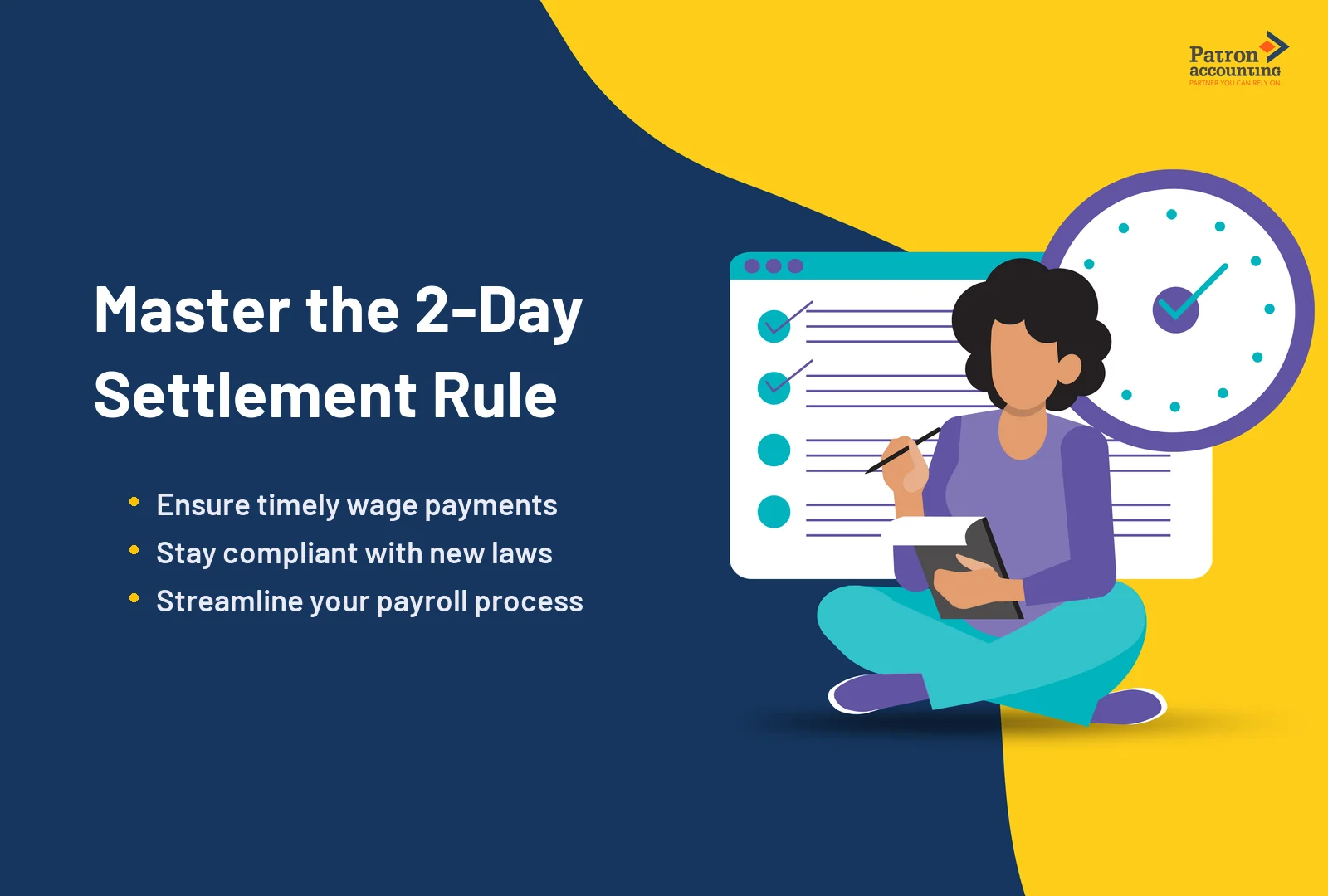
That changed on 21 November 2025. Section 17(2) of the Code on Wages 2019 now mandates that all wages payable to an employee must be settled within 2 working days of exit. This applies to every form of separation - resignation, termination, dismissal, retrenchment, and closure.
This guide covers what the 2-day rule actually says (and what it does not cover), the complete list of F&F components, a worked calculation example, the component-wise timeline breakdown (wage dues vs gratuity vs PF), the employer's operational workflow for processing F&F within 48 hours, and the penalties for non-compliance.
What Is Full and Final Settlement and Why Does It Matter?
Full and final settlement (F&F or FnF) is the process of calculating and paying all outstanding financial dues owed by the employer to the employee at the time of exit - and recovering any amounts owed by the employee to the employer. It is a complete financial reconciliation that closes the employment relationship.
Under Section 17(2) of the Code on Wages 2019, "where an employee has been removed or dismissed from service, or retrenched or has resigned from service, or became unemployed due to closure of the establishment, the wages payable to him shall be paid within two working days." This provision replaced the earlier industry practice of 30-45 day settlement cycles.
Employers using payroll processing and management services must now configure their payroll and HR systems for real-time F&F calculation - the 2-day deadline does not allow for the old batch-processing approach where F&F was run with the next month's payroll cycle.
Key Terms You Should Know
- Section 17(2) - Code on Wages 2019: The statutory provision mandating that wages payable to a departing employee must be paid within 2 working days of exit. This covers salary dues, leave encashment, bonus, and other wage components - but NOT gratuity or PF, which have separate timelines.
- Wage Components (for 2-day rule): The amounts covered by the 2-day deadline: unpaid salary for days worked, leave encashment, pro-rata bonus, pending reimbursements, overtime, and any other remuneration expressed in monetary terms under the wage definition.
- Non-Wage Components (separate timelines): Gratuity (30 days under Payment of Gratuity Act), PF transfer/withdrawal (EPFO processing timeline - typically 10-20 days), and insurance settlement - these are NOT covered by the 2-day rule but should be initiated simultaneously.
- Notice Period Recovery: If the employee resigns without serving the full notice period, the employer can recover the shortfall amount from the F&F settlement. This is a deduction from the employee's dues, not a separate payment.
- F&F Settlement Letter: A formal document issued by the employer showing the itemised breakdown of all credits (salary, leave, bonus, reimbursements) and deductions (notice recovery, loans, TDS, asset recovery), with the net payable or recoverable amount.
- Relieving Letter: A separate document confirming that the employee has been relieved from duties and all formalities are complete. Issued alongside the F&F settlement letter on or after the last working day.
Who Is Covered by the 2-Day F&F Settlement Rule?
The 2-day rule under Section 17(2) applies universally - there is no exemption based on salary level, designation, industry, or type of employment.
- Permanent employees who resign, retire, or are terminated
- Fixed-term employees whose contract expires or is terminated
- Contract workers whose engagement ends
- Employees who are retrenched or dismissed
- Employees affected by closure of the establishment
- Senior management and managerial employees - no salary ceiling for the rule's applicability
- Employees in IT, BPO, manufacturing, services, startups - all industries covered
- Employees on probation who are terminated during the probation period
Employers offering gratuity calculation services must process the gratuity calculation concurrently with the F&F - even though gratuity has its own 30-day timeline, the computation should be initiated on the last working day so that gratuity payment follows within 30 days without further delay.
Legal Framework: What Exactly Does the 2-Day Rule Cover?
The most common confusion about the 2-day F&F rule is what falls within the 2-day deadline and what does not. The answer lies in the distinction between "wages" and other statutory benefits.
| F&F Component | Timeline | Governing Law | Notes |
|---|---|---|---|
| Unpaid salary (days worked) | 2 working days | Section 17(2), Code on Wages | Must be calculated and paid within 48 hours |
| Leave encashment | 2 working days | Code on Wages (wage component) | Based on unused earned leave × daily wage rate |
| Pro-rata bonus | 2 working days | Code on Wages / Payment of Bonus Act | Proportionate to days worked in the accounting year |
| Pending reimbursements | 2 working days | Code on Wages (wage component) | Medical, travel, and other approved claims |
| Overtime dues | 2 working days | Code on Wages | At 2× normal wage rate for hours beyond prescribed limit |
| Notice period adjustment | Deducted from above | Company policy / employment contract | Shortfall in notice period recovered from F&F dues |
| Gratuity | 30 days from becoming payable | Payment of Gratuity Act / Code on Social Security | Separate timeline - not covered by 2-day rule |
| PF transfer/withdrawal | EPFO processing time (10-20 days) | EPF Act / Code on Social Security | Employee initiates claim through EPFO portal |
| TDS on F&F components | Deducted at source | Income Tax Act 2025 | Employer deducts TDS on taxable F&F components before payment |
The practical implication is clear: wage-related components must be computed and paid within 2 working days. Gratuity computation should be initiated simultaneously but payment follows the 30-day timeline. PF is handled entirely through the EPFO portal and does not involve the employer's payroll system for the actual transfer.
How to Process F&F Settlement Within 2 Days: Step-by-Step
1. Trigger the exit workflow on resignation acceptance. The moment resignation is accepted (or termination is decided), HR must simultaneously notify IT (for asset recovery and access deactivation), Finance (for loan reconciliation), Admin (for ID card and equipment return), and Payroll (for F&F calculation). Running these sequentially - as in the old 30-45 day model - makes 2-day compliance impossible.
2. Complete departmental clearances within the notice period.All clearances - IT, Finance, Admin - should be completed before the last working day, not after it. The 2-day clock starts from the last working day. If clearances are pending on that day, the employer cannot use them as a reason to delay wage payment. Employers using payroll compliance services can automate the entire F&F workflow - from resignation trigger to departmental clearances to final bank transfer - within the 2-day window.
3. Calculate all wage components. Payroll computes: (a) unpaid salary for days worked, (b) leave encashment = (basic + DA) ÷ 30 × unused earned leave days, (c) pro-rata bonus = annual bonus entitlement × (days worked ÷ total working days), (d) pending reimbursements, (e) overtime dues.
4. Calculate all deductions. Deduct: (a) notice period shortfall = (monthly salary ÷ 30) × unserved notice days, (b) outstanding loans or advances, (c) value of unreturned company assets (laptop, phone, etc.), (d) TDS on taxable F&F components at the employee's applicable slab rate, (e) any other contractual recoveries.
5. Compute net F&F amount. Net F&F = total credits minus total deductions. Prepare an itemised F&F settlement statement showing every component with INR amounts. Both parties should have clarity on what is being paid and what is being recovered.
6. Process bank transfer within 2 working days. Transfer the net F&F amount to the employee's registered bank account within 2 working days of the last working day. Issue the F&F settlement letter, final payslip, relieving letter, and experience certificate simultaneously.
7. Initiate gratuity and PF processing in parallel. Calculate gratuity = (15 × last drawn wages × completed years) ÷ 26. Issue Form L (gratuity determination notice) within 30 days. Inform the employee about the PF transfer/withdrawal process through the EPFO portal. File TDS returns reflecting the F&F components and deductions.
Documents the Employer Must Provide at Exit
- F&F settlement letter - itemised breakdown of all credits and deductions with net amount
- Final payslip - salary details for the last month/period including F&F components
- Relieving letter - confirming the employee has been relieved from duties as of the last working day
- Experience certificate - confirming the employee's tenure, designation, and period of employment
- Form 16 / Form 130 (from April 2026) - TDS certificate for the financial year covering F&F income
- Form L (gratuity) - notice of gratuity amount determined, issued within 30 days
- PF transfer guidance - instructions for the employee to initiate PF transfer/withdrawal through EPFO portal
- No-dues certificate - confirming all departmental clearances are complete
- ESIC contribution statement - confirming ESI contributions deposited for the employee
F&F Calculation: Worked Example
The following worked example illustrates a complete F&F calculation for a private sector employee resigning after 3 years of service.
| Component | Calculation | Amount (Rs) |
|---|---|---|
| Employee | Mr. Ankit - 3 years service, monthly CTC Rs 60,000 | - |
| Basic + DA (50% of CTC) | Rs 30,000/month | - |
| Last working day | 15 April 2026 (served notice) | - |
| CREDITS | ||
| Unpaid salary (1-15 April) | Rs 30,000 gross ÷ 30 × 15 days | Rs 30,000 |
| Leave encashment (18 unused EL days) | (Rs 30,000 ÷ 30) × 18 | Rs 18,000 |
| Pro-rata bonus (8.33% for 15 days in April) | Rs 7,000 (ceiling) × 8.33% × 15/365 | Rs 239 |
| Pending travel reimbursement | Approved claim from March 2026 | Rs 4,500 |
| Total credits | Rs 52,739 | |
| DEDUCTIONS | ||
| Employee PF (12% of basic for 15 days) | 12% × Rs 15,000 (15 days basic) | Rs 1,800 |
| Professional Tax (April) | Maharashtra rate | Rs 200 |
| TDS on taxable F&F (estimated) | At applicable slab rate | Rs 3,500 |
| Notice period recovery | Nil - full notice served | Rs 0 |
| Total deductions | Rs 5,500 | |
| NET F&F PAYABLE | Credits minus deductions | Rs 47,239 |
| Payment deadline | Within 2 working days of 15 April = by 17 April 2026 | - |
| SEPARATE TIMELINES | ||
| Gratuity (3 years service - below 5 years) | Not eligible (permanent employee - needs 5 years) | Rs 0 |
| PF transfer | Employee initiates through EPFO portal | Separate |
Note: If this employee were a fixed-term employee (FTE) with 3 years of service, gratuity would be payable under the 1-year FTE rule = (15 × Rs 30,000 × 3) ÷ 26 = Rs 51,923 - payable within 30 days separately from the 2-day wage settlement. The 50% wage rule ensures the gratuity is calculated on the higher basic (Rs 30,000) vs the old structure where basic may have been Rs 18,000-21,000.
Common Mistakes to Avoid in F&F Settlement
Mistake 1: Treating the 2-day rule as covering ALL exit dues including gratuity and PF. The 2-day rule under Section 17(2) covers only "wages payable" - salary, leave encashment, bonus, reimbursements, and overtime. Gratuity has a separate 30-day timeline. PF transfer is processed through EPFO. Promising employees that "everything will be settled in 2 days" creates unrealistic expectations. Employers should ensure their income tax return filing process reflects the correct F&F components and their tax treatment in Form 16/Form 130.
Mistake 2: Running clearances after the last working day. Under the old practice, clearances (IT, Finance, Admin) often started after the employee left. With a 2-day deadline, all clearances must be completed during the notice period. If the employee is on a 30-day notice, departments have 30 days to complete clearances - not 2 days after exit.
Mistake 3: Withholding F&F because the employee has not returned a laptop. The employer can deduct the value of unreturned assets from the F&F settlement. But withholding the entire settlement because of a pending laptop return is not legally permissible under Section 17(2). Deduct the asset value; pay the remaining amount within 2 days.
Mistake 4: Not calculating TDS correctly on F&F components. F&F includes multiple components with different tax treatments: leave encashment at retirement may be exempt up to Rs 25 lakh (Section 10(10AA)), gratuity may be exempt up to Rs 20 lakh (Section 10(10)), but salary and bonus are fully taxable. Incorrect TDS creates liability for both employer and employee.
Mistake 5: Not issuing the F&F settlement letter with itemised breakdown. A lump-sum transfer without a detailed breakdown invites disputes. Every F&F must be accompanied by an itemised statement showing each credit, each deduction, and the net amount - signed by the employer and acknowledged by the employee.
Penalties for Delayed F&F Settlement
The Code on Wages treats delayed wage payment as a non-compliance event with escalating consequences.
Under Section 17(3) of the Code on Wages, if the employer fails to pay wages within the prescribed timeline (2 working days), the employee has the right to file a complaint with the Controlling Authority. The Authority can direct the employer to pay the dues along with compensation.
Under Section 54 of the Code on Wages, contravention of wage payment provisions attracts a fine up to Rs 50,000 for the first offence. For repeat offences within 5 years, the penalty escalates to Rs 1,00,000 fine and/or imprisonment up to 3 months.
Under Section 45, the Controlling Authority can direct the employer to pay the aggrieved employee compensation up to 10 times the wages due - in addition to the actual wages. This makes delayed F&F extremely expensive for employers with large workforces.
Beyond statutory penalties, delayed F&F damages employer brand and creates attrition risk. Employees who experience delayed settlements become negative brand ambassadors - sharing their experience on platforms like Glassdoor, LinkedIn, and social media. In a competitive talent market, this reputational damage is often more costly than the financial penalty.
How F&F Connects with Other Exit Obligations
F&F settlement is the central financial component of the exit process, but it connects with several other statutory obligations. Employers maintaining PF registration must ensure that the employee's final PF contribution (for the last month/period) is deposited in the regular ECR cycle, and the employee is guided on how to initiate PF transfer or withdrawal through the EPFO portal.
Gratuity computation must be initiated on the last working day - even though the payment deadline is 30 days. The F&F settlement letter should clearly state the gratuity amount determined and the expected payment date, so the employee has full visibility of all exit dues.
From an income tax perspective, the F&F settlement triggers TDS obligations across multiple components - salary (at slab rates), leave encashment (exempt up to Rs 25 lakh at retirement/resignation), gratuity (exempt up to Rs 20 lakh), and bonus (fully taxable). The employer must compute aggregate taxable income including F&F components and deduct TDS correctly. The F&F income is reported in Form 16/Form 130 issued to the employee.
Before vs After: F&F Settlement Timeline Comparison
| Aspect | Before Labour Codes | After Labour Codes (November 2025) |
|---|---|---|
| Wage settlement deadline | No statutory deadline (30-90 days industry practice) | 2 working days (Section 17(2)) |
| Gratuity payment deadline | 30 days (Payment of Gratuity Act) | 30 days (unchanged - separate from 2-day rule) |
| PF transfer/withdrawal | Employee-initiated through EPFO | Unchanged - employee-initiated through EPFO |
| Leave encashment | Included in regular payroll cycle | Must be computed and paid within 2 days |
| Notice period recovery | Deducted from next month payroll | Deducted from F&F within 2 days |
| Departmental clearances | Completed after last working day | Must be completed during notice period |
| F&F settlement letter | No standard format required | Itemised breakdown recommended for compliance defence |
| Penalty for delay | No specific penalty under old laws | Rs 50,000 fine (first offence); Rs 1 lakh + 3 months (repeat) + up to 10× compensation |
| Applicability | Varied by company policy | Universal - all employees, all industries, all salary levels |
| Form 16 / Form 130 | Issued by June 15 of following year | Same - but F&F TDS must be computed at exit for correct withholding |
Key Takeaways
Under Section 17(2) of the Code on Wages 2019 (effective 21 November 2025), all wages payable to a departing employee - unpaid salary, leave encashment, pro-rata bonus, reimbursements, and overtime - must be paid within 2 working days of exit. This applies to resignation, termination, retrenchment, dismissal, and closure.
Gratuity has a separate 30-day payment timeline under the Payment of Gratuity Act / Code on Social Security and is NOT covered by the 2-day rule. PF transfer is handled through the EPFO portal on the employee's initiative. Employers must clearly communicate these distinct timelines to departing employees.
The 2-day deadline requires a fundamental operational shift - departmental clearances (IT, Finance, Admin) must be completed during the notice period, not after exit. The old batch-processing approach of running F&F with the next month's payroll is no longer compliant.
Penalties for delayed F&F are severe - Rs 50,000 fine for the first offence under Section 54, up to 10× compensation to the employee under Section 45, and imprisonment up to 3 months for repeat offences. Employees can file complaints with the Controlling Authority under Section 17(3).
The 50% wage rule under the Code on Wages increases the leave encashment and overtime calculation base in F&F settlements. Employers who have restructured salaries to comply with the 50% rule will see higher F&F payouts for leave encashment - but the increase is on money the employee has legitimately earned.
Need Help with F&F Settlement Compliance?
Processing F&F within 2 working days requires integrated systems that can compute leave encashment, pro-rata bonus, TDS, notice recovery, and outstanding loans in real-time - while simultaneously triggering departmental clearances and generating the settlement letter with itemised breakdown.
Explore our payroll processing and management services for end-to-end F&F settlement support - from exit workflow automation and real-time F&F calculation to TDS computation, settlement letter generation, gratuity processing, and Form 16/Form 130 reporting.