In this guide
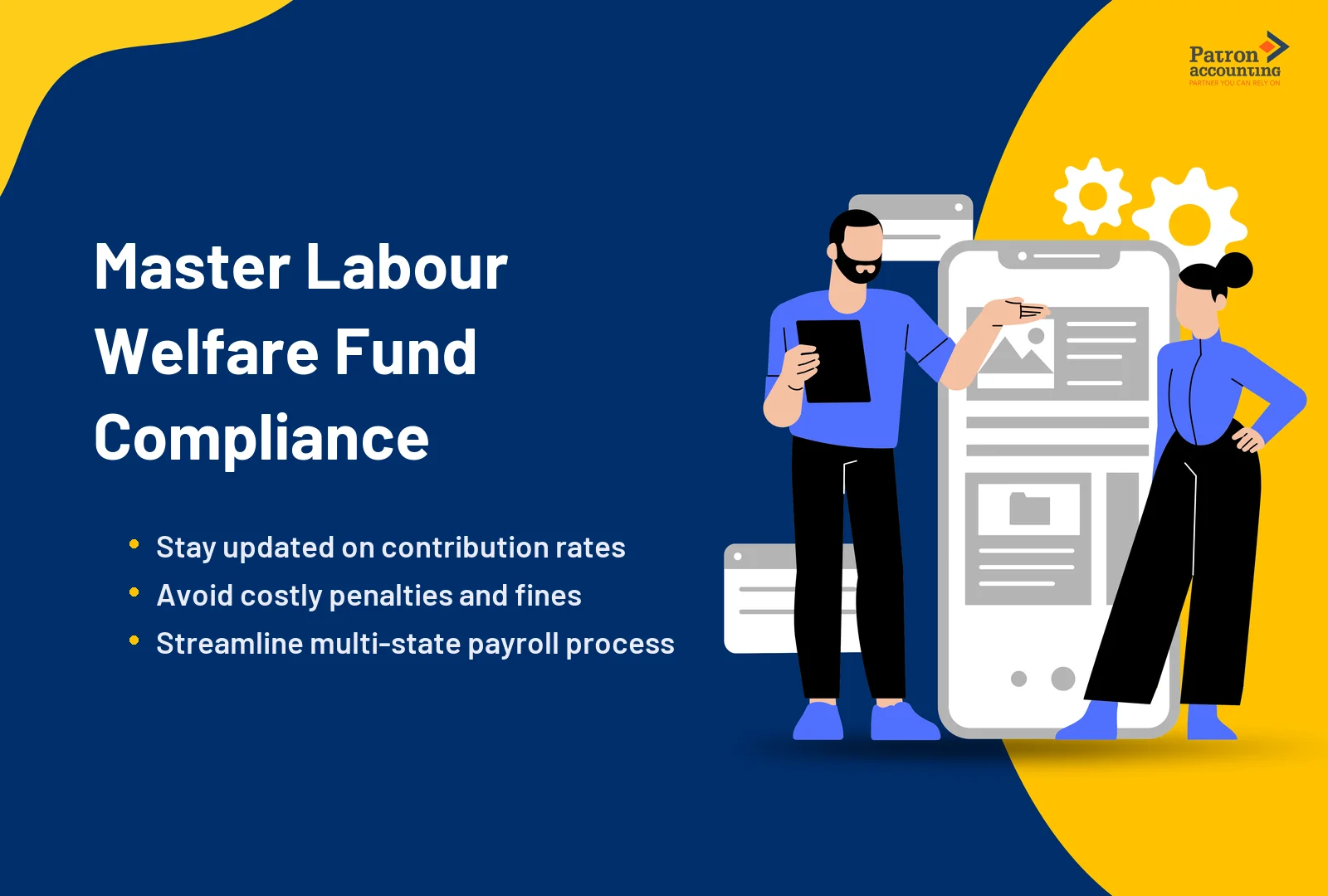
Among all statutory payroll deductions in India - PF, ESI, TDS, and Professional Tax - the Labour Welfare Fund is the one most employers forget about. The contribution amounts are small (sometimes just Rs 6 per employee), the filing is infrequent (half-yearly or annual), and the penalties seem minor. Until an inspector asks for your LWF challan receipts.
LWF compliance is particularly tricky for multi-state employers because each state has its own LWF Act, its own contribution rates, its own due dates, and its own filing portal. Maharashtra revised its rates in March 2024. Karnataka reduced its threshold from 50 to 10 employees in 2025. West Bengal increased the employer share from Rs 6 to Rs 30 in January 2024.
This guide covers what the Labour Welfare Fund is, which states have active LWF legislation, verified contribution rates for 2026, due dates and filing frequencies, registration requirements, employer obligations, and common compliance mistakes to avoid.
What Is the Labour Welfare Fund and Why Does It Matter?
The Labour Welfare Fund (LWF) is a statutory fund established by individual state governments in India to provide welfare benefits - including healthcare, housing, education, recreation, and financial assistance - to workers and their families.
Unlike PF and ESI, which are Central Government schemes with uniform rates, LWF is entirely state-governed. There is no single Central Act for LWF. Each state that levies it has its own Labour Welfare Fund Act - for example, the Maharashtra Labour Welfare Fund Act 1953, the Karnataka Labour Welfare Fund Act 1965, and the Gujarat Labour Welfare Fund Act 1953.
Employers managing payroll compliance services must track LWF obligations separately for each state where their employees work. The fund is not a tax - contributions are ring-fenced for specific welfare purposes and managed by the State Labour Welfare Board.
Key Terms You Should Know
- State Labour Welfare Board: The autonomous body constituted by each state government to administer the LWF - collect contributions, manage the fund, and disburse welfare benefits to eligible workers.
- LWF Contribution Period: The period for which LWF is calculated - half-yearly (January-June and July-December) in most states, or annual in some states like Karnataka and Haryana.
- Employer Contribution: The fixed amount the employer must pay to the LWF for each employee per contribution period - ranges from Rs 12 (Gujarat) to Rs 100 (Karnataka annually) depending on the state.
- Employee Contribution: The fixed amount deducted from the employee's salary toward LWF - ranges from Rs 6 (Gujarat) to Rs 50 (Karnataka annually) depending on the state.
- Concurrent List: Entry 22 of List III, Seventh Schedule, Indian Constitution - gives both Parliament and State Legislatures the power to enact laws on labour welfare, which is the constitutional basis for state-level LWF Acts.
Who Needs to Contribute to LWF in India?
LWF applicability depends on two factors: the state where the establishment operates and the type of establishment. Not all states have enacted LWF legislation, and within states that have, the applicability threshold varies.
- Factories, shops, and commercial establishments in states with active LWF legislation
- Employers in Maharashtra, Karnataka, Gujarat, Tamil Nadu, West Bengal, Madhya Pradesh, Kerala, Andhra Pradesh, Telangana, Chhattisgarh, Goa, Odisha, Haryana, Punjab, Chandigarh, and Delhi (though Delhi LWF has limited applicability)
- All employees drawing wages - there is generally no wage ceiling for LWF (unlike ESI which has a Rs 21,000 ceiling)
- Contract workers may be covered depending on the state's LWF Act - the principal employer's obligation varies by state
- Establishments with no minimum employee threshold in most states - even a single employee can trigger LWF in some states
- Multi-state employers must comply separately with each state's LWF Act, rates, and deadlines
Organisations handling payroll processing and management across multiple states must configure separate LWF deduction logic for each state - different amounts, different frequencies, and different portals.
Legal Framework: State-Specific LWF Acts
Labour is a Concurrent List subject under Entry 22 of List III, Seventh Schedule of the Indian Constitution. Both Parliament and State Legislatures can pass laws on labour welfare. This constitutional authority is the basis for each state's LWF Act.
There is no single Central Labour Welfare Fund Act. Each state has enacted its own legislation - the Maharashtra Labour Welfare Fund Act 1953, the Karnataka Labour Welfare Fund Act 1965, the Gujarat Labour Welfare Fund Act 1953, the Tamil Nadu Labour Welfare Fund Act 1972, and so on. These Acts define the contribution amounts, frequency, due dates, registration requirements, and penalties specific to each state.
Under the Code on Social Security 2020 (commenced November 2025), the Central Government has the power to frame social security schemes that may eventually subsume some state-level welfare funds. However, as of April 2026, state LWF Acts continue to operate independently and employers must comply with each state's specific requirements.
How to Register for LWF and File Contributions: Step-by-Step
1. Determine state-wise applicability. Identify all states where your employees work. Check whether each state has an active LWF Act. States like UP, Bihar, Jharkhand, and most northeastern states do not have mandatory LWF for private establishments.
2. Register with the State Labour Welfare Board. Apply for registration on the respective state's labour welfare board portal or through the local labour office. Provide establishment details - name, address, type, number of employees, and bank account. In Maharashtra, registration is through the mahakamgar.maharashtra.gov.in portal.
3. Calculate employer and employee contributions. Apply the state-specific fixed amounts per employee for the contribution period. The amounts are fixed (not percentage-based) and differ by state. Deduct the employee's share from their salary in the applicable month.
4. Deposit combined contribution by the due date. Add the employer's share to the employee's deducted share and deposit the combined amount to the State Labour Welfare Board through the prescribed challan - online banking, treasury challan, or demand draft as per the state's process.
5. File the prescribed return form. Submit the return form (Form A, Form D, or state-specific form) to the Labour Welfare Board by the due date. Include employee-wise details of contributions deducted and deposited.
6. Maintain records for inspection. Keep copies of all challans, return forms, and employee deduction records. Labour inspectors can demand these records during routine or triggered inspections.
Documents and Records Needed for LWF Registration
- Certificate of Incorporation / Partnership Deed / LLP Agreement
- PAN card of the establishment
- Address proof of the establishment - rent agreement, utility bill, or property deed
- GST registration certificate (if registered)
- List of employees with name, designation, date of joining, and gross monthly wages
- Bank account details - cancelled cheque or bank statement
- Previous LWF registration details (if migrating from another number)
- Specimen signature of the authorised signatory
- Shops and Establishments licence or Factory licence (as applicable)
LWF Contribution Rates: State-Wise Breakdown 2026
LWF contribution amounts are fixed per employee per contribution period - they are not calculated as a percentage of salary. The following table provides the verified contribution rates for major LWF-levying states as of April 2026.
| State | Employee Share | Employer Share | Frequency | Due Date |
|---|---|---|---|---|
| Maharashtra | Rs 25/half-year | Rs 75/half-year | Half-yearly (Jun & Dec) | 15 July / 15 January |
| Karnataka | Rs 50/year | Rs 100/year | Annual | 31 December |
| Gujarat | Rs 6/half-year | Rs 12/half-year | Half-yearly (Jun & Dec) | 15 July / 15 January |
| Tamil Nadu | Rs 20/half-year | Rs 40/half-year | Half-yearly | By end of contribution period month |
| West Bengal | Rs 3/half-year | Rs 30/half-year | Half-yearly (Jun & Dec) | 15 July / 15 January |
| Madhya Pradesh | Rs 10/half-year | Rs 20/half-year | Half-yearly (Jun & Dec) | 15 July / 15 January |
| Andhra Pradesh | Rs 30/year | Rs 70/year | Annual | 31 January |
| Telangana | Rs 10/half-year | Rs 20/half-year | Half-yearly | 15 July / 15 January |
| Kerala | Rs 10/half-year | Rs 20/half-year | Half-yearly | By prescribed date |
| Haryana | Rs 31/month | Rs 62/month | Monthly | 15th of following month |
| Chhattisgarh | Rs 15/half-year | Rs 30/half-year | Half-yearly | 15 July / 15 January |
| Goa | Rs 60/half-year | Rs 120/half-year | Half-yearly | By prescribed date |
| Delhi | Rs 1/month | Rs 2/month | Monthly | 15th of following month |
| Punjab | Rs 10/half-year | Rs 20/half-year | Half-yearly | 15 July / 15 January |
| Odisha | Rs 10/half-year | Rs 20/half-year | Half-yearly | 15 July / 15 January |
Note: Maharashtra revised its LWF rates from Rs 12/Rs 36 to Rs 25/Rs 75 in March 2024. Karnataka reduced the applicability threshold from 50 to 10 employees in 2025 and revised rates to Rs 50/Rs 100 annually. West Bengal increased the employer share from Rs 6 to Rs 30 in January 2024. Always verify with the respective State Labour Welfare Board before filing, as rates are subject to revision by state government notification.
Common Mistakes to Avoid in LWF Compliance
Mistake 1: Ignoring LWF entirely because the amounts are small. The contribution per employee may be as low as Rs 6, but non-compliance attracts penalties that far exceed the contribution. A company with 100 employees in Gujarat owes just Rs 1,800 per half-year in total LWF - but a penalty of 10-50% plus interest accumulates every missed period. During statutory audits and labour inspections, LWF non-compliance is flagged.
Mistake 2: Using outdated contribution rates after a state revision. Maharashtra revised LWF rates in March 2024, Karnataka in 2025, and West Bengal in January 2024. Many payroll systems still use pre-revision amounts. Employers must update their payroll configuration after every state notification. Ensuring your professional tax return filing and LWF deduction logic is updated after every state notification is key to avoiding arrears.
Mistake 3: Not registering separately in each state where employees work. Each state requires a separate LWF registration. A company with offices in Mumbai, Bangalore, and Chennai needs three separate registrations - Maharashtra, Karnataka, and Tamil Nadu. A single registration does not cover other states.
Mistake 4: Missing the half-yearly deduction months (June and December). In most states, the employee's LWF contribution is deducted from the June and December salary. If the payroll team forgets to deduct in these months, the employer cannot retroactively deduct from a later month. The employer becomes liable for the employee's share as well.
Mistake 5: Confusing LWF with ESI or PF. LWF is a separate state-specific welfare contribution - it is not a substitute for PF or ESI. All three can apply simultaneously to the same employee. LWF contributions are typically fixed amounts (not percentage-based), operate on half-yearly or annual cycles, and serve different welfare purposes.
Penalties for Non-Compliance with LWF Provisions
Penalties for LWF default vary by state. While the contribution amounts are small, the penalty multipliers can make non-compliance expensive, especially for employers with large workforces across multiple states.
In Maharashtra, failure to deposit LWF by the due date attracts interest at the rate prescribed by the State Board. Additional penalties of up to 10% of the amount due can be levied by the Labour Welfare Commissioner. Continued non-compliance can lead to prosecution under the Maharashtra Labour Welfare Fund Act 1953.
In West Bengal, late payment attracts interest at 1% per month on the unpaid amount plus a penalty of up to 50% of the total contribution due. The West Bengal Labour Welfare Board actively issues demand notices for non-compliant establishments.
In Karnataka, non-payment can attract prosecution and fines under the Karnataka Labour Welfare Fund Act 1965. With the 2025 threshold reduction (from 50 to 10 employees), many more establishments are now covered - and the Board is expected to increase enforcement.
Deducting the employee's LWF share from salary without depositing it to the State Board is treated as misappropriation of worker funds and can attract criminal prosecution under the respective state Act.
How LWF Connects with Other Statutory Provisions
LWF operates alongside PF registration, ESIC registration, Professional Tax, and TDS as part of the complete statutory payroll compliance framework. All five deductions can apply simultaneously to the same employee.
The key distinction is that PF and ESI are Central Government schemes with uniform nationwide rules, while Professional Tax and LWF are state-specific with rates, thresholds, and deadlines that vary across states. For multi-state employers, the payroll system must handle all four deductions separately for each state - different PF rates (12% or 10%), ESI threshold checks (Rs 21,000), state-wise PT slabs, and state-wise LWF fixed amounts.
LWF contributions do not qualify for income tax deduction under Section 80C or any other section for employees. However, for employers, LWF contributions paid are deductible as a business expense under Section 37(1) of the Income Tax Act - provided they are deposited by the due date.
LWF vs PF vs ESI vs Professional Tax: How They Compare
Indian employers face multiple statutory deductions - each with its own rules, thresholds, and portals. The following comparison clarifies how LWF fits within the broader payroll compliance framework.
| Feature | LWF | PF (EPF) | ESI | Professional Tax |
|---|---|---|---|---|
| Governing body | State Labour Welfare Board | EPFO (Central) | ESIC (Central) | State government |
| Applicability | State-specific; 16 states | 20+ employees | 10+ employees (most states) | 21 states + Puducherry |
| Contribution type | Fixed amount per employee | % of basic + DA (12%) | % of gross wages (4%) | Fixed slab amount |
| Employer share | Rs 12-120 per period | 3.67% EPF + 8.33% EPS + 0.50% EDLI | 3.25% of gross | Nil (employer deducts from employee) |
| Employee share | Rs 3-60 per period | 12% of basic + DA | 0.75% of gross | State-specific slab from salary |
| Frequency | Half-yearly / Annual | Monthly (by 15th) | Monthly (by 15th) | Monthly / Half-yearly / Annual |
| Wage ceiling | None (all employees) | Rs 15,000 (mandatory) | Rs 21,000 | None (slab-based) |
| Income tax deduction | Not available to employee | Section 80C | Not applicable | Section 16(iii) |
Key Takeaways
The Labour Welfare Fund is a state-specific statutory contribution - not a Central Government scheme - enacted in 16 states and union territories, with each state having its own LWF Act, contribution rates, and filing deadlines.
LWF contributions are fixed amounts per employee (not percentage-based), ranging from Rs 6 to Rs 120 per period, with both employer and employee contributing - the employer's share is typically 2-3 times the employee's share.
The most common filing frequency is half-yearly (deduction in June and December, deposit by 15 January and 15 July), though Karnataka and Andhra Pradesh follow an annual cycle and Haryana follows a monthly cycle.
Recent revisions have increased rates significantly - Maharashtra from Rs 12/Rs 36 to Rs 25/Rs 75 (March 2024), Karnataka reduced its threshold from 50 to 10 employees (2025), and West Bengal increased employer share from Rs 6 to Rs 30 (January 2024).
Multi-state employers must register separately in each state, apply the correct state-specific fixed amount for each employee, and deposit contributions on different portals with different deadlines - making LWF one of the most fragmented compliance obligations in Indian payroll.
Need Help with LWF Compliance?
Managing LWF compliance across multiple states - each with its own contribution amounts, deduction months, deposit deadlines, and registration portals - is one of the most fragmented obligations in Indian payroll. Missing a half-yearly cycle creates arrears that compound with interest and penalties.
Explore our payroll compliance services for end-to-end LWF management - from state applicability assessment and registration to payroll configuration, half-yearly deductions, challan deposits, return filing, and ongoing compliance tracking across all locations.