In this guide
Cross-objections are one of the most underutilised tools in GST litigation. Most taxpayers receive the department’s appeal notice and simply respond by defending the order. They miss the opportunity to use the cross-objection to raise their own grounds-challenging parts of the order that went against them. This is like showing up to a football match where the opponent has challenged the result, and not only defending your win but also claiming the goals that the referee disallowed.
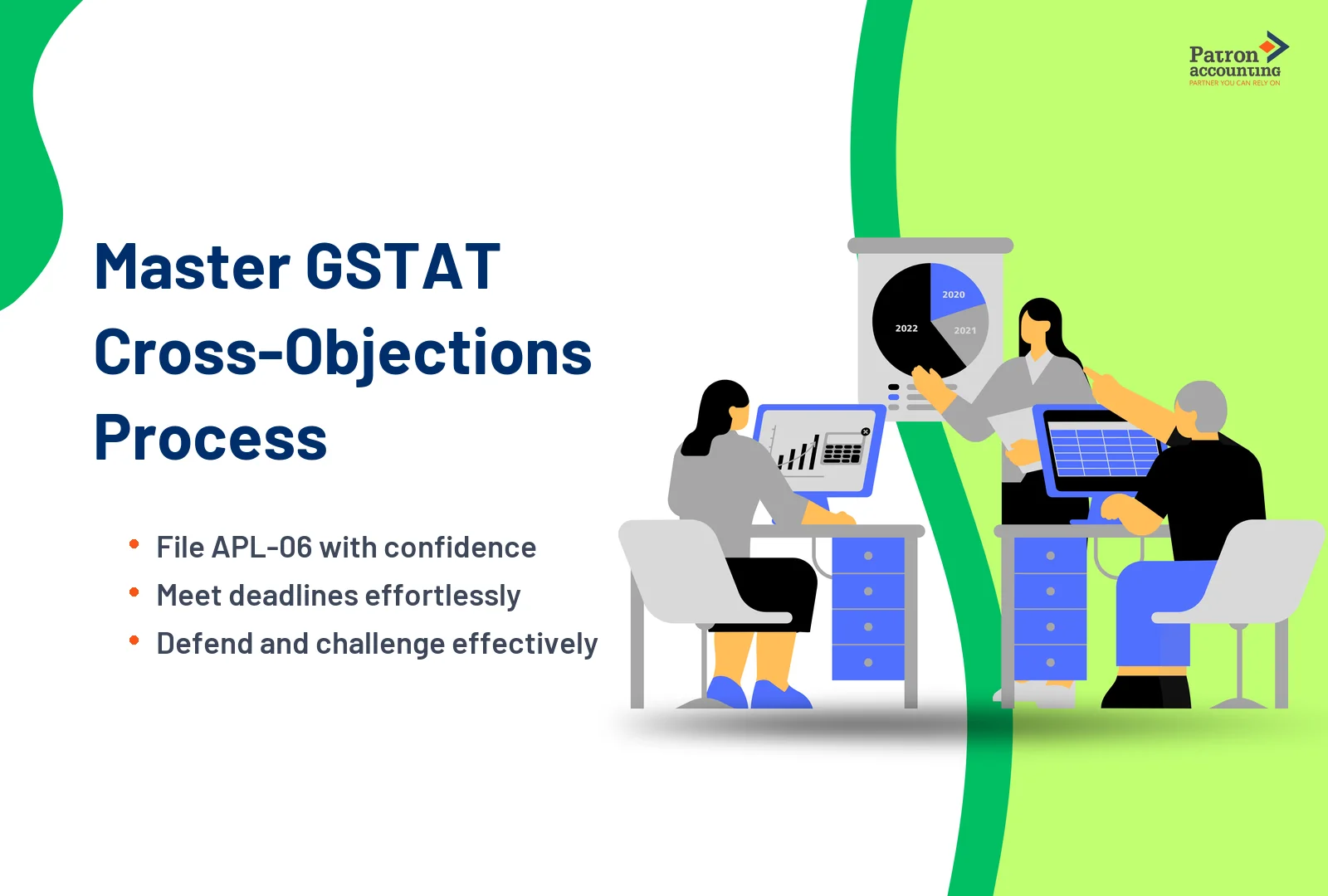
This guide explains what cross-objections are, when they arise, the exact filing process through Form APL-06, the 45-day deadline mechanics, and the strategic advantages of filing one. For the main appeal filing process (when you are the appellant), see how to file a GSTAT appeal (know more). For fee and pre-deposit differences, see our court fee vs pre-deposit guide (know more).
Cross-Objection vs Appeal: The Key Difference
| Parameter | Appeal (Form APL-05) | Cross-Objection (Form APL-06) |
|---|---|---|
| Who files | The aggrieved party (taxpayer or department) who wants to challenge the order. | The respondent to the appeal-the party who received notice that the other side has appealed. |
| Legal basis | Section 112(1), CGST Act | Section 112(5), CGST Act read with Rule 110(2) |
| Form | GST APL-05 | GST APL-06 |
| Deadline | 3 months from order + 3 months condonation. Backlog: 30 June 2026. | 45 days from receipt of notice of the appeal + 45 days condonation. |
| Pre-deposit | Mandatory: 20% of disputed tax (cumulative). | NOT required. No pre-deposit for cross-objections. |
| Court fee | Rs 1,000 per lakh (min Rs 1,000, max Rs 25,000). | Rs 1,000 per lakh (min Rs 1,000, max Rs 25,000). |
| Purpose | Challenge the entire order or specific parts as the primary aggrieved party. | (a) Defend the order in your favour, AND (b) Raise additional grounds challenging parts that went against you. |
| Filing mode | Electronic on efiling.gstat.gov.in | Electronic on efiling.gstat.gov.in (manual only if Registrar permits). |
| Can be filed independently? | Yes-the appellant initiates the proceedings. | No-can only be filed in response to an existing appeal by the other party. |
When Do Cross-Objections Arise? The 3 Common Scenarios
Scenario 1: Department appeals a fully favourable order
The First Appellate Authority fully allowed your appeal (demand cancelled entirely). The department (Commissioner) disagrees and files an appeal at GSTAT. You receive notice. Your cross-objection defends the cancellation and may raise procedural grounds (e.g., the original demand was time-barred under S.73/74, the department did not grant adequate hearing, the SCN was vague).
Scenario 2: Department appeals a partially favourable order
The First Appellate Authority partially allowed your appeal: demand reduced from Rs 20 lakh to Rs 12 lakh (Rs 8 lakh cancelled, Rs 12 lakh confirmed). You accepted the Rs 12 lakh and did not file your own GSTAT appeal. The department now appeals the Rs 8 lakh cancellation. Your cross-objection defends the Rs 8 lakh cancellation AND challenges the Rs 12 lakh confirmation-effectively reopening the entire demand without filing a separate appeal and without paying a separate pre-deposit.
This is the most strategically valuable scenario. Without the cross-objection, you can only defend the Rs 8 lakh cancellation. With it, you can challenge the full Rs 20 lakh.
Scenario 3: Taxpayer appeals, department files cross-objection
You filed a GSTAT appeal against the Rs 12 lakh confirmed demand. The department is the respondent. The department files a cross-objection under APL-06, defending the Rs 12 lakh AND challenging the Rs 8 lakh cancellation. This means both sides get to challenge the entire order through the appeal + cross-objection combination.
Department’s minimum monetary limit: The department has a minimum threshold of Rs 20 lakh for filing appeals at GSTAT. Below this amount, the Commissioner is generally not expected to file. However, this limit applies to appeals (APL-05), not necessarily to cross-objections. If the taxpayer appeals, the department can file a cross-objection regardless of amount.
Form APL-06: What It Contains
Form GST APL-06 (Memorandum of Cross-Objections) is structurally similar to Form APL-05 but serves a different function:
| Section of APL-06 | What to Include |
|---|---|
| Case details | GSTAT appeal number (from the notice you received), bench, case title (Appellant vs Respondent). |
| Cross-objector details | Your name, GSTIN, address, and contact details. You are the “cross-objector” (respondent to the appeal). |
| Impugned order | The First Appellate Authority order that the appellant is challenging. This is the same order referenced in the main appeal. |
| Grounds of support | Why the order in your favour should be upheld. Address each ground raised by the appellant and explain why the First Appellate Authority was correct. |
| Grounds of cross-objection | THIS IS THE CRITICAL SECTION. Here you raise YOUR OWN challenges to parts of the order that went against you. These are additional grounds-not raised in any appeal-that you want GSTAT to consider. |
| Prayer | (a) Dismiss the appellant’s appeal, (b) Allow the cross-objection and modify the order in your favour on the additional grounds. |
| Supporting documents | Certified copy of the order, evidence supporting your cross-objection grounds, and any new documents not presented at the first appeal stage (with explanation for non-production). |
| Verification and signing | Signed in the manner specified in Rule 26 (DSC or e-Sign). Vakalatnama if filed through representative. |
Filing Process: Step-by-Step
| Step | Action |
|---|---|
| 1 | Receive notice of the department’s (or taxpayer’s) appeal. Note the GSTAT appeal number and the bench. Note the date of receipt-your 45-day clock starts. |
| 2 | Assess the appeal: What is the appellant challenging? What parts of the order are in your favour? What parts went against you? Decide whether to file a simple defence or a full cross-objection with additional grounds. |
| 3 | Log in to efiling.gstat.gov.in. Navigate to your case (the appeal should appear in your dashboard since you are the respondent). Select "File Cross-Objection" or "Memorandum of Cross-Objections". |
| 4 | Complete Form GST APL-06: case details, cross-objector details, grounds of support (defending the order), grounds of cross-objection (your own challenges), and prayer. |
| 5 | Upload supporting documents as PDFs (max 20 MB each): order copy, evidence, new documents with explanation, vakalatnama if through representative. |
| 6 | Pay court fee through Bharatkosh: Rs 1,000 per lakh of the amount you are challenging in your cross-objection (not the entire demand). No pre-deposit required. |
| 7 | Sign with DSC or e-Sign. Submit. Download acknowledgment. The cross-objection is linked to the main appeal case number. |
| 8 | Serve copy on the appellant (the department or taxpayer who filed the main appeal) within 7 days of filing. |
The 45-Day Deadline: How It Works
Start date: The 45 days begin from the date you receive the notice of the appeal. The notice is served electronically through the GSTAT portal (you receive SMS and email). The portal records the date of service.
Condonation: If you miss the 45-day deadline, GSTAT may condone the delay for an additional 45 days if you demonstrate sufficient cause (medical emergency, representative unavailability, portal issues, non-receipt of notice). Beyond 90 days (45 + 45), the cross-objection is permanently time-barred.
Practical timeline: Do not wait until day 44. The filing process (document preparation, court fee payment on Bharatkosh, portal navigation) takes time. Start preparing the cross-objection within 7 days of receiving the notice. Engage your CA/advocate by day 10. Complete drafting by day 25. File by day 35. This gives you a 10-day buffer for portal issues or deficiency correction.
| Day | Action |
|---|---|
| Day 0 | Receive notice of department’s appeal. Download the appeal memorandum from the GSTAT portal. |
| Day 1-7 | Read the department’s appeal grounds. Identify what they are challenging. Assess which parts of the order are at risk. Decide whether to file a simple defence or a full cross-objection. |
| Day 7-10 | Engage CA/advocate. Share the appeal, the order, and the original demand file. |
| Day 10-25 | Draft grounds of support (defending your favourable portions) + grounds of cross-objection (challenging unfavourable portions). Gather supporting documents. |
| Day 25-30 | Complete Form APL-06. Pay court fee on Bharatkosh. Prepare PDFs for upload. |
| Day 30-35 | File on the portal. Download acknowledgment. Serve on appellant within 7 days. |
| Day 45 | DEADLINE. If not filed by this date, condonation application required with cause shown. |
| Day 90 | ABSOLUTE last date (with condonation). Beyond this, cross-objection is permanently barred. |
Strategic Value of Cross-Objections
Cross-objections are more than a defensive response. They are a strategic litigation tool:
Strategy 1: Reopen issues you accepted at first appeal. If you did not file a GSTAT appeal because the First Appellate order was partially acceptable, the department’s appeal gives you a second chance to challenge the unfavourable parts. Your cross-objection effectively reopens the entire order without a separate appeal, separate pre-deposit, or separate limitation computation.
Strategy 2: No pre-deposit required. Unlike a main appeal (20% pre-deposit), cross-objections require zero pre-deposit. For a taxpayer who accepted a Rs 12 lakh confirmed demand because they could not afford the Rs 1.2 lakh pre-deposit (10% additional at GSTAT), the department’s appeal creates a free entry to challenge the same demand via cross-objection.
Strategy 3: Challenge procedural defects in the original assessment. The cross-objection can raise grounds that go beyond the substantive tax dispute. For example: the original SCN was issued beyond the limitation period, the adjudicating officer did not grant adequate personal hearing, the demand was computed on assumptions without evidence, or the First Appellate Authority applied the wrong section. These procedural grounds can demolish the entire demand, not just the portion the department is challenging.
Strategy 4: Strengthen your position for the hearing. When both an appeal and a cross-objection are pending in the same case, GSTAT hears them together. Your cross-objection ensures that the bench examines the full picture-not just the department’s grievance. This is particularly important in cases where the department’s appeal, if allowed, would worsen your position. By filing a cross-objection, you ensure your arguments are also on record.
Strategy 5: Use it as a settlement negotiation tool. A cross-objection that challenges the entire demand gives you negotiation leverage. If the department realises that their appeal not only risks losing the Rs 8 lakh they are challenging but also the Rs 12 lakh they confirmed, they may be more willing to negotiate a settlement or withdraw their appeal.
What If You Do Not File a Cross-Objection?
If you receive the department’s appeal notice and do NOT file a cross-objection:
- You can still defend: You can appear at the hearing and argue against the department’s appeal (defend the order in your favour). You are the respondent-you have the right to be heard.
- But you cannot challenge: You CANNOT raise new grounds challenging parts of the order that went against you. Without a cross-objection, you are limited to defending what you already won. You cannot expand the scope of the hearing to include your grievances.
- Missed opportunity: If the order was partially against you (say, Rs 12 lakh confirmed), and the department is only challenging the Rs 8 lakh cancellation, your failure to file a cross-objection means the Rs 12 lakh is forever settled. Even if GSTAT rules in your favour on the Rs 8 lakh (dismissing the department’s appeal), the Rs 12 lakh remains payable.
Bottom line: If the order is mixed (partly favourable, partly unfavourable) and the other party appeals, ALWAYS file a cross-objection. The cost is minimal (court fee only, no pre-deposit), and the potential upside is challenging the entire unfavourable portion.
Court Fee for Cross-Objections
Cross-objections have the same court fee structure as appeals:
- Rs 1,000 per Rs 1 lakh of the amount challenged in the cross-objection
- Minimum: Rs 1,000
- Maximum: Rs 25,000
- Paid through Bharatkosh (bharatkosh.gov.in)
- No pre-deposit required (this is the key difference from appeals)
Example: The order confirmed Rs 12 lakh against you and cancelled Rs 8 lakh. Department appeals the Rs 8 lakh cancellation. You file a cross-objection challenging the Rs 12 lakh confirmation. Court fee for your cross-objection: 12 lakhs × Rs 1,000 = Rs 12,000. No pre-deposit. Total cost: Rs 12,000 + professional fees. Compare this to filing a separate GSTAT appeal for the Rs 12 lakh: pre-deposit Rs 1.2 lakh + court fee Rs 12,000 = Rs 1,32,000. The cross-objection route saves Rs 1,20,000 in pre-deposit.
Common Mistakes in Cross-Objection Filing
| # | Mistake | Consequence | Correct Approach |
|---|---|---|---|
| 1 | Not filing a cross-objection at all when the order is mixed | Unfavourable portions become permanently settled | ALWAYS file if any part of the order went against you |
| 2 | Filing only a defence without grounds of cross-objection | Cannot challenge unfavourable portions. Limited to defending favourable portions. | Include both: grounds of support + grounds of cross-objection in APL-06 |
| 3 | Missing the 45-day deadline | Need condonation application with cause. Beyond 90 days: permanently barred. | Start preparing on day 1. File by day 35. Keep 10-day buffer. |
| 4 | Paying pre-deposit for cross-objection | Unnecessary payment. Money locked until case is decided. | No pre-deposit for cross-objections. Only court fee required. |
| 5 | Not serving copy on the appellant | Procedural deficiency. May lead to adjournment or deficiency memo. | Serve within 7 days of filing. Upload proof of service. |
Key Takeaways
Cross-objections (Form APL-06) are filed by the respondent in response to the other party’s appeal. They serve a dual purpose: defending the order AND challenging parts that went against you. Filed under Section 112(5) within 45 days of receiving the appeal notice (+ 45 days condonation).
No pre-deposit required-only court fee (Rs 1,000/lakh, max Rs 25,000). This makes cross-objections significantly cheaper than filing a separate appeal. For a Rs 12 lakh dispute, cross-objection costs Rs 12,000 vs Rs 1,32,000 for a separate appeal.
The most strategically valuable use: when the order is mixed (partly favourable, partly unfavourable) and the department appeals. Your cross-objection reopens the entire order-including the confirmed demand you accepted-without a separate appeal or pre-deposit. Not filing a cross-objection in this scenario permanently settles the unfavourable portions.
File within 35 days to leave buffer. Complete Form APL-06 with both grounds of support and grounds of cross-objection. Upload documents as PDFs (max 20 MB). Sign with DSC/e-Sign. Serve on appellant within 7 days.
For professional support with cross-objection drafting and filing, explore our GSTAT appeal filing (know more) service.
Need Help with Cross-Objection Filing?
Cross-objections require strategic thinking: which grounds to support, which to challenge, and how to frame the cross-objection to maximise its impact. Our team drafts and files cross-objections at all 31 State Benches and the Principal Bench, ensuring both defensive and offensive grounds are covered.
Explore our GSTAT appeal filing (know more) service. For pre-deposit computation on the main appeal side, use our GSTAT pre-deposit calculation (know more) tool.