In this guide
When someone files a GSTAT appeal against a GST order, the other party — the respondent — gets a powerful but often overlooked tool: the right to file cross-objections. If the First Appellate Authority decided partly in your favour and partly against you, and only the other side has appealed, you might assume that the portions decided in your favour are safe. They are not. Without a cross-objection, you risk losing those favourable portions without any opportunity to defend them.
This guide explains what cross-objections are under Section 112(5) of the CGST Act, when you should file one, the step-by-step process using Form GST APL-06, the 45-day deadline, and the strategic scenarios where missing a cross-objection can cost you dearly. For a complete understanding of the main appeal provision, read our guide on Section 112 explained.
What Is a GSTAT Cross Objection and Why Does It Matter?
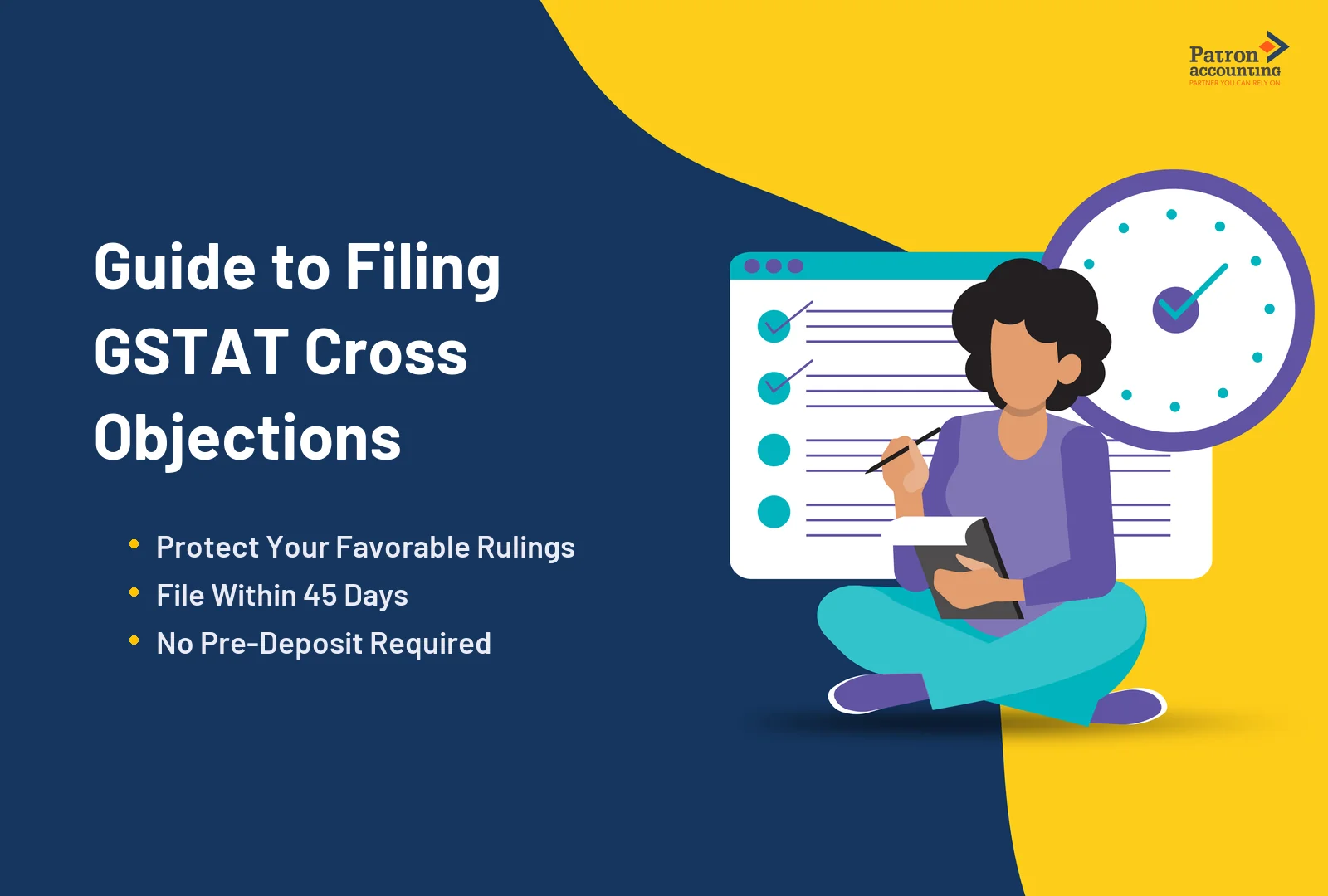
A GSTAT cross-objection is a memorandum filed under Section 112(5) of the CGST Act, 2017, by the respondent in a GSTAT appeal. It allows the respondent to challenge any part of the First Appellate Authority or Revisional Authority order that was decided against them, even if they did not file an independent appeal against that order. The cross-objection is treated by the Tribunal as if it were a separate appeal filed within the time specified in Section 112(1).
This provision exists because a first appellate order often has mixed outcomes — some issues decided in favour of the taxpayer and others in favour of the department. When one party appeals the unfavourable portions, the other party needs a mechanism to protect the portions decided in their favour, without having to file a separate full appeal (which would require pre-deposit). The cross-objection provides this mechanism with no pre-deposit requirement and a streamlined filing process. Businesses needing professional assistance can explore GSTAT cross-objection filing services for structured guidance.
Key Terms You Should Know
Cross-objection (Section 112(5)): A memorandum filed by the respondent in a GSTAT appeal, challenging any part of the appealed order, even if the respondent did not independently appeal. Treated as a separate appeal by the Tribunal.
Respondent: The party against whom a GSTAT appeal is filed. If the taxpayer appeals, the department is the respondent. If the department appeals under Section 112(3), the taxpayer is the respondent.
Form GST APL-06: The prescribed form for filing cross-objections before the GSTAT, filed electronically under Rule 110(2) of the CGST Rules 2017.
45-day time limit: The period within which cross-objections must be filed from the date of receipt of notice of the appeal, under Section 112(5).
Condonation under Section 112(6): The GSTAT may permit filing of cross-objections within 45 days after the expiry of the 45-day period (total 90 days), if sufficient cause is shown.
Memorandum: The document containing the respondent’s specific objections to parts of the order, drafted in numbered paragraphs with distinct grounds, as required by Rule 20 of the GSTAT Procedure Rules 2025.
Rule 35 (GSTAT Procedure Rules): Governs the filing format of cross-objections — must be registered, numbered, and comply with the same formatting requirements as appeals (A4 paper, double spacing, indexed, paged).
Who Should File a Cross Objection Before GSTAT?
The right to file cross-objections belongs to the ‘party against whom the appeal has been preferred’ under Section 112(5). In practice, this means:
- The GST department (respondent) when a taxpayer files an appeal under Section 112(1) challenging portions of the first appellate order that went against them — the department can cross-object on portions that went against the revenue
- A taxpayer (respondent) when the Commissioner directs a departmental appeal under Section 112(3) against portions of the first appellate order that went in the taxpayer’s favour — the taxpayer can cross-object on portions that were decided against them
- A co-respondent in multi-party disputes where the appeal affects their interests in the same order
- Any party that benefited from part of the first appellate order and now faces risk of that benefit being overturned by the appellant’s appeal
Critical strategic point: If the first appellate order was a mixed outcome (partly in your favour, partly against), and the other party appeals only the unfavourable portions, you MUST file cross-objections to protect your favourable portions. If you do not, the GSTAT may modify those portions without hearing your defence. The cross-objection ensures you have standing to argue your case.
Legal Framework: Cross Objection vs Independent Appeal
Understanding the statutory difference between a cross-objection and an independent appeal is essential for correct litigation strategy.
| Aspect | Cross Objection (Sec 112(5)) | Independent Appeal (Sec 112(1)) |
|---|---|---|
| Who files | Respondent (party against whom appeal is filed) | Aggrieved person (taxpayer or department) |
| Trigger | Receipt of notice of appeal by the other party | Communication of first appellate/revisional order |
| Time limit | 45 days from receipt of appeal notice | 3 months from order communication (or notified date) |
| Condonation | 45 days additional under Sec 112(6) | 3 months additional under Sec 112(6) |
| Total outer limit | 90 days from appeal notice | 6 months from order (or notified date) |
| Pre-deposit | NOT required | Mandatory under Section 112(8) |
| Filing form | Form GST APL-06 | Form GST APL-05 |
| Fee | Filing fee per Rule 110(5) | Filing fee per Rule 110(5) |
| Treatment by Tribunal | Treated as if it were an appeal filed within time | Heard as a regular appeal |
| Scope | Any part of the appealed order — even parts not challenged by the appellant | Only the parts of the order that aggrieve the appellant |
| Can be filed independently? | No — only after receiving appeal notice | Yes — independently filed |
The most significant advantage of a cross-objection is that no pre-deposit is required. This makes it a cost-effective strategic tool. A respondent who might not have filed an independent appeal (due to the 10% pre-deposit requirement) can still protect their interests through cross-objections at minimal cost. For the complete main appeal process, read our guide on how to file a GSTAT appeal.
How to File a GSTAT Cross Objection: Step-by-Step Process
Step 1: Receive and verify the appeal notice.
When the appellant files Form GST APL-05, the GSTAT Registrar sends copies of the appeal and all relied-upon documents to the respondent and the concerned Commissioner under Rule 34 of the GSTAT Procedure Rules 2025. Verify the date of receipt carefully — the 45-day clock starts from this date. Confirm which parts of the first appellate order are being challenged by the appellant.
Step 2: Analyse the order for cross-objection grounds.
Review the entire first appellate order — not just the parts challenged by the appellant. Identify any portion that was decided against you but that you had accepted (or not independently appealed). If the appellant’s appeal could indirectly affect these portions, you must file cross-objections to protect your position.
Step 3: Draft the memorandum of cross-objections.
The memorandum must set forth grounds of cross-objection concisely under distinct, numbered heads per Rule 20 of the GSTAT Procedure Rules. Type in double spacing on A4 paper. Include: the cause title (‘In the Goods and Services Tax Appellate Tribunal’), details of the impugned order, specific grounds challenging each portion, and the relief sought.
Step 4: Fill and file Form GST APL-06 electronically.
File the memorandum electronically on efiling.gstat.gov.in using Form GST APL-06 under Rule 110(2). Sign and verify per Rule 26 of the CGST Rules (same signing rules as appeals). Upload all supporting documents in PDF format (max 20 MB per file). For portal navigation assistance, explore
Step 5: Pay the filing fee.
The filing fee for cross-objections is the same as for appeals: Rs 1,000 per Rs 1 lakh of disputed amount, minimum Rs 5,000, maximum Rs 25,000. Pay via the Bharat Kosh gateway integrated with the GSTAT portal. No pre-deposit is required for cross-objections.
Step 6: Serve copies on the appellant.
Under Rule 35 of the GSTAT Procedure Rules, every form of cross-objection shall be registered and numbered. Copies must be endorsed to the appellant. The appellant then has the right to submit a rejoinder within one month or as directed by the Bench.
Step 7: Attend hearings and present arguments.
The GSTAT will hear the main appeal and the cross-objection together. The appellant presents first, followed by the respondent (including cross-objection arguments), with an opportunity for rejoinder. The Tribunal will pass a consolidated order addressing both the appeal and the cross-objection.
Documents Required for Filing Cross Objection
- Form GST APL-06 completed electronically on efiling.gstat.gov.in
- Memorandum of cross-objections with consecutively numbered grounds, typed in double spacing on A4 format
- Certified copy of the first appellate order being challenged
- Copy of the appellant’s appeal notice and Form GST APL-05 received from the Registrar
- Copy of the original adjudication order (order-in-original)
- Supporting evidence and documentary proof for each ground of cross-objection (PDF, max 20 MB each)
- Vakalatnama or authorisation letter if filing through an authorised representative
- English translation of non-English documents, certified by both parties
- Index of all documents, properly paged and tagged per GSTAT Procedure Rules 2025
- Filing fee payment proof (Bharat Kosh receipt)
Cross Objection Fees, Timelines, and Key Thresholds
The financial and procedural requirements for cross-objections differ significantly from independent appeals. This table provides a consolidated comparison:
| Parameter | Cross Objection | Independent Appeal (Sec 112(1)) |
|---|---|---|
| Filing fee | Rs 1,000/lakh, min Rs 5,000, max Rs 25,000 | Rs 1,000/lakh, min Rs 5,000, max Rs 25,000 |
| Pre-deposit | NOT required | 10% of disputed tax, max Rs 20 crore per enactment |
| Time limit | 45 days from receipt of appeal notice | 3 months from order communication |
| Condonation period | 45 additional days (total 90 days) | 3 additional months (total 6 months) |
| Filing form | Form GST APL-06 | Form GST APL-05 |
| Minimum threshold | No minimum (Section 112(2) does not apply to cross-objections) | Rs 50,000 under Section 112(2) |
| Signing requirement | Per Rule 26 of CGST Rules | Per Rule 26 of CGST Rules |
| Authentication | DSC or Aadhaar e-Sign | DSC or Aadhaar e-Sign |
Note: The absence of pre-deposit requirement makes cross-objections significantly cheaper than independent appeals. A taxpayer who would need to deposit 10% of disputed tax (potentially lakhs or crores) for an independent appeal can achieve similar protection through a cross-objection at a filing fee of just Rs 5,000 to Rs 25,000.
Common Mistakes When Filing GSTAT Cross Objections
Mistake 1: Not filing cross-objections because you ‘won’ at the first appeal.
The most dangerous mistake. If the first appellate order was partly in your favour and the other party appeals, failing to file cross-objections leaves the favourable portions unprotected. The GSTAT can modify any part of the appealed order, including parts not specifically challenged by the appellant.
Mistake 2: Missing the 45-day deadline.
The 45-day window starts from the date of receipt of the appeal notice, not from the date the appeal was filed. Track this date meticulously. Under Section 112(6), the GSTAT may condone a delay of up to 45 additional days, but condonation is discretionary and requires demonstrating sufficient cause.
Mistake 3: Treating cross-objection as a reply to the appeal.
A cross-objection under Section 112(5) and a reply to the appeal under Rule 36 of the GSTAT Procedure Rules are two different things. A reply responds to the appellant’s grounds; a cross-objection independently challenges portions of the order that were decided against you. Both should be filed — they serve different purposes.
Mistake 4: Not numbering grounds of cross-objection consecutively.
Rule 20 of the GSTAT Procedure Rules requires every ground to be set forth under distinct, numbered heads in double spacing on A4 paper. Non-compliance may result in the Registrar returning the filing for correction, eating into your already limited 45-day window.
Mistake 5: Assuming pre-deposit is required for cross-objections.
Section 112(8) pre-deposit applies only to appeals filed under Section 112(1). Cross-objections under Section 112(5) have no pre-deposit requirement. Paying an unnecessary pre-deposit ties up funds without any legal benefit.
Consequences of Not Filing Cross Objections on Time
Under Section 112(5) of the CGST Act, the right to file cross-objections is available only within 45 days of receiving the appeal notice. If you miss this deadline and do not obtain condonation under Section 112(6), the consequences can be severe.
First, the GSTAT will hear the appeal without any cross-objection from you. While you still participate as a respondent and can reply to the appellant’s grounds, you cannot independently challenge any part of the order that was decided against you. The Tribunal may modify, annul, or remand any part of the order — including portions that were in your favour — without your affirmative defence.
Second, once the 45+45 day outer limit expires, you permanently lose the right to challenge the unfavourable portions through cross-objection. Your only remaining option would be an independent appeal under Section 112(1), which requires a 10% pre-deposit and must be filed within the standard 3-month limitation from the order communication date. If that limitation has also expired, you have no statutory remedy.
Third, in departmental appeals (where the Commissioner directs an officer to apply to the GSTAT under Section 112(3)), taxpayers who fail to file cross-objections may find that the GSTAT increases the tax demand or reverses relief granted by the first appellate authority, without the taxpayer having had an opportunity to present their counter-arguments on those specific issues.
How Cross Objections Connect with Other GSTAT Provisions
Cross-objections under Section 112(5) are deeply intertwined with the broader GSTAT appellate framework. They arise only after a main appeal is filed under Section 112(1) (by the taxpayer) or Section 112(3) (by the department). The respondent receives copies of the appeal under Rule 34 of the GSTAT Procedure Rules, which triggers the 45-day cross-objection window. The cross-objection itself is filed using Form GST APL-06 under Rule 110(2), signed per Rule 26, and must comply with the formatting requirements of Rule 20 of the GSTAT Procedure Rules 2025.
Critically, the cross-objection is treated ‘as if it were an appeal presented within the time specified in sub-section (1)’. This means the Tribunal accords it the same status, weight, and procedural treatment as a main appeal. The hearing follows the sequence: appellant argues first, respondent (including cross-objection) next, with rejoinder as permitted. The GSTAT’s order under Section 113 addresses both the appeal and cross-objection in a single consolidated decision. For the main appeal process and forms, refer to our APL-05 form guide and GSTAT appeal filing services.
The reply mechanism under Rule 36 operates alongside but separately from cross-objections. The respondent must file a reply to the appellant’s petition within one month of receipt. This reply addresses the appellant’s specific grounds. The cross-objection, by contrast, raises the respondent’s own grounds against parts of the order not challenged by the appellant. Both can and should be filed simultaneously when the order has mixed outcomes.
Cross Objection vs Reply vs Independent Appeal: Complete Comparison
| Feature | Cross Objection (Sec 112(5)) | Reply to Appeal (Rule 36) | Independent Appeal (Sec 112(1)) |
|---|---|---|---|
| Purpose | Challenge parts of order decided against respondent | Respond to appellant’s specific grounds | Challenge parts of order decided against appellant |
| Filing form | Form GST APL-06 | Reply on GSTAT portal | Form GST APL-05 |
| Time limit | 45 days from appeal notice | 1 month from receipt of appeal | 3 months from order |
| Pre-deposit | Not required | Not applicable | 10% of disputed tax |
| Treated as appeal | Yes (Sec 112(5)) | No — it is a response | Yes |
| Can raise new grounds | Yes — on any part of order | No — limited to appellant’s grounds | Yes — on aggrieved portions |
| Condonation | 45 days additional | Bench may extend | 3 months additional |
| Fee | Per Rule 110(5) | No separate fee | Per Rule 110(5) |
| Filed by | Respondent only | Respondent only | Any aggrieved person |
Key Takeaways
A GSTAT cross-objection under Section 112(5) is the respondent’s right to challenge any part of the first appellate order that was decided against them, triggered by receipt of the appeal notice, and filed within 45 days using Form GST APL-06 on efiling.gstat.gov.in.
Cross-objections do not require any pre-deposit under the CGST Act, making them significantly cheaper than independent appeals — the only cost is the filing fee of Rs 5,000 to Rs 25,000 under Rule 110(5).
The cross-objection is treated by the GSTAT as if it were an appeal filed within time under Section 112(1), meaning it carries the same legal weight and procedural status as the main appeal.
The total outer limit for filing cross-objections is 90 days (45 days standard + 45 days condonation under Section 112(6)), after which the right is permanently lost and the only alternative is an independent appeal with pre-deposit.
Both cross-objections and replies to the appeal should be filed when the first appellate order has mixed outcomes — the reply responds to the appellant’s grounds, while the cross-objection independently challenges portions decided against the respondent.
Need Help Filing Your Cross Objection?
Filing a GSTAT cross-objection requires careful analysis of the first appellate order, identification of vulnerable portions, and precise drafting of numbered grounds within the tight 45-day deadline. Missing this window means losing a cost-effective litigation tool that requires no pre-deposit.
Explore our GSTAT cross-objection filing services (know more) for end-to-end support — from order analysis to Form APL-06 drafting and Tribunal representation.