In this guide
You won your GSTAT appeal. The Tribunal annulled the demand entirely. But you spent Rs 3 lakh on professional fees, travelled to the bench twice for hearings, and the department's appeal had no merit from the start - it was filed only because the officer did not want to accept the first appellate order. Can you recover your litigation costs from the department? The answer is yes - and Rule 120 of the GSTAT Procedure Rules 2025 is the provision that makes it possible.
This guide explains the GSTAT's power to award costs under Rule 120, the distinction between compensatory and exemplary costs, the factors the Tribunal considers, the procedure for applying, the quantum (there is no cap), and the scenarios where cost awards are most likely - including against the department for frivolous appeals.
What Are GSTAT Cost Awards and Why Do They Matter?
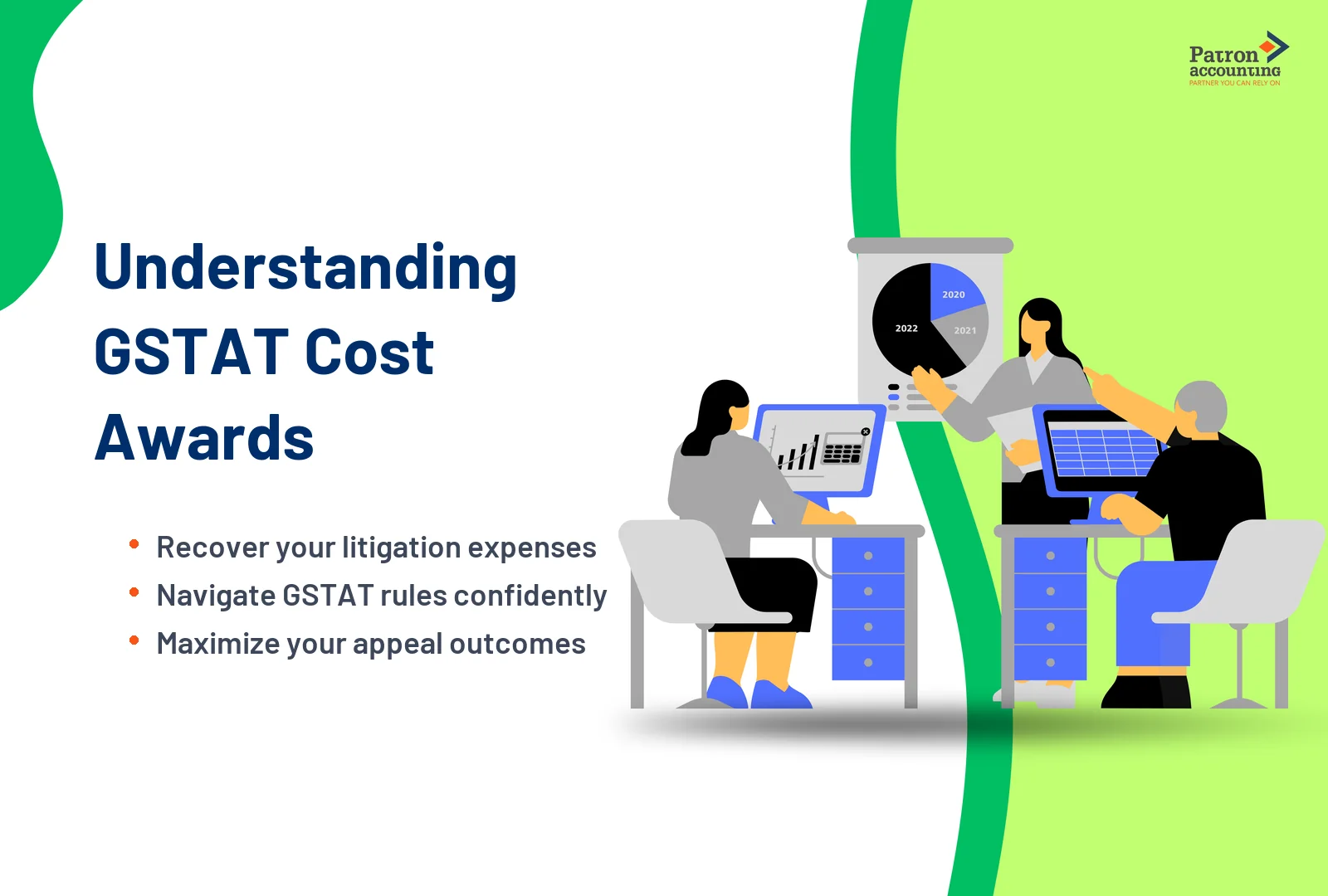
Rule 120 of the GSTAT Procedure Rules 2025 empowers the Appellate Tribunal to award costs in three distinct ways: (a) awarding costs to the respondent or the defaulting party for meeting legal expenses, whenever the Tribunal deems fit; (b) requiring either party to cover the litigation costs of the other side in suitable cases; and (c) imposing exemplary costs on the defaulting party in case of abuse of the court process.
This is a significant power. Unlike the first appellate level (Commissioner Appeals) where no cost-awarding mechanism exists, GSTAT can compensate the winning party for the expense of defending a meritless appeal - or penalise a party that abuses the Tribunal's process through delays, frivolous filings, or deliberate non-compliance.
For businesses that have invested in GSTAT appeal filing and representation, the cost recovery mechanism under Rule 120 is a tool to offset the financial burden of litigation - particularly in cases where the other side's appeal had no reasonable prospect of success.
Key Terms You Should Know
- Rule 120, GSTAT Procedure Rules 2025: The specific rule empowering GSTAT to award compensatory costs and exemplary costs. Located in Chapter XV (Miscellaneous) of the Rules.
- Compensatory Costs: Costs awarded to reimburse the winning party's actual litigation expenses - professional fees, travel, document preparation, court fees. Intended to make the winner financially whole.
- Exemplary Costs: Punitive costs imposed for abuse of process, frivolous filings, deliberate delays, or vexatious litigation. Not linked to actual expenses - intended to deter misconduct.
- Section 113(1), CGST Act: GSTAT may 'pass such orders thereon as it thinks fit' - broad power that includes the discretion to award costs as part of the final order.
- Section 117(4), CGST Act: High Court may 'award such cost as it deems fit' when deciding Section 117 appeals - parallel provision at the HC level.
- Rule 10, Inherent Powers: GSTAT's inherent jurisdiction to make orders necessary for justice or to prevent abuse of process - provides additional basis for cost awards beyond Rule 120.
- Abuse of Process: Using the Tribunal's procedures for purposes other than legitimate dispute resolution - filing frivolous appeals to delay recovery, seeking repeated adjournments without cause, or raising grounds not in the appeal form.
Who Can Be Ordered to Pay Costs at GSTAT?
Rule 120 applies to 'either party' - this means costs can be imposed on:
- The appellant (taxpayer) - if the appeal is found to be frivolous, without merit, or filed solely to delay recovery of confirmed demand
- The respondent (GST department) - if the department's contest of the appeal is found to be unreasonable, or if the department filed a frivolous departmental appeal under Section 112(3)
- Cross-objection filers - if the cross-objection under Section 112(5) is found to lack substance
- Parties seeking excessive adjournments - Rule 47 limits adjournments to 3 per party; costs may be imposed for each adjournment request
- Authorised representatives - in extreme cases, costs may be imposed on the AR personally if the Tribunal finds the AR contributed to abuse of process
The department is particularly vulnerable to cost orders when: (a) the monetary threshold for departmental appeals (Rs 50 lakh under Circular 207/1/2024-GST) is not met but the appeal was filed anyway, (b) the department's appeal raises purely factual grounds that were already settled by the First Appellate Authority, or (c) the department fails to appear for hearings without justification. For understanding the pre-deposit framework, see GSTAT pre-deposit calculation.
Legal Framework: Rule 120 and the Statutory Basis for Costs
The GSTAT's power to award costs rests on three pillars:
| Provision | Power | Scope |
|---|---|---|
| Rule 120, GSTAT Procedure Rules | Award compensatory costs and exemplary costs | Covers litigation expenses reimbursement and punitive costs for abuse of process |
| Section 113(1), CGST Act | Pass 'such orders as it thinks fit' | Broad discretionary power - costs are part of the final order-making power |
| Rule 10, Inherent Powers | Orders necessary for justice or to prevent abuse | Catch-all - can award costs even in situations not specifically covered by Rule 120 |
Note: Unlike the High Court (Section 117(4) expressly mentions 'award such cost as it deems fit'), the CGST Act does not explicitly mention costs at the GSTAT level. Rule 120 fills this gap through the procedural rules. Additionally, Section 111(2) of the CGST Act grants GSTAT the powers of a civil court - and under the CPC, civil courts have inherent power to award costs. For a full overview of the Rules, see our GSTAT Procedure Rules summary.
How to Apply for Costs at GSTAT: Step-by-Step Process
- Include a Cost Claim in Your Appeal Grounds. When drafting the grounds of appeal in Form GST APL-05, include a separate numbered paragraph seeking costs. For example: 'The appellant/respondent prays that the Tribunal may be pleased to award costs of this appeal in the appellant's/respondent's favour, given that the impugned appeal is frivolous and without merit.'
- Alternatively, File a Separate Interlocutory Application. If the need for costs becomes apparent during the hearing (e.g., the other party seeks repeated adjournments or raises entirely new grounds), file GSTAT FORM-01 seeking costs as an interlocutory application. Fee: Rs 5,000.
- Prepare a Cost Computation Statement. Document your actual litigation expenses: professional fees paid to the CA/advocate, travel expenses to the bench, document preparation costs, court fee (Bharatkosh), and time value. For exemplary costs, no computation is needed - the Tribunal decides the quantum.
- Present the Cost Argument at Hearing. During the final hearing, address the Bench on costs after the substantive arguments. Cite Rule 120 specifically. Demonstrate: (a) the other party's appeal was frivolous or an abuse of process, (b) your actual expenses, (c) why costs are justified in the interests of justice.
- Receive the Cost Order. The cost award is typically part of the final order under Section 113(1). The Tribunal will specify the amount and the party liable to pay. The order is uploaded on the GSTAT portal. If the other party fails to pay, the order can be enforced as a decree under Section 111(3) of the CGST Act read with Order 21 of the CPC.
Documents Needed for a GSTAT Cost Application
- Appeal form (Form APL-05) with cost claim included in the relief sought section
- GSTAT FORM-01 (if filing costs as a separate interlocutory application)
- Cost computation statement - itemised list of actual litigation expenses with supporting bills/receipts
- Fee receipts - Bharatkosh challans, professional fee invoices, travel receipts
- Chronology of proceedings showing delays, adjournments, or abuse by the other party
- Copy of the impugned order to demonstrate that the appeal was frivolous or without basis
- Relevant precedents - CESTAT or ITAT orders awarding costs in similar circumstances
- Affidavit supporting the cost claim (if filed as IA)
How Much Cost Can GSTAT Award? Factors and Quantum
Rule 120 does not prescribe any cap or specific quantum for cost awards. The amount is entirely at the Tribunal's discretion. However, based on precedents from CESTAT, ITAT, and High Courts, the following factors influence the quantum:
| Factor | Impact on Quantum |
|---|---|
| Degree of frivolousness of the appeal | Higher frivolousness = higher costs. An appeal with zero arguable merit attracts more costs than a weak-but-arguable one. |
| Actual litigation expenses incurred by the winning party | Documented expenses (professional fees, travel) form the baseline for compensatory costs. Undocumented claims are reduced. |
| Number of hearings and adjournments caused | Each unnecessary adjournment adds to the cost computation. 3+ adjournments by one party signals abuse. |
| Abuse of process - deliberate delay tactics | Exemplary costs are imposed over and above compensatory costs. Can be multiples of actual expenses. |
| Disputed amount in the appeal | Higher disputed amounts justify higher costs - a frivolous appeal on a Rs 10 crore demand warrants more costs than one on Rs 5 lakh. |
| Whether the party is a repeat offender | If the same party has a pattern of frivolous appeals or delaying tactics across multiple cases, exemplary costs are enhanced. |
| Precedent - CESTAT/ITAT cost quantum | CESTAT typically awarded Rs 5,000 to Rs 25,000. ITAT has awarded Rs 10,000 to Rs 1 lakh. GSTAT, being a new tribunal, has no precedent yet - the first cost orders will set the benchmark. |
Note: The absence of a statutory cap under Rule 120 is significant. The CGST Act does not limit cost awards the way it limits pre-deposit (Rs 20 crore cap) or filing fees (Rs 25,000 cap). This means GSTAT has theoretically unlimited discretion on quantum - though in practice, Tribunals tend to be conservative initially and increase quantum as precedent develops.
Common Mistakes to Avoid When Seeking or Facing Cost Orders
Mistake 1: Not claiming costs in the appeal grounds. Many practitioners forget to include a cost claim in the relief sought section of Form APL-05. If costs are not claimed, the Tribunal is unlikely to award them suo motu. Always include a cost prayer as a standard paragraph in every appeal where the other side's position is weak. For filing support, use our GSTAT e-filing assistance services.
Mistake 2: Confusing costs with fees. The filing fee (Rs 1,000 per Rs 1 lakh) and the IA fee (Rs 5,000) are statutory fees paid to the Tribunal. Costs under Rule 120 are amounts the Tribunal orders one party to pay to the other party. They are entirely separate. You cannot recover your filing fee as 'costs' - but you can include it in your cost computation statement as part of your litigation expenses.
Mistake 3: Filing a frivolous appeal and ignoring the cost risk. Taxpayers who file appeals solely to delay recovery (without any arguable merit) face exemplary cost orders. The 20% pre-deposit already locks up cash - a cost order on top makes the delay strategy counterproductive. Similarly, the department filing appeals below the Rs 50 lakh threshold (Circular 207/1/2024-GST) risks cost orders for pursuing litigation that the CBIC itself considers unworthy.
Mistake 4: Not documenting litigation expenses. Compensatory costs require proof of actual expenses. If you cannot produce professional fee invoices, travel receipts, or Bharatkosh challans, the Tribunal will reduce the compensatory component. Maintain a contemporaneous record of all litigation expenses from the date of filing.
Mistake 5: Assuming costs are only for winning parties. Rule 120 allows costs against the 'defaulting party' - which can include a party that defaults on a Tribunal direction, fails to appear, or does not comply with a document production order. Even a party that eventually wins the appeal can face costs for procedural defaults during the hearing.
What Happens If the Tribunal Awards Costs Against You?
A cost order by the GSTAT is part of the final order under Section 113(1) of the CGST Act. It has the force of a decree under Section 111(3) - meaning it can be enforced as if it were a civil court decree.
Under Section 111(3), GSTAT orders may be enforced following procedures under Order 21 of the CPC (execution of decrees). This means if the cost-liable party does not pay, the winning party can initiate execution proceedings - including attachment of property, garnishee orders on bank accounts, and other civil execution remedies.
If the department is ordered to pay costs, the jurisdictional officer must arrange payment from government funds. If a taxpayer is ordered to pay costs, the amount is payable to the other party directly - it does not go through the Electronic Cash Ledger or the GST portal. Non-payment can lead to contempt proceedings.
How GSTAT Costs Connect with Other Provisions
The cost-awarding power at GSTAT fills a gap that existed at the first appellate level. The Commissioner (Appeals) under Section 107 has no express power to award costs. The GSTAT under Rule 120 does. And the High Court under Section 117(4) also does. This means cost recovery becomes available only from the second appeal stage onward. For a comparison of GSTAT and the erstwhile CESTAT cost provisions, see our blog on GSTAT vs CESTAT.
Under the erstwhile indirect tax regime, CESTAT routinely imposed costs of Rs 5,000 to Rs 25,000 for frivolous appeals and unnecessary adjournments. The ITAT (Income Tax Appellate Tribunal) has been more aggressive - awarding costs of Rs 25,000 to Rs 1 lakh in cases of departmental delay or filing appeals contrary to CBDT circular thresholds. GSTAT's Rule 120, with its explicit mention of 'exemplary costs,' suggests the intention to be at least as robust as CESTAT and ITAT in deterring frivolous litigation.
Critically, Rule 120 works alongside Rule 47 (adjournment limits) and Rule 10 (inherent powers). When a party exceeds the 3-adjournment limit, the Tribunal can simultaneously impose costs for the delay AND proceed ex parte. This combination creates a strong deterrent against delay tactics - both the financial penalty (costs) and the substantive risk (ex parte hearing) apply together.
Compensatory Costs vs Exemplary Costs at GSTAT: Key Differences
| Feature | Compensatory Costs | Exemplary Costs |
|---|---|---|
| Purpose | Reimburse actual litigation expenses of winning party | Punish abuse of process and deter frivolous litigation |
| Basis | Documented actual expenses - fees, travel, preparation | Tribunal's assessment of degree of abuse or misconduct |
| Quantum Link | Linked to actual expenses incurred | Not linked to expenses - discretionary, can be higher |
| Cap | No statutory cap; limited by proof of expenses | No statutory cap; limited by Tribunal discretion |
| When Awarded | When winning party incurred expenses defending a meritless appeal | When a party abuses process - frivolous filings, delay tactics, non-compliance |
| Against Whom | The losing party who caused the expenses | The 'defaulting party' who abused the process |
| Enforcement | As part of GSTAT order - enforceable as decree | As part of GSTAT order - enforceable as decree |
Key Takeaways
Rule 120 of the GSTAT Procedure Rules 2025 empowers the Tribunal to award compensatory costs (to reimburse the winning party's litigation expenses) and exemplary costs (to penalise abuse of process) against any party - taxpayer or department - with no statutory cap on quantum.
The cost-awarding power fills a gap in the GST appellate hierarchy, as the Commissioner (Appeals) under Section 107 has no such power, while the High Court under Section 117(4) expressly mentions costs - making GSTAT the first level where cost recovery is available.
To claim costs, practitioners must include a cost prayer in the appeal grounds (Form APL-05) or file a separate interlocutory application (GSTAT FORM-01), supported by a documented cost computation statement with actual expense receipts.
The department faces cost risk when filing appeals below the Rs 50 lakh threshold (Circular 207/1/2024-GST), raising purely factual grounds at the Tribunal level, or failing to appear for hearings - as Rule 120 applies to 'either party' without distinction.
GSTAT cost orders have the force of a civil court decree under Section 111(3) of the CGST Act and are enforceable through CPC Order 21 execution proceedings - making non-payment a serious legal consequence.
Need Help with GSTAT Cost Applications?
Claiming costs at GSTAT requires precise documentation of litigation expenses, strategic inclusion of cost prayers in the appeal grounds, and persuasive presentation of the frivolousness or abuse of process by the other side. Equally, defending against a cost application requires demonstrating that the appeal had arguable merit.
Explore our GSTAT litigation services for end-to-end support from appeal filing through cost recovery.