In this guide
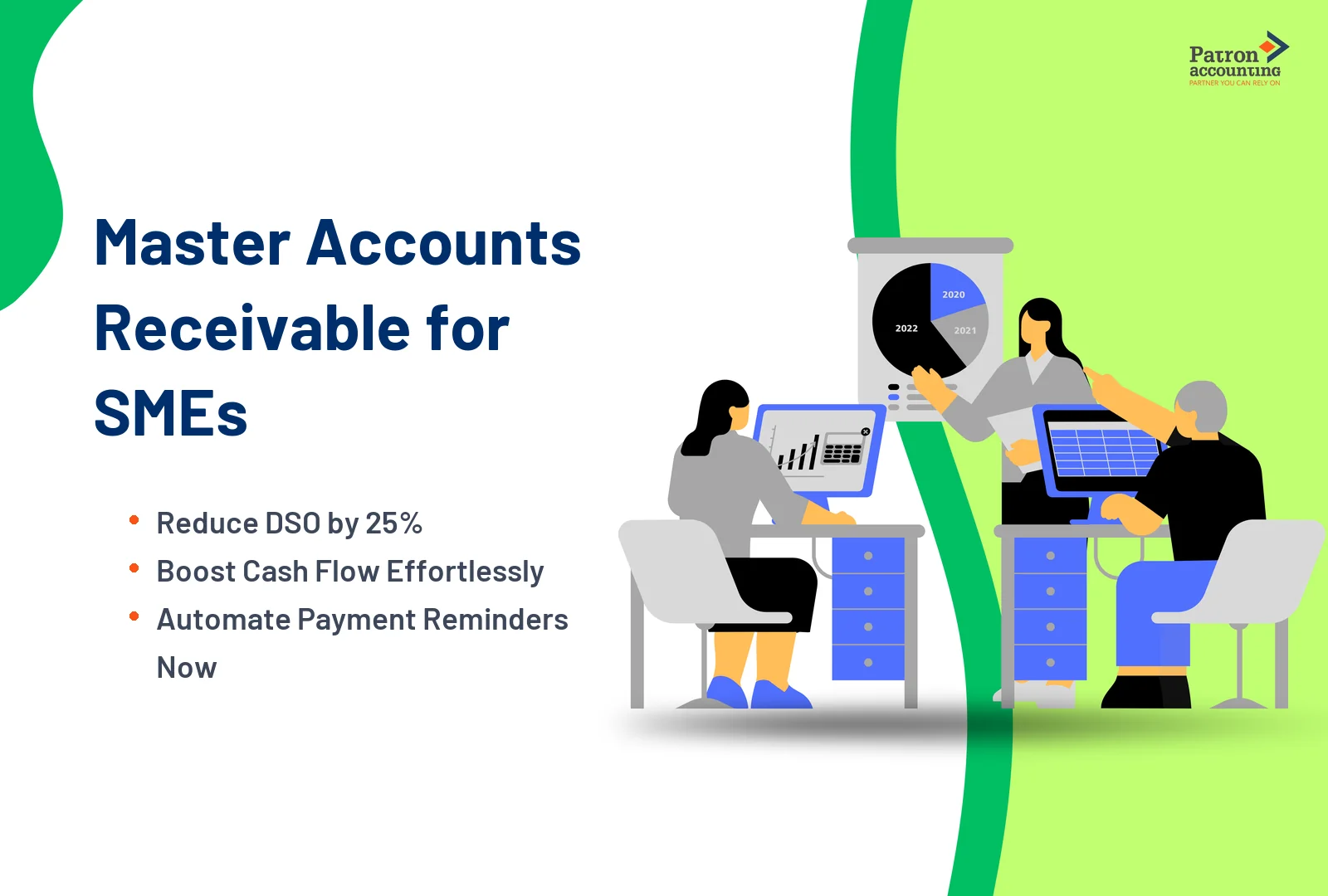
Cash flow does not kill profitable businesses. Late payments do. An Indian SME with Rs 50 lakh in monthly sales and a 75-day DSO has Rs 1.25 crore permanently locked in receivables - money that could fund operations, hire staff, or invest in growth. Yet most SME owners treat receivables as 'the customer will pay eventually' rather than as a process that needs active management.
This guide covers accounts receivable management for Indian SMEs - from understanding DSO and aging reports, through 8 practical strategies to cut payment delays, to setting up automated collection workflows. For the invoicing setup that feeds receivables, see our GST invoicing guide. For the broader Zoho Books overview, see our complete Zoho Books guide.
Understanding DSO: The One Number That Tells You Everything
Days Sales Outstanding (DSO) is the average number of days it takes your business to collect payment after a sale. It is the single most important metric for receivable management.
Formula: DSO = (Accounts Receivable ÷ Total Credit Sales) × Number of Days in the Period
Example: Your Accounts Receivable balance on 31 March is Rs 18,00,000. Your total credit sales for March were Rs 25,00,000. DSO = (18,00,000 ÷ 25,00,000) × 30 = 21.6 days. If your payment terms are Net 30, this DSO is excellent - customers are paying within terms.
Benchmark: If your payment terms are Net 30 but your DSO is 65 days, your customers are paying an average of 35 days late - and you are essentially providing them interest-free financing for over two months.
Indian SME DSO benchmarks by industry:
| Industry | Typical DSO Range (India) |
|---|---|
| IT Services / Consulting | 45-75 days |
| Manufacturing (B2B) | 60-120 days |
| Trading / Wholesale | 45-90 days |
| Retail (B2C - mostly cash/UPI) | 0-7 days |
| Construction / Infrastructure | 90-180 days |
| E-Commerce (marketplace settlement) | 7-15 days (settlement cycle) |
| Professional Services (CA/Legal) | 30-60 days |
Reading Your Aging Report: Where the Money Is Stuck
An aging report (also called Aged Receivables or Receivable Aging Summary) breaks down your total receivables by how long each invoice has been outstanding:
| Aging Bucket | What It Means | Action Required |
|---|---|---|
| 0-30 days (Current) | Within payment terms - healthy | No action. Send before-due reminder at day 25 |
| 31-60 days | Slightly overdue - customer may have missed or delayed | Automated overdue reminder + phone call from accounts team |
| 61-90 days | Seriously overdue - deliberate delay or cash flow problem | Escalation email to customer's management. Pause further credit |
| 90-180 days | High risk of non-payment - potential bad debt | Final demand notice. Consider legal notice under MSMED Act |
| 180+ days | Likely write-off candidate unless disputed amount | Provision for doubtful debt. Write off if unrecoverable. ITC reversal if GST was collected |
Target: 80%+ of your receivables should be in the 0-30 day bucket. If more than 20% is in the 60+ day bucket, your collection process needs immediate attention.
8 Strategies to Cut Payment Delays for Indian SMEs
1. Invoice Immediately - Not Next Week
The payment clock starts when the customer receives the invoice. If you deliver on the 1st but invoice on the 10th, you have already lost 10 days. Cloud accounting software (Zoho Books) lets you create and send invoices from your phone the moment the delivery/service is complete.
2. Add a 'Pay Now' Button to Every Invoice
Integrate Razorpay, Stripe, or PayPal with your invoicing software. Customers can pay via UPI, credit card, or net banking directly from the invoice email. This eliminates the 'I will pay when I get to it' delay - the payment option is right there.
3. Automate Payment Reminders at 3 Levels
Configure automated reminders in your accounting software: (a) 3 days before due date - gentle reminder with payment link, (b) 3 days after due date - firm reminder noting the invoice is overdue, (c) 15 days after due date - final notice escalation. Automated reminders reduce DSO by 15-25% without any manual follow-up effort. For setup in Zoho Books, see our automation guide.
4. Set Clear Credit Policies Before the First Sale
Before extending credit to a new customer, define: maximum credit limit (based on their financial profile), payment terms (Net 15/30/45), and consequences of late payment (interest at 1.5% per month, credit freeze). Document these in your sales agreement. Do not start with open credit - start with advance payment and graduate to credit terms based on payment history.
5. Offer Early Payment Discounts
Offer 1-2% discount for payment within 10 days (on Net 30 terms). The maths: on a Rs 5,00,000 invoice, a 1% discount (Rs 5,000) costs far less than the working capital cost of waiting 60 days for payment. For large B2B clients, this can accelerate payment by 20-30 days.
6. Use TReDS for Large Corporate Receivables
TReDS (Trade Receivables Discounting System) is an RBI-regulated electronic platform where MSME invoices accepted by large buyers can be discounted (sold) to financiers for immediate cash. Platforms: RXIL (Receivables Exchange of India), M1xchange, and Invoicemart. If your customers are large corporates or PSUs with 60-120 day payment cycles, TReDS can convert your receivable into cash within 2-3 days at competitive discount rates.
7. Review the Aging Report Weekly
Do not wait until month-end. Review the aging report every Monday - identify new entries in the 30+ day bucket and take action immediately. In Zoho Books: Reports → Receivable Aging Summary. For bank reconciliation that ties into receivable tracking, see our bank reconciliation guide.
8. Enforce Consequences for Chronic Late Payers
For customers who consistently pay 30+ days late: (a) reduce their credit limit, (b) move to advance payment or cash-on-delivery, (c) charge late payment interest (mention in payment terms from the beginning), (d) for MSME suppliers, leverage the MSMED Act 2006 which mandates payment within 45 days from large buyers and allows interest at 3× the bank rate for delays.
India-Specific AR Challenges and How to Handle Them
'Cheque is in the mail' culture: Many Indian businesses still use post-dated cheques - adding 3-10 days of clearing time on top of the already delayed payment. Migration to UPI/NEFT/RTGS eliminates clearing delays entirely. Include your UPI ID and bank details on every invoice. Incentivise digital payments.
Festival season delays: Payments slow down during Diwali (October-November) and March (year-end closing). Plan for this - send reminders earlier, collect before the festival season starts, and maintain a cash reserve for these periods.
GST-linked payment disputes: Customers may withhold payment until they verify that your invoice appears in their GSTR-2B (confirming their ITC). Solution: file GSTR-1 on time (by the 11th) so your invoices appear in their GSTR-2B by the 14th - removing the excuse for delay.
Government/PSU receivables: Public sector buyers often have 90-180 day payment cycles despite MSMED Act provisions. Use TReDS for immediate discounting. Maintain separate aging tracking for government receivables - do not mix them with private sector DSO calculations.
Common AR Management Mistakes Indian SMEs Make
Mistake 1: Treating all customers the same. A customer with a clean 2-year payment history deserves different terms than a new customer. Segment customers into tiers (A/B/C) based on payment behaviour and adjust credit limits, terms, and follow-up intensity accordingly.
Mistake 2: Not charging late payment interest. Even if you never actually collect the interest, having it in your payment terms signals seriousness. Under the MSMED Act, interest at 3× the bank rate (currently approximately 24% per annum) is legally enforceable for MSME suppliers.
Mistake 3: Sales team promising payment terms that finance cannot support. If your standard terms are Net 30 but the sales team promises Net 90 to close a deal, your DSO explodes. Align sales and finance - any non-standard terms should require finance approval before commitment.
Mistake 4: Not provisioning for bad debts. Receivables older than 180 days that are not actively disputed should be provisioned as doubtful debts in your books. This ensures your P&L and Balance Sheet reflect reality - not hope. If GST was collected on a sale that becomes a bad debt, you may need to reverse the ITC implications. Our Zoho Books accounting services include receivable management and bad debt provisioning.
Mistake 5: No dedicated AR follow-up process. Collection is not the accountant's side job - it is a dedicated function. Even in a small business, assign one person (or automated reminders) to follow up on overdue invoices weekly. Businesses that assign dedicated collection responsibility reduce DSO by 20-30%.
Key Takeaways
DSO (Days Sales Outstanding) is the single most important metric for receivable management - it tells you how many days, on average, your money is locked in unpaid invoices. Most Indian SMEs have a DSO of 60-90 days, significantly higher than the 30-45 day ideal.
The aging report is your weekly action tool - 80%+ of receivables should be in the 0-30 day bucket. Any amount in the 60+ day bucket requires immediate escalation (phone call, management email, credit freeze). The 180+ day bucket should trigger bad debt provisioning.
The three highest-impact strategies for Indian SMEs are: immediate invoicing with online payment links (removes 5-10 days), automated 3-level payment reminders (reduces DSO by 15-25%), and clear credit policies enforced from the first sale (prevents chronic late payment from becoming normalised).
India-specific tools like TReDS (Trade Receivables Discounting System) allow MSMEs to convert invoices from large buyers into immediate cash at competitive discount rates - particularly valuable when dealing with PSU/corporate customers with 90+ day payment cycles.
Late payments are a process problem, not a customer problem. Businesses that invoice immediately, add payment links, automate reminders, review aging weekly, and enforce consequences consistently will always have lower DSO than those who rely on ad-hoc manual follow-up.
Need Help Managing Receivables?
Accounts receivable management is not just an accounting function - it is a cash flow function that directly determines whether your business can fund operations, pay employees, and invest in growth. Every day of reduced DSO puts real money back in your bank account.
Explore our Zoho Books accounting services - we set up automated invoicing with payment links, configure 3-level payment reminders, generate weekly aging reports, and manage your monthly bookkeeping and GST compliance. Your receivables get the attention they deserve.