


Talk to an Expert
Talk to an Expert ✆ +91 945 945 6700
Trusted by 10,000+ Businesses

Chart of Accounts Setup Services

Reviewed by CA and CS Team, Patron Accounting LLP ICAI & ICSI Registered| 15+ Years Experience| Last Updated: July 2026 Verify Credentials →

One head, one meaning: Each account name states what belongs in it, and only named people can create a new ledger.

Tax figures traceable to ledgers: We keep output and input tax by GSTIN, reverse charge apart and deduction at source split by section.

Room to grow without renumbering: We lay out code blocks with deliberate gaps, so a new product line or branch slots in where it belongs.

Branch reporting without spreadsheets: We carry location, department and project on the transaction as dimensions, instead of repeating a ledger for every branch.

15+ YearsIndustry Experience
CA & CSCertified Experts
4.9
Based on real Google reviews

Get Free Consultation

Talk to a CA/CS expert today

🇮🇳 +91

Our team will get back to you shortly. No spam.

Real Stories from Real People

Verified Google reviews from founders and businesses Patron works with across India.

Join 3,000+ Founders and Businesses on Patron

Rated 4.9 on Google - trusted for startup accounting since 2019.

Talk to an Expert
10,000+Businesses ServedGST compliance and litigation support across India.
15+Years ExperienceDeep expertise in IP registration, GST & business compliance.
50,000+Documents FiledReturns, appeals, and filings handled accurately.
4.9★Client RatingTrusted by entrepreneurs, startups, and growing businesses.
ISO CertifiedProfessional standards and documented processes.
SSL SecureYour financial and business data is fully protected.

What Chart of Accounts Setup Covers — Scope, Deliverables and Who It Suits

📌 TL;DR - Chart of Accounts Setup Services at a Glance

Chart of accounts setup decides, before the first entry, how every transaction will be grouped and reported. Patron builds the code structure so a single posting feeds both the GST return and the Schedule III board pack. Opening balances are migrated and reconciled before go-live. Works well for new entities, ERP migrations and books that have outgrown their codes.

Schedule III fixes the heads under which a company must present its accounts, and no amount of year-end regrouping makes a badly numbered ledger fall into them cleanly. So the work starts with the reports you are obliged to produce, then reasons backwards to codes. Patron drafts the account tree, agrees naming and numbering conventions with you, loads it into the software and runs a test posting before anyone books live entries. How account codes are structured explains the numbering logic.

Get the structure wrong and cost surfaces later, in regrouped comparatives, disallowed claims and GST heads that cannot be traced to a ledger. Chart of accounts design grows with the entities, locations and registrations you report on. Loading the final structure into your software is included. Ongoing bookkeeping is not, and any restatement under the accounting standards issued by ICAI is available as an independent engagement.
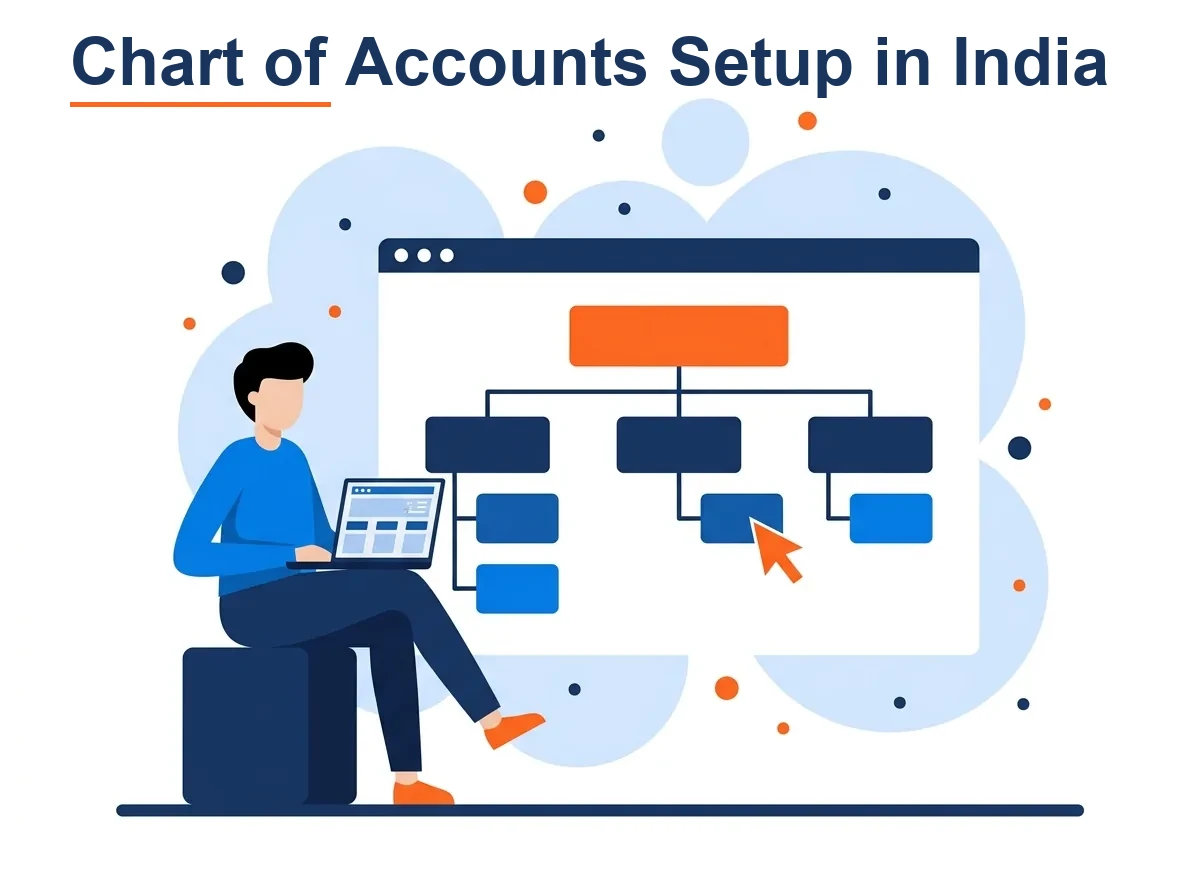

What Is Chart of Accounts Setup?

Chart of accounts setup is not ongoing bookkeeping, though the two are often confused. It is the one-time design that decides, before a single entry is booked, how every future transaction will be grouped, named and numbered. The books that follow can only report as cleanly as this structure allows.

Work starts from the statements you must file, then runs back to the account codes that will feed them. One posting is made to serve both your tax working and your board pack. It drafts the account tree, agrees the naming and numbering conventions, loads the structure into your software and runs a test posting before any live entry is made. Opening balances are brought across and agreed before the system goes live. It is a design exercise, not a data-entry one. The chart of accounts design is fixed here; the routine bookkeeping that runs on it afterwards, and any restatement under the accounting standards, sit outside this engagement.

Key Terms for Chart of Accounts Setup:

What Is Chart of Accounts Setup. Chart of accounts setup is not ongoing bookkeeping, though the two are often

Who Needs Chart of Accounts Setup in India?

This is for businesses at a starting line: a new company, a move to fresh accounting software, or a ledger grown into hundreds of overlapping heads. Each one needs the chart of accounts setup done before transactions pile onto a design nobody chose.

  • Newly incorporated companies opening their books and needing a code structure before the first entry.
  • Companies moving onto new accounting software whose old ledger list is a flat, unusable jumble.
  • Groups that added entities, branches and GSTINs faster than a sensible numbering system could keep up.
  • Businesses whose month-end needs heavy regrouping because one ledger head carries three different meanings.
  • Firms facing investor or lender reporting their current codes cannot produce without a manual working.
  • Businesses wanting a chart of accounts design where department, project and location spend falls out of one entry.
  • Indian firms needing GST ledgers built into the structure, not bolted on at return time.
  • Businesses handing over from a departing accountant whose personal coding no one else can follow.

Our Chart of Accounts Setup Services

ServiceWhat We Do
Reporting obligations reviewWe start your chart of accounts setup from the reporting you must produce, covering Schedule III, lender, investor and parent-company formats One-time (setup)
Existing ledger auditWe audit your current ledger master, finding duplicate, unused and misgrouped heads, so the redesign starts from a clear picture One-time (setup)
Code structure designOur chart of accounts design gives each head one meaning and a numbering system with room to grow, following this numbering system guide One-time (setup)
Dimensions and tax build-inWe separate cost centre, department and project dimensions from account heads and build GST and TDS tracking into the structure from the start One-time (setup)
Software configuration and migrationWe configure the structure in your accounting software, migrate opening balances so they agree, and restrict who can create new ledgers One-time (setup)
Chart of accounts documentationWe write down the naming rules and posting logic, so the structure survives handover and new staff use it consistently One-time (setup)
Our Process

How Chart of Accounts Setup Works — Our Process

How Patron delivers chart of accounts setup, step by step from onboarding to a clean monthly close.

Step 1

Start from the reporting obligations

We begin with what the numbers must eventually become: legal entities, branches, GSTINs and states, the Schedule III groupings that apply, and any investor, lender or parent-company format. The chart is then designed backwards from those outputs rather than upwards from transactions.

Illustration for Start from the reporting obligations: We begin with what the numbers must eventually become: legal
Step 2

Audit the existing ledger master

The current ledger export is reviewed for the familiar damage: duplicate vendor accounts, ledgers named after individuals, expense buckets called miscellaneous, and accounts created in a hurry and never used again. Each one is marked keep, merge or retire before any new design begins.

Illustration for Audit the existing ledger master: The current ledger export is reviewed for the familiar damage: duplicate
Step 3

Design the code structure

Account codes are laid out in blocks that follow the reporting groupings, with deliberate gaps so new accounts fit later without renumbering. Depth is kept shallow on purpose: one account should mean one thing, and its name should make clear what belongs in it.

Illustration for Design the code structure: Account codes are laid out in blocks that follow the reporting groupings, with
Step 4

Separate dimensions from accounts

Department, cost centre, location and project are configured as dimensions carried on the transaction, never as duplicated ledgers. Repeating the same expense account for every branch is the most common reason a chart becomes unusable, and it makes consolidated reporting impossible without spreadsheets.

Illustration for Separate dimensions from accounts: Department, cost centre, location and project are configured as
Step 5

Build tax into the structure

Ledgers are structured so that tax falls out of them. Output and input tax are held by GSTIN, reverse charge exposures kept separate, tax deducted at source split by section, and revenue accounts aligned to HSN and SAC codes. Return preparation then becomes a report, not a project.

Illustration for Build tax into the structure: Ledgers are structured so that tax falls out of them. Output and input tax
Step 6

Configure, migrate and restrict

The chart is created in your accounting software, old ledgers are mapped one-to-one to new ones, and balances are migrated and agreed back to the trial balance. Posting rights are set by role and the ability to create new ledgers is restricted to named people.

Illustration for Configure, migrate and restrict: The chart is created in your accounting software, old ledgers are mapped
Step 7

Write the rules down

A short manual accompanies the chart: what posts where, how accounts are named, which dimensions are mandatory on which transaction types, and who approves a new ledger. Without that document the chart drifts back to its old state within about a year.

Illustration for Write the rules down: A short manual accompanies the chart: what posts where, how accounts are named, which

Documents Required for Chart of Accounts Setup

This is a design exercise fed by structure and reporting needs rather than by vouchers, and ten items genuinely cover it.

  • List of legal entities, branches, GSTINs and states of operation
  • Organisation structure: departments, cost centres, projects and locations to be reported on
  • Product and service catalogue or price list with HSN/SAC codes and applicable GST rates
  • List of all bank, loan, credit card, wallet and payment gateway accounts
  • Reporting requirements: Schedule III groupings needed, plus any investor, lender or parent-company reporting format
  • Tax positions to be tracked: GST rates in use, reverse charge exposures, and the TDS/TCS sections applicable
  • Accounting software in use, its edition, and the user and role list
  • Any existing approval matrix or accounting policy note
  • Existing chart of accounts / ledger master export from the current accounting software
  • Latest trial balance and the last signed financial statements
Client Portal

How You Work With Patron

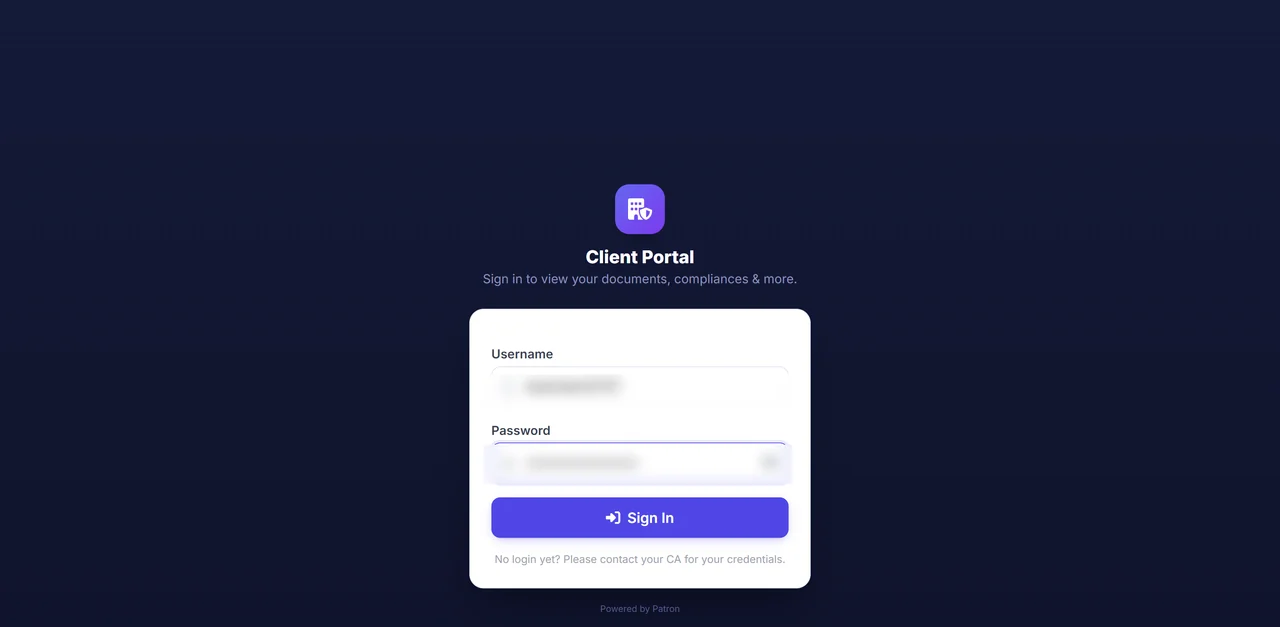
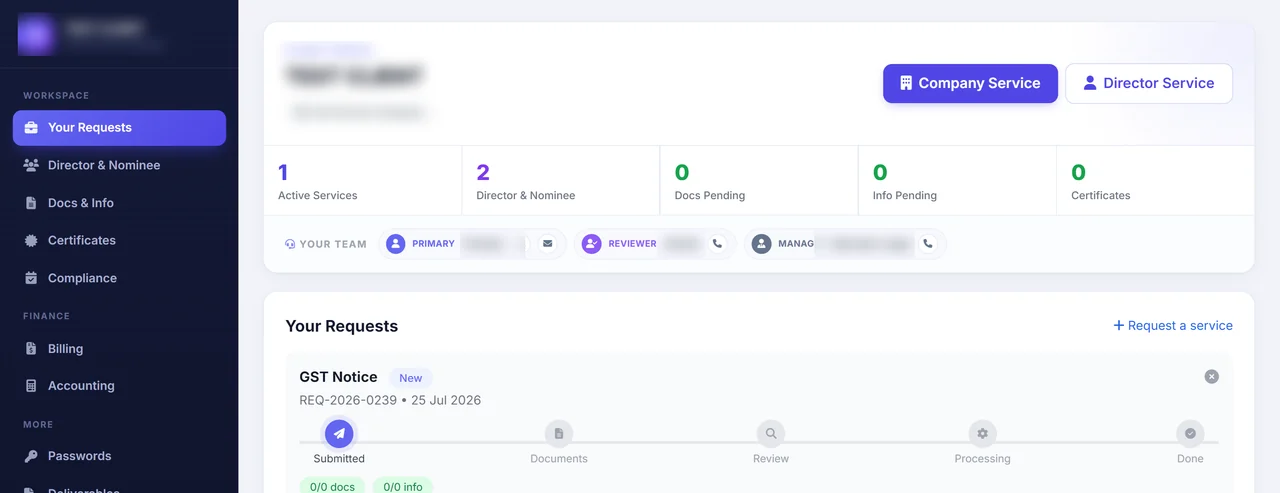
Everything happens in one secure login. You can see your active services, the Patron team on your account, and anything still pending. Once you raise a request, it moves through the same clear steps every time, so you always know exactly where your work stands.

Secure client portal login screen
1

Sign in securely

Your books, documents and requests all sit behind one private, password protected login. The team handling your account is shown on screen, so nothing sensitive ever needs to travel over email or WhatsApp.

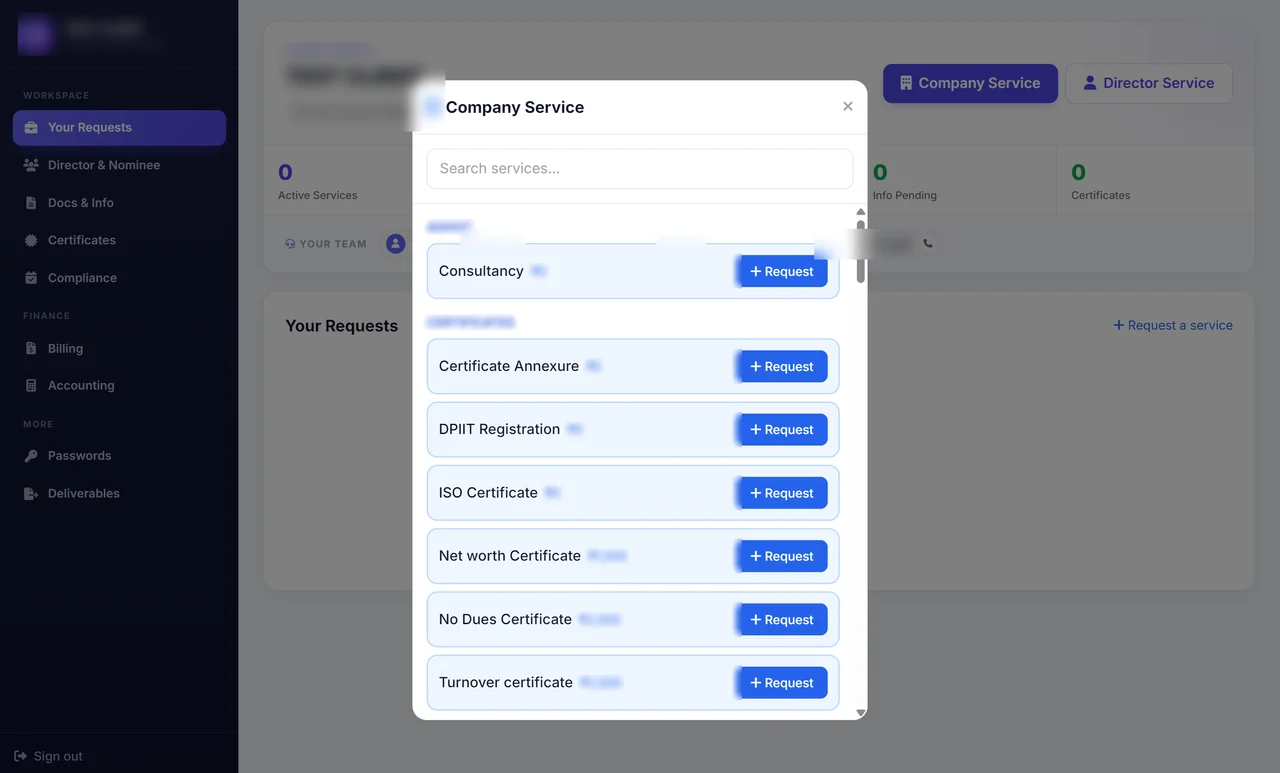
Service catalogue inside the client portal
2

Raise your request

Choose the service you need from the menu inside the portal, where the price is shown before you go ahead. Your request is logged the moment you send it, with no phone calls or reminder emails to wait on.

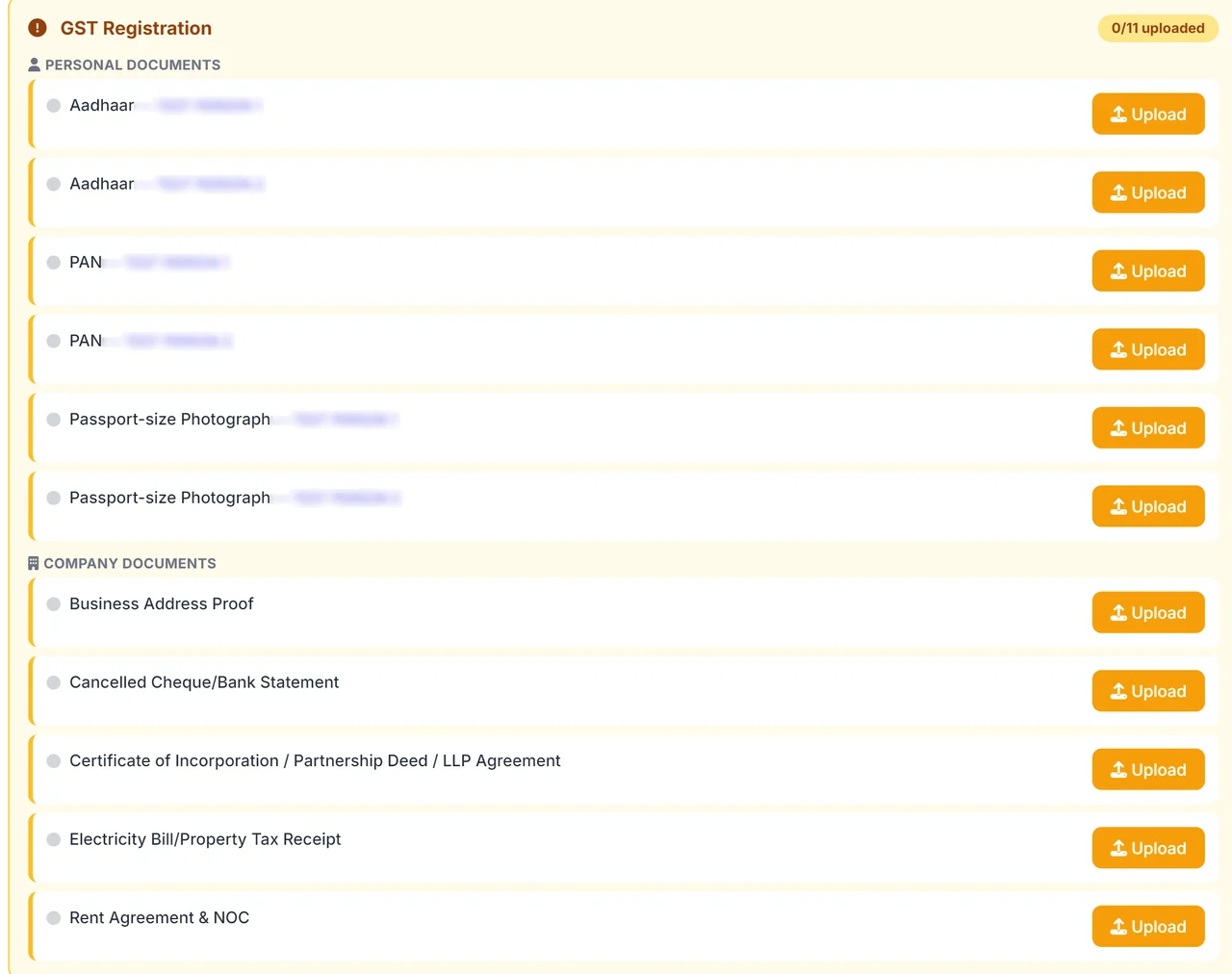
GST registration document checklist in the client portal, with an upload button beside each item
3

Share what the service asks for

For every service, the portal lists the exact documents it needs, each with its own upload button. The example shown here is the GST registration checklist. When a service needs nothing from you, it simply asks for nothing.

Live request tracker inside the client portal
4

We review, prepare and file

Once your documents are in, your team checks them, prepares the work and files it for you. A live tracker shows each stage as it happens, from review to processing to done, so you never have to ask where things stand.

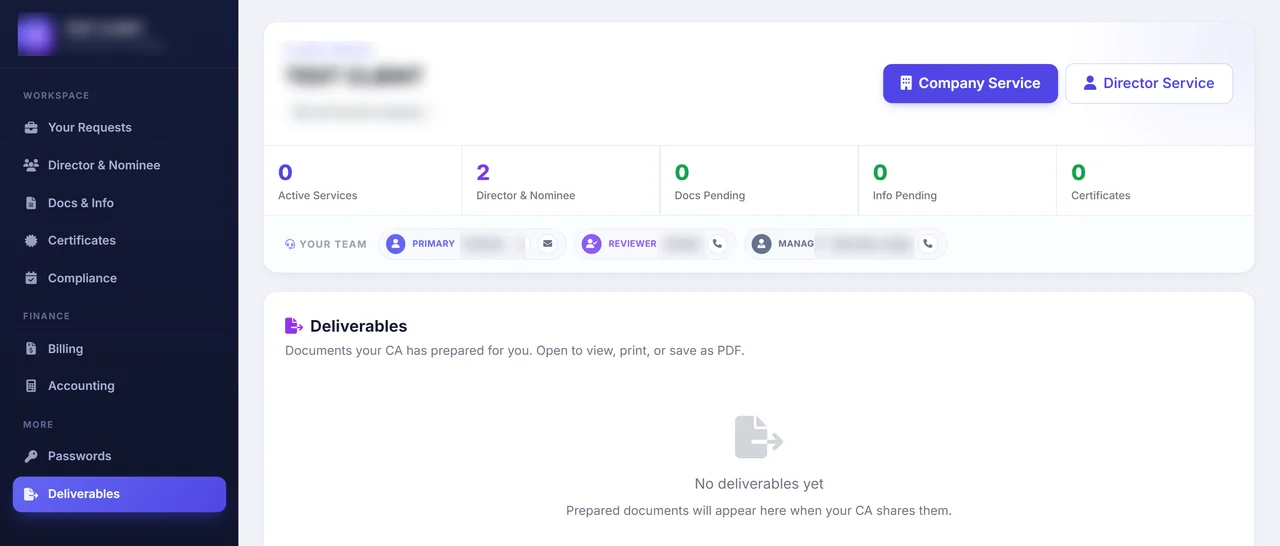
Deliverables area of the client portal
5

Collect your finished work

Every completed return, computation and certificate is placed in your Deliverables area. You can open, print or download any of them as a PDF whenever you need a copy.

Common Chart of Accounts Setup Challenges and How We Solve Them

ChallengeImpactHow Patron Accounting Solves It
Expense heads sprawl with duplicate and overlapping account codesReports fragment, the same cost lands in three ledgers and analysis breaks downWe rationalise to a numbered hierarchy with one head per cost type; see how to set up a chart of accounts
No sub-ledger structure for cost centres or locationsBranch or project profitability cannot be pulled without manual re-sorting each periodBuild dimensions and cost centres into the code, so one posting reports by entity, branch and project
GST rate and place-of-supply not designed into ledgersReturns filled by manual regrouping, with mismatches against 2B and 3B every cycleTag tax type and HSN at account level, so postings feed the GST return without rework
Schedule III groupings bolted on at year-endAudit regrouping eats weeks, and the board pack never ties to the ledgerAlign account heads to Schedule III line items from the start, so statements assemble directly
Inconsistent codes across group entities block consolidationIntercompany elimination and consolidated reporting need manual mapping each periodIssue a uniform group chart with a mapping key, so entities consolidate cleanly

Chart of Accounts Setup Fees

Fee ComponentAmount
Standard — a single-entity chart with a standard ledger structureINR 4,999 one-time
Excl. GST & Government Charges
Complex — a group structure with many ledgers or multi-entity mappingOn quote

A single-entity chart of accounts setup is a one-time project at INR 4,999, covering your ledgers, groups and opening balances. The fee depends on your group structure and the number of ledgers we design, so multi-entity mapping sits higher. Schedule a pricing consultation on +91 94594 56700.

Fees exclude GST and government charges. Final quote confirmed after a scoping review.

All fees and charges listed are indicative only and do not constitute a binding offer. Final amounts may vary depending on the volume of work and the complexity involved.

Professional accounting and compliance charges are scoped to your number of entities, funding stage and monthly transaction volume, and are separate from statutory and government charges. Contact us for a detailed, fixed quote.

Get a free Chart of Accounts Setup consultation - Call +91 945 945 6700 or WhatsApp us. No-obligation assessment.

Chart of Accounts Setup Compliance Calendar 2026

ComplianceDue DateApplies To
TDS / TCS deposit (Challan ITNS-281)7th of every month (30 April for March)Every business that deducts tax at source on salaries, rent, contractor or professional fees
GSTR-1 (outward supplies)11th of every month for monthly filersGST-registered businesses filing monthly returns
Provident Fund (ECR) and ESI contribution15th of every monthEmployers registered under EPF and ESI
GSTR-3B (summary return and tax payment)20th of every month for monthly filersGST-registered businesses filing monthly; QRMP filers pay via PMT-06
Tax audit report (Form 3CA/3CB-3CD)30 September 2026Businesses crossing the Section 44AB turnover threshold
Annual GST return GSTR-9 and reconciliation GSTR-9C31 December 2026GST-registered businesses above the annual-return and audit thresholds

A chart of accounts is worth setting up before your first filing dates, the 11th GSTR-1 and 20th GSTR-3B, so tax codes map cleanly from day one. Patron builds a GST-ready chart of accounts that carries through to the year-end audit. Get a filing-reminder schedule set up; call +91 94594 56700.

Key Benefits

Why Professional Chart of Accounts Setup Matters

One head, one meaning

Each account name states what belongs in it, and only named people can create a new ledger.

  • Code structure designed, then ledger creation restricted to named staff
  • One meaning per head stops three versions of an expense
  • Without it, comparatives are regrouped by hand every year

Tax figures traceable to ledgers

We keep output and input tax by GSTIN, reverse charge apart and deduction at source split by section.

  • GSTINs by state and TDS/TCS sections built into the structure
  • A queried return figure points to the ledger it came from
  • Without it, return figures are rebuilt from invoices under query

Room to grow without renumbering

We lay out code blocks with deliberate gaps, so a new product line or branch slots in where it belongs.

  • Deliberate gaps in the number blocks leave room to grow
  • New accounts land where they belong, not at the bottom
  • Without gaps, the numbering soon stops matching the business

Branch reporting without spreadsheets

We carry location, department and project on the transaction as dimensions, instead of repeating a ledger for every branch.

  • Dimensions sit on the transaction, separate from the accounts
  • One rent head reports by branch without duplicate ledgers
  • Without dimensions, consolidation becomes a manual mapping every month

Opening balances that agree

We map old ledgers one to one onto the new tree and agree migrated balances to the trial balance before go-live.

  • Migrated balances tied back to the latest trial balance
  • Old ledger master export mapped one to one
  • Without it, later differences are argued twice, migration versus current period

A structure that survives handover

A written manual records what posts where, which dimensions are mandatory and who may approve a new ledger.

  • The accounting manual sets posting rules and approval rights
  • Mandatory dimensions and ledger approvals written down for the next person
  • Without it, the chart drifts back after a staff change

Why Businesses Choose Patron Accounting for Chart of Accounts Setup

Five things a founder can check before handing over the books. Each is a claim with the proof behind it.

A COA built for the reports you need

We design the ledger structure around the reports you must produce, not a stock template, so every head has one clear meaning. This account code structure work draws on 15+ years of experience.

GST, TDS and Schedule III mapping designed in

We map GST, TDS and Schedule III groupings into the ledgers from the first entry, following a GST-ready ledger template so statutory figures trace to source. That reflects the 25,000+ filings we have completed.

Built natively in Zoho Books, Xero or Odoo

We work in whichever of Zoho Books, Xero, Tally Prime or Odoo you run. The chart of accounts is built directly in the platform you run, not a spreadsheet imported later.

Live COA with opening balances migrated

We hand over a live chart of accounts with opening balances migrated and agreed to your last signed figures, so the first month closes clean. Clients rate this 4.9 on Google.

Charts designed across the 3,000+ businesses served

The businesses whose books we have structured sit among the 3,000+ we have served since 2019, from proprietorships to mid-sized groups. Our in-house team of CAs and CS brings 15+ years of experience.

Figures reflect Patron Accounting LLP engagements since 2019. Scope and turnaround are confirmed in your engagement letter.

Default Software COA vs Custom Segmented COA

CriterionDefault Software COACustom Segmented COA
Setup effortDefault: ready out of the box, quick to start.Custom: designed upfront, taking more time to build.
StructureDefault: generic single-level heads with little grouping.Custom: parent-child hierarchy with cost centres and segments.
Reporting depthDefault: totals only, with limited drill-down by unit.Custom: branch, product and department views without spreadsheets.
Tax mappingDefault: broad heads make GST and TDS harder to trace.Custom: ledgers aligned to return lines and tax figures.
ScalabilityDefault: renumbering often needed as the business grows.Custom: spare codes left to add heads later.
Handover riskDefault: meanings drift as staff add duplicate heads.Custom: one head one meaning, surviving staff changes.
VerdictA default software chart of accounts suits a very small single-location business. Any firm with branches, GST complexity or growth plans is better served by a custom segmented design following a chart of accounts numbering system.

Legal and Regulatory Framework for Chart of Accounts Setup

One transaction wears two faces the moment it is booked: an accounting face measured under the standards and a tax face measured under the CGST and Income-tax Acts. A chart of accounts is where those two are reconciled in advance, by deciding which ledger a rupee lands in before it is ever posted, so the same expense reads correctly for the profit and loss and for the GST return.

That is why the design is a compliance exercise, not a naming one. The heads have to carry the input-tax split, the TDS nature of a payment and the Schedule III grouping all at once, which is why a Segmented Chart of Accounts and a clean Parent-Child Ledger Hierarchy matter more than tidy labels. Chart of accounts setup builds that structure to satisfy the provisions below from the first entry.

  • Section 128, Companies Act 2013The books are kept on accrual and double entry, so the ledger structure must support that discipline before the first voucher is posted - the basis of Double-Entry Bookkeeping.
  • Companies (Accounting Standards) Rules 2021 and Companies (Indian Accounting Standards) Rules 2015The heads are mapped to the applicable AS or Ind AS grouping, so measurement and disclosure fall out of the structure automatically.
  • Section 35(1), CGST Act 2017The accounts must separate inward and outward supplies, input tax credit and output tax, which the ledger design has to accommodate for every GSTIN.
  • Section 128 and Section 44AA, Income-tax Act 1961The same double-entry obligation applies whichever entity holds the books, so the chart is built to fit a company or a non-corporate alike.
  • Rule 3(1), Companies (Accounts) Rules 2014The software's audit trail is enabled from set-up, so any later change to a ledger head is itself on record. Ongoing posting is handled separately under catch-up bookkeeping where records are behind.

Official sources: Ministry of Corporate Affairs · Income Tax Department · GST Portal · Startup India (DPIIT)

How do you set up a chart of accounts?

A chart of accounts is set up by listing every reporting requirement first, then building groups for assets, liabilities, equity, income and expenses, numbering them in blocks and mapping each one to the Schedule III heads used in Indian financial statements. GST input and output ledgers, TDS payable heads and related party accounts are created at this stage rather than bolted on later.

Can a new chart of accounts still be built in QuickBooks in India?

QuickBooks withdrew from India in 2023 and stopped serving Indian subscribers, so a new chart of accounts should not be built there. Businesses still holding an old QuickBooks file should export the account list and trial balance and rebuild the structure in Zoho Books, Tally, Xero or Odoo, with GST and TDS ledgers mapped correctly during the move.

How do you design a chart of accounts?

A chart of accounts is designed around the decisions the business needs to make, with a short account list and depth pushed into cost centres, departments and tags instead. Keep 60 to 120 ledgers for a small company, separate direct cost from overhead, and avoid one off ledgers for single vendors, because those make year on year comparison impossible.

How is a QuickBooks chart of accounts redesigned for an Indian accounting system?

Redesign starts by mapping every old QuickBooks account to a new head, merging duplicates and dropping accounts with no balance and no future use. The imported structure rarely fits Indian reporting, so rate wise GST sales heads, TDS receivable and payable ledgers and Schedule III groupings are added before opening balances are posted in the new software.

How long does a chart of accounts setup take?

A chart of accounts setup takes 5 to 10 working days for a single entity and 2 to 3 weeks where multiple branches, GST registrations or a group consolidation are involved. That covers the design discussion, building the structure in your software, posting opening balances and running a test month of transactions before the structure is signed off.

What does a chart of accounts setup cost?

A one time chart of accounts setup costs Rs 15,000 to Rs 40,000 for a single entity and Rs 50,000 upwards for group structures with several branches or GST registrations. The fee covers the design document, configuration in Zoho Books, Tally, Xero or Odoo, opening balance migration and a written mapping sheet your team keeps for reference.

What are the 5 basic charts of accounts?

A chart of accounts rests on five basic account types: assets, liabilities, equity, income and expenses, and every ledger you create sits under one of them. In India each type is then mapped to the Schedule III heads used in the balance sheet and profit and loss account, with GST input and output ledgers and TDS receivable and payable heads built in from the start.

Can a chart of accounts be restructured without losing earlier year data?

Yes, restructuring is done by mapping old ledgers to new ones and merging rather than deleting, so historical vouchers stay intact and comparative figures still pull correctly. We take a full backup before any change, run the merge in a test company first, and hand you a mapping sheet showing where every old balance has landed.

Should GST ledgers be built into the chart of accounts?

Yes, separate ledgers for CGST, SGST, IGST and cess on both the input and output side belong in the chart of accounts, along with a control account for the electronic cash ledger. Relying only on the software's automatic tax handling makes GSTR-3B reconciliation harder, because the liability and credit balances then have no visible ledger to tie back to.

How should the chart of accounts handle multiple branches and state GST registrations?

Each state registration needs its own set of GST ledgers while operating heads stay common, with the branch identified through a cost centre or location dimension instead of duplicated ledgers. Inter branch transfers get a dedicated control account that must net to zero on consolidation, which is the first thing auditors test in a multi state structure.

Quick Answers

Schedule III fixes the heads under which a company must present its accounts, and no amount of year-end regrouping makes a badly numbered ledger fall into them cleanly. So the work starts with the reports you are obliged to produce, then reasons backwards to codes. Patron drafts the account tree, agrees naming and.

Chart of Accounts Setup Deadlines You Cannot Afford to Miss

TDS / TCS deposit (Challan ITNS-281) is due 7th of every month (30 April for March). GSTR-1 (outward supplies) is due 11th of every month for monthly filers. Provident Fund (ECR) and ESI contribution is due 15th of every month. Patron tracks each against your books so nothing is reconstructed after the fact. Call +91 94594 56700 to set up a filing-reminder schedule.

Start Your Chart of Accounts Setup with Patron Accounting

Postings stop being a judgement call. The head already exists, only one person can add another, and the person coding a bill is not inventing a category on the last working day of the month. The report your board reads comes out of the ledger as it stands, not out of a spreadsheet built beside it.

Chart of accounts design lets one code answer several questions at once. Spend by department, spend by project and spend by location fall out of the same entry without anyone recoding it. A number quoted in a management meeting survives contact with the audited accounts. Nobody has to remember last time's coding.

Two things open this one: who codes entries day to day, and which software the structure lives inside. Existing balances matter too, because an entity changing mid-year carries history that must land somewhere sensible in the new tree. Unposted history from earlier years is handled separately.

Book a Free Consultation - No Obligation.

Explore Our Accounting Services

Related services our CA-led team delivers for businesses across India.

Reviewed by the CA & CS Team, Patron Accounting LLP
ICAI & ICSI registered  ·  15+ years in Indian accounting & compliance  ·  Last reviewed 23 July 2026  ·  Next review 23 October 2026