


Talk to an Expert
Talk to an Expert ✆ +91 945 945 6700
Trusted by 10,000+ Businesses

Inventory Accounting and Costing Services

Reviewed by CA and CS Team, Patron Accounting LLP ICAI & ICSI Registered| 15+ Years Experience| Last Updated: July 2026 Verify Credentials →

Landed cost inside stock value: We absorb freight, insurance, customs duty, clearing charges and non-creditable taxes into the goods they relate to, and keep creditable GST out.

Stock at job workers accounted: Material lying with job workers stays in your books, with challans and the job-work return kept current and the return window watched.

Conversion cost on normal capacity: We absorb production overheads on normal capacity, and keep waste, by-products and abnormal loss out of the unit cost.

One item master, one measure: Your item master gives each item one unit of measure, its conversion factors, an HSN code and a cost.

15+ YearsIndustry Experience
CA & CSCertified Experts
4.9
Based on real Google reviews

Get Free Consultation

Talk to a CA/CS expert today

🇮🇳 +91

Our team will get back to you shortly. No spam.

Real Stories from Real People

Verified Google reviews from founders and businesses Patron works with across India.

Join 3,000+ Founders and Businesses on Patron

Rated 4.9 on Google - trusted for startup accounting since 2019.

Talk to an Expert
10,000+Businesses ServedGST compliance and litigation support across India.
15+Years ExperienceDeep expertise in IP registration, GST & business compliance.
50,000+Documents FiledReturns, appeals, and filings handled accurately.
4.9★Client RatingTrusted by entrepreneurs, startups, and growing businesses.
ISO CertifiedProfessional standards and documented processes.
SSL SecureYour financial and business data is fully protected.

What Inventory Accounting and Costing Covers — Scope, Deliverables and Who It Suits

📌 TL;DR - Inventory Accounting Costing Services at a Glance

Inventory accounting services begin with a valuation you can defend, applying lot, batch or weighted average consistently period after period. AS 2 caps the carrying value at whichever is lower, cost or what the stock will fetch. Patron reports variance against physical counts and provisions slow-moving lines on a written policy. Designed for distributors and inventory-heavy retailers.

Everything turns on cut-off. Goods dispatched on the last day of the month, material lying at a job worker, a delivery received but not yet invoiced: each has to sit on the right side of the line before the books close. Patron fixes that cut-off with your warehouse team first, then values closing stock, posts consumption, and issues the costing pack with each variance explained in turn. How valuation methods differ matters most at this point in the cycle.

Getting valuation wrong costs more than the adjustment itself: input credit reversed, stock differences treated as unexplained, and an auditor's qualification that follows the accounts around. Cost accounting services are scoped by SKU count, the spread of godowns, and whether job work and consignment stock are in play. Movement documentation on the e-way bill system is prepared by your dispatch team, not here.

What Is Inventory Accounting and Costing?

Counting stock tells you how many units sit in the godown; it does not tell you what they are worth or what they cost to make. Inventory accounting services answer that second question. They fix a valuation basis, whether first-in-first-out or weighted average, and apply it consistently, so closing stock and cost of goods sold are stated on a defensible footing.

Landed cost is built from purchase price, freight, insurance and duty, and where goods are manufactured each item is costed against its bill of materials. Where a standard cost is used, the variance from actual is measured and cleared each period. It measures book stock against the physical count, explains each variance, and writes down slow-moving lines under a stated policy. AS 2 caps the carried value at the lower of cost or net realisable value, which is where careful inventory valuation services earn their keep. Inventory accounting services stay inside costing and valuation; the GST treatment of stock movement is handled elsewhere.

Key Terms for Inventory Accounting Costing:

What Is Inventory Accounting and Costing. Counting stock tells you how many units sit in the godown; it does not tell

Who Needs Inventory Accounting and Costing in India?

Inventory accounting services are needed wherever closing stock is large enough to move reported profit, yet nobody really owns how it is valued. It suits distributors, importers and stock-heavy operations whose count, ledger and bank statement should agree rather than diverge.

  • Distributors carrying thousands of SKUs across several godowns, where a single valuation basis has never been fixed.
  • Importers whose goods arrive with freight, insurance and customs duty nobody has been folding into cost.
  • Producers assembling goods from a bill of materials who need conversion cost set by proper methods of costing.
  • Businesses sending raw material out to job workers, unsure how much stock now sits outside their walls.
  • Companies whose warehouse count and ledger stock disagree under whichever perpetual or periodic system they run.
  • Firms borrowing against a monthly stock statement, where the bank's drawing power rests on that figure.
  • Traders holding ageing, slow-moving lines that no one has provisioned down to net realisable value.

Our Inventory Accounting and Costing Services

ServiceWhat We Do
Item master set-upWe fix your SKU master with one unit of measure, HSN code and cost per item, so inventory accounting services rest on clean data One-time (setup)
Valuation basisWe settle the valuation method, whether FIFO or weighted average, and apply it consistently, following this FIFO versus weighted average comparison One-time (setup)
Landed cost build-upOur inventory valuation services load freight, insurance and customs duty into stock cost, so each item carries its true landed value Monthly
Cost of conversionOur cost accounting services compute conversion cost on normal capacity using your bill of materials, so finished goods absorb labour and overhead correctly Monthly
Job-work stock trackingWe track stock lying with job workers and third parties against challans and ITC-04, so goods held elsewhere stay on your books Monthly
Count reconciliation and ageingWe reconcile physical counts to book stock, record losses and free issues, and flag slow-moving and obsolete lines for your write-down decisions Quarterly
Our Process

How Inventory Accounting and Costing Works — Our Process

How Patron delivers inventory accounting costing, step by step from onboarding to a clean monthly close.

Step 1

Fix the item master

Every item is set with a single unit of measure, conversion factors where it is bought and issued differently, its HSN code and a standard or last purchase cost. Duplicate item codes are merged first, because stock that cannot be counted consistently cannot be valued consistently either.

Illustration for Fix the item master: Every item is set with a single unit of measure, conversion factors where it is bought
Step 2

Settle the valuation basis

We agree the cost formula, either first in first out or weighted average, and apply it consistently to items of a similar nature. Stock is then carried at the lower of that cost and net realisable value, a comparison made item by item rather than across the whole stock.

Illustration for Settle the valuation basis: We agree the cost formula, either first in first out or weighted average, and
Step 3

Build landed cost properly

Freight, insurance, customs duty, clearing charges and any non-creditable tax are absorbed into the cost of the goods they relate to, allocated on a stated basis. Creditable GST is excluded, because carrying recoverable tax in stock overstates both inventory and cost of sales.

Illustration for Build landed cost properly: Freight, insurance, customs duty, clearing charges and any non-creditable tax
Step 4

Compute cost of conversion

Using the bill of materials and the process route, we build direct material and labour per unit and allocate production overheads on normal capacity rather than actual output. Waste, by-products and abnormal loss are treated separately so a bad month does not inflate the value of stock.

Illustration for Compute cost of conversion: Using the bill of materials and the process route, we build direct material and
Step 5

Track stock held elsewhere

Goods lying with job workers or third parties remain yours and remain in your stock. Challans and the job-work return are kept current, and the return window under the GST job-work provisions is monitored. Goods not returned in time are deemed to have been supplied to the job worker.

Illustration for Track stock held elsewhere: Goods lying with job workers or third parties remain yours and remain in your
Step 6

Reconcile count to book stock

Physical count sheets are reconciled to book stock in both quantity and value, and every material difference is explained before adjustment. The stock register is maintained to record goods lost, stolen, destroyed, written off or given away, as the GST rules on records require.

Illustration for Reconcile count to book stock: Physical count sheets are reconciled to book stock in both quantity and
Step 7

Identify slow-moving and obsolete

Stock is aged by item on last movement date, and non-moving lines are separated from slow-moving ones. Where the expected selling price less costs to complete and sell has fallen below cost, the item is written down and the basis for that write-down is documented.

Illustration for Identify slow-moving and obsolete: Stock is aged by item on last movement date, and non-moving lines are

Documents Required for Inventory Accounting and Costing

Valuation depends on what you spent getting goods to your door, so freight, insurance and duty have to travel with the purchase invoice.

  • Purchase invoices for raw material and traded goods with freight, insurance, customs duty and other landed-cost documents
  • Goods receipt notes, delivery challans and e-way bills
  • Stock register showing receipts, supplies, and goods lost, stolen, destroyed, written off or given away as gift or free sample
  • Monthly production records: quantitative details of raw materials consumed and goods manufactured, including waste and by-products
  • Bill of materials and the process route or flow for each finished product
  • Job work challans and ITC-04 filings, with a statement of stock lying with job workers or third parties
  • Physical stock count sheets with the reconciliation to book stock and explanations for differences
  • Item / SKU master with unit of measure, HSN code and standard or last purchase cost
  • Opening stock statement with quantity, value and the stated basis of valuation
Client Portal

How You Work With Patron

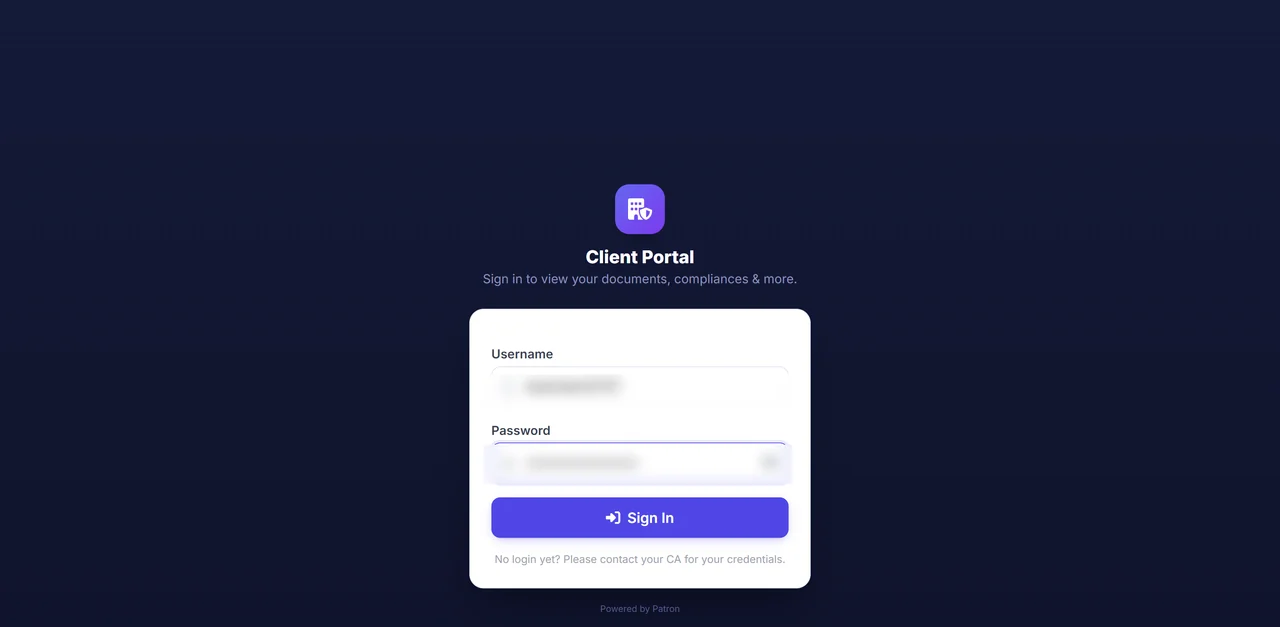
Everything happens in one secure login. You can see your active services, the Patron team on your account, and anything still pending. Once you raise a request, it moves through the same clear steps every time, so you always know exactly where your work stands.

Secure client portal login screen
1

Sign in securely

Your books, documents and requests all sit behind one private, password protected login. The team handling your account is shown on screen, so nothing sensitive ever needs to travel over email or WhatsApp.

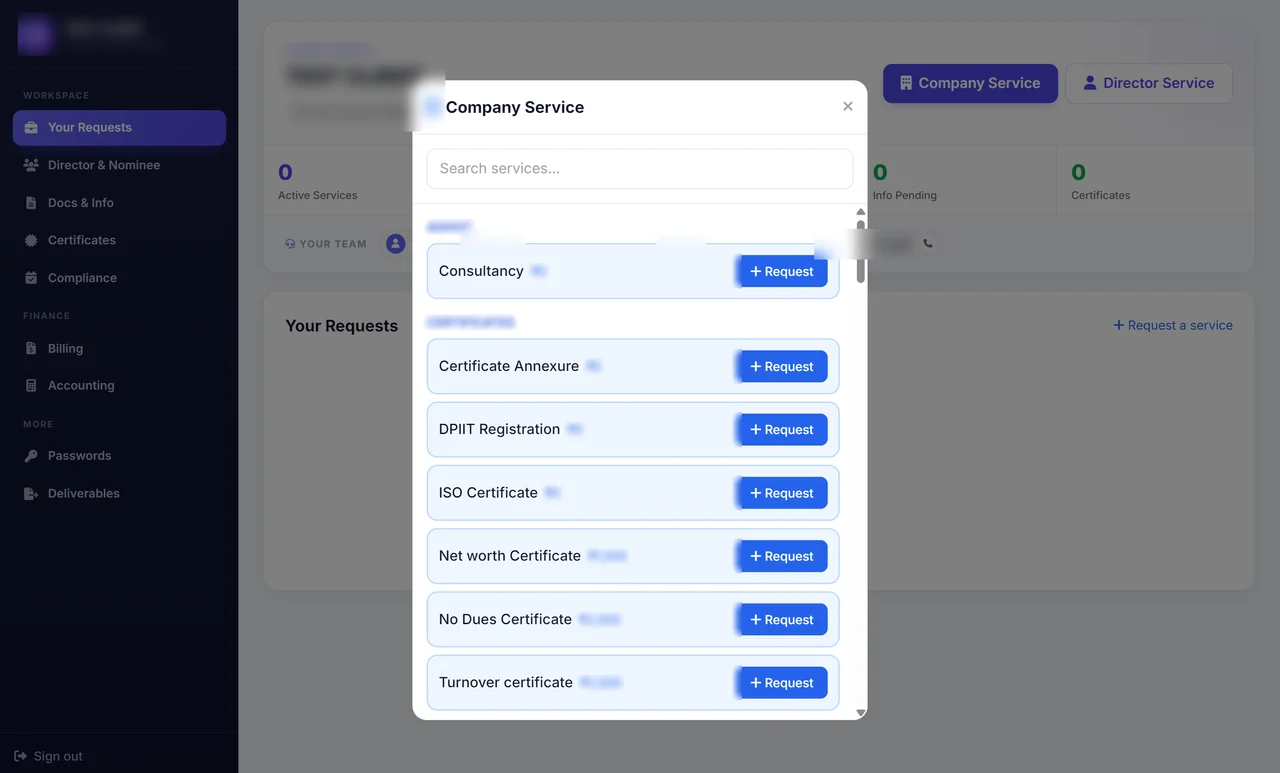
Service catalogue inside the client portal
2

Raise your request

Choose the service you need from the menu inside the portal, where the price is shown before you go ahead. Your request is logged the moment you send it, with no phone calls or reminder emails to wait on.

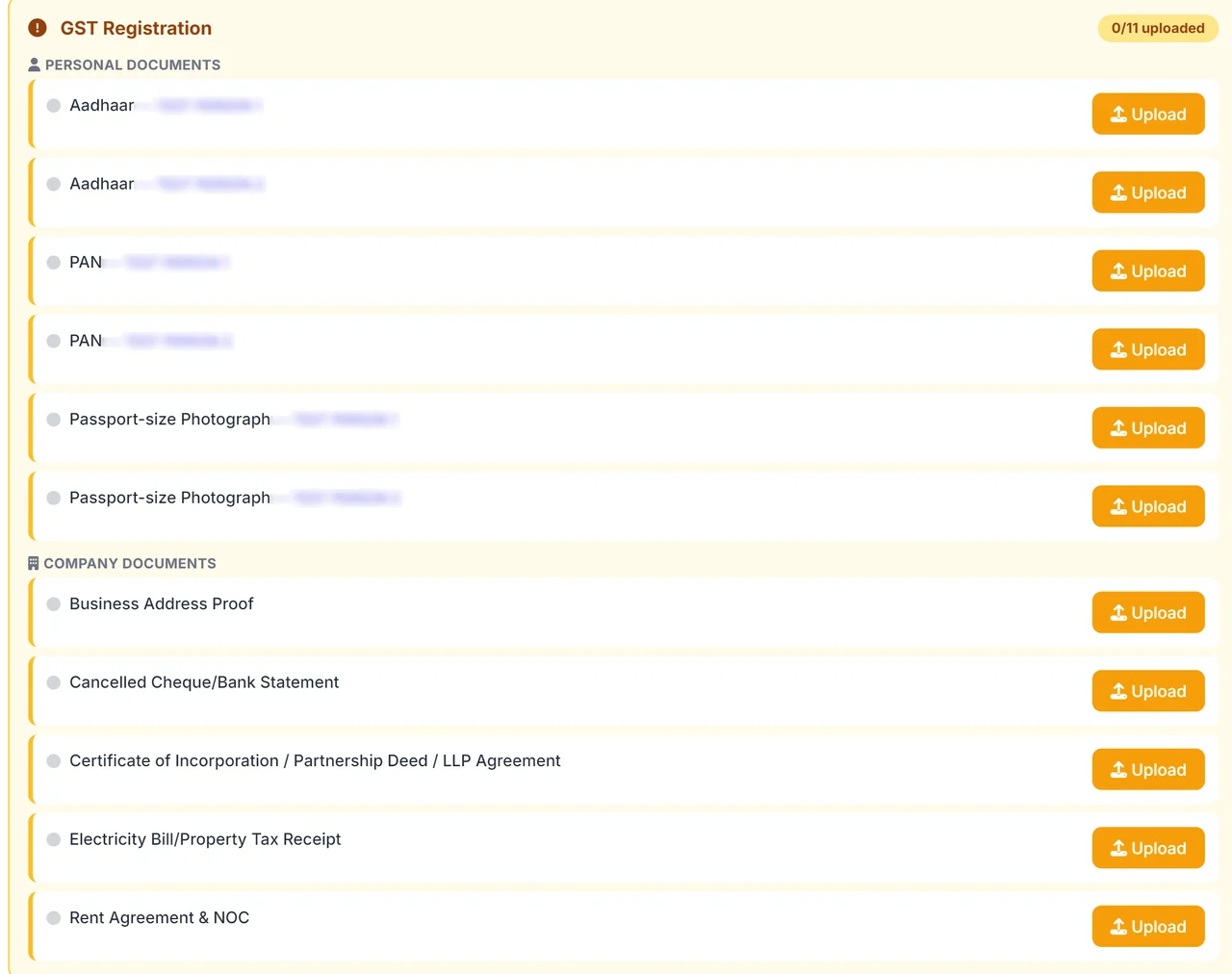
GST registration document checklist in the client portal, with an upload button beside each item
3

Share what the service asks for

For every service, the portal lists the exact documents it needs, each with its own upload button. The example shown here is the GST registration checklist. When a service needs nothing from you, it simply asks for nothing.

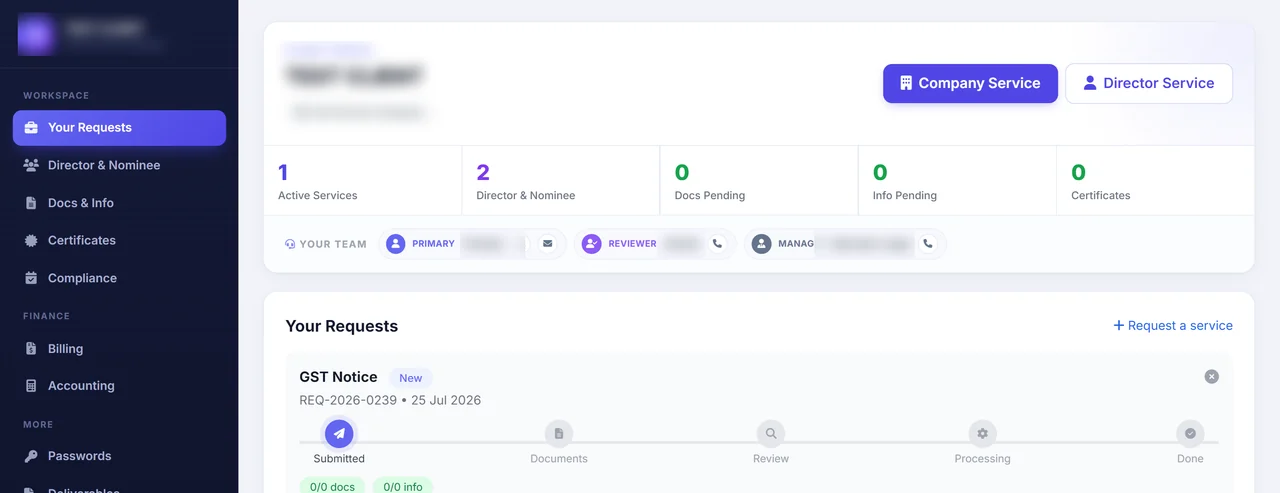
Live request tracker inside the client portal
4

We review, prepare and file

Once your documents are in, your team checks them, prepares the work and files it for you. A live tracker shows each stage as it happens, from review to processing to done, so you never have to ask where things stand.

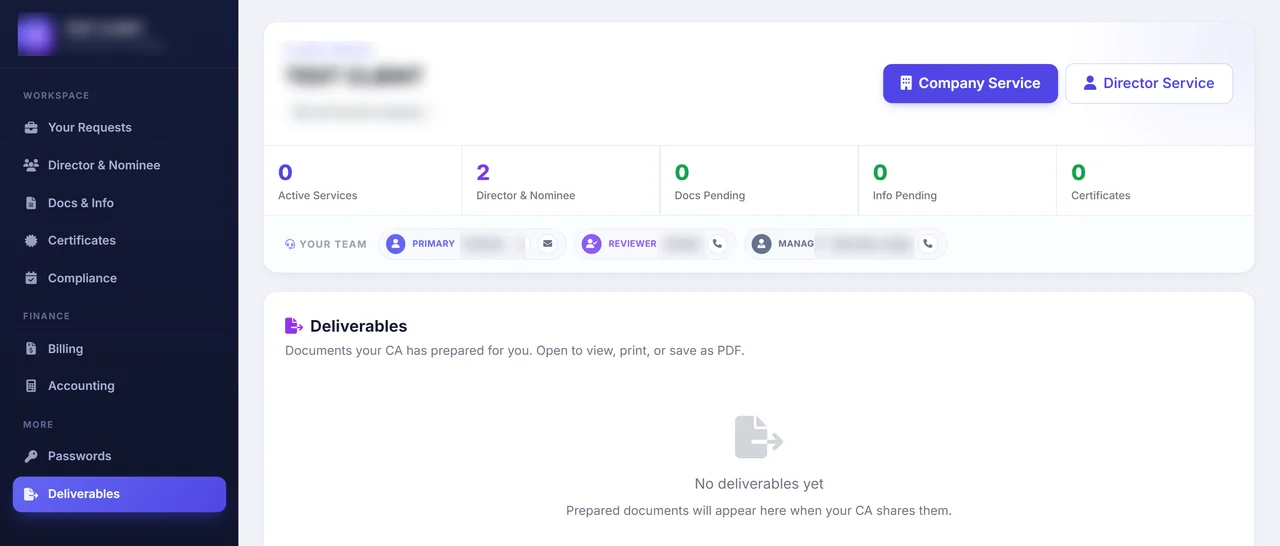
Deliverables area of the client portal
5

Collect your finished work

Every completed return, computation and certificate is placed in your Deliverables area. You can open, print or download any of them as a PDF whenever you need a copy.

Common Inventory Accounting and Costing Challenges and How We Solve Them

ChallengeImpactHow Patron Accounting Solves It
Landed cost ignores freight, duty and insuranceUnit cost is understated, inflating margin and mispricing every SKU on the shelf.We build landed cost into the valuation, absorbing freight, duty and clearing per consignment.
Stock lying with job-workers left off the booksThe balance sheet understates inventory and the ITC-04 movement cannot be reconciled.We track material sent for job work and reconcile it to the stock ledger monthly.
Standard costs never revised as input prices moveVariances balloon and product costing misleads pricing and tender decisions for months.Patron revises standards periodically and reports purchase-price and usage variance; compare inventory valuation methods.
No ABC prioritisation, so counts treat all stock alikeHigh-value lines go uncounted while effort is wasted on trivial items, letting shrinkage hide.We apply ABC analysis so A-class items are counted often and reconciled tightly.
Purchase invoice posted before goods receipt is matchedStock and payables both overstate, and GRN-to-invoice gaps quietly break three-way matching.Our team enforces a three-way match of purchase order, GRN and invoice before any posting.

Inventory Accounting and Costing Fees

Fee ComponentAmount
Starter — one entity, a defined SKU set and one costing methodINR 7,499 per month
Excl. GST & Government Charges
Growth — wider SKU range, added costing methods or frequent valuationOn quote
Managed — multi-entity stock with custom valuation and reportingOn quote

Sizing starts from a defined SKU set for one entity under a single costing method. Your fee shifts with SKU count, the method chosen and how often you revalue stock, and our piece comparing inventory valuation methods helps. We scope the work to those factors, so call to price yours. Schedule a pricing consultation on +91 94594 56700.

Fees exclude GST and government charges. Final quote confirmed after a scoping review.

All fees and charges listed are indicative only and do not constitute a binding offer. Final amounts may vary depending on the volume of work and the complexity involved.

Professional accounting and compliance charges are scoped to your number of entities, funding stage and monthly transaction volume, and are separate from statutory and government charges. Contact us for a detailed, fixed quote.

Get a free Inventory Accounting Costing consultation - Call +91 945 945 6700 or WhatsApp us. No-obligation assessment.

Inventory Accounting and Costing Compliance Calendar 2026

ComplianceDue DateApplies To
TDS / TCS deposit (Challan ITNS-281)7th of every month (30 April for March)Every business that deducts tax at source on salaries, rent, contractor or professional fees
GSTR-1 (outward supplies)11th of every month for monthly filersGST-registered businesses filing monthly returns
GSTR-3B (summary return and tax payment)20th of every month for monthly filersGST-registered businesses filing monthly; QRMP filers pay via PMT-06
Tax audit report (Form 3CA/3CB-3CD)30 September 2026Businesses crossing the Section 44AB turnover threshold
Job-work movement return (ITC-04)25 October 2026 (Apr-Sep) and 25 April (Oct-Mar) for turnover above Rs 5 crore; annually otherwiseManufacturers sending inputs or capital goods to job workers
Annual GST return GSTR-9 and reconciliation GSTR-9C31 December 2026GST-registered businesses above the annual-return and audit thresholds
Cost records and CRA-4 cost audit filingWithin 30 days of the cost audit reportRegulated manufacturers meeting the cost-audit thresholds

For inventory-heavy businesses the ITC-04 job-work return on 25 October and the tax audit on 30 September both hinge on a valued, reconciled stock ledger. Patron runs inventory and costing so closing stock and costing tie out before each date. Talk to a Patron CA on +91 94594 56700 about your due dates.

Key Benefits

Why Professional Inventory Accounting and Costing Matters

Landed cost inside stock value

We absorb freight, insurance, customs duty, clearing charges and non-creditable taxes into the goods they relate to, and keep creditable GST out.

  • landed costs absorbed on a stated basis into the goods
  • creditable GST kept out of stock value
  • Without it, overstated margin and understated closing stock on imports

Stock at job workers accounted

Material lying with job workers stays in your books, with challans and the job-work return kept current and the return window watched.

  • job work challans and ITC-04 kept current
  • return window monitored, deemed supply on non-return
  • Without it, a processing arrangement deemed a taxable supply

Conversion cost on normal capacity

We absorb production overheads on normal capacity, and keep waste, by-products and abnormal loss out of the unit cost.

  • overheads allocated on normal capacity, not actual output
  • waste, by-products and abnormal loss kept out of unit cost
  • Without it, a bad month's loss deferred into next year's stock

One item master, one measure

Your item master gives each item one unit of measure, its conversion factors, an HSN code and a cost.

  • single UOM, conversion factors, HSN and cost per item
  • duplicate codes merged before anything is valued
  • Without it, a physical count that can never tie to the books

Losses and free issues recorded

We record goods lost, stolen, destroyed, written off or given away as samples, each entered in the stock register with its quantity.

  • goods lost, stolen, destroyed, written off or gifted recorded
  • entered in the stock register as the GST record rules require
  • Without it, a quantity gap read as unrecorded supply

Why Businesses Choose Patron Accounting for Inventory Accounting & Costing

Five things a founder can check before handing over the books. Each is a claim with the proof behind it.

Valuation you can defend, applied consistently

Across 15+ years and 3,000+ businesses, we apply one costing basis, whether lot, batch or weighted average, consistently across every SKU, so your stock value holds up under scrutiny.

AS 2 compliance and Section 148 cost records

We keep AS 2 valuation compliant and maintain Section 148 cost records where they apply, routine work backed by the 25,000+ filings completed and reviewed before any audit.

Inventory module configured to your actual movement

Whether you use Zoho Books, Xero, Tally Prime or Odoo, we work inside it, configuring the inventory module to your real stock movement, not a generic template.

Stock valuation and variance report every month

Every month we deliver a stock valuation and variance report set against proper methods of costing, the cadence behind our 25,000+ filings and 4.9 star Google rating.

Inventory-heavy businesses among 3,000+ we serve

Inventory-heavy businesses, from manufacturing to distribution, sit among the 3,000+ served since 2019 under our accounting and bookkeeping services. Our in-house team of CAs and CS with 15+ years of experience handles them.

Figures reflect Patron Accounting LLP engagements since 2019. Scope and turnaround are confirmed in your engagement letter.

FIFO vs Weighted Average Costing

CriterionFIFOWeighted Average Costing
How cost flowsFIFO: earliest purchase cost charged to sales first.Weighted average: pooled average cost applied to each issue.
Closing stock valueFIFO: valued at the most recent purchase prices.Weighted average: valued at the blended cost of the period.
In rising pricesFIFO: lower COGS and higher reported profit.Weighted average: smoothed COGS, profit between the extremes.
Record-keepingFIFO: needs layer-wise tracking by purchase batch.Weighted average: single running average, lighter to maintain.
Best-fit stockFIFO: perishable stock and batch-expiry goods rotated first.Weighted average: homogeneous, high-volume or commodity items.
Standards positionFIFO: permitted under AS 2 and Ind AS 2.Weighted average: equally permitted; LIFO is not allowed.
VerdictBoth methods are lawful, so choose by stock nature: FIFO for perishable or price-sensitive goods, weighted average for uniform commodity items. Consistency, not superiority, matters most in inventory accounting services, as the FIFO vs weighted average rules confirm.

Legal and Regulatory Framework for Inventory Accounting and Costing

The same closing stock is one number in the accounts and often another for tax, because the accounting standard values it at the lower of cost and net realisable value while the tax computation re-tests that value against its own rules. Inventory accounting services exist to hold both and explain the difference, with AS 2 as the anchor.

That reconciliation runs deeper than a year-end count. What goes into cost - materials, labour, absorbed overhead - is a measurement decision that then drives the profit and the tax, which is why a disciplined Bill of Materials (BOM) Costing and the choice between FIFO vs Weighted Average Cost are governed rather than free. Where a company is notified, the same figures feed a statutory cost audit. The provisions below are what the valuation answers to.

  • AS 2 / Ind AS 2, Valuation of InventoriesRaw material, work-in-progress and finished goods are valued at the lower of cost and net realisable value, with overheads absorbed on normal capacity.
  • Section 148, Companies Act 2013 with the Companies (Cost Records and Audit) Rules 2014Notified companies maintain cost records and, above the thresholds, undergo a cost audit reported in Form CRA-3.
  • Schedule II, Companies Act 2013 with Section 32, Income-tax Act 1961The plant that produces the stock is depreciated over useful life for the books and on block rates for tax, the two reconciled in the Cost of Goods Sold.
  • Sections 16 and 17, CGST Act 2017Input tax credit on inputs and capital goods is claimed and, where required, reversed, tying the stock ledger to the GST returns.
  • Section 128, Companies Act 2013The underlying books stay on accrual and double entry, and the stock records that support them are retained for eight years.
  • Rule 3(1), Companies (Accounts) Rules 2014The audit trail stays enabled, so a revaluation or a write-down of slow stock is logged. General filing runs from the hub page.

Official sources: Ministry of Corporate Affairs · Income Tax Department · GST Portal · Startup India (DPIIT)

What is included in cost of services under a costing system?

Cost of services is the direct cost of delivering a service to a customer, covering delivery staff salaries, subcontractor charges, project specific software and travel, and it sits above gross profit in the profit and loss in the same position as cost of goods sold. Separating it from administrative overhead is what makes service line gross margin measurable and comparable month to month.

Should stock be costed using FIFO or weighted average?

FIFO values closing stock at the most recent purchase prices while weighted average smooths price movement across the whole pool, so in a rising cost market FIFO reports higher closing stock and higher profit. Indian standards permit both but not LIFO. FIFO suits perishables and batch tracked goods, weighted average suits commodities and high volume identical items, and the choice must stay consistent.

How is closing inventory valued for statutory audit in India?

Closing inventory is valued at the lower of cost and net realisable value under AS 2, where cost includes purchase price net of recoverable taxes, freight inward, duties and the conversion cost of bringing the item to its present location and condition. Selling costs, abnormal wastage, finished goods storage and administrative overhead are excluded and must be charged to the profit and loss.

What is inventory accounting?

Inventory accounting is the valuation of stock held at each reporting date and the release of that cost to the profit and loss when goods are sold or consumed. In India stock is carried at the lower of cost and net realisable value under AS 2, with cost taken on FIFO or weighted average because LIFO is not permitted. It also covers work in progress, job work stock and obsolescence provisioning.

Why does physical stock never match the system, and how is that fixed?

System to physical variance is closed by running a cut off controlled physical count, reconciling item by item against perpetual records, and classifying every difference as a counting error, an unrecorded issue, an unposted goods receipt or genuine shrinkage. Root causes, usually receipt timing and unrecorded scrap, are then fixed at source so the next count lands inside a tolerance you set.

Are cost records or a cost audit required for an inventory-heavy company?

Cost records and cost audit apply to companies in specified regulated and non regulated industries above prescribed turnover thresholds under the Companies Act cost records and audit rules, with the audit performed by a practising cost accountant. Because the covered industry list and thresholds are specific, we check your product classification and turnover against the current rules before confirming applicability.

What does an inventory accountant do?

An inventory accountant values closing stock, maintains the standard cost of every item, reconciles perpetual records against physical counts and explains the variance between standard and actual cost each month. The role also covers provisioning for slow moving and obsolete stock against an approved ageing policy, tracking goods lying with job workers, and preparing the stock schedules and count observations a statutory auditor will test.

What does an inventory valuation and costing engagement cost?

A one time inventory valuation and costing engagement is quoted by SKU band and number of locations, starting around Rs 30,000 for a single warehouse and rising with multiple plants, job work locations or bill of material complexity. Ongoing monthly costing support with variance reporting is priced separately as a retainer once the base costing model has been built and signed off.

How do you account for stock lying with job workers and third party warehouses?

Goods sent to a job worker remain your stock and stay in your books, tracked through delivery challans, with GST law requiring inputs to return within a prescribed period and capital goods within a longer one, failing which the movement is treated as a supply. Stock held at a third party warehouse is equally your asset and needs monthly written confirmation from the operator.

What data is needed to start inventory costing work?

We need the item master with units of measure, opening stock quantities and values, purchase and sales registers for the period, bill of materials and routing for manufactured items, job work challans, the last physical count sheets and a note on the costing method currently used. Read only access to your ERP or Tally data file is enough to begin reconciliation.

Quick Answers

Everything turns on cut-off. Goods dispatched on the last day of the month, material lying at a job worker, a delivery received but not yet invoiced: each has to sit on the right side of the line before the books close. Patron fixes that cut-off with your warehouse team first, then values closing stock, posts.

Inventory Accounting Costing Deadlines You Cannot Afford to Miss

TDS / TCS deposit (Challan ITNS-281) is due 7th of every month (30 April for March). GSTR-1 (outward supplies) is due 11th of every month for monthly filers. GSTR-3B (summary return and tax payment) is due 20th of every month for monthly filers. Patron tracks each against your books so nothing is reconstructed after the fact. Call +91 94594 56700 to set up a filing-reminder schedule.

Start Your Inventory Accounting and Costing with Patron Accounting

Stock valuation, left unassigned, lands on the storekeeper at year end. The count covers what is visible, priced from whatever rate is handy, and the figure enters the accounts unchallenged. Inventory accounting services exist because that number drives reported profit, the tax charge and the borrowing base your bank lends against, and it deserves better authorship.

Drawing power is calculated on the stock statement filed with your bank each month. Cost accounting services keep that statement, the physical count and the ledger carrying one figure. The monitoring visit then becomes a formality instead of a negotiation about which set of books the bank should believe.

Last year's closing stock figure is examined early: who signed it, what rate was applied, and whether your auditor accepted it without a note or a qualification. Where records lag, catching up on unrecorded months must happen before any valuation can stand.

Book a Free Consultation - No Obligation.

Explore Our Accounting Services

Related services our CA-led team delivers for businesses across India.

Reviewed by the CA & CS Team, Patron Accounting LLP
ICAI & ICSI registered  ·  15+ years in Indian accounting & compliance  ·  Last reviewed 23 July 2026  ·  Next review 23 October 2026